Floor plan

Style galleriesPaintings

Paintings

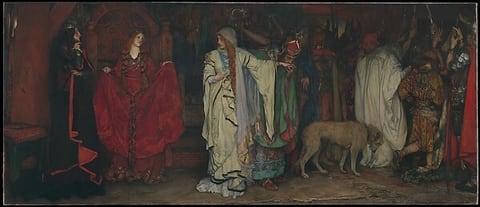
"King Lear," Act I, Scene I, by Edwin Austin Abbey, 1898
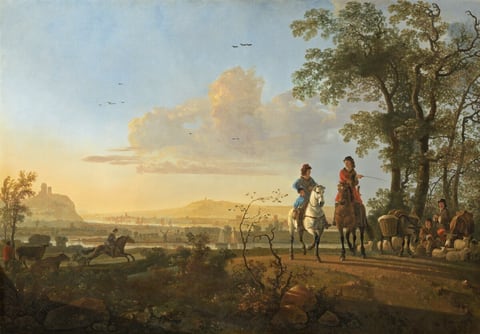
Golden sunlight pours across a landscape with three people on horseback and two more people near a flock of sheep, a cow, and a mule in this horizontal painting. The people all have pale, peachy skin. The horizon is about a third of the way up the composition and is lined with towers on distant, hazy, pale yellow hills. Two of the horses are to the right of center, both facing us. The horse on the left is white, and the rider wears an azure-blue tunic and red brimless cap. The other horse is brown with a white blaze, and its rider wears a red tunic and black cap. That second rider points with a whip to the sitting and standing people near the sheep, to the right. Those two people wear brown jackets, and the standing man has a mustache. The seated person rests a long staff over one shoulder. About half of the nine sheep there lie on the ground, and the others stand. The cow dips her head down to the sheep, and the splay-footed donkey has baskets hung to each side. This grouping is in front of a copse of tall trees that nearly reach the top edge of the composition. The third rider is to our left and a short distance away. That dark brown horse gallops to our right. A short distance away, another herdsman along the left edge of the composition wears a red tunic and brown pants, and he rests a long staff on one shoulder. One cow stands and one lies down next to that herdsman. Sunlight rakes across twigs, leafy plants, scrubby growth, and rocks in the foreground, closest to us. Sailboats float on the waterways that stretch horizontally across the painting in the distance, and the land separating those bodies of water is dotted with spires, windmills, towers, and other structures. A dozen dark birds fly high in the sky, which takes up the top two-thirds of the picture. A bank of iridescent yellow and pearly white clouds trundle across the pale blue sky. The artist signed the painting in the lower right corner, “A.cuijp.”
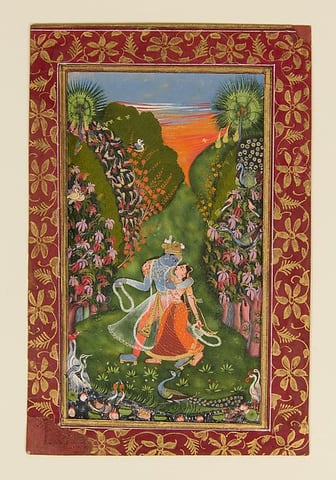
Radha and Krishna Walk in a Flowering Grove (recto); Krishna Fluting (verso), by the Kota Master, ca. 1720 (recto); ca. 1750–75 (verso)
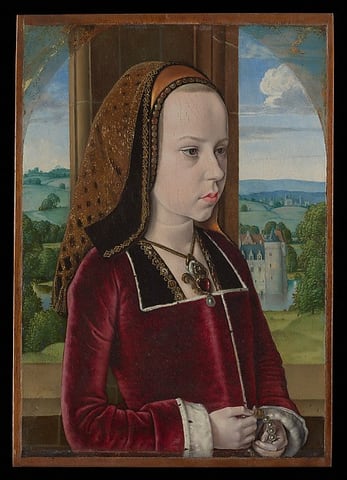
Margaret of Austria, by Jean Hey (called Master of Moulins), ca. 1490
A work made of oil on canvas.
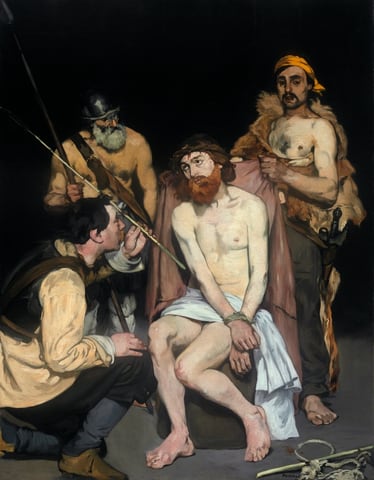
Large, dark painting of Jesus sitting with three standing soldiers.

The works in this room are listed below.

Works in this room

Every one of the collection's paintings, in today's hang.

Section 1, north wall

  1. "King Lear," Act I, Scene I, by Edwin Austin Abbey, 1898
    "King Lear," Act I, Scene IEdwin Austin Abbey, 1898Courtesy of The Metropolitan Museum of Art
  2. Golden sunlight pours across a landscape with three people on horseback and two more people near a flock of sheep, a cow, and a mule in this horizontal painting. The people all have pale, peachy skin. The horizon is about a third of the way up the composition and is lined with towers on distant, hazy, pale yellow hills. Two of the horses are to the right of center, both facing us. The horse on the left is white, and the rider wears an azure-blue tunic and red brimless cap. The other horse is brown with a white blaze, and its rider wears a red tunic and black cap. That second rider points with a whip to the sitting and standing people near the sheep, to the right. Those two people wear brown jackets, and the standing man has a mustache. The seated person rests a long staff over one shoulder. About half of the nine sheep there lie on the ground, and the others stand. The cow dips her head down to the sheep, and the splay-footed donkey has baskets hung to each side. This grouping is in front of a copse of tall trees that nearly reach the top edge of the composition. The third rider is to our left and a short distance away. That dark brown horse gallops to our right. A short distance away, another herdsman along the left edge of the composition wears a red tunic and brown pants, and he rests a long staff on one shoulder. One cow stands and one lies down next to that herdsman. Sunlight rakes across twigs, leafy plants, scrubby growth, and rocks in the foreground, closest to us. Sailboats float on the waterways that stretch horizontally across the painting in the distance, and the land separating those bodies of water is dotted with spires, windmills, towers, and other structures. A dozen dark birds fly high in the sky, which takes up the top two-thirds of the picture. A bank of iridescent yellow and pearly white clouds trundle across the pale blue sky. The artist signed the painting in the lower right corner, “A.cuijp.”
    Horsemen and Herdsmen with CattleAelbert Cuyp, 1655/1660Courtesy National Gallery of Art, Washington

Section 1, south wall

  1. Radha and Krishna Walk in a Flowering Grove (recto); Krishna Fluting (verso), by the Kota Master, ca. 1720 (recto); ca. 1750–75 (verso)
    Radha and Krishna Walk in a Flowering Grove (recto); Krishna Fluting (verso)the Kota Master, ca. 1720 (recto); ca. 1750–75 (verso)Courtesy of The Metropolitan Museum of Art
  2. Margaret of Austria, by Jean Hey (called Master of Moulins), ca. 1490
    Margaret of AustriaJean Hey (called Master of Moulins), ca. 1490Courtesy of The Metropolitan Museum of Art
  3. A work made of oil on canvas.
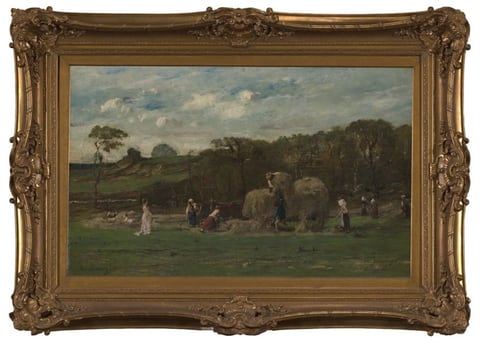
    Loading HayMihály Munkácsy, c. 1886-87Courtesy of the Art Institute of Chicago
  4. Large, dark painting of Jesus sitting with three standing soldiers.
    Jesus Mocked by the SoldiersÉdouard Manet, 1865Courtesy of the Art Institute of Chicago

Section 2, south wall
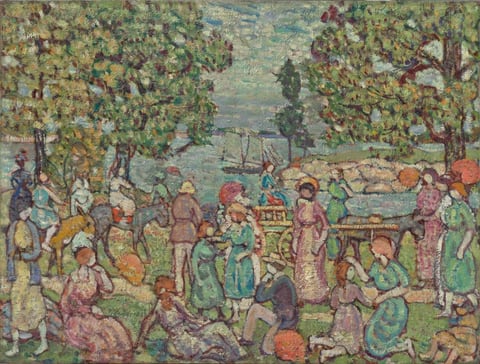
  1. On the Beach, No. 3, by Maurice Prendergast, c. 1915–18
    On the Beach, No. 3Maurice Prendergast, c. 1915–18Courtesy of the Cleveland Museum of Art
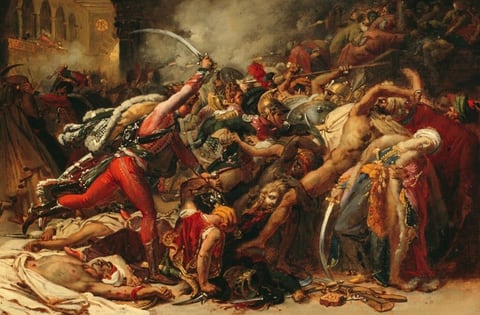
  2. A work made of oil and ink on paper, laid down on canvas.
    Sketch for The Revolt of CairoAnne-Louis Girodet de Roussy-Trioson, c. 1810Courtesy of the Art Institute of Chicago
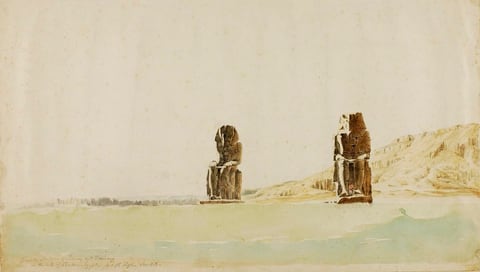
  3. Statues at Memnon, Thebes, by Miner Kilbourne Kellogg, n.d.
    Statues at Memnon, ThebesMiner Kilbourne Kellogg, n.d.Courtesy of the Smithsonian American Art Museum

Section 2, north wall
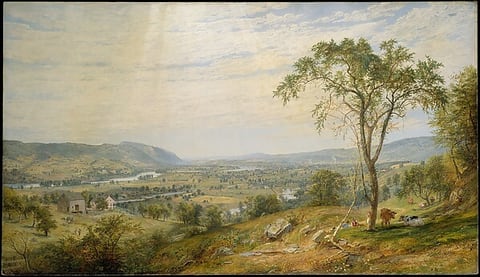
  1. The Valley of Wyoming, by Jasper Francis Cropsey, 1865
    The Valley of WyomingJasper Francis Cropsey, 1865Courtesy of The Metropolitan Museum of Art

  2. Tobias and the Angel, by Francesco Guardi, 1750s
    Tobias and the AngelFrancesco Guardi, 1750sCourtesy of the Cleveland Museum of Art
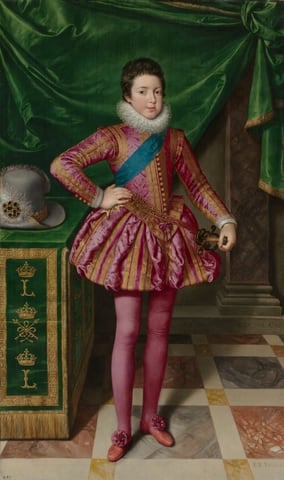
  3. Portrait of King Louis XIII of France, by Frans Pourbus, 1611
    Portrait of King Louis XIII of FranceFrans Pourbus, 1611Courtesy of the Cleveland Museum of Art

Section 3, north wall
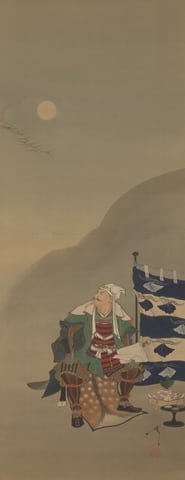
  1. A work made of hanging scroll; ink and colors on silk.
    Frost fills the air and the autumn air is still/lines of returning geese cross the moon in the third hour-Kenshin, from the series Twelve Aspects of the MoonTsukioka Yoshitoshi, 1885/92Courtesy of the Art Institute of Chicago
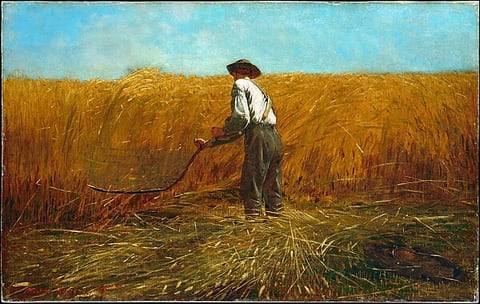
  2. The Veteran in a New Field, by Winslow Homer, 1865
    The Veteran in a New FieldWinslow Homer, 1865Courtesy of The Metropolitan Museum of Art

Section 3, south wall
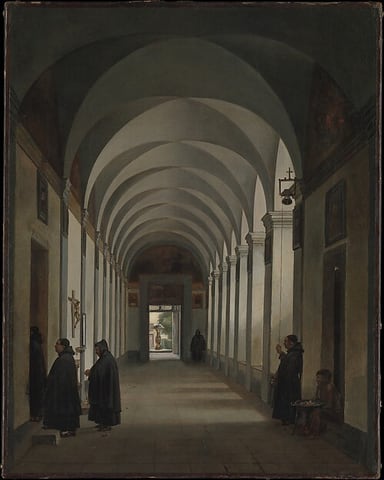
  1. Monks in the Cloister of the Church of Gesù e Maria, Rome, by François Marius Granet, 1808
    Monks in the Cloister of the Church of Gesù e Maria, RomeFrançois Marius Granet, 1808Courtesy of The Metropolitan Museum of Art
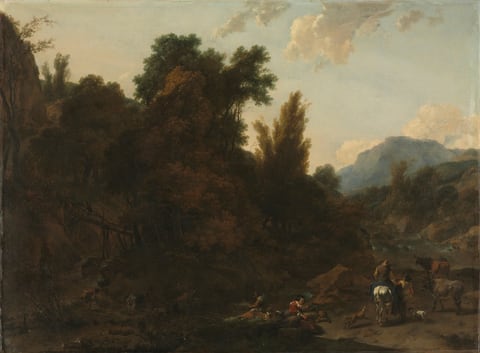
  2. Rush Gatherers, by Nicolaes Berchem, 1657
    Rush GatherersNicolaes Berchem, 1657Courtesy of the Cleveland Museum of Art