Floor plan

Style galleriesThe Northern Renaissance
The Northern Renaissance
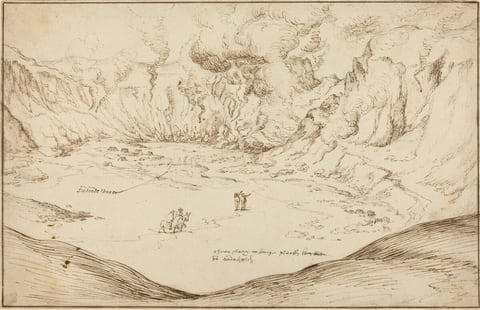
The image shows an elevated view looking down into a crater-like landscape with steep surrounding cliffs. The horizon is high in the image, obscured by rocky formations and rising plumes of smoke. The detailed drawing has a sketch-like quality with fine lines depicting the cliffs and swirling smoke. The color palette is monochromatic, using shades of brown and beige. Two figures and a horse stand on a sloped terrain, providing scale. The crater's basin is visible, with smoke plumes and rock formations in the distance, stretching towards the horizon.
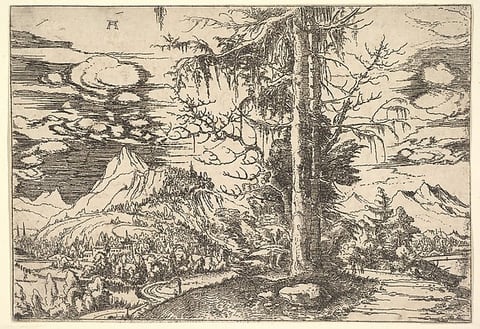
Landscape with a Double Spruce, by Albrecht Altdorfer, ca. 1521–22
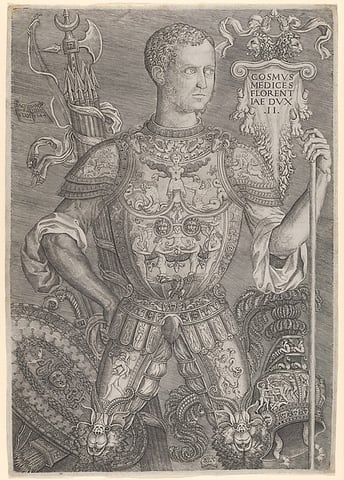
Portrait of Cosimo de' Medici in full armor, his left hand resting on a staff, by Niccolò della Casa, 1544
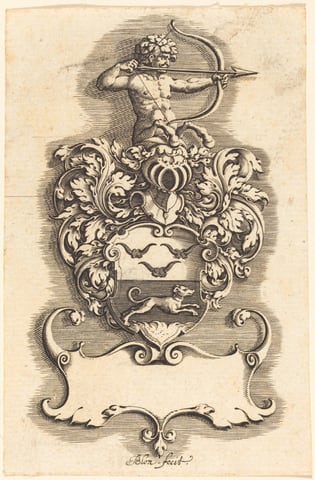
This is a drawing of a heraldic emblem. The image shows a centaur-like figure holding a bow and arrow, with leaves around its head. Below, there is a shield divided into two sections: the upper part shows shapes resembling birds, while the lower part shows a hound-like animal in a running pose. The shield is surrounded by swirling acanthus-like leaves, with additional decorative elements and a blank scroll space below it.
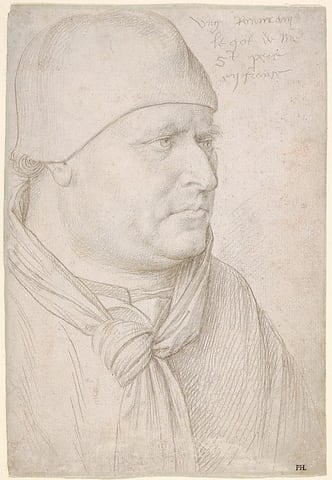
Portrait of Alain de Coëtivy (1407–1474), by Jean Fouquet, ca. 1451–55
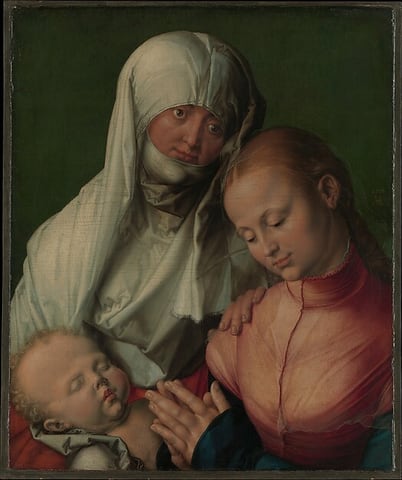
Virgin and Child with Saint Anne, by Albrecht Dürer, probably 1519

The works in this room are listed below.

Works in this room

Dürer's prints, Holbein's portraits and the art of northern Europe in the 1500s.

Section 1, north wall

  1. The image shows an elevated view looking down into a crater-like landscape with steep surrounding cliffs. The horizon is high in the image, obscured by rocky formations and rising plumes of smoke. The detailed drawing has a sketch-like quality with fine lines depicting the cliffs and swirling smoke. The color palette is monochromatic, using shades of brown and beige. Two figures and a horse stand on a sloped terrain, providing scale. The crater's basin is visible, with smoke plumes and rock formations in the distance, stretching towards the horizon.
    Forum Vulcani: The Hot Springs at PozzuoliJoris Hoefnagel, 1578Courtesy National Gallery of Art, Washington
  2. Landscape with a Double Spruce, by Albrecht Altdorfer, ca. 1521–22
    Landscape with a Double SpruceAlbrecht Altdorfer, ca. 1521–22Courtesy of The Metropolitan Museum of Art
  3. Portrait of Cosimo de' Medici in full armor, his left hand resting on a staff, by Niccolò della Casa, 1544
    Portrait of Cosimo de' Medici in full armor, his left hand resting on a staffNiccolò della Casa, 1544Courtesy of The Metropolitan Museum of Art

Section 1, south wall

  1. This is a drawing of a heraldic emblem. The image shows a centaur-like figure holding a bow and arrow, with leaves around its head. Below, there is a shield divided into two sections: the upper part shows shapes resembling birds, while the lower part shows a hound-like animal in a running pose. The shield is surrounded by swirling acanthus-like leaves, with additional decorative elements and a blank scroll space below it.
    CrestMichel Le BlonCourtesy National Gallery of Art, Washington
  2. Portrait of Alain de Coëtivy (1407–1474), by Jean Fouquet, ca. 1451–55
    Portrait of Alain de Coëtivy (1407–1474)Jean Fouquet, ca. 1451–55Courtesy of The Metropolitan Museum of Art
  3. Virgin and Child with Saint Anne, by Albrecht Dürer, probably 1519
    Virgin and Child with Saint AnneAlbrecht Dürer, probably 1519Courtesy of The Metropolitan Museum of Art

Section 2, south wall
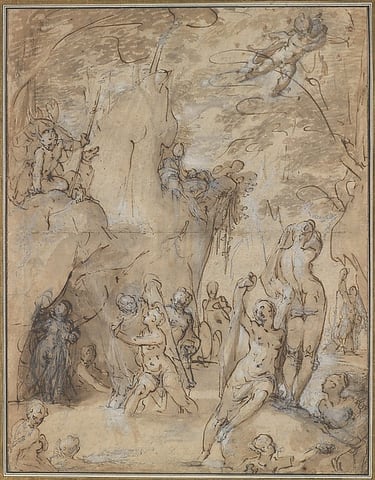
  1. Diana and Actaeon, by Bartholomeus Spranger, ca. 1580–85
    Diana and ActaeonBartholomeus Spranger, ca. 1580–85Courtesy of The Metropolitan Museum of Art
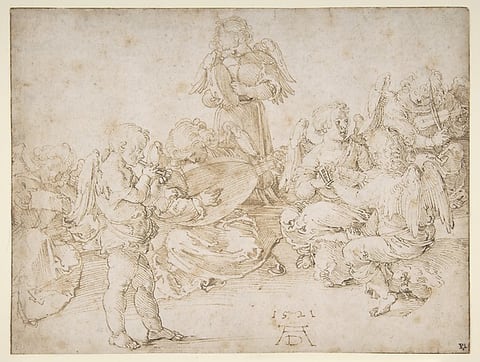
  2. Music-Making Angels, by Albrecht Dürer, 1521
    Music-Making AngelsAlbrecht Dürer, 1521Courtesy of The Metropolitan Museum of Art

Section 2, north wall
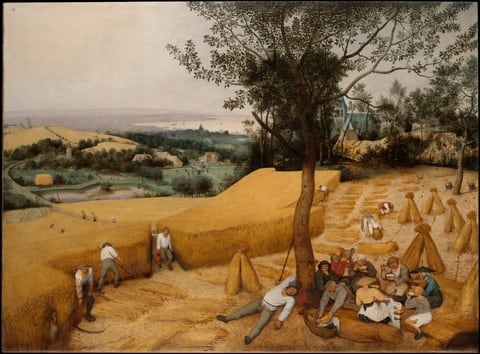
  1. The Harvesters, by Pieter Bruegel, 1565
    The HarvestersPieter Bruegel, 1565Courtesy of The Metropolitan Museum of Art
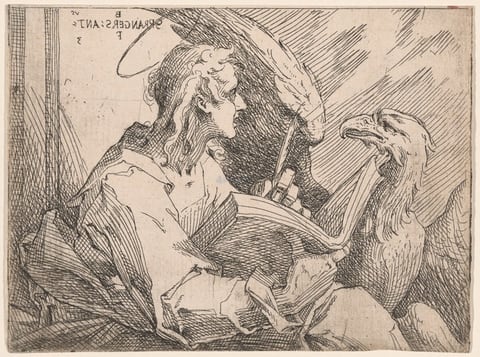
  2. A work made of etching on ivory laid paper.
    St. John the EvangelistBartholomaeus Spranger, c. 1590Courtesy of the Art Institute of Chicago

Section 3, north wall
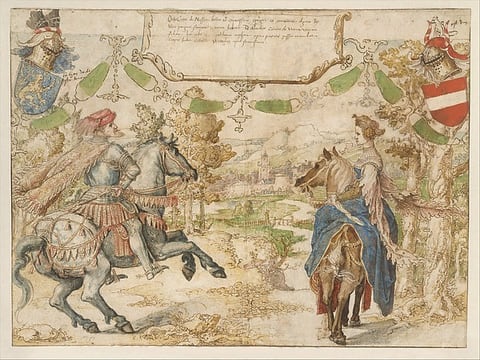
  1. Otto, Count of Nassau and his Wife Adelheid van Vianen, by Bernard van Orley, 1530–35
    Otto, Count of Nassau and his Wife Adelheid van VianenBernard van Orley, 1530–35Courtesy of The Metropolitan Museum of Art
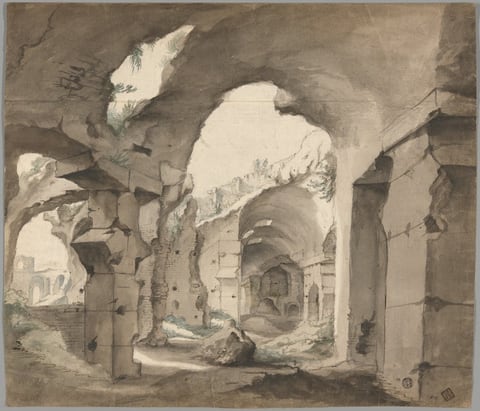
  2. A work made of pen and brown ink and brush and black and green washes, over black chalk, on cream laid paper.
    Interior View of the ColiseumLodewijk Toeput, c. 1580Courtesy of the Art Institute of Chicago

Section 3, south wall
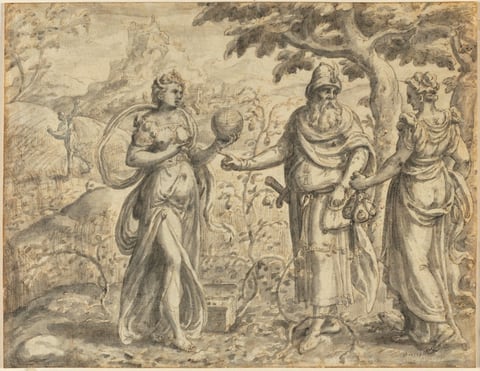
  1. The Seed Received among the Thorns, from the Parable of the Sower, by Gerard P. van Groningen, c. 1573
    The Seed Received among the Thorns, from the Parable of the SowerGerard P. van Groningen, c. 1573Courtesy of the Cleveland Museum of Art
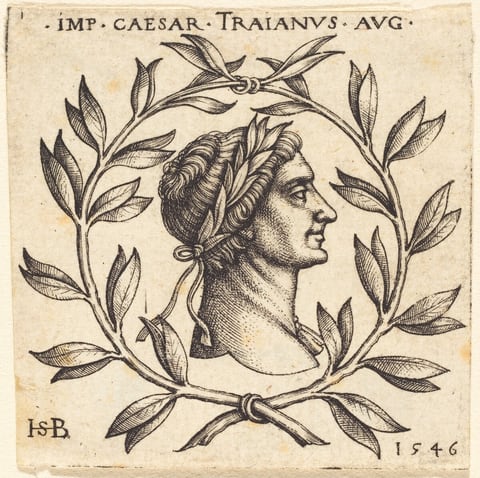
  2. The image shows a profile of a person's head and partial neck within a circular laurel wreath. The individual has distinct facial features, including a prominent nose and chin. The hairstyle is tight, wavy locks pulled back, and a laurel wreath crowns the head. The background is plain, with an inscription reading "IMP. CAESAR. TRAIANVS. AVG." Below the portrait are the initials "ISB" and the year "1546". The overall style resembles a classical engraving, featuring detailed line work and traditional iconography.
    TrajanSebald Beham, 1546Courtesy National Gallery of Art, Washington

Section 4, south wall
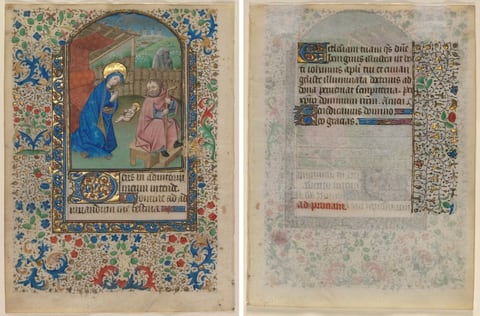
  1. Leaf from a Book of Hours: The Nativity (recto) and Text (verso), c. 1430
    Leaf from a Book of Hours: The Nativity (recto) and Text (verso)Unrecorded French maker, c. 1430Courtesy of the Cleveland Museum of Art
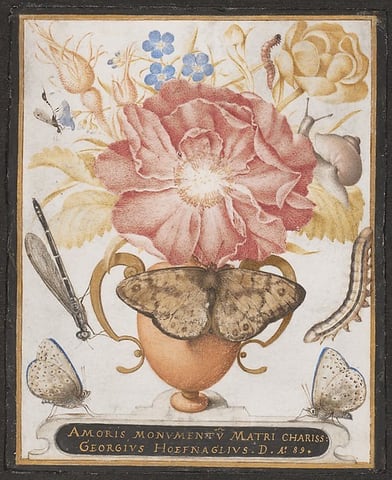
  2. Still Life with Flowers, a Snail and Insects, by Joris Hoefnagel, 1589
    Still Life with Flowers, a Snail and InsectsJoris Hoefnagel, 1589Courtesy of The Metropolitan Museum of Art