Mughal and Rajput painting
Works in this room
Jewel-bright painting from the Mughal court and the Rajput and Pahari kingdoms of India.
First room, north wall
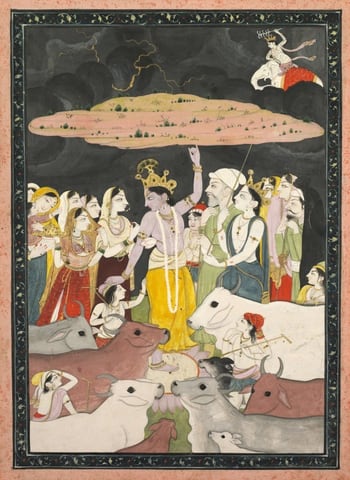
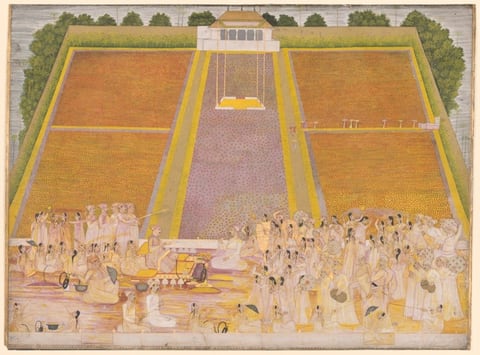
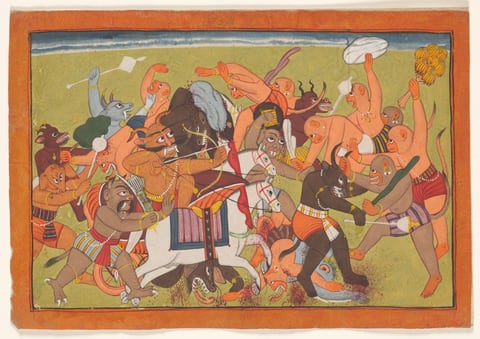
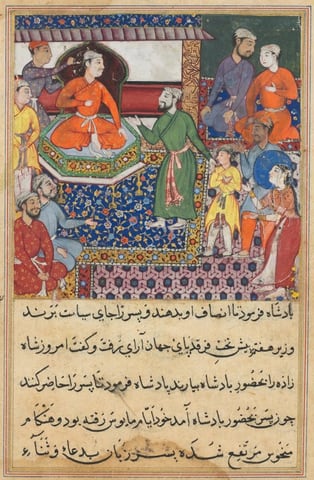
Krishna Lifting Mount GovardhanUnrecorded Indian maker, c. 1780–90Courtesy of the Cleveland Museum of Art Holi Festival in a Walled Garden with CelebrantsUnrecorded Indian maker, c. 1764Courtesy of the Art Institute of Chicago Battle between monkeys and demons, from the “Shangri” RamayanaUnrecorded Indian maker, c. 1700Courtesy of the Cleveland Museum of Art The handmaiden again pleads for the death of the prince, from a Tuti-nama (Tales of a Parrot): Eighth NightLalu, c. 1560Courtesy of the Cleveland Museum of Art
First room, south wall
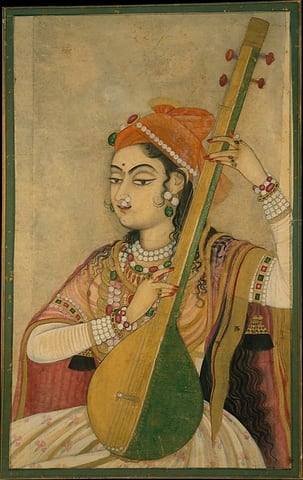
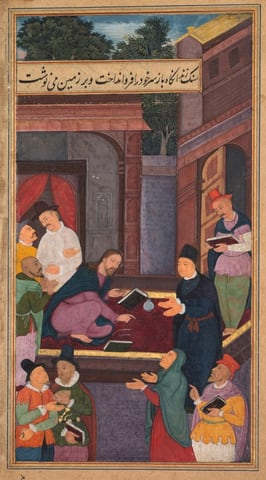
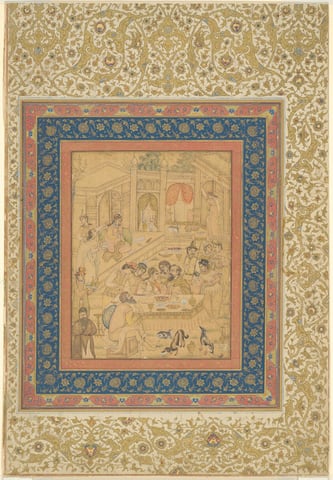
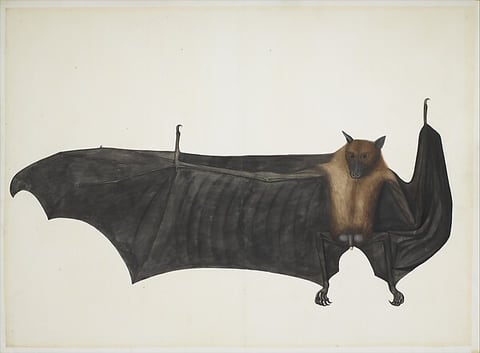
A Lady Playing the TanpuraUnrecorded Indian maker, ca. 1735Courtesy of The Metropolitan Museum of Art Jesus writes on the ground (folio 130 verso), from a Mirror of Holiness (Mir’at al-quds) of Father Jerome XavierUnrecorded Indian maker, 1602–4Courtesy of the Cleveland Museum of Art European Banquet Scene (or The Marriage Feast at Cana?)Mughal, Mughal period, c. 1600Courtesy of the Art Institute of Chicago Great Indian Fruit BatBhawani Das, ca. 1777–82Courtesy of The Metropolitan Museum of Art
Second room, south wall
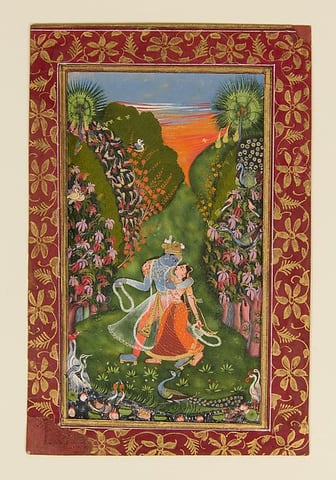
Radha and Krishna Walk in a Flowering Grove (recto); Krishna Fluting (verso)the Kota Master, ca. 1720 (recto); ca. 1750–75 (verso)Courtesy of The Metropolitan Museum of Art 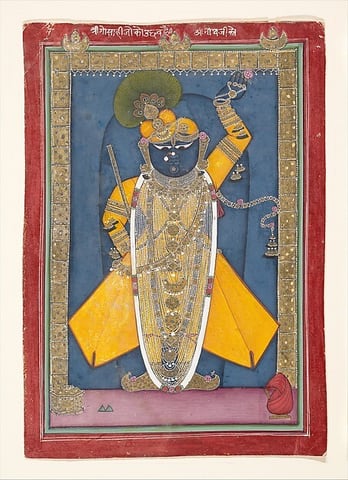
Krishna in the Form of Shri NathjiUnrecorded Indian maker, ca. 1840Courtesy of The Metropolitan Museum of Art 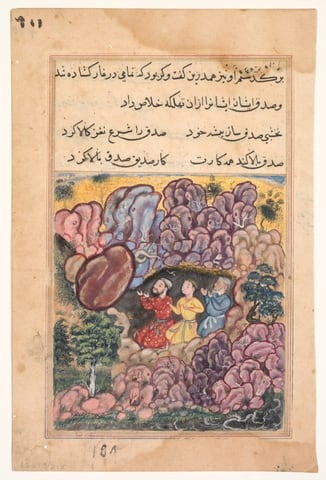
The tale of the three men trapped in a cave by a rolling boulder, from a Tuti-nama (Tales of a Parrot): Thirty-second NightBihzad, c. 1560Courtesy of the Cleveland Museum of Art 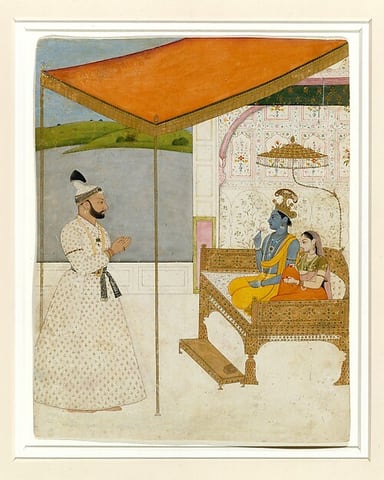
Raja Balwant Singh’s Vision of Krishna and RadhaNainsukh, ca. 1745–50Courtesy of The Metropolitan Museum of Art
Second room, north wall
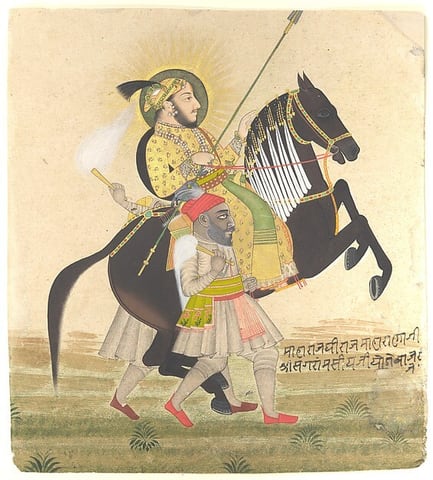
Maharana Sangram Singh Riding a Prize StallionStipple Master, ca. 1712Courtesy of The Metropolitan Museum of Art 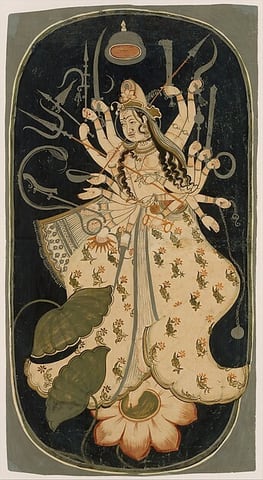
Mahadevi, the Great GoddessUnrecorded Indian maker, ca. 1725Courtesy of The Metropolitan Museum of Art 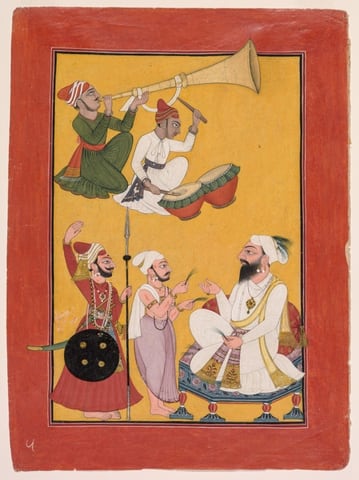
Celebrations of Krishna's Birth, from a Bhagavata PuranaUnrecorded Indian maker, c. 1725–30Courtesy of the Cleveland Museum of Art 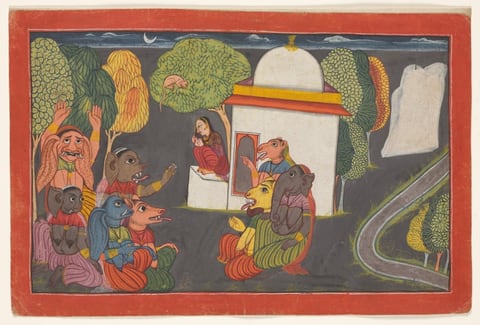
Hanuman spies Sita in the Ashoka Grove, from the “Shangri” RamayanaUnrecorded Indian maker, c. 1700–25Courtesy of the Cleveland Museum of Art