Floor plan

Style galleriesThe Etching Revival

The Etching Revival

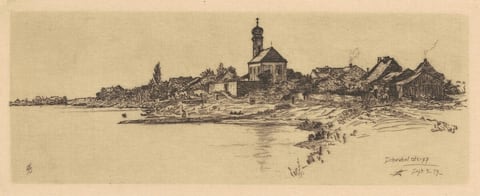
The image shows a village scene viewed from a low vantage point near a water's edge. A row of small, closely packed buildings and a church with an onion-shaped dome are prominently featured. There are gentle slopes leading towards the structures. The image uses fine, detailed line work to depict texture and depth in the buildings and natural landscape. The lines are delicate and varied, creating a sense of detail and softness. The color palette is monochromatic, with dark ink on a pale background, resulting in a classic and timeless feel.
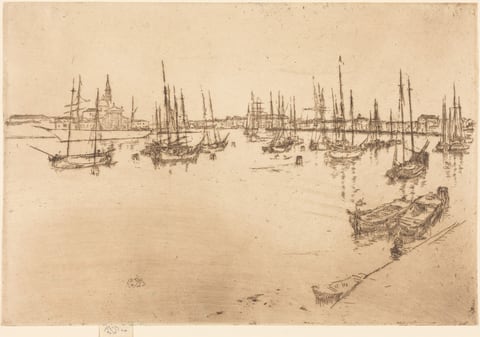
The image displays a harbor filled with boats and ships. The perspective is slightly elevated, likely from a dock, with a partially visible boat and dock at the forefront. The horizon is in the upper third of the image, showing a distant cityscape with spires and structures. The brushwork is delicate, with fine, linear strokes typical of etching. The color palette is monochromatic, sepia tones creating a vintage and serene mood. The ships with tall masts populate the water, with reflections giving a sense of stillness. In the distance, faint impressions of buildings line the harbor, blending into the horizon.
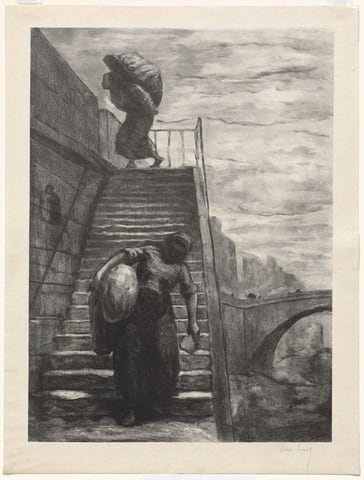
Washerwomen Descending a Quai Staircase, by Alexandre Lunois, 1888
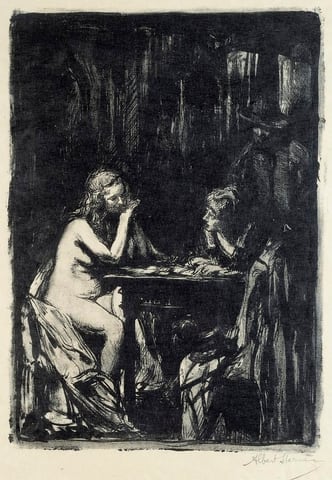
The Stranger, by Albert Sterner, 1916
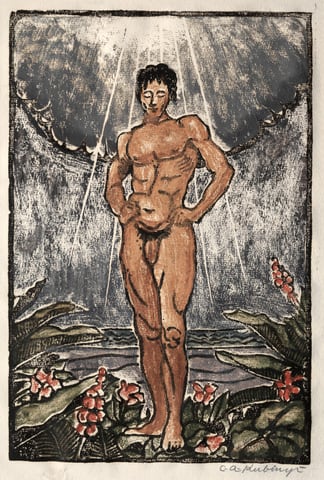
The Creation, by Kálmán Kubinyi, before 1927

The works in this room are listed below.

Works in this room

Artists who took up the etching needle again, from Whistler to the Paris printmakers.

Section 1, north wall

  1. The image shows a village scene viewed from a low vantage point near a water's edge. A row of small, closely packed buildings and a church with an onion-shaped dome are prominently featured. There are gentle slopes leading towards the structures. The image uses fine, detailed line work to depict texture and depth in the buildings and natural landscape. The lines are delicate and varied, creating a sense of detail and softness. The color palette is monochromatic, with dark ink on a pale background, resulting in a classic and timeless feel.
    SchwabelweissOtto Henry Bacher, 1879Courtesy National Gallery of Art, Washington
  2. The image displays a harbor filled with boats and ships. The perspective is slightly elevated, likely from a dock, with a partially visible boat and dock at the forefront. The horizon is in the upper third of the image, showing a distant cityscape with spires and structures. The brushwork is delicate, with fine, linear strokes typical of etching. The color palette is monochromatic, sepia tones creating a vintage and serene mood. The ships with tall masts populate the water, with reflections giving a sense of stillness. In the distance, faint impressions of buildings line the harbor, blending into the horizon.
    San GiorgioJames McNeill Whistler, 1880Courtesy National Gallery of Art, Washington

Section 1, south wall

  1. Washerwomen Descending a Quai Staircase, by Alexandre Lunois, 1888
    Washerwomen Descending a Quai StaircaseAlexandre Lunois, 1888Courtesy of the Cleveland Museum of Art
  2. The Stranger, by Albert Sterner, 1916
    The StrangerAlbert Sterner, 1916Courtesy of the Smithsonian American Art Museum
  3. The Creation, by Kálmán Kubinyi, before 1927
    The CreationKálmán Kubinyi, before 1927Courtesy of the Cleveland Museum of Art

Section 2, south wall
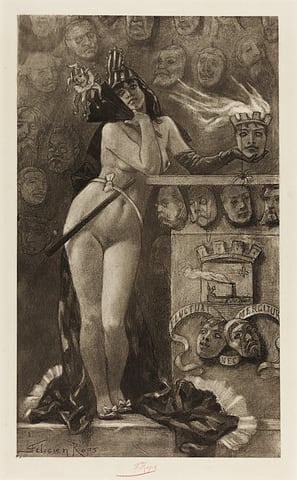
  1. A work made of photogravure in dark brown retouched with soft varnish (vernis mou), roulette and blue handcoloring on thick cream wove paper.
    Modern MasksFélicien Rops, 1889Courtesy of the Art Institute of Chicago
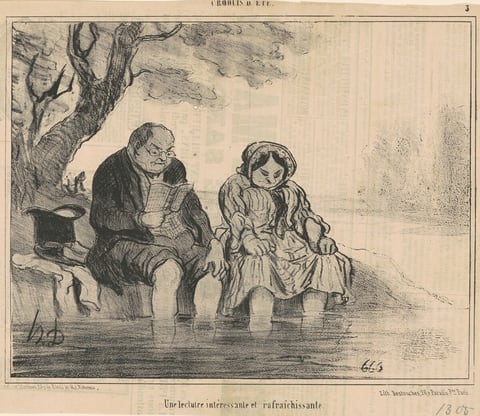
  2. The image shows two individuals seated outdoors near a body of water with their feet submerged. Both individuals are seen from head to toe. The person on the left is seated with a slightly hunched posture, reading a document or a book. They have a balding head, wear glasses, a dark suit with the coat draped over their knees, and a top hat placed on the ground. The individual on the right is sitting upright with a scarf over their hair. They wear a long dress with a shawl, and their hands rest on their lap. The background features a bare tree and a rough, sketched environment. The sky and landscape are depicted in shades of light and dark.
    Une lecture intéressante et rafraichissanteHonoré Daumier, 1854Courtesy National Gallery of Art, Washington

Section 2, north wall
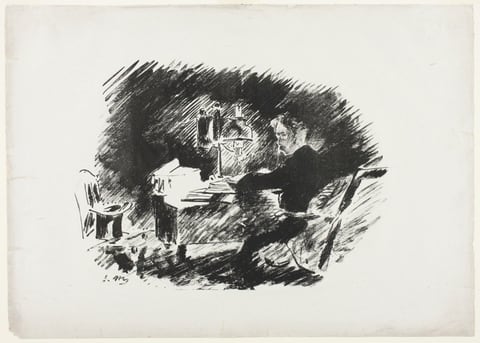
  1. A work made of transfer lithograph in black on gray china paper.
    Under the Lamp ("Once upon a midnight dreary..."), from The Raven (Le Corbeau)Édouard Manet, 1875Courtesy of the Art Institute of Chicago
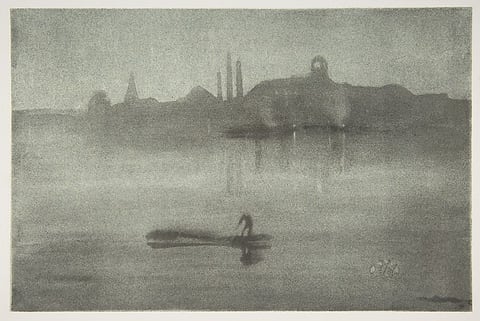
  2. Nocturne (Nocturne: The Thames at Battersea), by James McNeill Whistler, 1878
    Nocturne (Nocturne: The Thames at Battersea)James McNeill Whistler, 1878Courtesy of The Metropolitan Museum of Art

Section 3, north wall
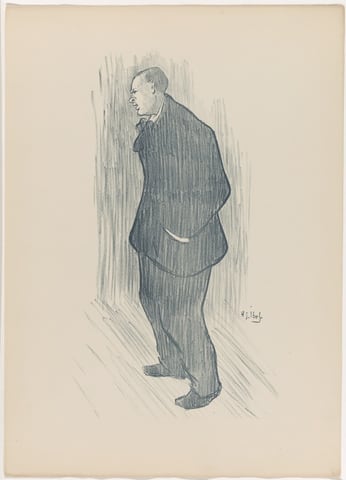
  1. A work made of lithograph in dark green on cream wove paper.
    Mévisto, from Le Café-ConcertHenri-Gabriel Ibels, 1893Courtesy of the Art Institute of Chicago
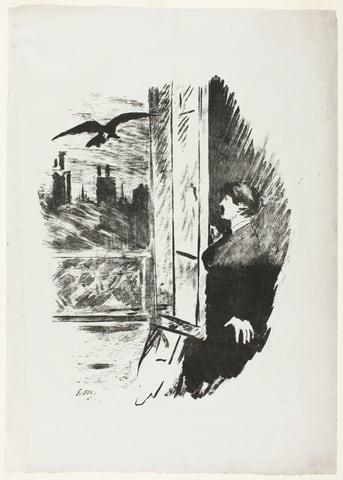
  2. A work made of transfer lithograph in black on gray china paper.
    At the window ("Open here I flung the shutter..."), from The Raven (Le Corbeau)Édouard Manet, 1875Courtesy of the Art Institute of Chicago
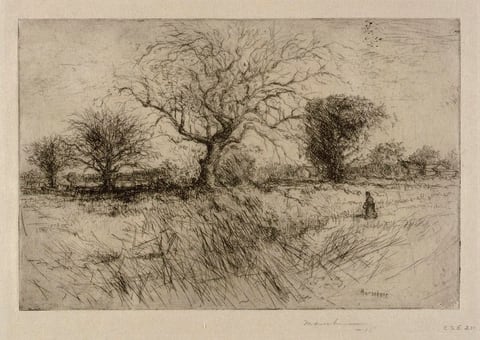
  3. The Old Orchard, by Arthur A. Marschner, 1915
    The Old OrchardArthur A. Marschner, 1915Courtesy of the Smithsonian American Art Museum

Section 3, south wall
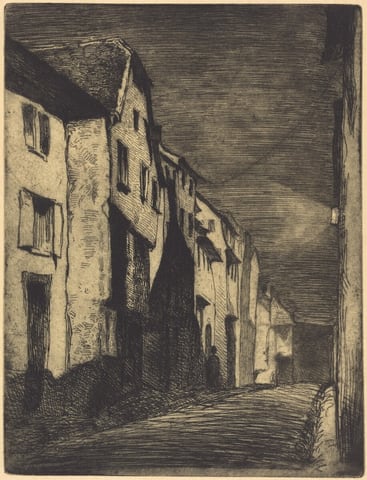
  1. The image shows a street scene from a close perspective down a narrow alleyway. The horizon is not visible, with buildings on both sides. The style features detailed etching with fine lines and shading for depth and texture. The color palette is monochromatic with black, gray, and off-white tones. The houses have worn facades, and there is a distant figure. The sky is dark and overcast, enhancing the shadow-filled scene.
    Street in SaverneJames McNeill Whistler, 1858Courtesy National Gallery of Art, Washington
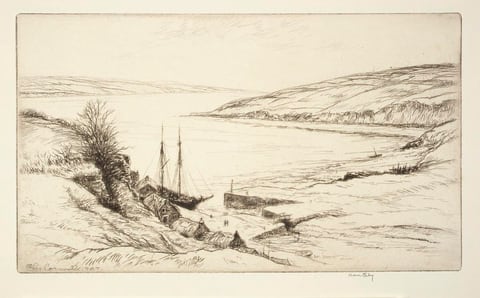
  2. Cornwall, by Kerr Eby, 1927
    CornwallKerr Eby, 1927Courtesy of the Smithsonian American Art Museum

Section 4, south wall
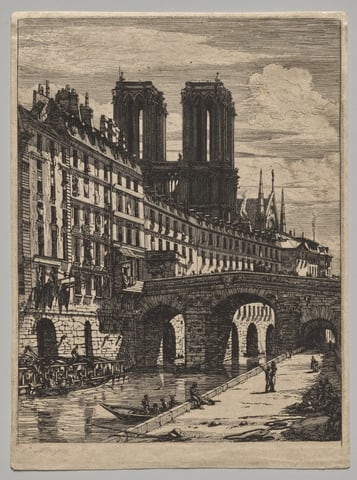
  1. The Petit Pont, by Charles Meryon, 1850
    The Petit PontCharles Meryon, 1850Courtesy of the Cleveland Museum of Art
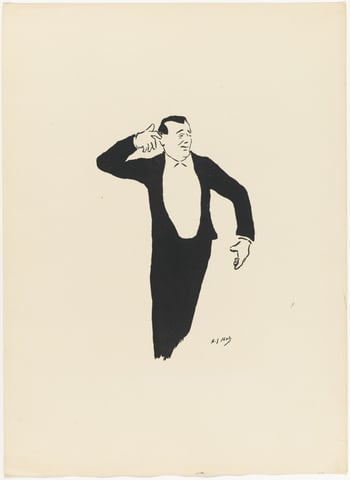
  2. A work made of lithograph on ivory wove paper.
    Paulus, from Le Café-ConcertHenri-Gabriel Ibels, 1893Courtesy of the Art Institute of Chicago