Floor plan

Style galleriesThe Etching Revival, room 2
The Etching Revival, room 2
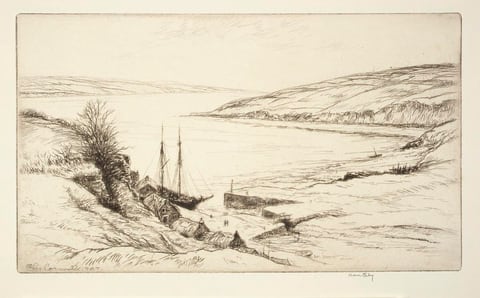
Cornwall, by Kerr Eby, 1927
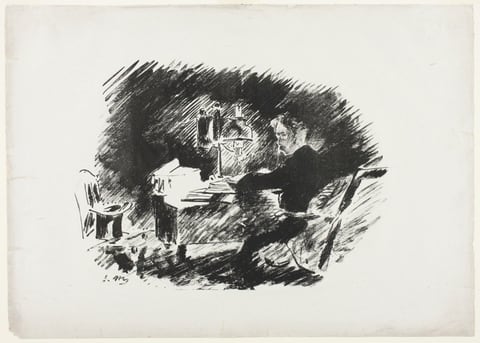
A work made of transfer lithograph in black on gray china paper.
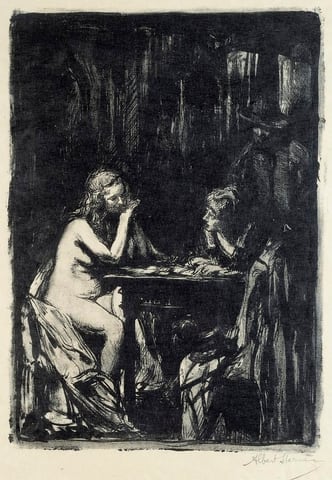
The Stranger, by Albert Sterner, 1916
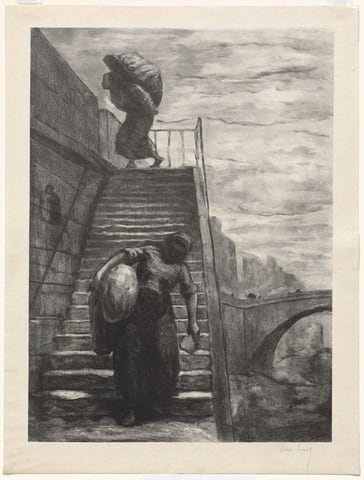
Washerwomen Descending a Quai Staircase, by Alexandre Lunois, 1888
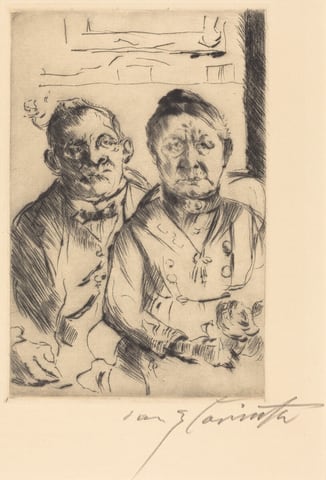
The image depicts two individuals from the waist up. The person on the left has a round face and is slightly behind the person on the right who has a slightly elongated face. Both individuals appear to be seated and have short, neatly combed hair. They have neutral facial expressions and their features are indistinct. The person on the left wears a suit with a bow tie, while the person on the right is dressed in clothing with detailed patterns and holds a flower-like object in their left hand. The background shows simple line sketches that suggest an interior setting.

The works in this room are listed below.

Works in this room

Artists who took up the etching needle again, from Whistler to the Paris printmakers.

Section 1, north wall

  1. Cornwall, by Kerr Eby, 1927
    CornwallKerr Eby, 1927Courtesy of the Smithsonian American Art Museum
  2. A work made of transfer lithograph in black on gray china paper.
    Under the Lamp ("Once upon a midnight dreary..."), from The Raven (Le Corbeau)Édouard Manet, 1875Courtesy of the Art Institute of Chicago
  3. The Stranger, by Albert Sterner, 1916
    The StrangerAlbert Sterner, 1916Courtesy of the Smithsonian American Art Museum

Section 1, south wall

  1. Washerwomen Descending a Quai Staircase, by Alexandre Lunois, 1888
    Washerwomen Descending a Quai StaircaseAlexandre Lunois, 1888Courtesy of the Cleveland Museum of Art
  2. The image depicts two individuals from the waist up. The person on the left has a round face and is slightly behind the person on the right who has a slightly elongated face. Both individuals appear to be seated and have short, neatly combed hair. They have neutral facial expressions and their features are indistinct. The person on the left wears a suit with a bow tie, while the person on the right is dressed in clothing with detailed patterns and holds a flower-like object in their left hand. The background shows simple line sketches that suggest an interior setting.
    Ostpreussisches Ehepaar (Couple from East Prussia)Lovis Corinth, 1916Courtesy National Gallery of Art, Washington

Section 2, south wall
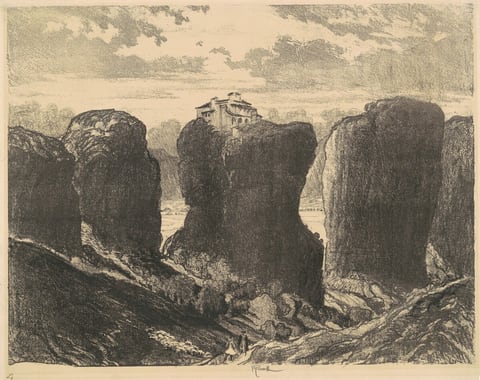
  1. The image depicts a landscape with towering rock formations dominating the scene. The ground is rugged and textured, leading the eye towards the rock pillars in the center. A structure or building is perched atop one of these rocks. The background shows the horizon above the structure, with clouds and sky stretching out beyond. The artwork features detailed brushstrokes adding texture to the rocks. The color palette is monochromatic with varying shades of charcoal or ink, emphasizing the contrast between the rocks and the sky.
    The Cliffs of the TrinityJoseph Pennell, 1913Courtesy National Gallery of Art, Washington
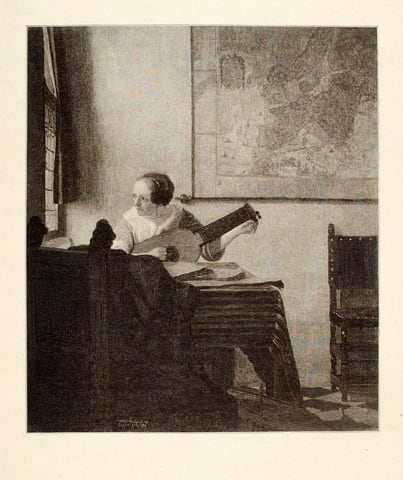
  2. Lady with the Lute, by Henry Wolf, 1909
    Lady with the LuteHenry Wolf, 1909Courtesy of the Smithsonian American Art Museum
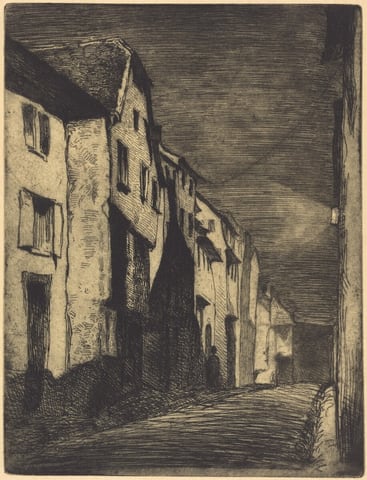
  3. The image shows a street scene from a close perspective down a narrow alleyway. The horizon is not visible, with buildings on both sides. The style features detailed etching with fine lines and shading for depth and texture. The color palette is monochromatic with black, gray, and off-white tones. The houses have worn facades, and there is a distant figure. The sky is dark and overcast, enhancing the shadow-filled scene.
    Street in SaverneJames McNeill Whistler, 1858Courtesy National Gallery of Art, Washington

Section 2, north wall
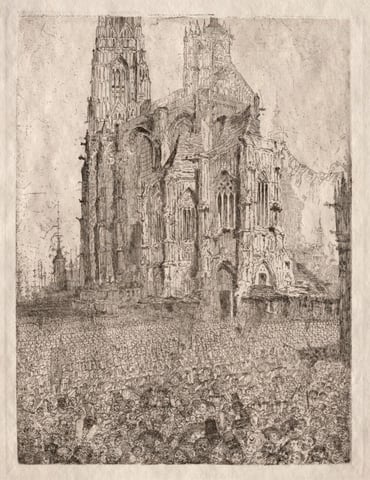
  1. The Cathedral, by James Ensor, 1886
    The CathedralJames Ensor, 1886Courtesy of the Cleveland Museum of Art
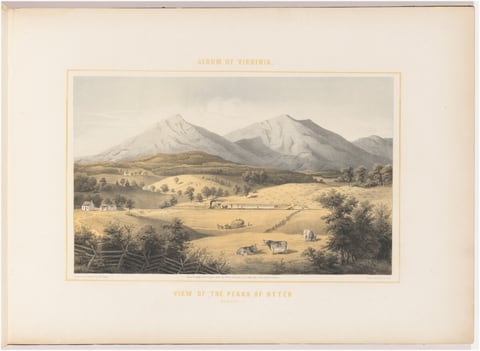
  2. The image shows a landscape with a valley leading towards two mountain peaks known as the Peaks of Otter. The horizon is low, with the mountains dominating the scene. The brushwork is smooth and delicate, and the color palette consists of muted earth tones, greens, and soft blues. In the foreground, there are cattle grazing in a field with a wooden fence, and a couple of houses among trees to the left. Further back, there are open fields with horses and agricultural activities, leading to a dense tree line at the base of the mountains.
    View of the Peaks of OtterWoldemar Rau, 1858Courtesy National Gallery of Art, Washington
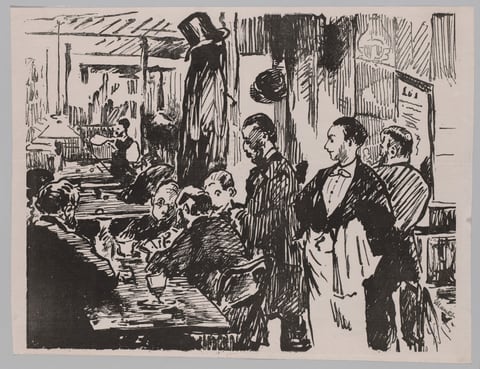
  3. At the Café, by Édouard Manet, 1874
    At the CaféÉdouard Manet, 1874Courtesy of the Cleveland Museum of Art

Section 3, north wall
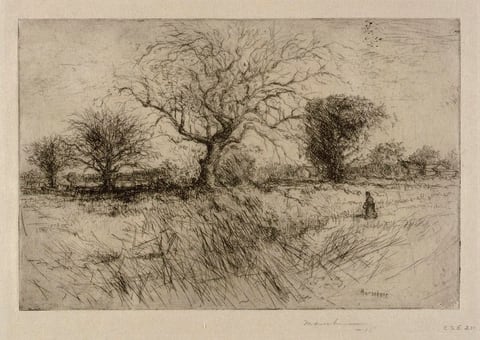
  1. The Old Orchard, by Arthur A. Marschner, 1915
    The Old OrchardArthur A. Marschner, 1915Courtesy of the Smithsonian American Art Museum
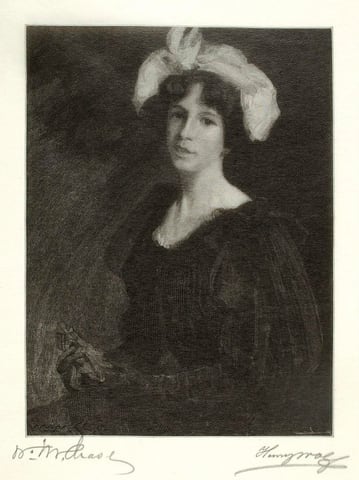
  2. Portrait of Mrs. C--, by Henry Wolf, 1894
    Portrait of Mrs. C--Henry Wolf, 1894Courtesy of the Smithsonian American Art Museum
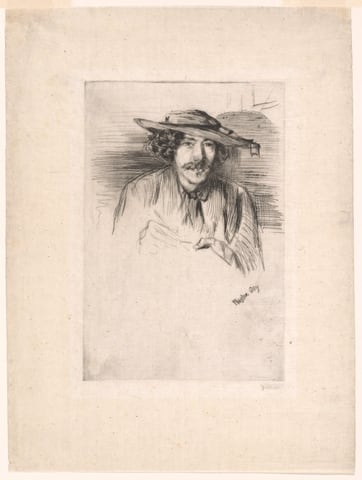
  3. A work made of drypoint with light plate tone on thin ivory japanese paper.
    Whistler with a HatJames McNeill Whistler, 1859Courtesy of the Art Institute of Chicago

Section 3, south wall
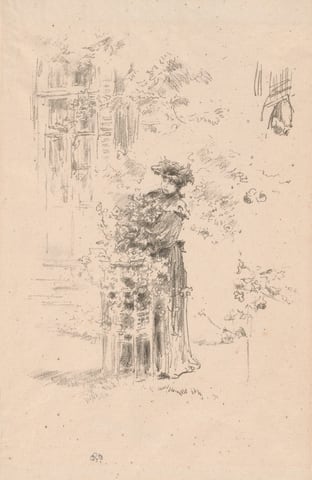
  1. A work made of transfer lithograph in black, with stumping and scraping, on cream laid paper, laid down on a heavy backing sheet.
    La Belle JardinièreJames McNeill Whistler, 1894Courtesy of the Art Institute of Chicago
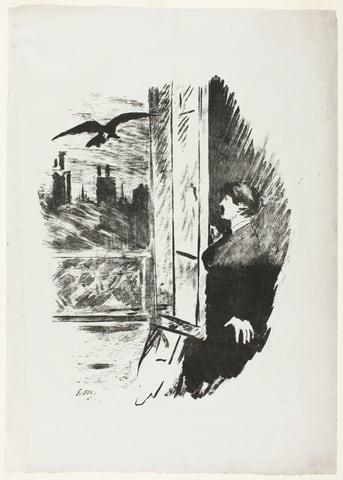
  2. A work made of transfer lithograph in black on gray china paper.
    At the window ("Open here I flung the shutter..."), from The Raven (Le Corbeau)Édouard Manet, 1875Courtesy of the Art Institute of Chicago