Floor plan

Style galleriesEarly modernism

Early modernism

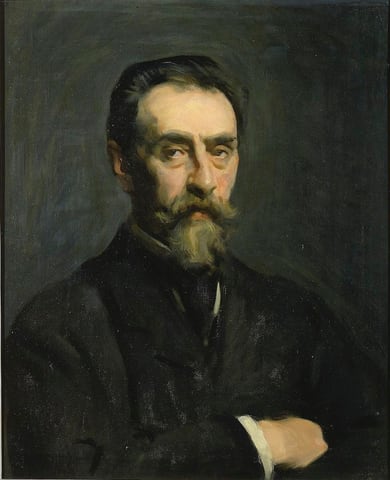
Portrait of William E. Norton, by William Penhallow Henderson, 1901
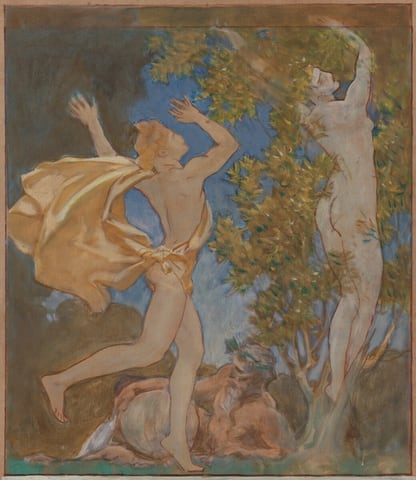
This is a painting showing two people in nature. The person on the left appears to be running towards the right, with one leg in the air and their arms outstretched. They have tan, golden-toned skin, blond hair, and golden fabric draped loosely around them, billowing backward as they run. On the right is a pale person standing upright in a tree, their arms outstretched. They appear intertwined with the tree, with their feet nestled in the light brown trunk and their head and hands covered in olive-green leaves. The background features indistinct brown shapes against a clear blue sky.
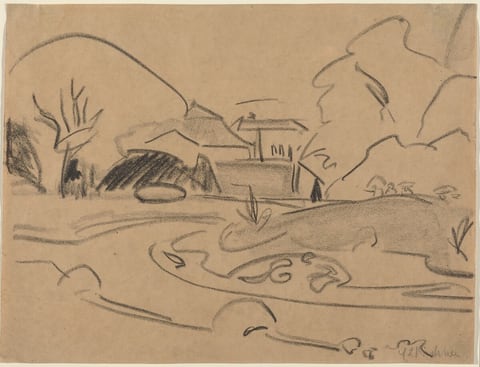
The image shows a landscape drawing with buildings, trees, and a winding path or water feature. The drawing is done in black charcoal on brownish background paper, creating a monochromatic color palette.
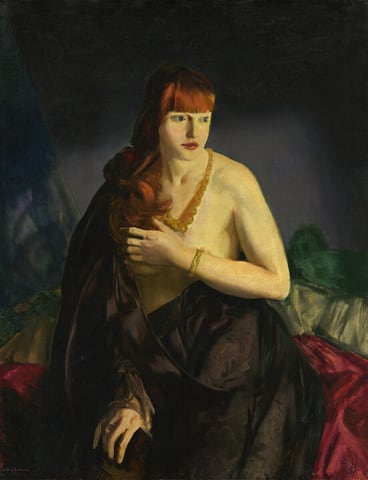
Shown from the knees up, a woman sits partially covered by a black cloth as she holds one forearm across her bare breasts in this vertical painting. The woman has pale, yellow-tinged skin and long, copper-red hair and bangs. Her body faces us, but she turns her head to look off to our right with large blue, wide-set eyes. Her cheeks are flushed, and her full, dark pink lips are closed. A strand of gradually larger amber-yellow beads hangs around her neck, and she wears a gold-colored bracelet on the arm braced across her chest, her left arm, to our right. Glimpses of pale pink nipples are visible. The voluminous black cloth drapes down over one shoulder and across her hips. She wears a ring on the other hand, which emerges from the cloth to rest on that knee. Piles of garnet red, peridot green, and forest green are piled up to chest height behind her, and the background is nickel gray around her body and darkens to black around the top and side edges. The scene is loosely painted, especially in the fabric and background. The artist signed the canvas in the lower left corner, “Geo. Bellows E.S.B.”
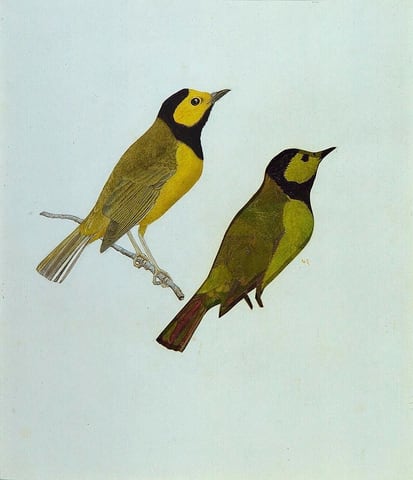
Hooded Warblers, study for book Concealing Coloration in the Animal Kingdom, by Gladys Thayer, ca. 1900-1909
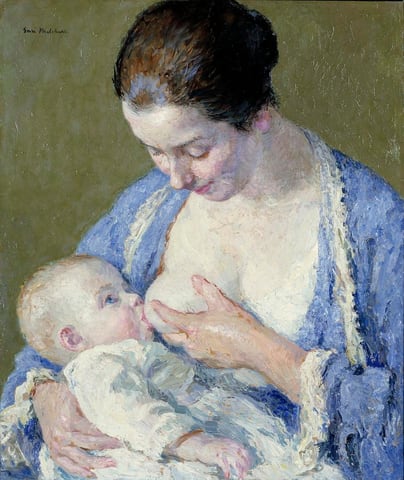
Mother and Child, by Gari Melchers, ca. 1920

The works in this room are listed below.

Works in this room

The first decades of the twentieth century, when artists broke with the academy.

First room, north wall

  1. Portrait of William E. Norton, by William Penhallow Henderson, 1901
    Portrait of William E. NortonWilliam Penhallow Henderson, 1901Courtesy of the Smithsonian American Art Museum
  2. This is a painting showing two people in nature. The person on the left appears to be running towards the right, with one leg in the air and their arms outstretched. They have tan, golden-toned skin, blond hair, and golden fabric draped loosely around them, billowing backward as they run. On the right is a pale person standing upright in a tree, their arms outstretched. They appear intertwined with the tree, with their feet nestled in the light brown trunk and their head and hands covered in olive-green leaves. The background features indistinct brown shapes against a clear blue sky.
    Apollo and DaphneJohn Singer Sargent, c. 1916/1919Courtesy National Gallery of Art, Washington
  3. The image shows a landscape drawing with buildings, trees, and a winding path or water feature. The drawing is done in black charcoal on brownish background paper, creating a monochromatic color palette.
    Footpaths and Pavilion in the Dresden Grosser GartenErnst Ludwig Kirchner, c. 1909Courtesy National Gallery of Art, Washington

First room, south wall

  1. Shown from the knees up, a woman sits partially covered by a black cloth as she holds one forearm across her bare breasts in this vertical painting. The woman has pale, yellow-tinged skin and long, copper-red hair and bangs. Her body faces us, but she turns her head to look off to our right with large blue, wide-set eyes. Her cheeks are flushed, and her full, dark pink lips are closed. A strand of gradually larger amber-yellow beads hangs around her neck, and she wears a gold-colored bracelet on the arm braced across her chest, her left arm, to our right. Glimpses of pale pink nipples are visible. The voluminous black cloth drapes down over one shoulder and across her hips. She wears a ring on the other hand, which emerges from the cloth to rest on that knee. Piles of garnet red, peridot green, and forest green are piled up to chest height behind her, and the background is nickel gray around her body and darkens to black around the top and side edges. The scene is loosely painted, especially in the fabric and background. The artist signed the canvas in the lower left corner, “Geo. Bellows E.S.B.”
    Nude with Red HairGeorge Bellows, 1920Courtesy National Gallery of Art, Washington
  2. Hooded Warblers, study for book Concealing Coloration in the Animal Kingdom, by Gladys Thayer, ca. 1900-1909
    Hooded Warblers, study for book Concealing Coloration in the Animal KingdomGladys Thayer, ca. 1900-1909Courtesy of the Smithsonian American Art Museum
  3. Mother and Child, by Gari Melchers, ca. 1920
    Mother and ChildGari Melchers, ca. 1920Courtesy of the Smithsonian American Art Museum

Second room, south wall
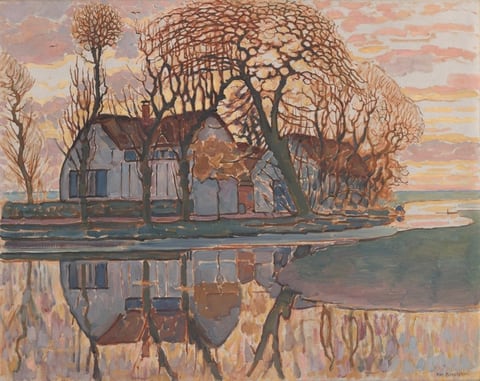
  1. A work made of oil on canvas.
    Farm near DuivendrechtPiet Mondrian, c. 1916Courtesy of the Art Institute of Chicago
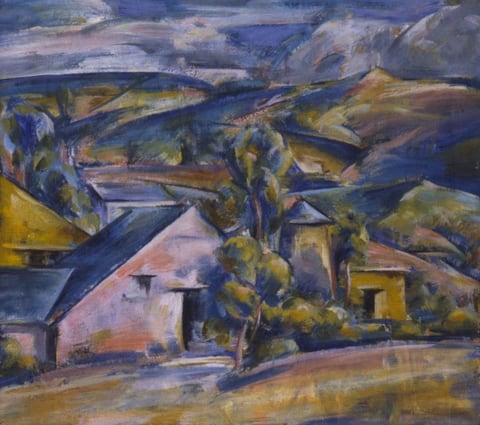
  2. The Hills, by Preston Dickinson, ca. 1919
    The HillsPreston Dickinson, ca. 1919Courtesy of the Smithsonian American Art Museum
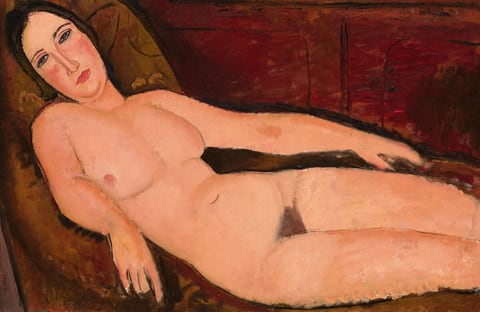
  3. A nude woman lying across a brown divan in front of a russet-red wall is loosely painted with areas of mottled color in this horizontal composition. The woman fills the wide canvas so her head is angled into the upper left corner, and her legs extend off the right edge of the composition below the knees. Her long, oval face rests back against the couch, and she looks at us with slitted, almond-shaped eyes under dark, shallowly arched brows. She has a long, straight nose, flushed cheeks, a double chin, and her pink lips are closed. Her breasts fall to each side so we only see the pink nipple closer to us. She has a rounded belly and a triangle of brown hair at her groin. Her arms rest alongside her body. The couch has a low, upholstered arms sweeping down the sides. Black lines in the red wall behind the couch suggest molding or cabinetry. The artist signed the painting in the upper right corner, “modigliani.”
    Nude on a DivanAmedeo Modigliani, 1918Courtesy National Gallery of Art, Washington

Second room, north wall
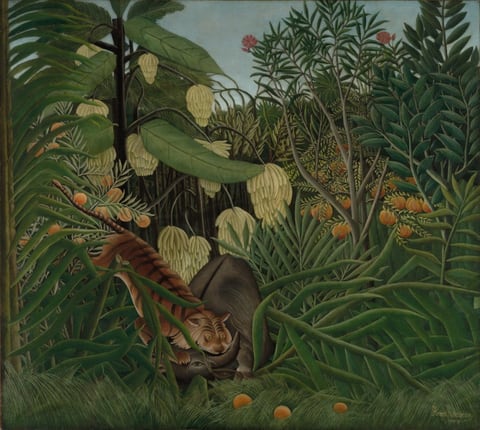
  1. Fight Between a Tiger and a Buffalo, by Henri Rousseau, 1908
    Fight Between a Tiger and a BuffaloHenri Rousseau, 1908Courtesy of the Cleveland Museum of Art
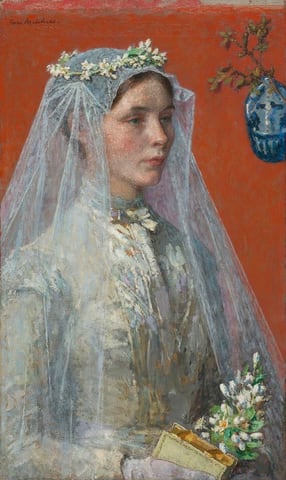
  2. The Bride, by Gari Melchers, ca. 1907
    The BrideGari Melchers, ca. 1907Courtesy of the Smithsonian American Art Museum
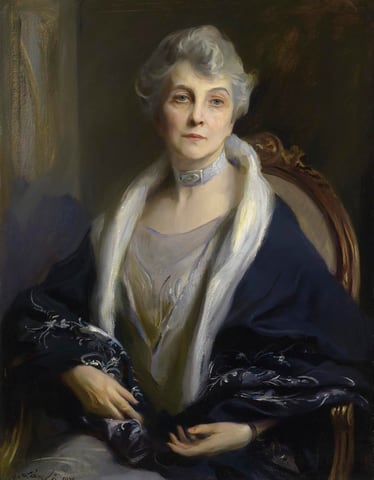
  3. Artist: Philip Alexius de László, Sitter: Clara Margaret Cook Kellogg, Current owner: National Portrait Gallery, Smithsonian Institution
    Clara Cook KelloggPhilip Alexius de László, 1929Courtesy of the National Portrait Gallery, Smithsonian Institution

Third room, north wall
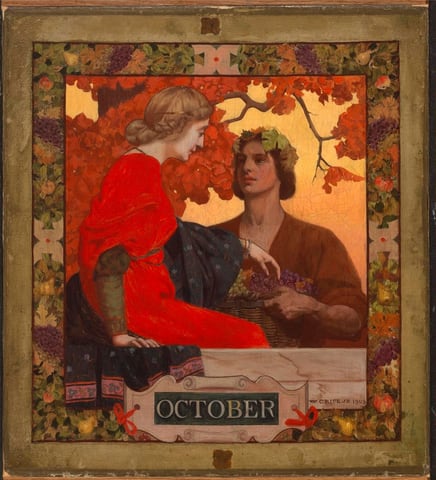
  1. October (cover illustration for Harper's Magazine), by William Clarke Rice, 1903
    October (cover illustration for Harper's Magazine)William Clarke Rice, 1903Courtesy of the Smithsonian American Art Museum
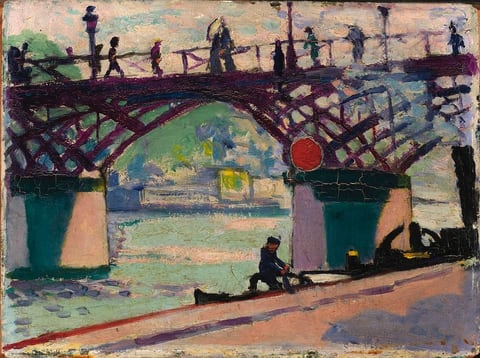
  2. Pont des Arts, by H. Lyman Saÿen, 1908-1911
    Pont des ArtsH. Lyman Saÿen, 1908-1911Courtesy of the Smithsonian American Art Museum
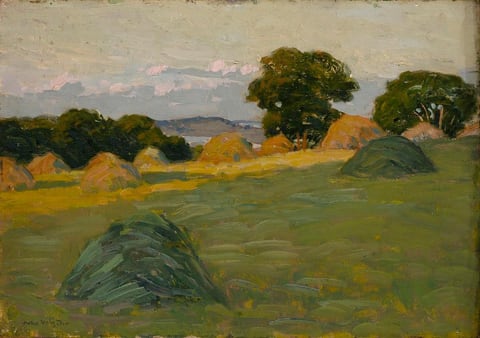
  3. The Hill Field, by Arthur Wesley Dow, 1908-1910
    The Hill FieldArthur Wesley Dow, 1908-1910Courtesy of the Smithsonian American Art Museum
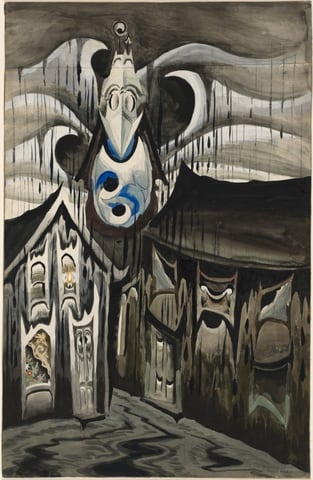
  4. Church Bells Ringing, Rainy Winter Night, by Charles Burchfield, December 1917
    Church Bells Ringing, Rainy Winter NightCharles Burchfield, December 1917Courtesy of the Cleveland Museum of Art