Floor plan

Style galleriesDrawings

Drawings

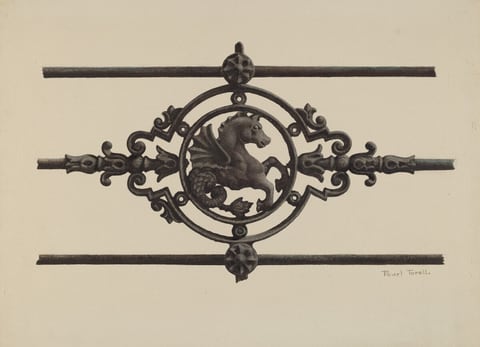
The image shows an ornate metalwork design with a winged creature. The design features intricate wrought iron decoration with a mythical figure, resembling a Pegasus, enclosed within a circular frame. The central circle is surrounded by symmetrical, stylized scrollwork motifs and horizontal bars, suggesting an architectural or ornamental fixture intended for use in structures like gates or window grills. The detailed craftsmanship and balanced design highlight the creature's form and the harmonious symmetry of the patterns.
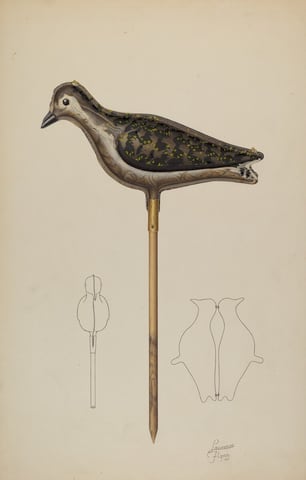
The image shows a painted decoy of a bird mounted on a wooden stake. The decoy has intricate details with spots of yellow and green on top of a dark body. The colors are naturalistic with brown, black, yellow, white, and beige. In the lower left section of the image, there are two line drawings of a bird.
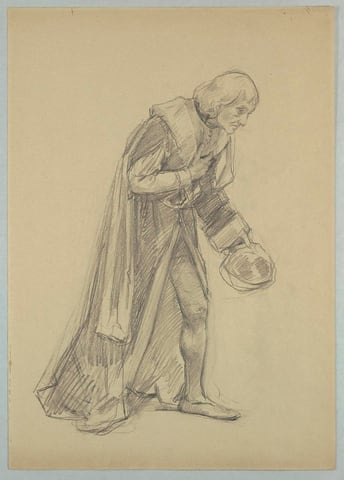
STUDY OF A BOWING MAN (CHRISTOPHER COLUMBUS)
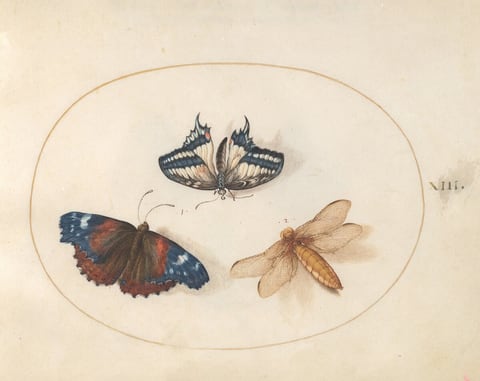
Three insects are depicted in the image: a butterfly with dark blue and red wings on the bottom left, a larger butterfly with white, black, and blue patterns at the top center, and a dragonfly with brown and gold tones on the bottom right. The color palette includes rich blues, reds, browns, and golds against a neutral background. The central butterfly is positioned higher than the other two insects, with the left butterfly and right dragonfly symmetrically arranged below.

The works in this room are listed below.

Works in this room

Every one of the collection's drawings, in today's hang.

Section 1, north wall

  1. The image shows an ornate metalwork design with a winged creature. The design features intricate wrought iron decoration with a mythical figure, resembling a Pegasus, enclosed within a circular frame. The central circle is surrounded by symmetrical, stylized scrollwork motifs and horizontal bars, suggesting an architectural or ornamental fixture intended for use in structures like gates or window grills. The detailed craftsmanship and balanced design highlight the creature's form and the harmonious symmetry of the patterns.
    Fence - Sea Horse DesignPearl Torell, c. 1939Courtesy National Gallery of Art, Washington
  2. The image shows a painted decoy of a bird mounted on a wooden stake. The decoy has intricate details with spots of yellow and green on top of a dark body. The colors are naturalistic with brown, black, yellow, white, and beige. In the lower left section of the image, there are two line drawings of a bird.
    Snipe DecoyLawrence Flynn, 1941Courtesy National Gallery of Art, Washington

Section 1, south wall

  1. STUDY OF A BOWING MAN (CHRISTOPHER COLUMBUS)
    Study of a Bowing Man (Christopher Columbus)Raimundo de MadrazoCourtesy of Cooper Hewitt, Smithsonian Design Museum
  2. Three insects are depicted in the image: a butterfly with dark blue and red wings on the bottom left, a larger butterfly with white, black, and blue patterns at the top center, and a dragonfly with brown and gold tones on the bottom right. The color palette includes rich blues, reds, browns, and golds against a neutral background. The central butterfly is positioned higher than the other two insects, with the left butterfly and right dragonfly symmetrically arranged below.
    Plate 13: Yellow Swallowtail and Red Admiral Butterflies with a Dragonfly (Broad-Bodied Chaser?)Joris Hoefnagel, c.1575/1590sCourtesy National Gallery of Art, Washington

Section 2, south wall
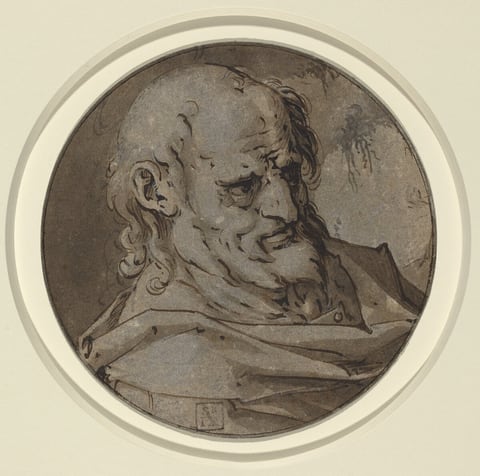
  1. The image features the upper body and head of a man in a circular frame. The man is facing slightly to the side and downward, with his body oriented to the left and his head turned towards the viewer. He has a prominent forehead, a defined nose, a furrowed brow, and a scrunched face. His hair is thinning on top, with longer strands curling around the back and sides of his head. The man has a beard with similar curled texture as his hair. He is wearing a garment that drapes over his shoulders, with visible folds and a texture that suggests a substantial fabric. No jewelry or objects are in his hands, as they are not visible in this image. The background is plain with a light, sketchy look, focusing attention on the man as the central figure in the circular composition.
    Head of an ApostleHendrick GoltziusCourtesy National Gallery of Art, Washington
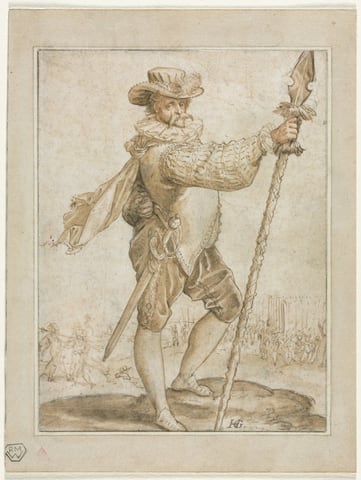
  2. Standing Officer Holding a Boar's Spear, by Hendrick Goltzius, 1586
    Standing Officer Holding a Boar's SpearHendrick Goltzius, 1586Courtesy of the Cleveland Museum of Art

Section 2, north wall
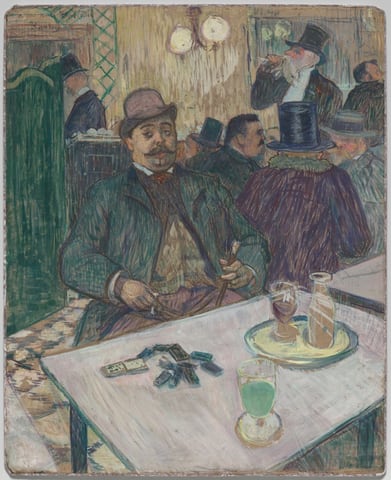
  1. Monsieur Boileau at the Café, by Henri de Toulouse-Lautrec, 1893
    Monsieur Boileau at the CaféHenri de Toulouse-Lautrec, 1893Courtesy of the Cleveland Museum of Art
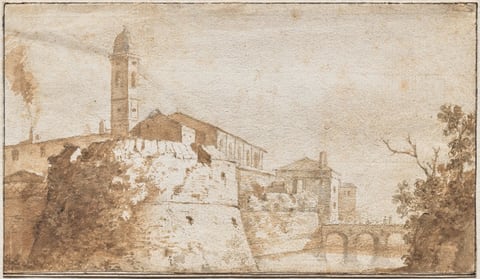
  2. A View of Bracciano with the Church of S. Maria Assunta, by Bartholomeus Breenberg, c. 1619–33
    A View of Bracciano with the Church of S. Maria AssuntaBartholomeus Breenberg, c. 1619–33Courtesy of the Cleveland Museum of Art

Section 3, north wall
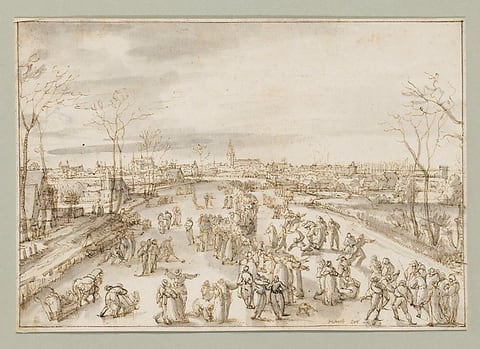
  1. Ice skaters on the Amstel in Amsterdam, by Hans Bol, 1589
    Ice skaters on the Amstel in AmsterdamHans Bol, 1589Courtesy of The Metropolitan Museum of Art
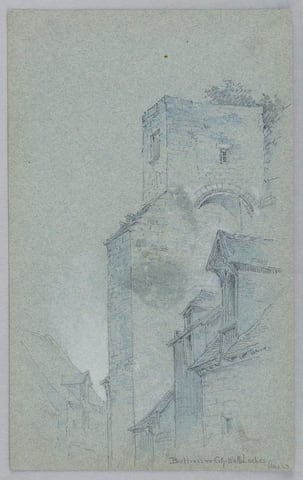
  2. BUTTRESSES ON CITY WALLS; LOCHES
    Buttresses on City Walls; LochesArnold William Brunner, 1883Courtesy of Cooper Hewitt, Smithsonian Design Museum
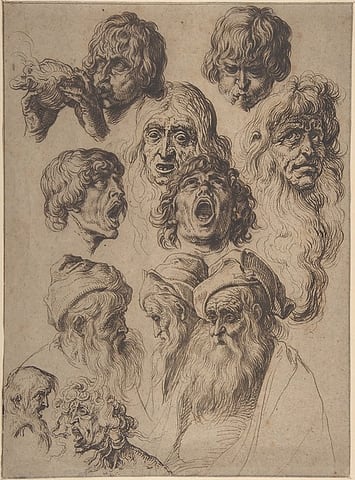
  3. Study of Eleven Heads, by Jacques de Gheyn II, late 16th–early 17th century
    Study of Eleven HeadsJacques de Gheyn II, late 16th–early 17th centuryCourtesy of The Metropolitan Museum of Art

Section 3, south wall
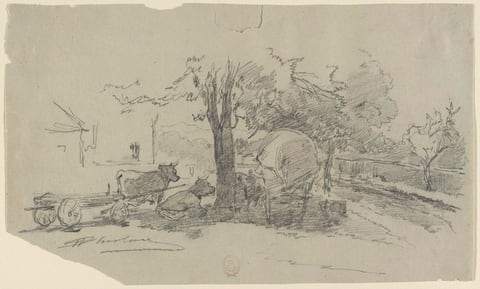
  1. A VILLAGE SQUARE
    A Village SquareWalter Shirlaw, 1875–80Courtesy of Cooper Hewitt, Smithsonian Design Museum
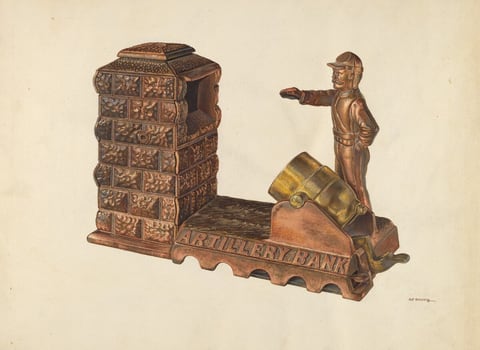
  2. The image displays a vintage mechanical bank with a brick-patterned tower on the left and a soldier figure on the right, prepared to operate a cannon. The color scheme is mainly earthy tones including brown, bronze, and hints of gold, creating a retro metallic appearance. The label "ARTILLERY BANK" is engraved on the base in front of the cannon.
    Mechanical Artillery BankAlf Bruseth, c. 1940Courtesy National Gallery of Art, Washington
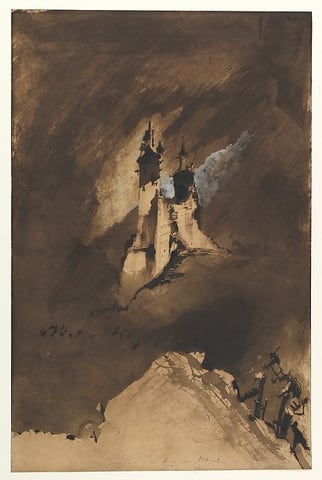
  3. Souvenir of a Castle in Vosges, by Victor Hugo, 1857
    Souvenir of a Castle in VosgesVictor Hugo, 1857Courtesy of The Metropolitan Museum of Art

Section 4, south wall
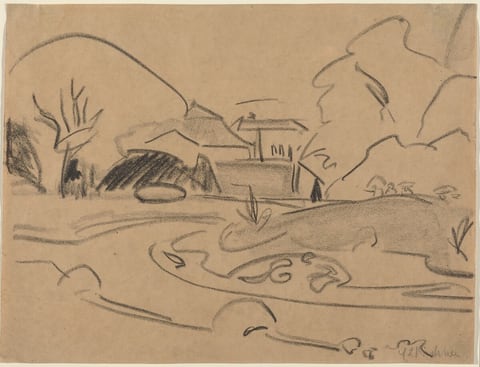
  1. The image shows a landscape drawing with buildings, trees, and a winding path or water feature. The drawing is done in black charcoal on brownish background paper, creating a monochromatic color palette.
    Footpaths and Pavilion in the Dresden Grosser GartenErnst Ludwig Kirchner, c. 1909Courtesy National Gallery of Art, Washington
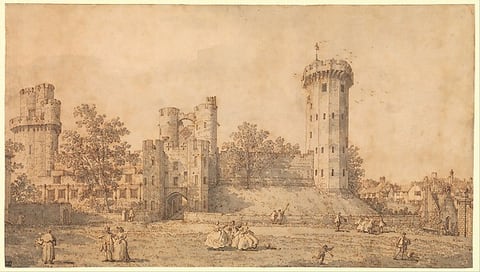
  2. Warwick Castle: The East Front, by Canaletto, 1752
    Warwick Castle: The East FrontCanaletto, 1752Courtesy of The Metropolitan Museum of Art