Floor plan

Style galleriesDrawings

Drawings

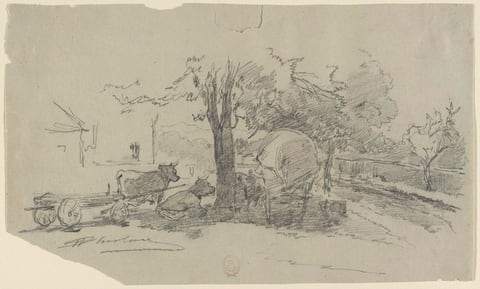
A VILLAGE SQUARE
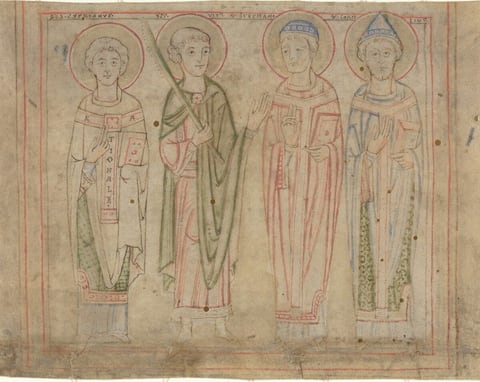
The image features four figures depicted upright from head to toe, each with a halo. The person on the far left has short, curly hair, wearing a decorated robe and holding a book, gesturing with the other hand. Next to him, the second figure also has short, curly hair and wears a striped robe, holding a staff. The third person has short hair under a blue and white cap, in a striped robe, holding a book while gesturing. The fourth figure has curly hair under a pointed cap, wearing a robe with blue and red detailing, holding a book with one hand raised. The background is a parchment-like surface with decorative red lining at the border.
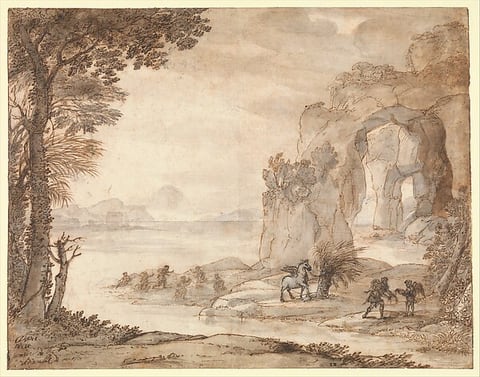
Perseus and the Origin of Coral, by Claude Lorrain (Claude Gellée), ca. 1671
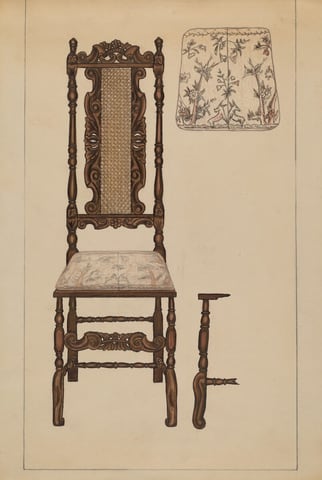
This is a drawing of a wooden chair with detailed upholstery. The chair has an ornate, high backrest with elaborate scrollwork and a woven central panel. The seat is cushioned and covered with a floral patterned fabric. There is also a separate drawing of the fabric pattern used on the seat and a sketch of one of the chair's legs to show the craftsmanship and decorative elements.
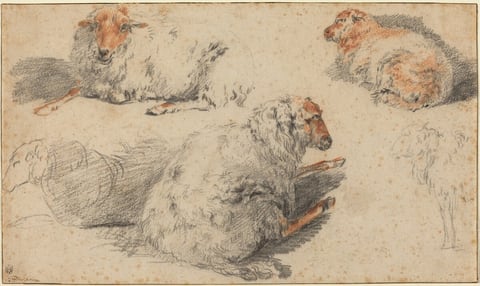
This is a drawing of multiple sheep in various poses. The full-page illustration depicts several sheep lying down. The fur of the sheep is textured with detailed pencil strokes, and there are subtle hints of shadow beneath each animal. There is a combination of different angles and poses, showing the sheep from different perspectives. The drawing also contains some rough sketches and outlines, suggesting movement and presence without complete detail. The background is plain.
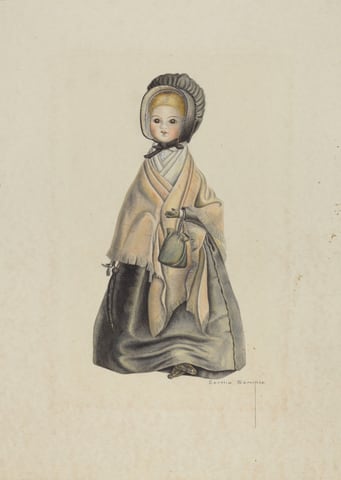
The image displays a full-body illustration of a person standing upright. They have a delicate and round face with rosy cheeks and small, pink lips. Their eyes are large and expressive, and they have light-colored hair peeking out from under a bonnet. The person's attire consists of a long, dark skirt and a light-colored shawl draped over their shoulders. They wear a hooded cloak tied with a bow at the neck, and hold a small bag in their left hand. The background is plain with a light-colored texture. The artwork is a painted illustration with visible fine lines and shading to enhance details of the clothing and facial features.

The works in this room are listed below.

Works in this room

Every one of the collection's drawings, in today's hang.

Section 1, north wall

  1. A VILLAGE SQUARE
    A Village SquareWalter Shirlaw, 1875–80Courtesy of Cooper Hewitt, Smithsonian Design Museum
  2. The image features four figures depicted upright from head to toe, each with a halo. The person on the far left has short, curly hair, wearing a decorated robe and holding a book, gesturing with the other hand. Next to him, the second figure also has short, curly hair and wears a striped robe, holding a staff. The third person has short hair under a blue and white cap, in a striped robe, holding a book while gesturing. The fourth figure has curly hair under a pointed cap, wearing a robe with blue and red detailing, holding a book with one hand raised. The background is a parchment-like surface with decorative red lining at the border.
    Saints Cyprian, Vitus, Stephan, and CorneliusUnrecorded German maker, third quarter 12th centuryCourtesy National Gallery of Art, Washington
  3. Perseus and the Origin of Coral, by Claude Lorrain (Claude Gellée), ca. 1671
    Perseus and the Origin of CoralClaude Lorrain (Claude Gellée), ca. 1671Courtesy of The Metropolitan Museum of Art

Section 1, south wall

  1. This is a drawing of a wooden chair with detailed upholstery. The chair has an ornate, high backrest with elaborate scrollwork and a woven central panel. The seat is cushioned and covered with a floral patterned fabric. There is also a separate drawing of the fabric pattern used on the seat and a sketch of one of the chair's legs to show the craftsmanship and decorative elements.
    Side ChairUnrecorded American maker, 1935/1942Courtesy National Gallery of Art, Washington
  2. This is a drawing of multiple sheep in various poses. The full-page illustration depicts several sheep lying down. The fur of the sheep is textured with detailed pencil strokes, and there are subtle hints of shadow beneath each animal. There is a combination of different angles and poses, showing the sheep from different perspectives. The drawing also contains some rough sketches and outlines, suggesting movement and presence without complete detail. The background is plain.
    SheepNicolaes BerchemCourtesy National Gallery of Art, Washington
  3. The image displays a full-body illustration of a person standing upright. They have a delicate and round face with rosy cheeks and small, pink lips. Their eyes are large and expressive, and they have light-colored hair peeking out from under a bonnet. The person's attire consists of a long, dark skirt and a light-colored shawl draped over their shoulders. They wear a hooded cloak tied with a bow at the neck, and hold a small bag in their left hand. The background is plain with a light-colored texture. The artwork is a painted illustration with visible fine lines and shading to enhance details of the clothing and facial features.
    Quaker DollBertha Semple, 1935/1942Courtesy National Gallery of Art, Washington

Section 2, south wall
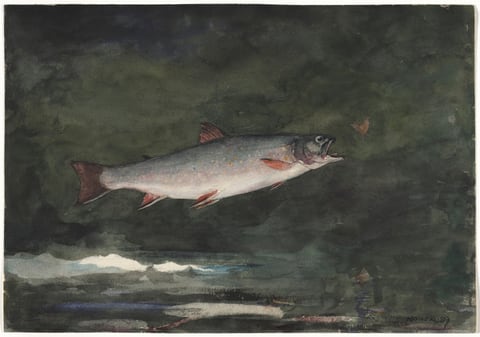
  1. Leaping Trout, by Winslow Homer, 1889
    Leaping TroutWinslow Homer, 1889Courtesy of the Cleveland Museum of Art
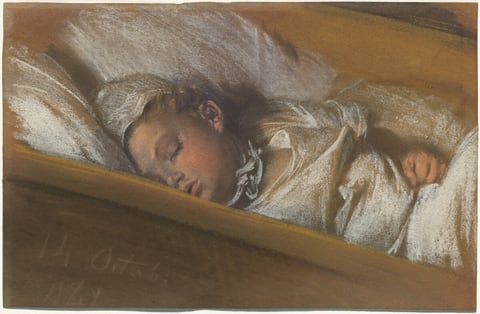
  2. The image shows a person lying down, positioned on their side, resting on a pillow. The individual appears to be asleep, with closed eyes, slightly parted lips, and a relaxed facial expression. The person has light-colored hair, partially covered by a white nightcap, and is dressed in white nightwear with a ruffled collar. They are covered by a white blanket and their hand is partially visible near the face, with fingers interlaced. The background features a wooden headboard or furniture piece.
    An Infant Asleep in His CribAdolph Menzel, 1848Courtesy National Gallery of Art, Washington

Section 2, north wall
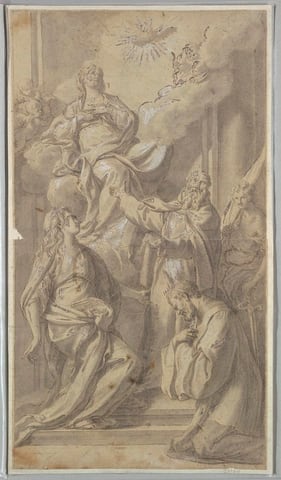
  1. MADONNA AND SAINTS
    Madonna and SaintsSebastiano Conca, ca. 1730Courtesy of Cooper Hewitt, Smithsonian Design Museum
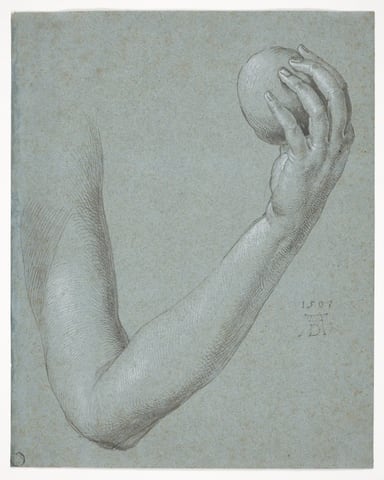
  2. Arm of Eve, by Albrecht Dürer, 1507
    Arm of EveAlbrecht Dürer, 1507Courtesy of the Cleveland Museum of Art
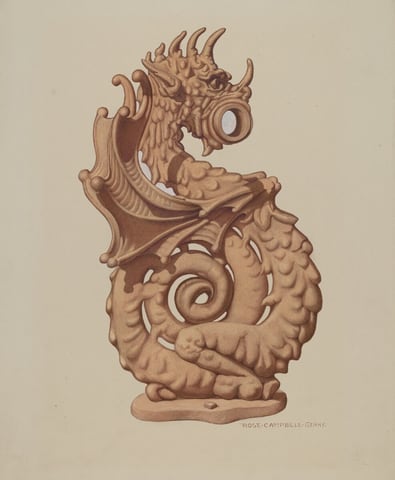
  3. The sculpture depicts a mythical creature resembling a dragon. It has a long spiraled body and an intricate head with spiky protrusions. The sculpture is a warm brown color. The dragon has bat-like wings, an open mouth, detailed texture with scales, and is standing on a small base.
    FenceRose Campbell-Gerke, c. 1941Courtesy National Gallery of Art, Washington

Section 3, north wall
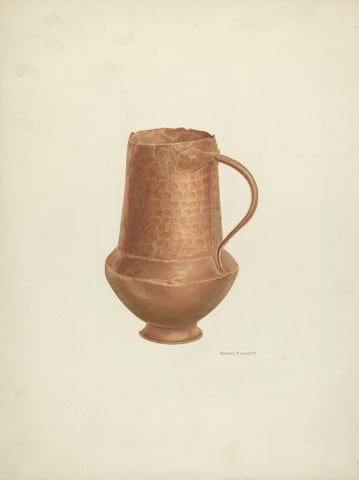
  1. The image shows a large, copper-colored pitcher with a hammered texture and a curving handle on the right side. The color palette consists of muted, warm tones of copper and brown against a pale beige background. The pitcher is centrally placed in the image, with its handle positioned on the right side.
    Copper CruetEdward Jewett, 1937Courtesy National Gallery of Art, Washington
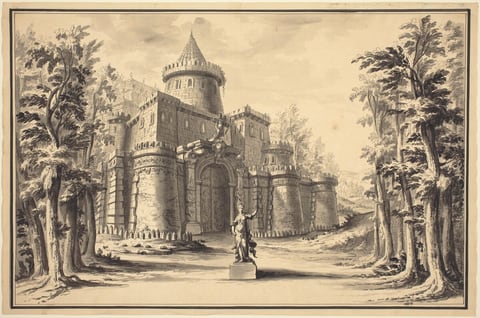
  2. The image shows a castle with a circular tower, a statue positioned on a pedestal on a path leading to the castle entrance. Tall trees flank the path, forming a natural archway. The castle walls have fortified turrets and an ornate gateway with intricate stonework and carvings. In the background, there are more trees and faint outlines of hills. The scene is in a monochromatic sepia tone, emphasizing depth and detail with subtle shading variations.
    A Stage Set with a Statue and a PalaceDaniel Marot the Younger, 1730s (?)Courtesy National Gallery of Art, Washington

Section 3, south wall
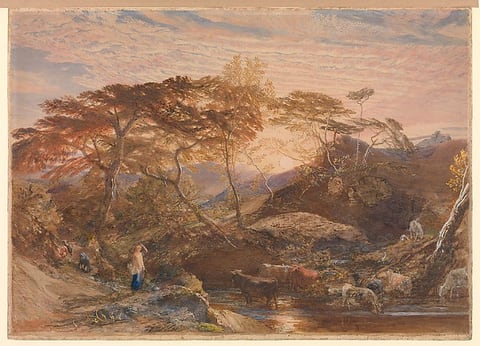
  1. Sabrina, by Samuel Palmer, 1856
    SabrinaSamuel Palmer, 1856Courtesy of The Metropolitan Museum of Art
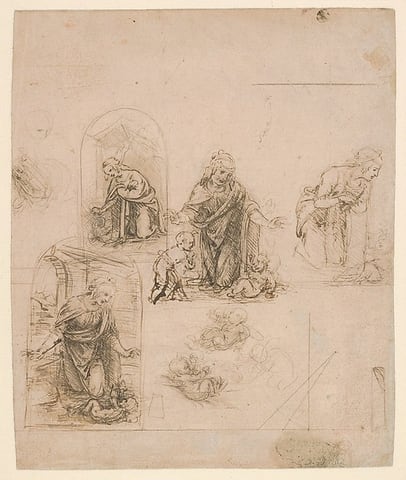
  2. Compositional Sketches for the Virgin Adoring the Christ Child, with and without the Infant St. John the Baptist; Diagram of a Perspectival Projection (recto); Slight Doodles (verso), by Leonardo da Vinci, 1480–85
    Compositional Sketches for the Virgin Adoring the Christ Child, with and without the Infant St. John the Baptist; Diagram of a Perspectival Projection (recto); Slight Doodles (verso)Leonardo da Vinci, 1480–85Courtesy of The Metropolitan Museum of Art
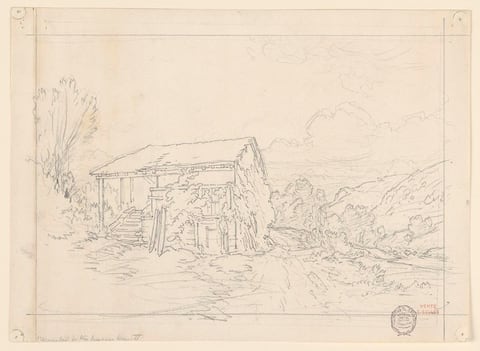
  3. A PEASANT'S HOUSE IN A VALLEY
    A Peasant's House in a ValleyEugène Edouard Soulès, ca. 1840Courtesy of Cooper Hewitt, Smithsonian Design Museum