Floor plan

Style galleriesDrawings

Drawings

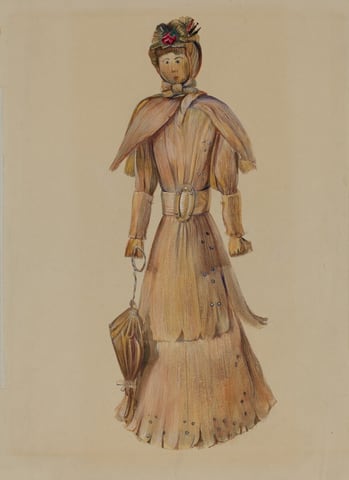
The image shows a person standing upright. They have a round face with simple facial features, wearing a hat with a red flower and dark ribbon. Their outfit includes a belted dress or coat, pleated texture, a cape, and arm coverings. The person is holding a matching umbrella in their right hand. The background is plain and light tan.
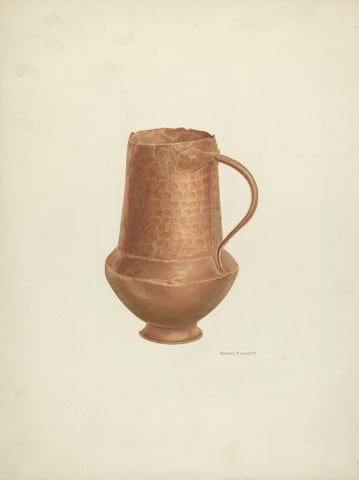
The image shows a large, copper-colored pitcher with a hammered texture and a curving handle on the right side. The color palette consists of muted, warm tones of copper and brown against a pale beige background. The pitcher is centrally placed in the image, with its handle positioned on the right side.
STUDY FOR "SCIENTIFIC GROUP"
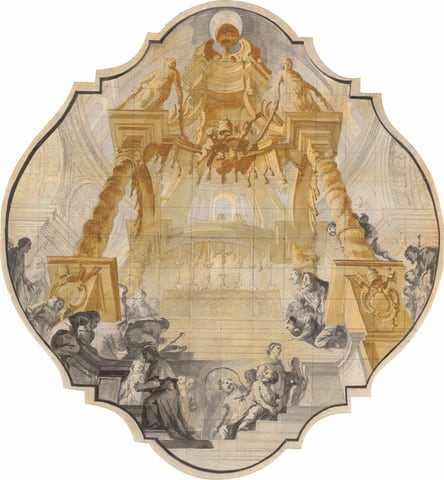
This is a painting of an architectural scene with decorative and religious elements. The painting features a grand interior setting, possibly a church or cathedral, dominated by ornate columns and a ceiling structure. Figures appear on pedestals atop the columns. In the background, there is a depiction of a religious or ceremonial space with detailed balustrades and steps, where figures are shown in dynamic poses. The color palette consists of warm golden hues contrasted with cooler grey tones, highlighting the intricate details of the architecture and figures. This is in the style of Giovanni Battista Tiepolo.
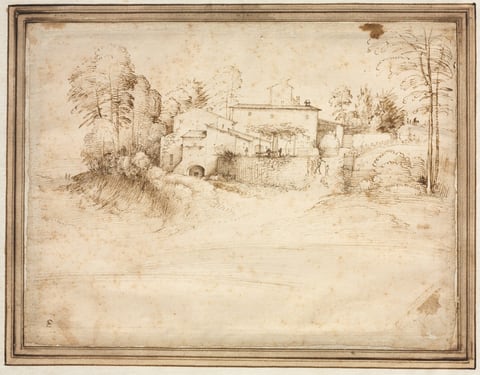
Farmhouse on the Slope of a Hill, by Fra Bartolommeo, c. 1508

The works in this room are listed below.

Works in this room

Every one of the collection's drawings, in today's hang.

Section 1, north wall

  1. The image shows a person standing upright. They have a round face with simple facial features, wearing a hat with a red flower and dark ribbon. Their outfit includes a belted dress or coat, pleated texture, a cape, and arm coverings. The person is holding a matching umbrella in their right hand. The background is plain and light tan.
    Corn Husk DollMina Lowry, c. 1936Courtesy National Gallery of Art, Washington
  2. The image shows a large, copper-colored pitcher with a hammered texture and a curving handle on the right side. The color palette consists of muted, warm tones of copper and brown against a pale beige background. The pitcher is centrally placed in the image, with its handle positioned on the right side.
    Copper CruetEdward Jewett, 1937Courtesy National Gallery of Art, Washington
  3. STUDY FOR "SCIENTIFIC GROUP"
    Study for "Scientific Group"Daniel Huntington, 1858Courtesy of Cooper Hewitt, Smithsonian Design Museum

Section 1, south wall

  1. This is a painting of an architectural scene with decorative and religious elements. The painting features a grand interior setting, possibly a church or cathedral, dominated by ornate columns and a ceiling structure. Figures appear on pedestals atop the columns. In the background, there is a depiction of a religious or ceremonial space with detailed balustrades and steps, where figures are shown in dynamic poses. The color palette consists of warm golden hues contrasted with cooler grey tones, highlighting the intricate details of the architecture and figures. This is in the style of Giovanni Battista Tiepolo.
    Worshippers at the Tomb of Saint PeterMatthäus Günther, 1740/1741Courtesy National Gallery of Art, Washington
  2. Farmhouse on the Slope of a Hill, by Fra Bartolommeo, c. 1508
    Farmhouse on the Slope of a HillFra Bartolommeo, c. 1508Courtesy of the Cleveland Museum of Art

Section 2, south wall
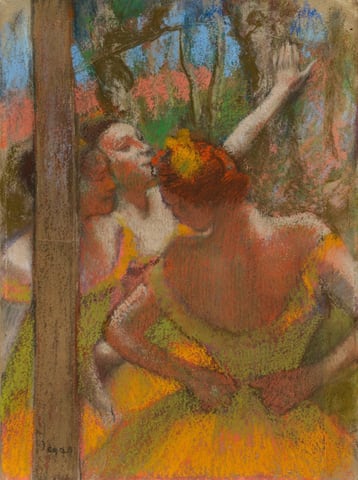
  1. Dancers, by Edgar Degas, c. 1896
    DancersEdgar Degas, c. 1896Courtesy of the Cleveland Museum of Art
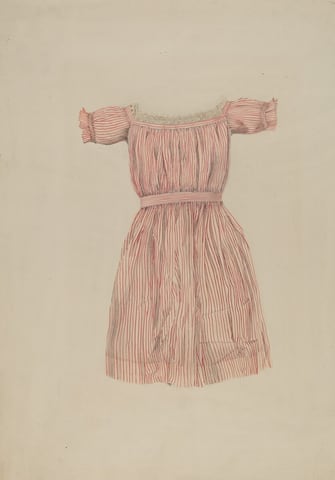
  2. The image shows a dress with a pink and white vertical striped pattern. The color palette is predominantly soft pinks and whites with subtle shading for light and shadow effects on the fabric. The dress is positioned at the center of the image, with sleeves extending slightly outward to the sides.
    Child's DressLucien Verbeke, c. 1937Courtesy National Gallery of Art, Washington
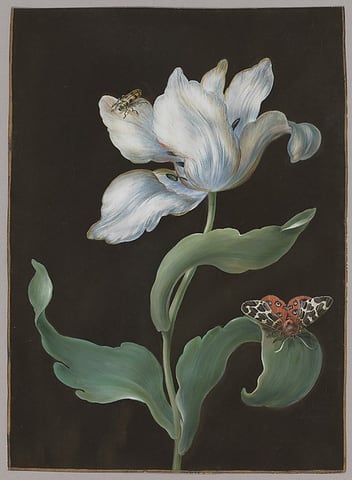
  3. A tulip, a butterfly of the species Arctia caja (garden tiger moth), and a beetle (possibly a longhorn), by Barbara Regina Dietzsch, ca. 1750-60
    A tulip, a butterfly of the species Arctia caja (garden tiger moth), and a beetle (possibly a longhorn)Barbara Regina Dietzsch, ca. 1750-60Courtesy of The Metropolitan Museum of Art

Section 2, north wall
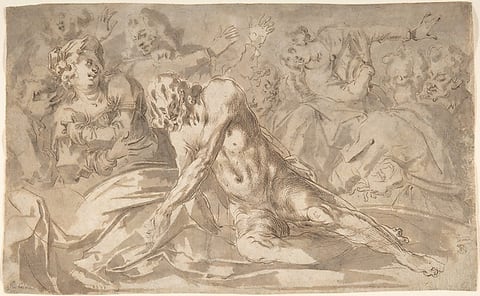
  1. The Raising of Lazarus, by Jacques Bellange, ca. 1606–8
    The Raising of LazarusJacques Bellange, ca. 1606–8Courtesy of The Metropolitan Museum of Art
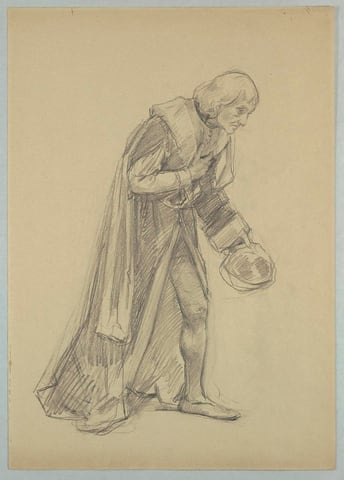
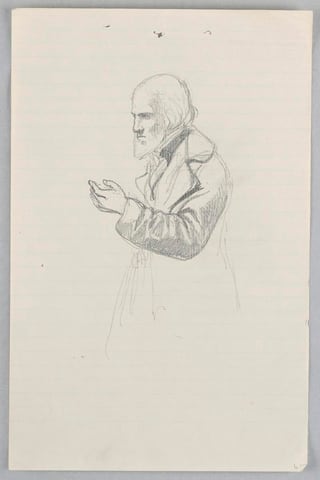
  2. STUDY OF A BOWING MAN (CHRISTOPHER COLUMBUS)
    Study of a Bowing Man (Christopher Columbus)Raimundo de MadrazoCourtesy of Cooper Hewitt, Smithsonian Design Museum

Section 3, north wall
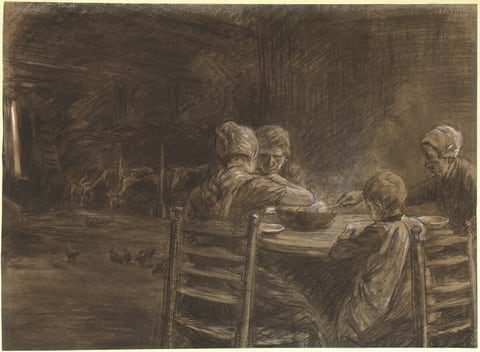
  1. This is a drawing of a rustic interior scene. The artwork depicts an interior where a table is surrounded by chairs. On the table, there is a bowl, as the individuals appear to be interacting or reaching towards it. In the background, livestock and chickens are visible, suggesting the environment is possibly a farm or a barn with a dining space. The use of soft lines and shading creates a warm, intimate, and slightly somber atmosphere within the image, with light and shadow playing an important role in highlighting the subjects and their surroundings.
    East Frisian Peasants Eating SupperMax Liebermann, 1893Courtesy National Gallery of Art, Washington
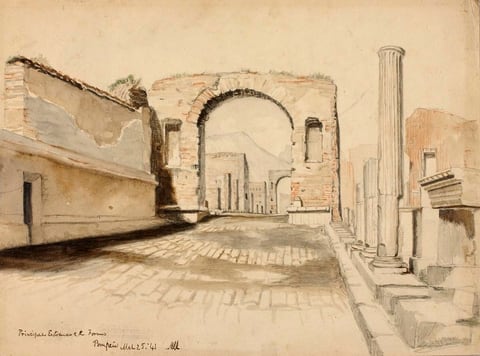
  2. Principal Entrance to the Forum, Pompeii, by Miner Kilbourne Kellogg
    Principal Entrance to the Forum, PompeiiMiner Kilbourne KelloggCourtesy of the Smithsonian American Art Museum

Section 3, south wall
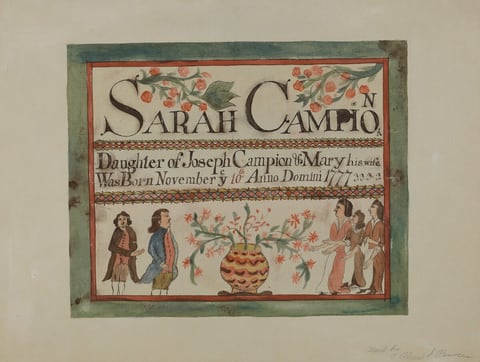
  1. This painting is a birth record for Sarah Campion, daughter of Joseph and Mary Campion, born on November 16th, 1777. It features elaborate calligraphy and ornamental designs. The borders contain floral patterns with red and orange-colored flowers and green leaves. The central text is decorative, and at the bottom are human-like figures in colonial attire standing beside a flower vase. The artwork reflects a style reminiscent of early American folk art, created by an anonymous folk artist capturing the essence of 18th-century American artistry.
    Pa. German Birth CertificateGlenn Pearce, c. 1936Courtesy National Gallery of Art, Washington
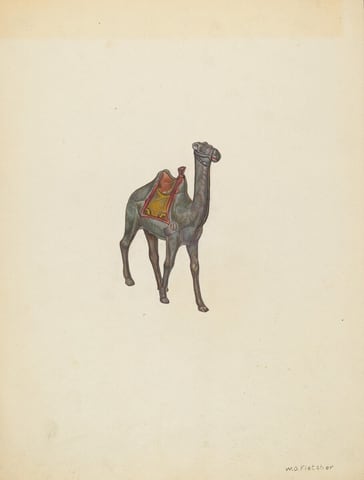
  2. This is a painting of a camel with a colorful saddle. The camel is centered in the image, standing against a plain, light-colored background. The animal is drawn with careful attention to detail, showcasing its distinctive humps, elongated neck, and slender legs. It is adorned with a vibrant saddle that features bright orange and red tones. The simplicity of the background emphasizes the camel.
    Bank CamelWilliam O. Fletcher, c. 1940Courtesy National Gallery of Art, Washington

Section 4, south wall
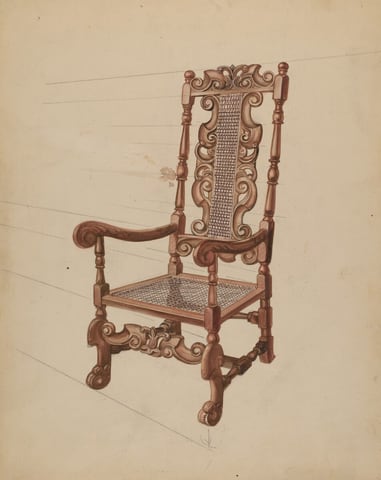
  1. The image shows an ornate chair with a high back, decorative carvings along its arms, legs, and backrest, a woven or cane seat and back, and intricate patterns. The chair is detailed with earthy brown tones and subtle shading accentuating the wood texture and design motifs. It is placed in the center of the image, facing slightly to the left, with linear guides indicating perspective and depth on a plain background.
    ArmchairAgnes Karlin, c. 1936Courtesy National Gallery of Art, Washington
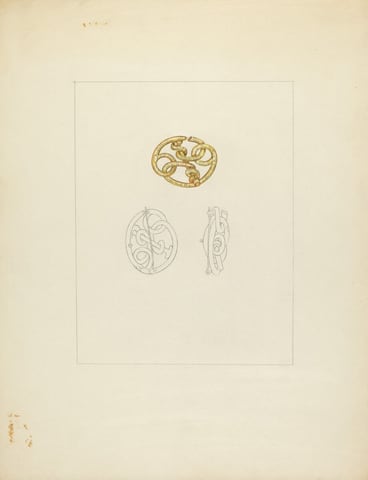
  2. This is a drawing of decorative motifs. The image shows three distinct designs with ornate, swirling patterns. The uppermost design is in gold color. Two additional designs are sketched below in a lighter tone, likely pencil. The use of line and form emphasizes intricate looping patterns that suggest inspiration from natural forms such as vines or waves. The composition is against a plain background, drawing attention to the details and shapes of the motifs, presenting a sense of simplicity and artistry.
    Gold BroochIsidore Steinberg, c. 1940Courtesy National Gallery of Art, Washington