Floor plan

Style galleriesDrawings of the 19th century
Drawings of the 19th century
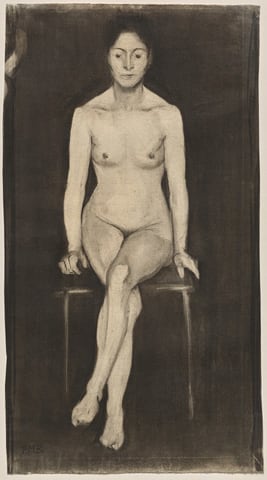
Seated Female Nude (Self-Portrait?), by Paula Modersohn-Becker, c. 1899
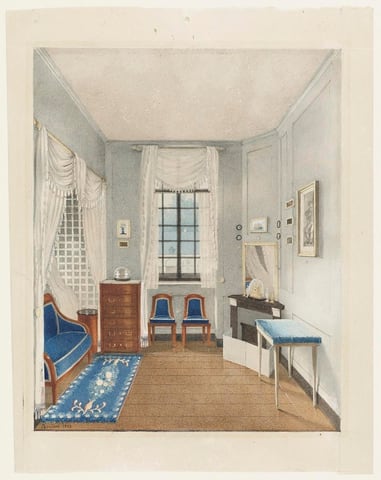
A FRENCH RESTORATION BEDROOM
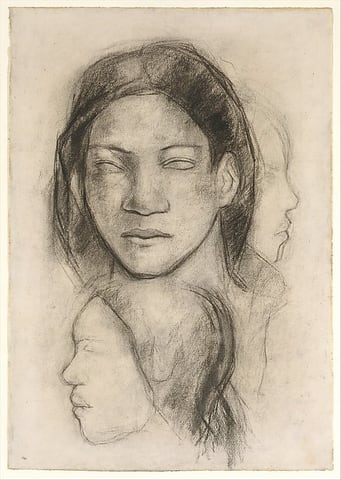
Tahitian Faces (Frontal View and Profiles), by Paul Gauguin, ca. 1899
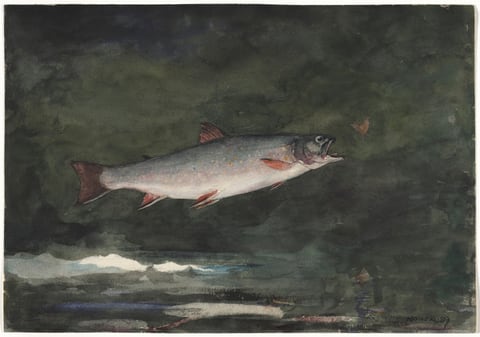
Leaping Trout, by Winslow Homer, 1889
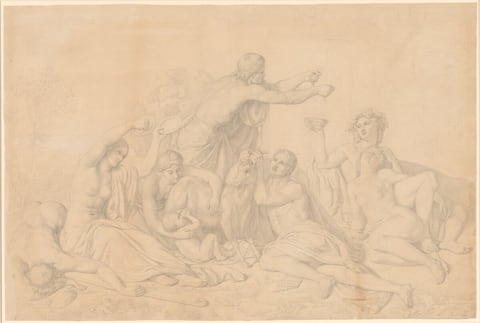
This is a drawing of a group of mythological figures in a ceremonial scene. The composition features multiple figures in various poses, centered around a symbolic gathering. The drawing is detailed, providing a classical representation of human forms, draped fabrics, and an animal. A plateau with trees is subtly depicted in the background. The figures display expressions ranging from serene to contemplative.

The works in this room are listed below.

Works in this room

Drawings made in the 19th century, from every museum.

Section 1, north wall

  1. Seated Female Nude (Self-Portrait?), by Paula Modersohn-Becker, c. 1899
    Seated Female Nude (Self-Portrait?)Paula Modersohn-Becker, c. 1899Courtesy of the Cleveland Museum of Art
  2. A FRENCH RESTORATION BEDROOM
    A French Restoration BedroomBouilhet, French, 1823Courtesy of Cooper Hewitt, Smithsonian Design Museum
  3. Tahitian Faces (Frontal View and Profiles), by Paul Gauguin, ca. 1899
    Tahitian Faces (Frontal View and Profiles)Paul Gauguin, ca. 1899Courtesy of The Metropolitan Museum of Art

Section 1, south wall

  1. Leaping Trout, by Winslow Homer, 1889
    Leaping TroutWinslow Homer, 1889Courtesy of the Cleveland Museum of Art
  2. This is a drawing of a group of mythological figures in a ceremonial scene. The composition features multiple figures in various poses, centered around a symbolic gathering. The drawing is detailed, providing a classical representation of human forms, draped fabrics, and an animal. A plateau with trees is subtly depicted in the background. The figures display expressions ranging from serene to contemplative.
    The Nursing of JupiterThéodore ChassériauCourtesy National Gallery of Art, Washington

Section 2, south wall
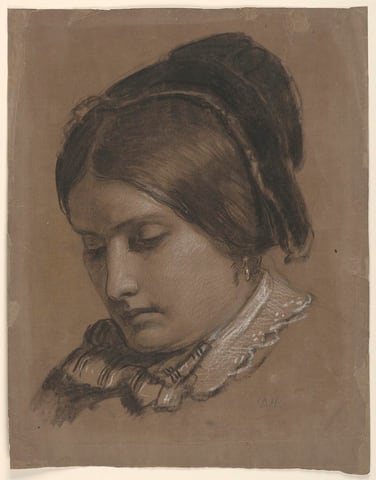
  1. THE ARTIST'S WIFE SOPHIE
    The Artist's Wife SophieDaniel Huntington, 1853Courtesy of Cooper Hewitt, Smithsonian Design Museum
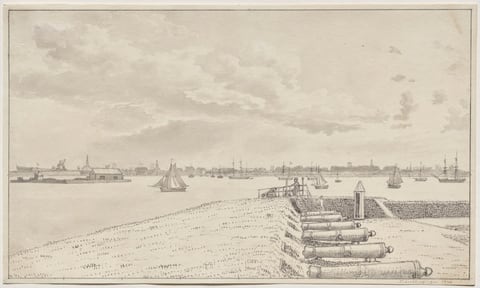
  2. View from the Battery toward the City, by Christoffer Wilhelm Eckersberg, 1836
    View from the Battery toward the CityChristoffer Wilhelm Eckersberg, 1836Courtesy of the Cleveland Museum of Art
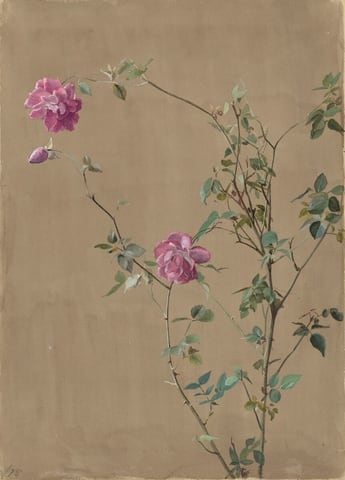
  3. This detailed painting shows two pink roses and a pink bud on a long, thin green stem with green leaves and small green thorns. The tall stem rises near the right edge of the painting, with some thin branches reaching out to either side. The largest rose is positioned near the top left corner of the painting, with the small bud right below it. The other large flower is right around the center of the painting. The background is a flat beige color.
    Pink RosesFidelia Bridges, 1875Courtesy National Gallery of Art, Washington

Section 2, north wall
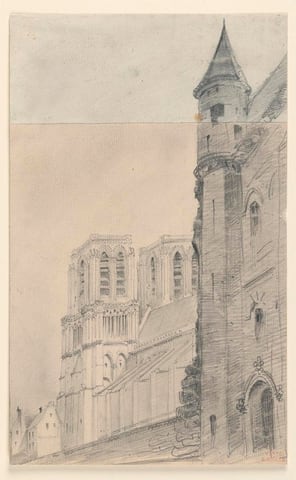
  1. CATHEDRAL OF NOTRE DAME IN PARIS
    Cathedral of Notre Dame in ParisCharles Nicolas Ransonnette, 1825–1840Courtesy of Cooper Hewitt, Smithsonian Design Museum
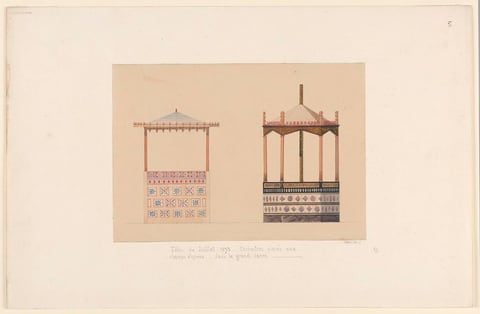
  2. "ORCHSTRES PLACES AUX CHAMPS ELYSEES, DANS LE GRAN CARRES"
    "Orchstres places aux Champs elysees, dans le gran carres"Félix Duban, 1833Courtesy of Cooper Hewitt, Smithsonian Design Museum
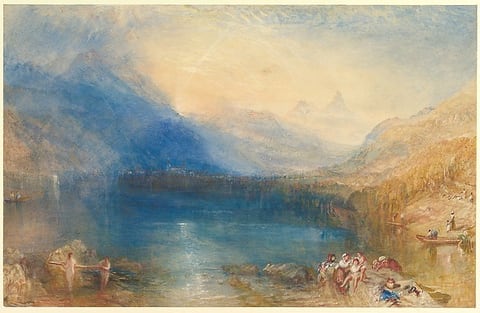
  3. The Lake of Zug, by Joseph Mallord William Turner, 1843
    The Lake of ZugJoseph Mallord William Turner, 1843Courtesy of The Metropolitan Museum of Art

Section 3, north wall
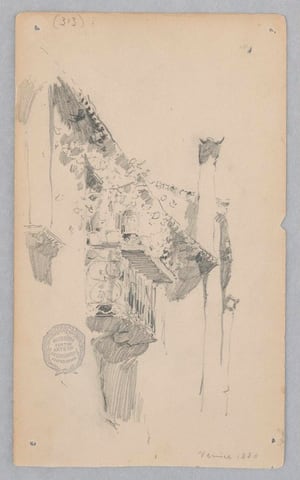
  1. BALCONY
    BalconyRobert Frederick Blum, 1880Courtesy of Cooper Hewitt, Smithsonian Design Museum
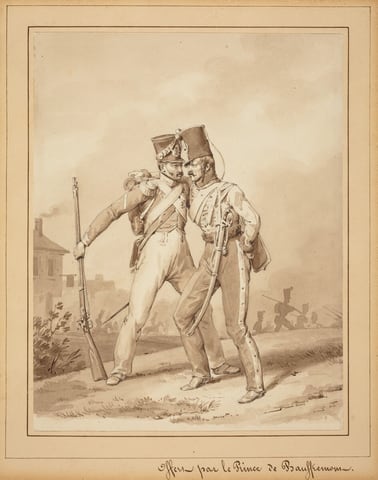
  2. The image features two men in military uniform engaging closely with each other. Both are shown from head to toe. The man on the left stands with his left leg forward, holding a rifle, and has his right arm around the shoulder of the other man. The man on the right has his right leg slightly bent, supporting his weight, and is holding a sword in his left hand. Each man has distinctive facial features. Both wear tall, elaborate military hats and detailed uniforms. The man on the left displays a strap over his shoulder, while the man on the right has intricate decorations on his jacket and trousers. In the background, there are a few more soldiers and part of a building to the left. The setting is monochromatic.
    Two GrenadiersVictor AdamCourtesy National Gallery of Art, Washington
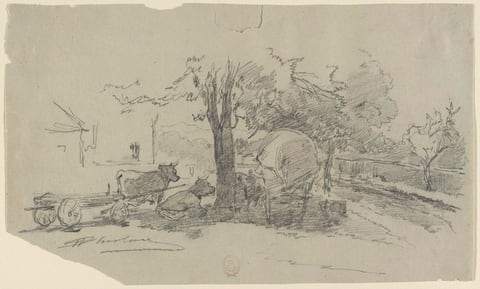
  3. A VILLAGE SQUARE
    A Village SquareWalter Shirlaw, 1875–80Courtesy of Cooper Hewitt, Smithsonian Design Museum

Section 3, south wall
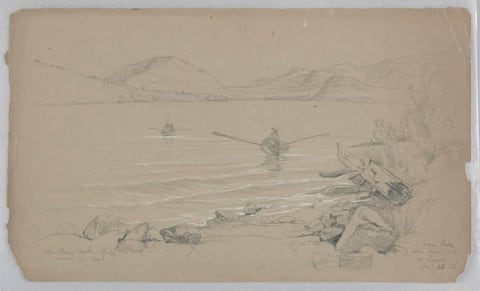
  1. EAGLE LAKE, MT. DESERT
    Eagle Lake, Mt. DesertDaniel Huntington, August 23, 1856Courtesy of Cooper Hewitt, Smithsonian Design Museum
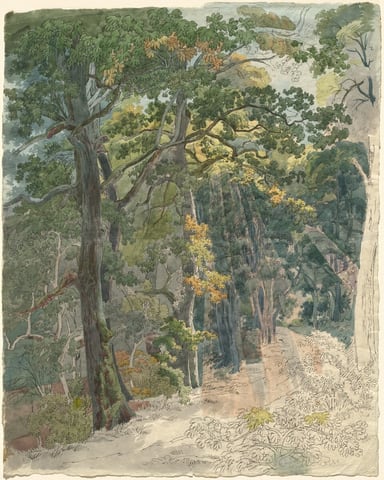
  2. The image shows a dense, forested area with towering trees. The composition leads the eye along a pathway into the distance, without a distinct horizon line. The intricate brushstrokes depict the texture and foliage of the trees, suggesting movement and light filtering through the leaves. The color palette is rich and earthy, with shades of green, brown, yellow, and orange, creating a vibrant yet tranquil atmosphere emphasizing light and shadow.
    Rays of Sunlight Striking a Woodland PathFriedrich Salathé, c. 1815Courtesy National Gallery of Art, Washington