Floor plan

West wing: Old MastersRenaissance

Renaissance

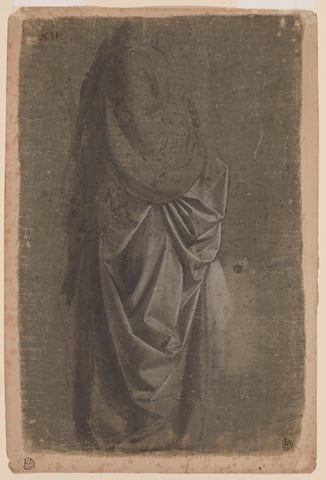
A work made of brush and opaque watercolor, on linen prepared with a gray ground, mounted to cream laid paper.
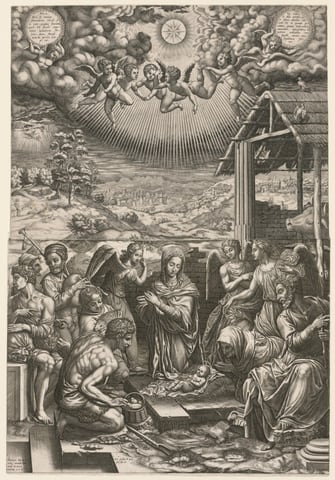
The Nativity, by Giorgio Ghisi, 1553
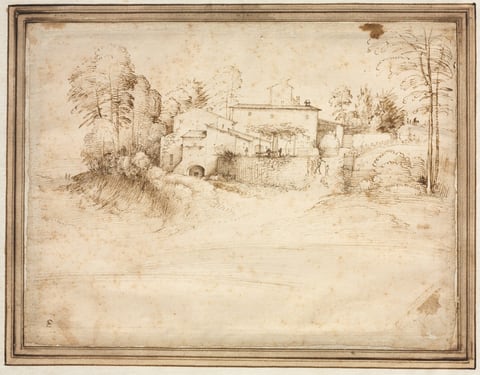
Farmhouse on the Slope of a Hill, by Fra Bartolommeo, c. 1508
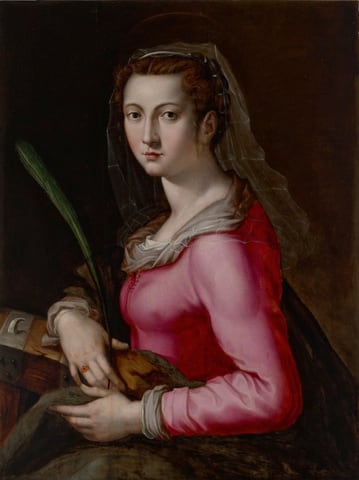
Portrait of a Woman as Saint Catherine, by Pier Francesco Foschi, c. 1560
A work made of black chalk (recto), and black chalk and pen and black ink (verso), on ivory laid paper.
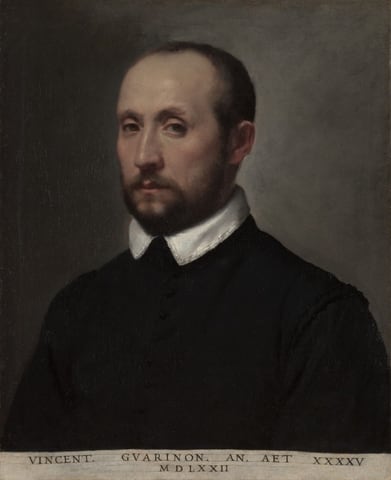
Portrait of Vincenzo Guarignoni, by Giovanni Battista Moroni, c. 1572
A work made of oil on panel.
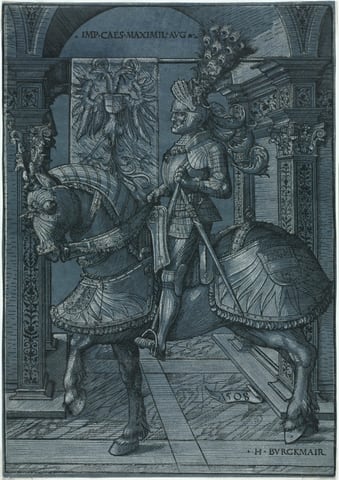
Equestrian Portrait of the Emperor Maximilian, by Hans Burgkmair, 1508

The works in this room are listed below.

Works in this room

European art from about 1400 to 1600, when painters rediscovered perspective and the classical past.

Section 1, north wall

  1. A work made of brush and opaque watercolor, on linen prepared with a gray ground, mounted to cream laid paper.
    Drapery Study of a Standing Figure Facing Right, in ProfileAndrea del Verrocchio, late 1460s–early 1470sCourtesy of the Art Institute of Chicago
  2. The Nativity, by Giorgio Ghisi, 1553
    The NativityGiorgio Ghisi, 1553Courtesy of the Cleveland Museum of Art
  3. Farmhouse on the Slope of a Hill, by Fra Bartolommeo, c. 1508
    Farmhouse on the Slope of a HillFra Bartolommeo, c. 1508Courtesy of the Cleveland Museum of Art
  4. Portrait of a Woman as Saint Catherine, by Pier Francesco Foschi, c. 1560
    Portrait of a Woman as Saint CatherinePier Francesco Foschi, c. 1560Courtesy of the Cleveland Museum of Art

Section 1, south wall

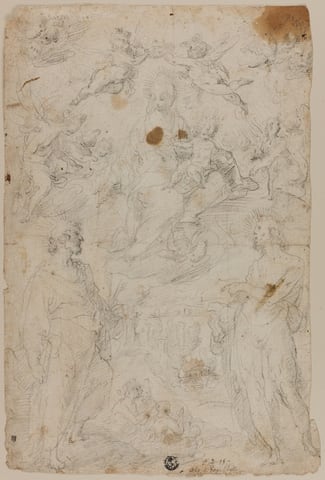
  1. A work made of black chalk (recto), and black chalk and pen and black ink (verso), on ivory laid paper.
    Virgin and Child with Saints Peter and John the Baptist (recto); Saint John the Baptist (verso)Pietro d' Asaro, n.d.Courtesy of the Art Institute of Chicago
  2. Portrait of Vincenzo Guarignoni, by Giovanni Battista Moroni, c. 1572
    Portrait of Vincenzo GuarignoniGiovanni Battista Moroni, c. 1572Courtesy of the Cleveland Museum of Art
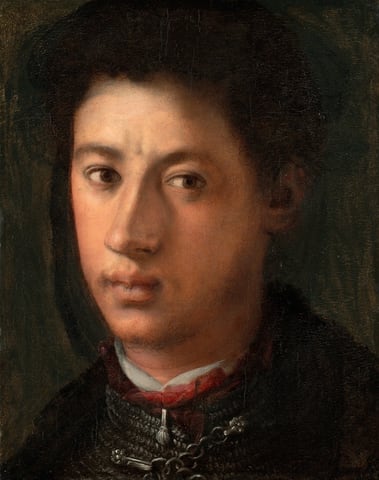
  3. A work made of oil on panel.
    Alessandro de' MediciPontormo, (Jacopo Carrucci), 1534–35Courtesy of the Art Institute of Chicago
  4. Equestrian Portrait of the Emperor Maximilian, by Hans Burgkmair, 1508
    Equestrian Portrait of the Emperor MaximilianHans Burgkmair, 1508Courtesy of the Cleveland Museum of Art

Section 2, south wall
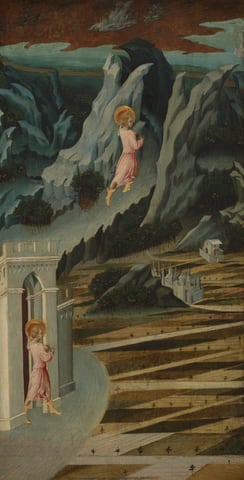
  1. A work made of tempera on panel.
    Saint John the Baptist Entering the WildernessGiovanni di Paolo, 1455–60Courtesy of the Art Institute of Chicago
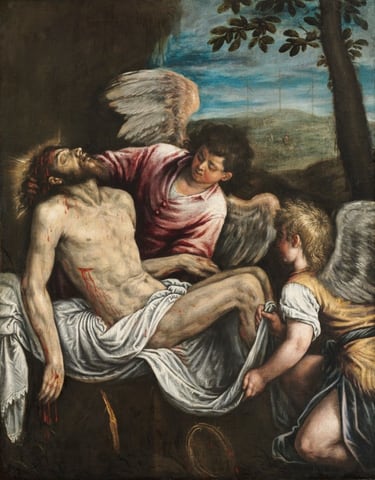
  2. The Dead Christ with Angels, by Leandro Bassano, c. 1580
    The Dead Christ with AngelsLeandro Bassano, c. 1580Courtesy of the Cleveland Museum of Art
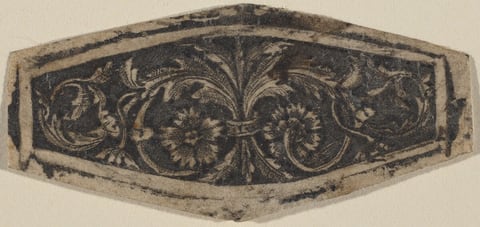
  3. This is a drawing of an ornamental floral design. The image shows a central floral motif resembling a flower with radiating petals, surrounded by swirling leaf patterns. The background is dark, contrasting with the lighter line work of the floral design. The drawing's borders are uneven and have an antique appearance.
    Ornament in Hexagonal ShapeUnrecorded Italian maker, c. 1480/1510Courtesy National Gallery of Art, Washington
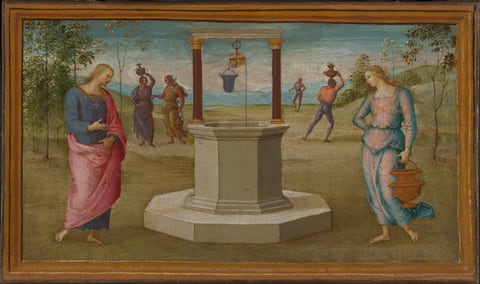
  4. A work made of tempera on panel, transferred to canvas.
    Christ and the Woman of SamariaPerugino, 1500–05Courtesy of the Art Institute of Chicago

Section 2, north wall
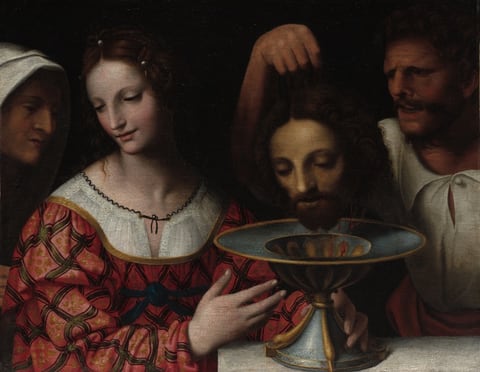
  1. Salome with the Head of Saint John the Baptist, by Bernardino Luini, 1500s or later
    Salome with the Head of Saint John the BaptistBernardino Luini, 1500s or laterCourtesy of the Cleveland Museum of Art
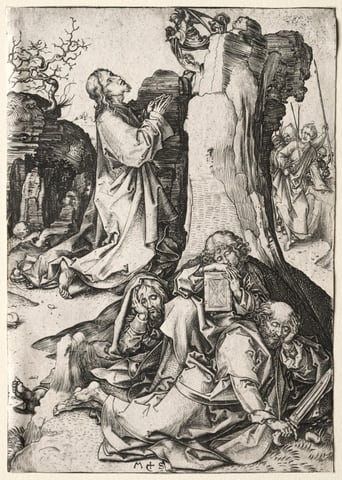
  2. The Passion: The Agony in the Garden, by Martin Schongauer, c. 1480
    The Passion: The Agony in the GardenMartin Schongauer, c. 1480Courtesy of the Cleveland Museum of Art
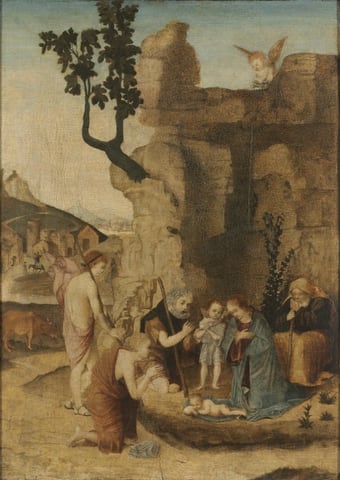
  3. Adoration of the Shepherds, c. 1500
    Adoration of the ShepherdsUnrecorded Italian maker, c. 1500Courtesy of the Cleveland Museum of Art
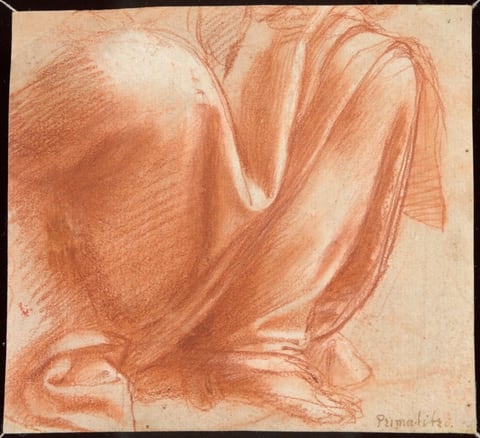
  4. A work made of red chalk and brush and red chalk wash (recto) and black chalk, with black chalk grid lines, (verso) on cream laid paper.
    A Drapery Study for the Knees of a Seated Allegorical Figure of Charity (recto); Bust of a Naked Allegorical Figure of Charity with Two Putti (verso)Giovanni Antonio di Francesco Sogliani, 1520/30Courtesy of the Art Institute of Chicago