Floor plan

Time and placeGermany

Germany

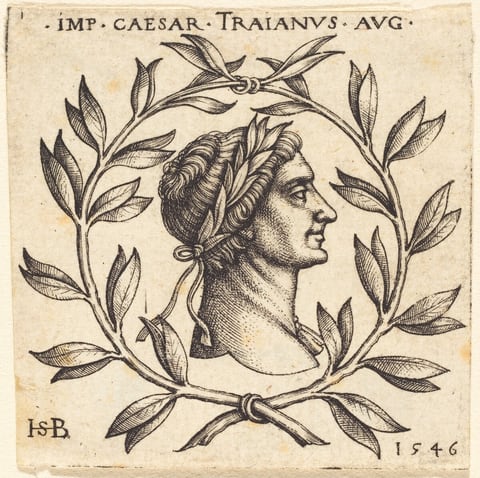
The image shows a profile of a person's head and partial neck within a circular laurel wreath. The individual has distinct facial features, including a prominent nose and chin. The hairstyle is tight, wavy locks pulled back, and a laurel wreath crowns the head. The background is plain, with an inscription reading "IMP. CAESAR. TRAIANVS. AVG." Below the portrait are the initials "ISB" and the year "1546". The overall style resembles a classical engraving, featuring detailed line work and traditional iconography.
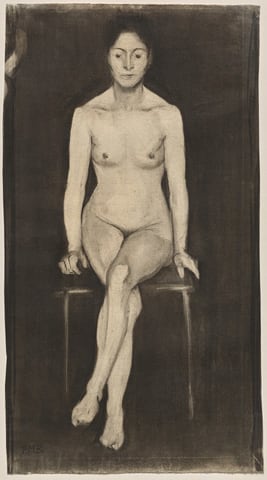
Seated Female Nude (Self-Portrait?), by Paula Modersohn-Becker, c. 1899
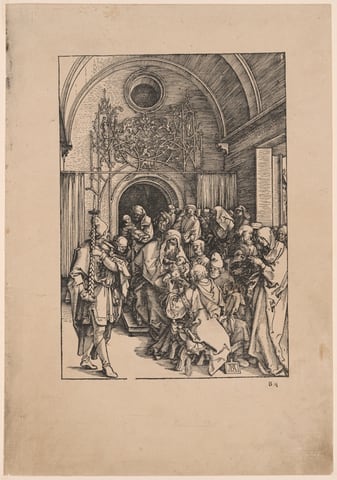
A work made of woodcut in black on tan laid paper.
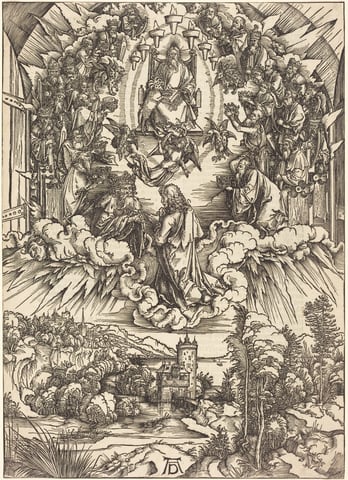
The image features a celestial scene with multiple figures depicted from head to waist. Two central figures are engaged in a conversation amidst clouds. One figure appears seated, possibly on a throne, holding a book. Both figures have long hair and beards. The robes worn by the figures are detailed. Other figures surround them in a semi-circle, some wearing crowns, holding items like bowls. Heavenly hosts with wings are seen above. The background shows a detailed landscape with trees, a river, and castles nestled in hills.
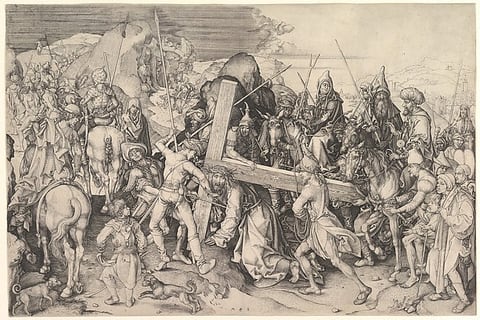
Christ Carrying the Cross, by Martin Schongauer, ca. 1475–80
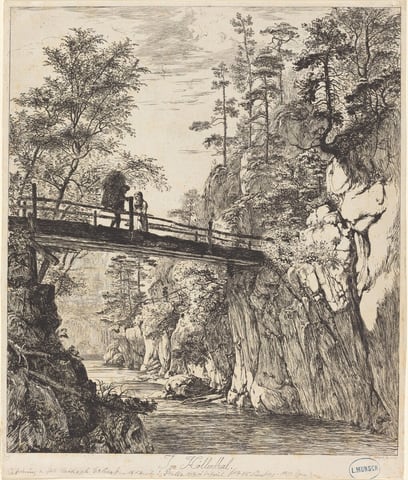
The image shows a landscape with a wooden bridge crossing over a river in a valley. The scenery includes cliffs, trees, and flowing water below. The artwork features fine, detailed brushstrokes depicting the texture of the cliffs, foliage, and water. The color scheme is monochromatic with various shades of gray and sepia tones. Two figures are seen on the bridge, contributing to the sense of scale and activity in the serene setting.
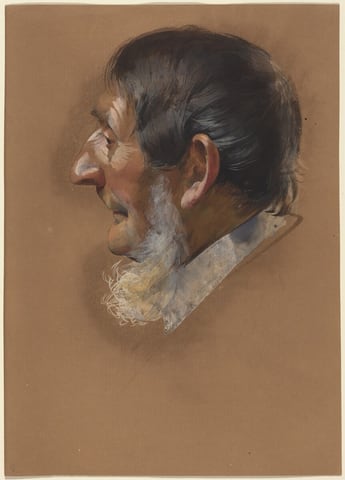
The image shows a man's head and part of his neck in profile view. The man is looking to the left, showcasing his facial features. He has a prominent nose, cheekbones, dark hair with hints of gray at the sides, and a white beard under his chin. He is wearing a gray collar that is partially visible. The background is a plain, muted brown color. There are no objects or jewelry visible in the image.
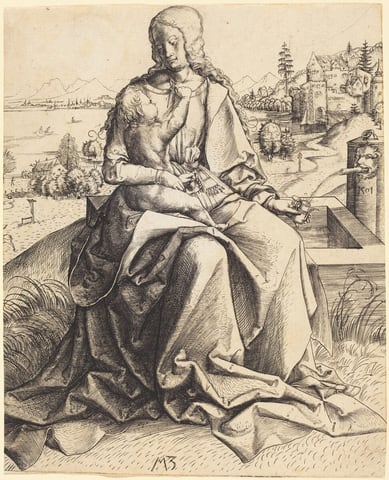
The image shows a woman sitting with a child on her lap. The woman has a gentle expression and long hair, wearing a flowing robe. The child is facing her, reaching up with one hand. In the background are trees, hills, a building, and a fountain with a lion's head spouting water into a basin. The illustration is detailed, capturing textures and elements in the scene.

The works in this room are listed below.

Works in this room

Works made in Germany, from every century in the collection.

First room, north wall

  1. The image shows a profile of a person's head and partial neck within a circular laurel wreath. The individual has distinct facial features, including a prominent nose and chin. The hairstyle is tight, wavy locks pulled back, and a laurel wreath crowns the head. The background is plain, with an inscription reading "IMP. CAESAR. TRAIANVS. AVG." Below the portrait are the initials "ISB" and the year "1546". The overall style resembles a classical engraving, featuring detailed line work and traditional iconography.
    TrajanSebald Beham, 1546Courtesy National Gallery of Art, Washington
  2. Seated Female Nude (Self-Portrait?), by Paula Modersohn-Becker, c. 1899
    Seated Female Nude (Self-Portrait?)Paula Modersohn-Becker, c. 1899Courtesy of the Cleveland Museum of Art
  3. A work made of woodcut in black on tan laid paper.
    The Circumcision of Christ, from The Life of the VirginAlbrecht Dürer, c. 1505, published 1511Courtesy of the Art Institute of Chicago
  4. The image features a celestial scene with multiple figures depicted from head to waist. Two central figures are engaged in a conversation amidst clouds. One figure appears seated, possibly on a throne, holding a book. Both figures have long hair and beards. The robes worn by the figures are detailed. Other figures surround them in a semi-circle, some wearing crowns, holding items like bowls. Heavenly hosts with wings are seen above. The background shows a detailed landscape with trees, a river, and castles nestled in hills.
    Saint John before God and the EldersAlbrecht Dürer, probably c. 1496/1498Courtesy National Gallery of Art, Washington

First room, south wall

  1. Christ Carrying the Cross, by Martin Schongauer, ca. 1475–80
    Christ Carrying the CrossMartin Schongauer, ca. 1475–80Courtesy of The Metropolitan Museum of Art
  2. The image shows a landscape with a wooden bridge crossing over a river in a valley. The scenery includes cliffs, trees, and flowing water below. The artwork features fine, detailed brushstrokes depicting the texture of the cliffs, foliage, and water. The color scheme is monochromatic with various shades of gray and sepia tones. Two figures are seen on the bridge, contributing to the sense of scale and activity in the serene setting.
    Im Höllenthal (In the Höllen Valley)Johann Christoph Erhard, 1818Courtesy National Gallery of Art, Washington
  3. The image shows a man's head and part of his neck in profile view. The man is looking to the left, showcasing his facial features. He has a prominent nose, cheekbones, dark hair with hints of gray at the sides, and a white beard under his chin. He is wearing a gray collar that is partially visible. The background is a plain, muted brown color. There are no objects or jewelry visible in the image.
    Profile of a Man with SidewhiskersUnrecorded German maker, c. 1850Courtesy National Gallery of Art, Washington
  4. The image shows a woman sitting with a child on her lap. The woman has a gentle expression and long hair, wearing a flowing robe. The child is facing her, reaching up with one hand. In the background are trees, hills, a building, and a fountain with a lion's head spouting water into a basin. The illustration is detailed, capturing textures and elements in the scene.
    Madonna and Child at a FountainMaster MZ, 1501Courtesy National Gallery of Art, Washington

Second room, south wall
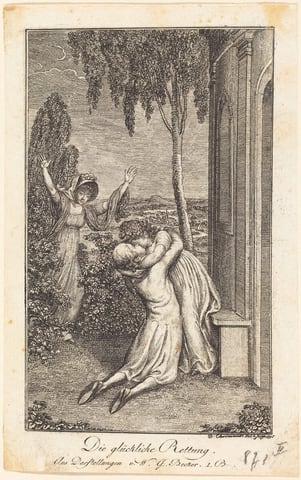
  1. The image shows three figures. Two of them are embracing in the foreground, kneeling on the ground and facing each other in a kiss. The person on the left has curly hair and appears to be wearing a coat-like garment, while the person on the right has long hair tied back and is dressed in a long robe. The third figure emerges from the bushes in the background, with shoulder-length hair, wearing a dress with a sash and a light shawl or scarf over their head. The setting includes tall trees, shrubs, and a structure with columns and arches on the right side, suggesting a garden or courtyard. Rolling hills and cloudy skies are in the distant background.
    The Fortunate RescueDaniel Nikolaus Chodowiecki, 1791Courtesy National Gallery of Art, Washington
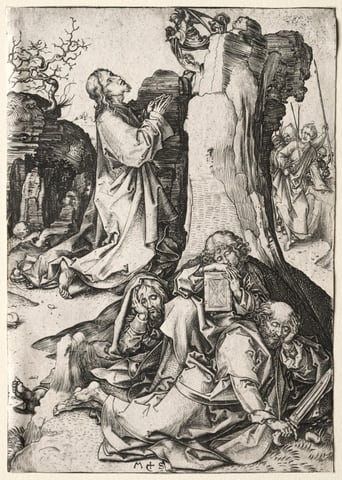
  2. The Passion: The Agony in the Garden, by Martin Schongauer, c. 1480
    The Passion: The Agony in the GardenMartin Schongauer, c. 1480Courtesy of the Cleveland Museum of Art
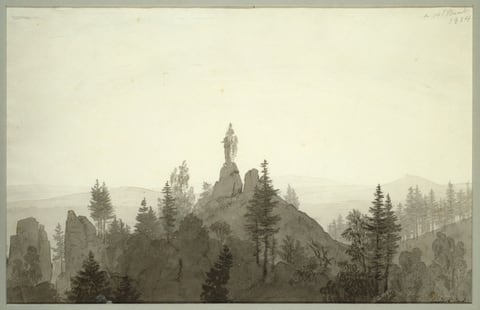
  3. Black ink drawing of forested landscape, statue of woman holding child at pinnacle of mountain.
    Statue of the Madonna in the MountainsCaspar David Friedrich, 1804Courtesy of the Art Institute of Chicago
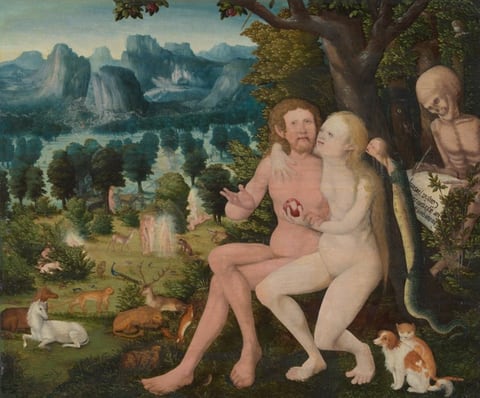
  4. A work made of oil on panel.
    The Fall of Man with Scenes of the CreationAugustus Cordus, 1544Courtesy of the Art Institute of Chicago

Second room, north wall
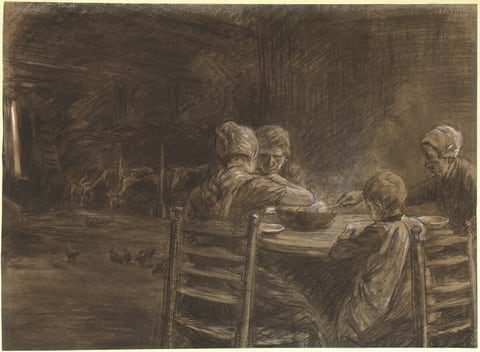
  1. This is a drawing of a rustic interior scene. The artwork depicts an interior where a table is surrounded by chairs. On the table, there is a bowl, as the individuals appear to be interacting or reaching towards it. In the background, livestock and chickens are visible, suggesting the environment is possibly a farm or a barn with a dining space. The use of soft lines and shading creates a warm, intimate, and slightly somber atmosphere within the image, with light and shadow playing an important role in highlighting the subjects and their surroundings.
    East Frisian Peasants Eating SupperMax Liebermann, 1893Courtesy National Gallery of Art, Washington
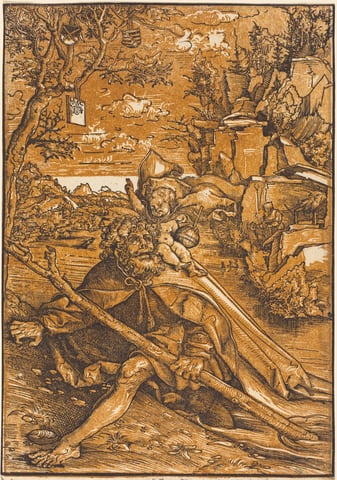
  2. This is a drawing of a wilderness setting by a river. The scene features rocky cliffs, lush vegetation, a large bearded figure holding a staff, and a small cherubic figure beside them. In the background, there is a village against a mountainous backdrop. The drawing has rich texture and intricate details, with a contrast of dark lines and lighter hues.
    Saint ChristopherLucas Cranach the Elder, 1506Courtesy National Gallery of Art, Washington
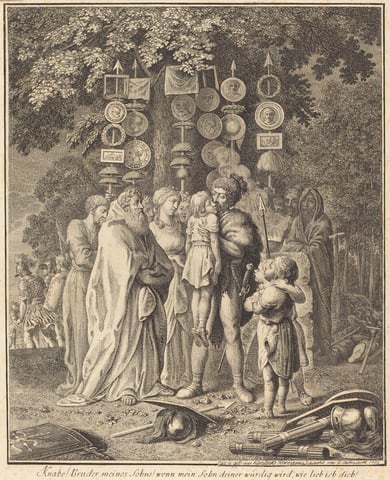
  3. The image depicts a group of people in varying poses and outfits. A central figure, possibly a child, is being held up by a man. Those around them are positioned differently, some standing closely. The figures have detailed faces and wear garments resembling classical attire. Shields and banners decorated with symbols are present in the background. Armor and helmets are scattered on the ground. Trees and a group of people in the distance are part of the background.
    Ancient TeutonsDaniel Nikolaus Chodowiecki, 1782Courtesy National Gallery of Art, Washington
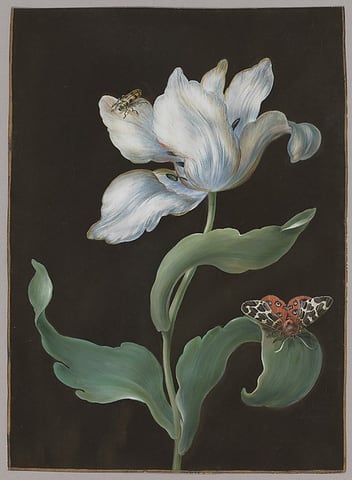
  4. A tulip, a butterfly of the species Arctia caja (garden tiger moth), and a beetle (possibly a longhorn), by Barbara Regina Dietzsch, ca. 1750-60
    A tulip, a butterfly of the species Arctia caja (garden tiger moth), and a beetle (possibly a longhorn)Barbara Regina Dietzsch, ca. 1750-60Courtesy of The Metropolitan Museum of Art