Floor plan

Time and placeFlanders

Flanders

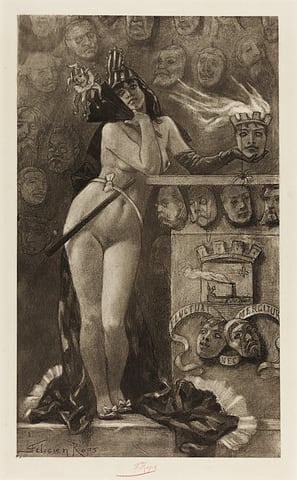
A work made of photogravure in dark brown retouched with soft varnish (vernis mou), roulette and blue handcoloring on thick cream wove paper.
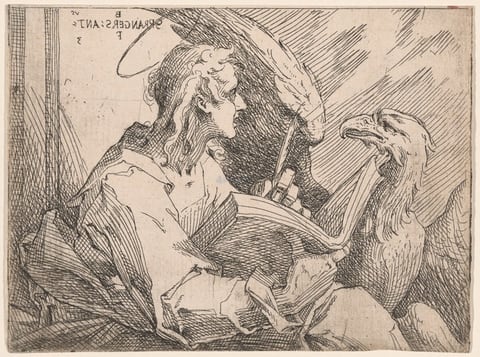
A work made of etching on ivory laid paper.
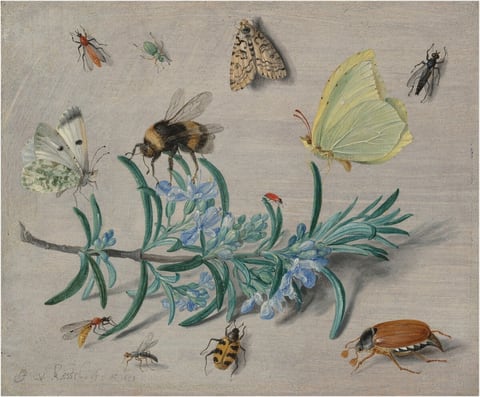
A sprig of flowering rosemary lying against an ivory-white background and the twelve insects that surround it fills this horizontal painting. Stretching nearly the length of the composition with the cut end to our left, the rosemary has blunted, needle-like, gently curling teal-green leaves and small periwinkle-blue flowers along the ash-brown stem. Several insects perch on the sprig while others are seen as if looking from overhead, resting on the white background. The three largest insects perch along the top of the sprig, with an ivory-white butterfly with moss-green and black markings to the left, a black and golden, fuzzy bumblebee near the center, and a lemon-yellow butterfly with red antennae to our right. A tiny red insect, perhaps a ladybug without spots, sits on a leaf between the bee and yellow butterfly, and a small wasp-like insect rests on a leaf in at the lower left. Another mosquito-like insect alights on the surface nearby, next to a beetle with a honey-orange body with black, almost tiger-like stripes. A large cockroach sitting near the lower right corner has six spindly legs, a mahogany-colored abdomen, a black thorax, and tiny, black head. Spaced somewhat evenly across the top of the panel are a brick-red, winged insect to the left, a mint-green, beetle-like bug near a moth patterned with bone white and black, and a black, fly-like insect to our right. Lit from the upper left, the rosemary and insects cast shadows on the surface. The artist signed and dated the work with gray in the lower left corner: “J v. kessel . . f. Ao 1653.”
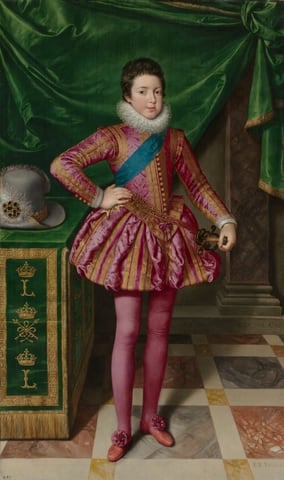
Portrait of King Louis XIII of France, by Frans Pourbus, 1611
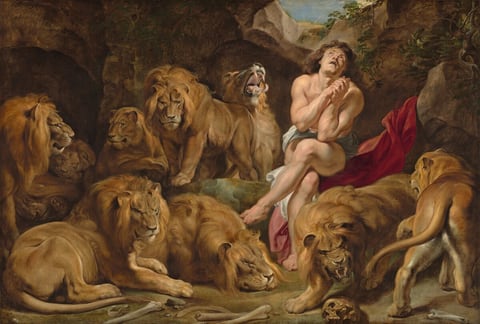
A nearly nude, muscular man with pale, peachy skin sits in an underground cave among seven male and two female lions in this horizontal painting. The man sits to our right of center with his legs crossed, elbows close to his body with hands clasped by his chest. His head tips back to look up through a small opening above. He has long, wavy, chestnut-brown hair and dark eyes. A white cloth wraps across his hips, and he sits on a scarlet-red swath of fabric draped up over a rock next to him. The nine lions stalk, sit, or lie down around the man. One male lion next to the man, to our left, opens his mouth with his head thrown back, curling tongue extended beyond long fangs. A human skull and other bones are strewn on the dirt ground close to us. The rocky cave curves up around the animals and man to a narrow, round opening showing blue sky above.
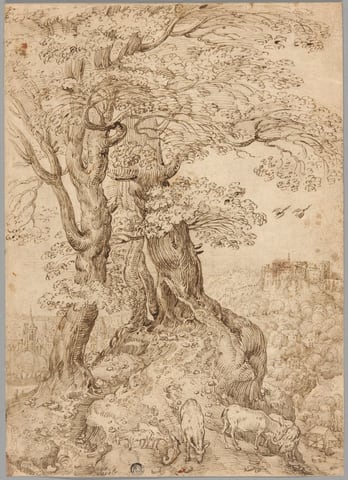
A work made of pen and brown ink on cream laid paper.

The works in this room are listed below.

Works in this room

Works made in Flanders, from every century in the collection.

First room, north wall

  1. A work made of photogravure in dark brown retouched with soft varnish (vernis mou), roulette and blue handcoloring on thick cream wove paper.
    Modern MasksFélicien Rops, 1889Courtesy of the Art Institute of Chicago
  2. A work made of etching on ivory laid paper.
    St. John the EvangelistBartholomaeus Spranger, c. 1590Courtesy of the Art Institute of Chicago
  3. A sprig of flowering rosemary lying against an ivory-white background and the twelve insects that surround it fills this horizontal painting. Stretching nearly the length of the composition with the cut end to our left, the rosemary has blunted, needle-like, gently curling teal-green leaves and small periwinkle-blue flowers along the ash-brown stem. Several insects perch on the sprig while others are seen as if looking from overhead, resting on the white background. The three largest insects perch along the top of the sprig, with an ivory-white butterfly with moss-green and black markings to the left, a black and golden, fuzzy bumblebee near the center, and a lemon-yellow butterfly with red antennae to our right. A tiny red insect, perhaps a ladybug without spots, sits on a leaf between the bee and yellow butterfly, and a small wasp-like insect rests on a leaf in at the lower left. Another mosquito-like insect alights on the surface nearby, next to a beetle with a honey-orange body with black, almost tiger-like stripes. A large cockroach sitting near the lower right corner has six spindly legs, a mahogany-colored abdomen, a black thorax, and tiny, black head. Spaced somewhat evenly across the top of the panel are a brick-red, winged insect to the left, a mint-green, beetle-like bug near a moth patterned with bone white and black, and a black, fly-like insect to our right. Lit from the upper left, the rosemary and insects cast shadows on the surface. The artist signed and dated the work with gray in the lower left corner: “J v. kessel . . f. Ao 1653.”
    Insects and a Sprig of RosemaryJan van Kessel the Elder, 1653Courtesy National Gallery of Art, Washington
  4. Portrait of King Louis XIII of France, by Frans Pourbus, 1611
    Portrait of King Louis XIII of FranceFrans Pourbus, 1611Courtesy of the Cleveland Museum of Art

First room, south wall

  1. A nearly nude, muscular man with pale, peachy skin sits in an underground cave among seven male and two female lions in this horizontal painting. The man sits to our right of center with his legs crossed, elbows close to his body with hands clasped by his chest. His head tips back to look up through a small opening above. He has long, wavy, chestnut-brown hair and dark eyes. A white cloth wraps across his hips, and he sits on a scarlet-red swath of fabric draped up over a rock next to him. The nine lions stalk, sit, or lie down around the man. One male lion next to the man, to our left, opens his mouth with his head thrown back, curling tongue extended beyond long fangs. A human skull and other bones are strewn on the dirt ground close to us. The rocky cave curves up around the animals and man to a narrow, round opening showing blue sky above.
    Daniel in the Lions' DenPeter Paul Rubens, c. 1614/1616Courtesy National Gallery of Art, Washington
  2. A work made of pen and brown ink on cream laid paper.
    Wooded Landscape with Donkeys and Goats, and Castle on Hill in DistancePaul Bril, n.d.Courtesy of the Art Institute of Chicago

Second room, south wall
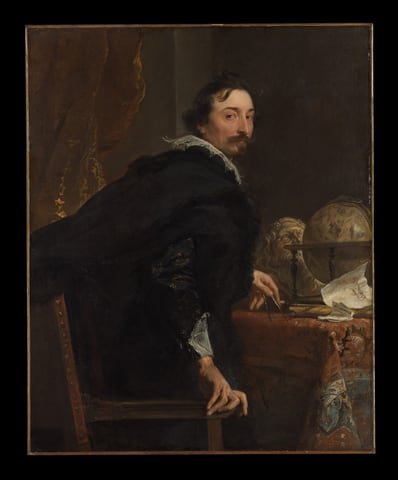
  1. Lucas van Uffel (died 1637), by Anthony van Dyck, ca. 1622
    Lucas van Uffel (died 1637)Anthony van Dyck, ca. 1622Courtesy of The Metropolitan Museum of Art
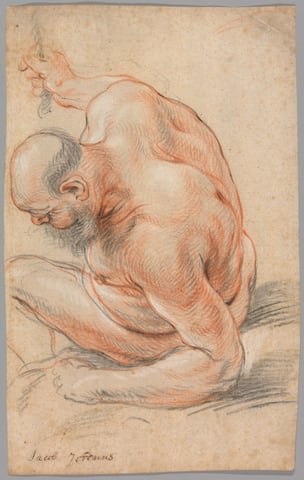
  2. A work made of red and black chalk, with touches of white chalk, on cream laid paper.
    Nude Old Man Seated, Leaning on His Forearm, Facing LeftJacob Jordaens, c. 1640Courtesy of the Art Institute of Chicago
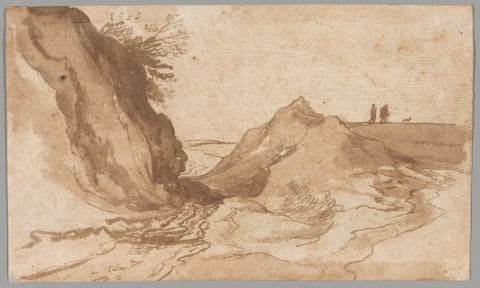
  3. A work made of pen and brush and brown ink and brush and brown wash on ivory laid paper.
    A Hilly Landscape with Figures Near a RavineJan Brueghel the Elder, 1595Courtesy of the Art Institute of Chicago
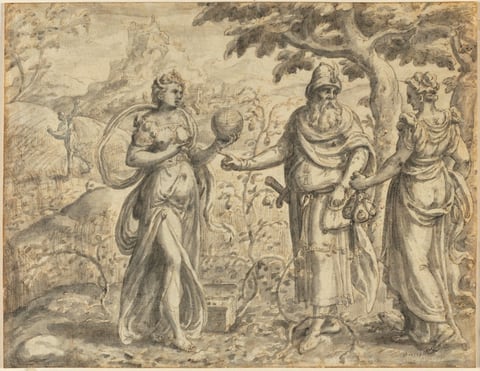
  4. The Seed Received among the Thorns, from the Parable of the Sower, by Gerard P. van Groningen, c. 1573
    The Seed Received among the Thorns, from the Parable of the SowerGerard P. van Groningen, c. 1573Courtesy of the Cleveland Museum of Art

Second room, north wall
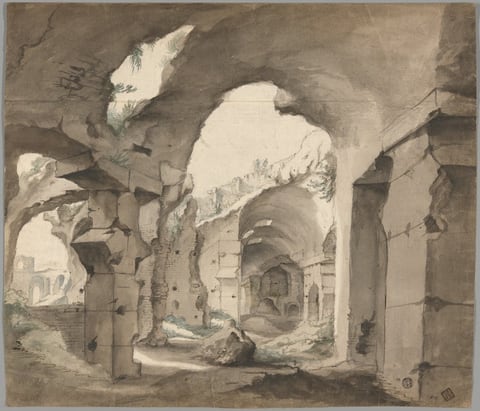
  1. A work made of pen and brown ink and brush and black and green washes, over black chalk, on cream laid paper.
    Interior View of the ColiseumLodewijk Toeput, c. 1580Courtesy of the Art Institute of Chicago
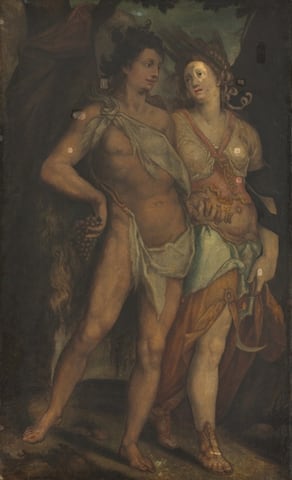
  2. Ceres and Bacchus, by Bartholomaeus Spranger, 1600s
    Ceres and BacchusBartholomaeus Spranger, 1600sCourtesy of the Cleveland Museum of Art
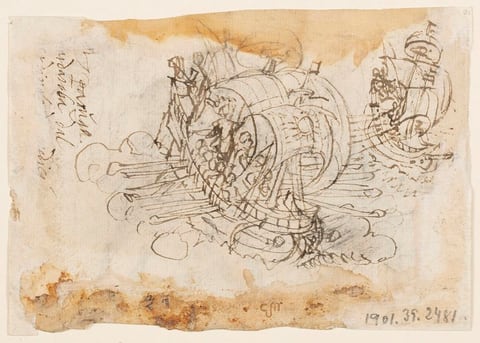
  3. TWO GALLEYS AT SEA
    Two Galleys at SeaJan van der Straet, called Stradanus, ca. 1587 – 1590Courtesy of Cooper Hewitt, Smithsonian Design Museum

Third room, north wall
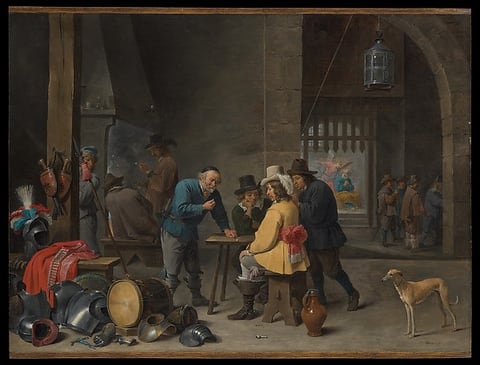
  1. Guardroom with the Deliverance of Saint Peter, by David Teniers the Younger, ca. 1645–47
    Guardroom with the Deliverance of Saint PeterDavid Teniers the Younger, ca. 1645–47Courtesy of The Metropolitan Museum of Art
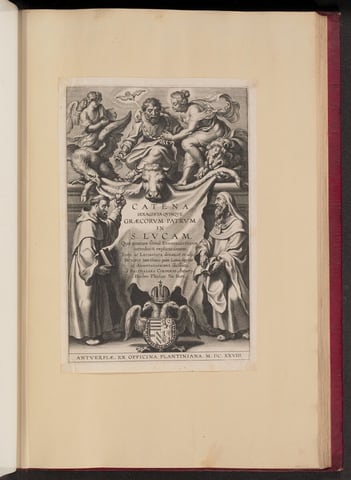
  2. The image features a detailed black and white illustration with multiple human and animal figures in a symbolic arrangement. In the foreground, two full-body figures are depicted in long robes and sandals, positioned on either side of a large draped banner with text. One figure holds an open book. Above the banner are celestial figures in dynamic poses. To the left is a winged bull-like creature and a seated male figure with a beard, next to a female figure in classical attire. They are all surrounded by flowing fabric and a lion-like animal. In the lower center foreground, there is an emblem resembling a coat of arms with an eagle and a crowned shield. The background is textured, with no natural landscape or architecture present, allowing the figures to stand out. The illustration is framed by the margins of an open book.
    Title Page for Balthasar Cordier, Catena Sexaginta Qvinqve Graecorvm Patrvm in S. Lvcam...Cornelis Galle I, 1628Courtesy National Gallery of Art, Washington
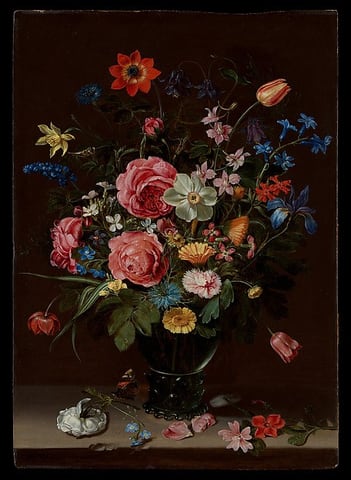
  3. A Bouquet of Flowers, by Clara Peeters, ca. 1612
    A Bouquet of FlowersClara Peeters, ca. 1612Courtesy of The Metropolitan Museum of Art