Floor plan

Time and placeFlanders

Flanders

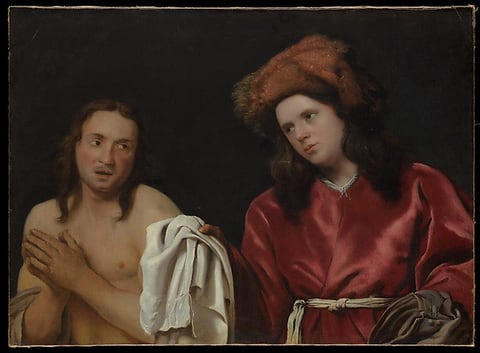
Clothing the Naked, by Michiel Sweerts, ca. 1661
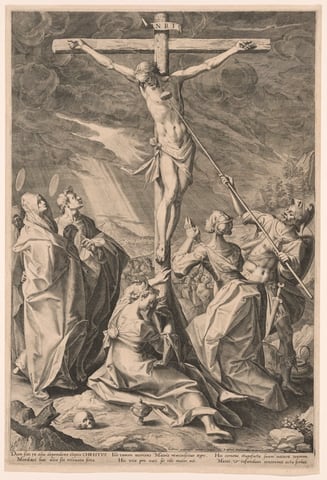
A work made of engraving in black on cream laid paper.
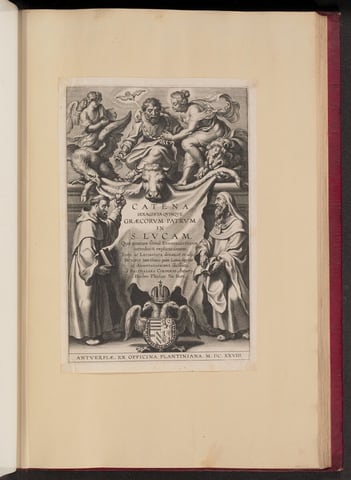
The image features a detailed black and white illustration with multiple human and animal figures in a symbolic arrangement. In the foreground, two full-body figures are depicted in long robes and sandals, positioned on either side of a large draped banner with text. One figure holds an open book. Above the banner are celestial figures in dynamic poses. To the left is a winged bull-like creature and a seated male figure with a beard, next to a female figure in classical attire. They are all surrounded by flowing fabric and a lion-like animal. In the lower center foreground, there is an emblem resembling a coat of arms with an eagle and a crowned shield. The background is textured, with no natural landscape or architecture present, allowing the figures to stand out. The illustration is framed by the margins of an open book.
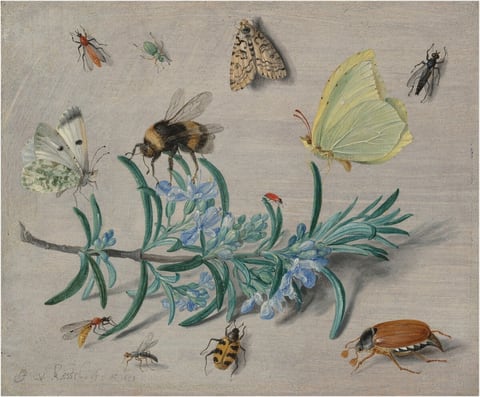
A sprig of flowering rosemary lying against an ivory-white background and the twelve insects that surround it fills this horizontal painting. Stretching nearly the length of the composition with the cut end to our left, the rosemary has blunted, needle-like, gently curling teal-green leaves and small periwinkle-blue flowers along the ash-brown stem. Several insects perch on the sprig while others are seen as if looking from overhead, resting on the white background. The three largest insects perch along the top of the sprig, with an ivory-white butterfly with moss-green and black markings to the left, a black and golden, fuzzy bumblebee near the center, and a lemon-yellow butterfly with red antennae to our right. A tiny red insect, perhaps a ladybug without spots, sits on a leaf between the bee and yellow butterfly, and a small wasp-like insect rests on a leaf in at the lower left. Another mosquito-like insect alights on the surface nearby, next to a beetle with a honey-orange body with black, almost tiger-like stripes. A large cockroach sitting near the lower right corner has six spindly legs, a mahogany-colored abdomen, a black thorax, and tiny, black head. Spaced somewhat evenly across the top of the panel are a brick-red, winged insect to the left, a mint-green, beetle-like bug near a moth patterned with bone white and black, and a black, fly-like insect to our right. Lit from the upper left, the rosemary and insects cast shadows on the surface. The artist signed and dated the work with gray in the lower left corner: “J v. kessel . . f. Ao 1653.”
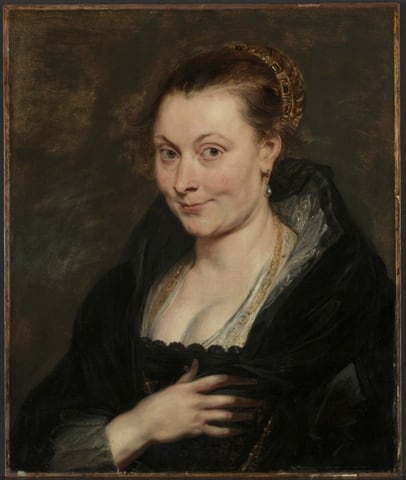
Portrait of Isabella Brant, by Peter Paul Rubens, c. 1620–25
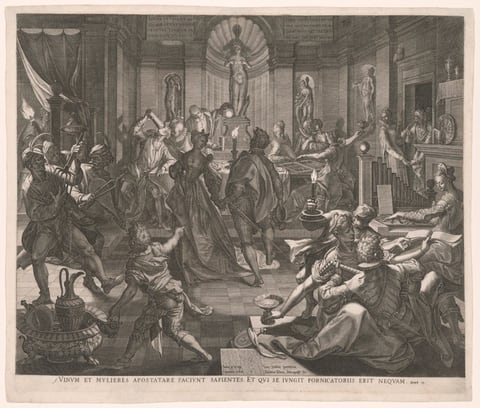
A work made of engraving in black on cream laid paper.
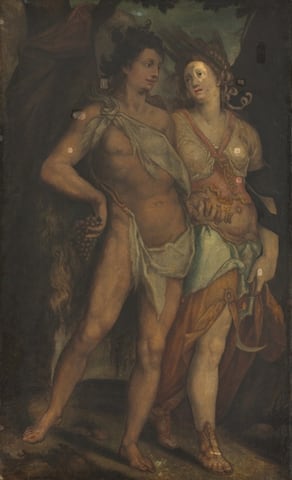
Ceres and Bacchus, by Bartholomaeus Spranger, 1600s
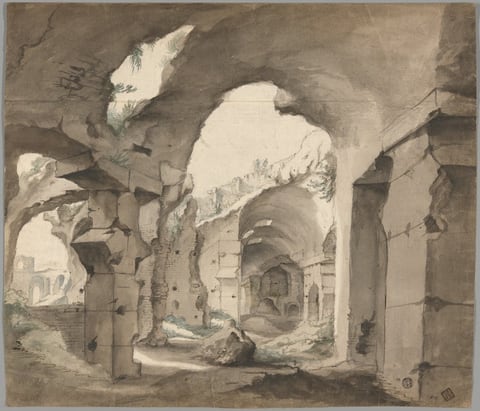
A work made of pen and brown ink and brush and black and green washes, over black chalk, on cream laid paper.

The works in this room are listed below.

Works in this room

Works made in Flanders, from every century in the collection.

First room, north wall

  1. Clothing the Naked, by Michiel Sweerts, ca. 1661
    Clothing the NakedMichiel Sweerts, ca. 1661Courtesy of The Metropolitan Museum of Art
  2. A work made of engraving in black on cream laid paper.
    Christ on the CrossRaphael Sadeler, I, 1590Courtesy of the Art Institute of Chicago
  3. The image features a detailed black and white illustration with multiple human and animal figures in a symbolic arrangement. In the foreground, two full-body figures are depicted in long robes and sandals, positioned on either side of a large draped banner with text. One figure holds an open book. Above the banner are celestial figures in dynamic poses. To the left is a winged bull-like creature and a seated male figure with a beard, next to a female figure in classical attire. They are all surrounded by flowing fabric and a lion-like animal. In the lower center foreground, there is an emblem resembling a coat of arms with an eagle and a crowned shield. The background is textured, with no natural landscape or architecture present, allowing the figures to stand out. The illustration is framed by the margins of an open book.
    Title Page for Balthasar Cordier, Catena Sexaginta Qvinqve Graecorvm Patrvm in S. Lvcam...Cornelis Galle I, 1628Courtesy National Gallery of Art, Washington
  4. A sprig of flowering rosemary lying against an ivory-white background and the twelve insects that surround it fills this horizontal painting. Stretching nearly the length of the composition with the cut end to our left, the rosemary has blunted, needle-like, gently curling teal-green leaves and small periwinkle-blue flowers along the ash-brown stem. Several insects perch on the sprig while others are seen as if looking from overhead, resting on the white background. The three largest insects perch along the top of the sprig, with an ivory-white butterfly with moss-green and black markings to the left, a black and golden, fuzzy bumblebee near the center, and a lemon-yellow butterfly with red antennae to our right. A tiny red insect, perhaps a ladybug without spots, sits on a leaf between the bee and yellow butterfly, and a small wasp-like insect rests on a leaf in at the lower left. Another mosquito-like insect alights on the surface nearby, next to a beetle with a honey-orange body with black, almost tiger-like stripes. A large cockroach sitting near the lower right corner has six spindly legs, a mahogany-colored abdomen, a black thorax, and tiny, black head. Spaced somewhat evenly across the top of the panel are a brick-red, winged insect to the left, a mint-green, beetle-like bug near a moth patterned with bone white and black, and a black, fly-like insect to our right. Lit from the upper left, the rosemary and insects cast shadows on the surface. The artist signed and dated the work with gray in the lower left corner: “J v. kessel . . f. Ao 1653.”
    Insects and a Sprig of RosemaryJan van Kessel the Elder, 1653Courtesy National Gallery of Art, Washington

First room, south wall

  1. Portrait of Isabella Brant, by Peter Paul Rubens, c. 1620–25
    Portrait of Isabella BrantPeter Paul Rubens, c. 1620–25Courtesy of the Cleveland Museum of Art
  2. A work made of engraving in black on cream laid paper.
    The Carnival (or the Prodigal Son)Jan Sadeler, I, 1588Courtesy of the Art Institute of Chicago
  3. Ceres and Bacchus, by Bartholomaeus Spranger, 1600s
    Ceres and BacchusBartholomaeus Spranger, 1600sCourtesy of the Cleveland Museum of Art
  4. A work made of pen and brown ink and brush and black and green washes, over black chalk, on cream laid paper.
    Interior View of the ColiseumLodewijk Toeput, c. 1580Courtesy of the Art Institute of Chicago

Second room, south wall
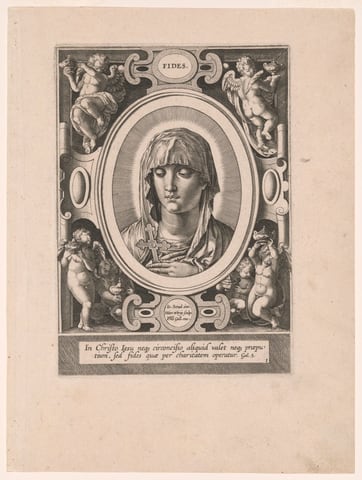
  1. A work made of engraving on ivory laid paper.
    Fides, plate 1 from The Seven VirtuesHieronymous Wierix, c. 1598Courtesy of the Art Institute of Chicago
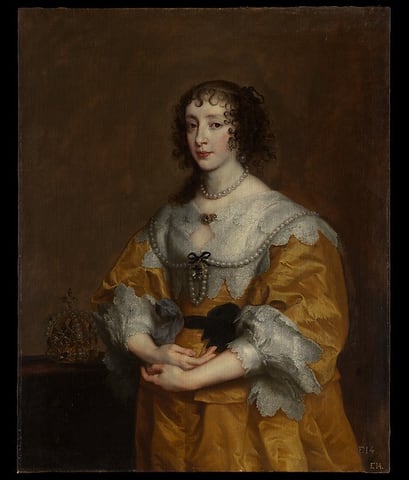
  2. Queen Henrietta Maria, by Anthony van Dyck, 1636
    Queen Henrietta MariaAnthony van Dyck, 1636Courtesy of The Metropolitan Museum of Art
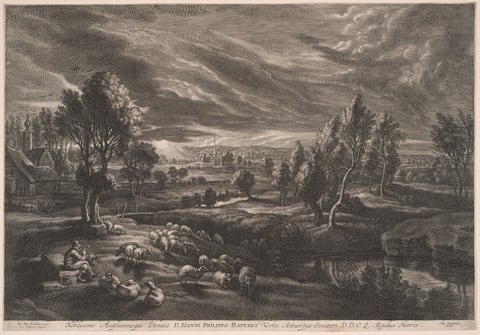
  3. A work made of engraving on ivory laid paper.
    Landscape with Sheep, from The Small LandscapesSchelte Adamsz. Bolswert, c. 1638Courtesy of the Art Institute of Chicago
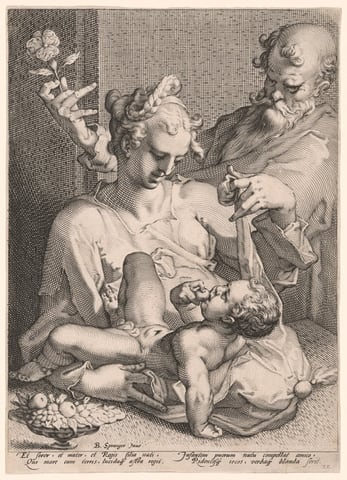
  4. A work made of engraving on laid paper.
    The Holy FamilyPieter de Jode, I, c. 1585-1595Courtesy of the Art Institute of Chicago

Second room, north wall
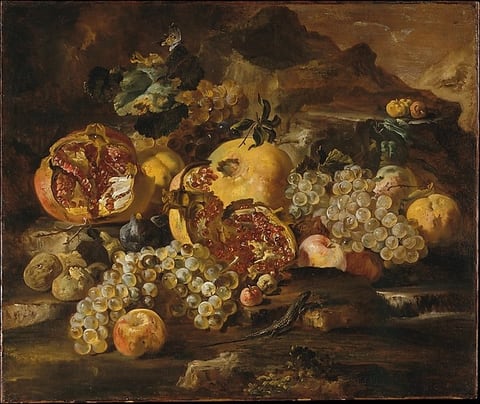
  1. Pomegranates and Other Fruit in a Landscape, by Abraham Brueghel
    Pomegranates and Other Fruit in a LandscapeAbraham BrueghelCourtesy of The Metropolitan Museum of Art
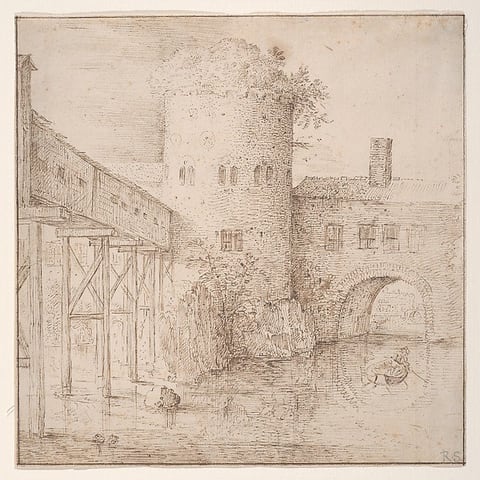
  2. A Mill with a Fortified Bridge, a Rowing Boat in the Foreground, by Roelandt Savery, 1596–1639
    A Mill with a Fortified Bridge, a Rowing Boat in the ForegroundRoelandt Savery, 1596–1639Courtesy of The Metropolitan Museum of Art
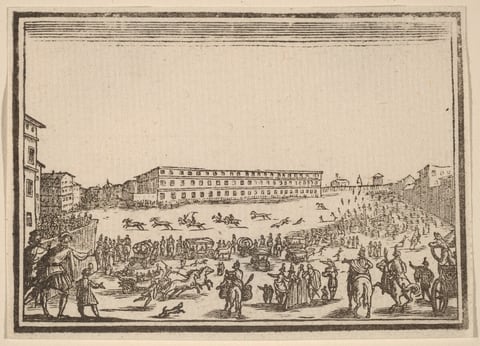
  3. The image shows a wide aerial view of a public gathering. Buildings line the horizon overlooking the scene below. The detailed illustration features various individuals and animals in motion, including groups of people, horse riders, and carts. The monochromatic color palette contributes to a classic aesthetic.
    Piazza Presso alla Porta al PratoEdouard Eckman, 1621Courtesy National Gallery of Art, Washington
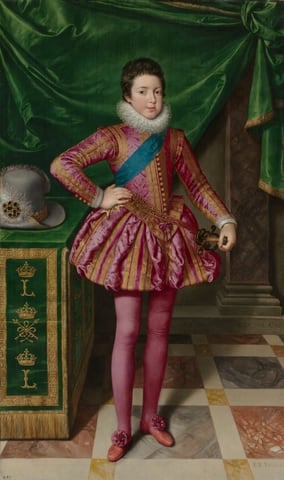
  4. Portrait of King Louis XIII of France, by Frans Pourbus, 1611
    Portrait of King Louis XIII of FranceFrans Pourbus, 1611Courtesy of the Cleveland Museum of Art