Floor plan

Time and placeFlanders

Flanders

A work made of engraving on ivory laid paper.
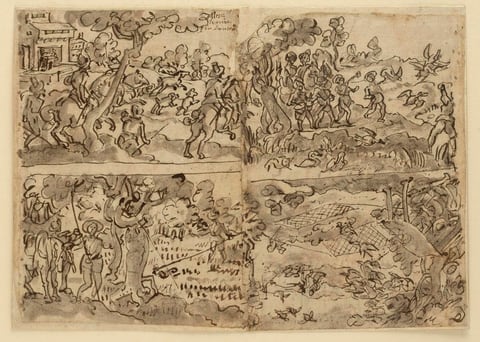
1901-39-151-a: DEER HUNT WITH HOUNDS [ABOVE]; SKYLARK HUNT WITH FALCONS [BELOW]; 1901-39-151-b: GOOSE AND DUCK HUNT WITH FALCONS [ABOVE RIGHT]; GOOSE HUNT [BELOW RIGHT]
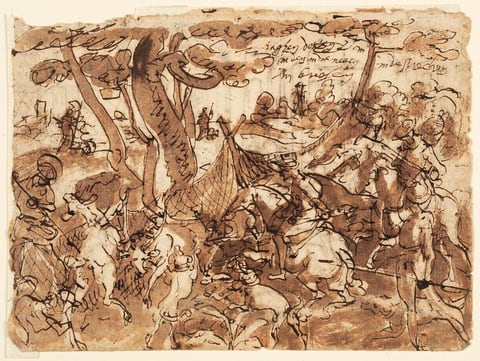
DEER HUNT WITH NETS
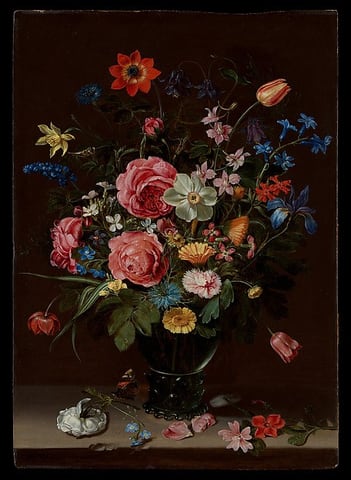
A Bouquet of Flowers, by Clara Peeters, ca. 1612
A work made of oil on canvas.
A work made of etching on ivory laid paper.
Self-Portrait, from "The Iconography", by Anthony van Dyck, ca. 1640
A work made of engraving in black on cream laid paper.

The works in this room are listed below.

Works in this room

Works made in Flanders, from every century in the collection.

First room, north wall

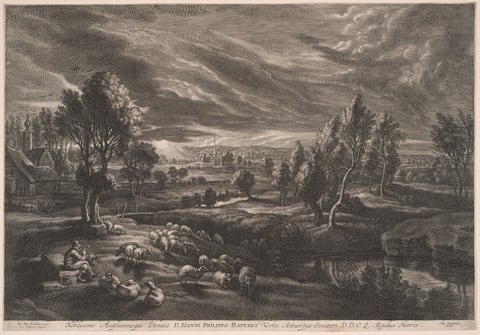
  1. A work made of engraving on ivory laid paper.
    Landscape with Sheep, from The Small LandscapesSchelte Adamsz. Bolswert, c. 1638Courtesy of the Art Institute of Chicago
  2. 1901-39-151-a: DEER HUNT WITH HOUNDS [ABOVE]; SKYLARK HUNT WITH FALCONS [BELOW]; 1901-39-151-b: GOOSE AND DUCK HUNT WITH FALCONS [ABOVE RIGHT]; GOOSE HUNT [BELOW RIGHT]
    Goose and Duck Hunt with Falcons [above right]; Goose Hunt [below right]Jan van der Straet, called Stradanus, ca. 1596-99Courtesy of Cooper Hewitt, Smithsonian Design Museum
  3. DEER HUNT WITH NETS
    Deer Hunt with NetsJan van der Straet, called Stradanus, ca. 1590 – 1599Courtesy of Cooper Hewitt, Smithsonian Design Museum
  4. A Bouquet of Flowers, by Clara Peeters, ca. 1612
    A Bouquet of FlowersClara Peeters, ca. 1612Courtesy of The Metropolitan Museum of Art

First room, south wall

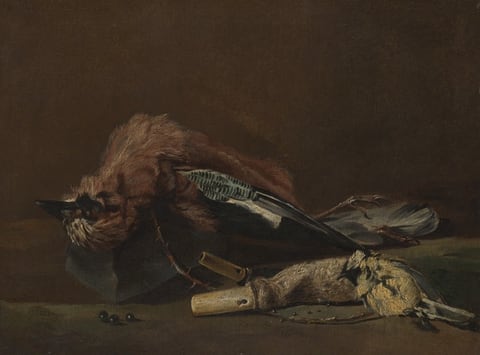
  1. A work made of oil on canvas.
    Dead Birds and Shot BagsPieter Boel, c. 1660Courtesy of the Art Institute of Chicago
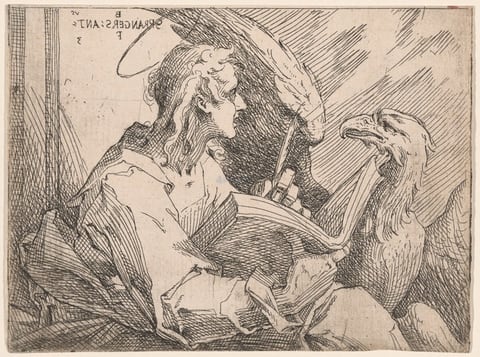
  2. A work made of etching on ivory laid paper.
    St. John the EvangelistBartholomaeus Spranger, c. 1590Courtesy of the Art Institute of Chicago
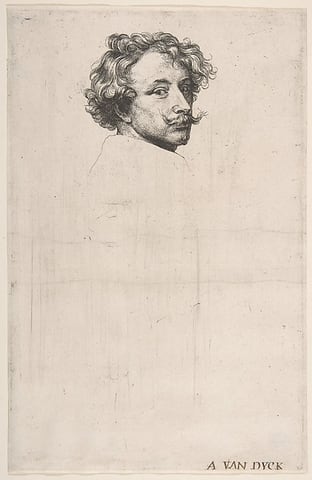
  3. Self-Portrait, from "The Iconography", by Anthony van Dyck, ca. 1640
    Self-Portrait, from "The Iconography"Anthony van Dyck, ca. 1640Courtesy of The Metropolitan Museum of Art
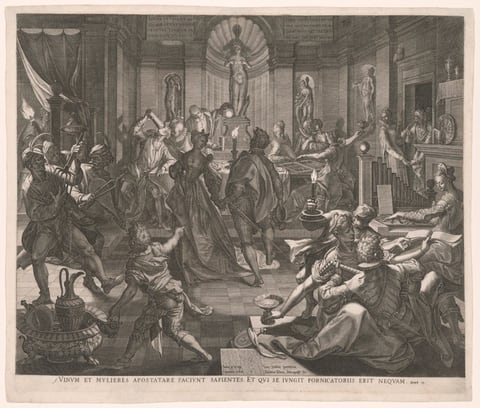
  4. A work made of engraving in black on cream laid paper.
    The Carnival (or the Prodigal Son)Jan Sadeler, I, 1588Courtesy of the Art Institute of Chicago

Second room, south wall
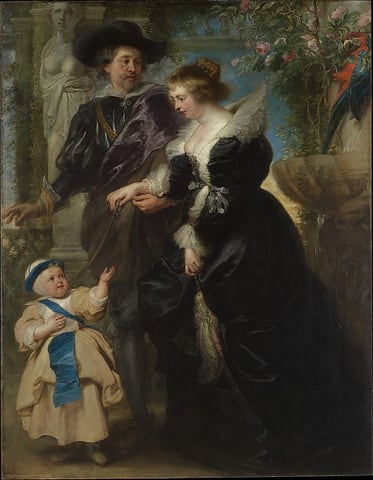
  1. Rubens, Helena Fourment (1614–1673), and Their Son Frans (1633–1678), by Peter Paul Rubens, ca. 1635
    Rubens, Helena Fourment (1614–1673), and Their Son Frans (1633–1678)Peter Paul Rubens, ca. 1635Courtesy of The Metropolitan Museum of Art
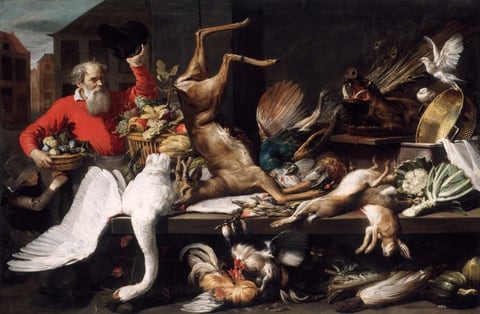
  2. An older man at left in red raises his hat toward a central table chaotically overflowing with dead game, fruits, and vegetables. The wings of dead birds and limbs of animals are splayed out at dramatic angles; a deer at center is suspended by his back legs. Live birds and a cat animate the scene.
    Still Life with Dead Game, Fruits, and Vegetables in a MarketFrans Snyders, 1614Courtesy of the Art Institute of Chicago

Second room, north wall
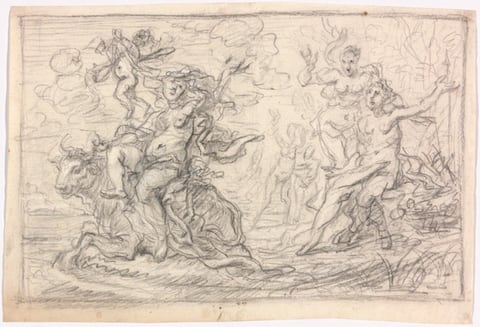
  1. A work made of black chalk, with touches of white chalk, on ivory laid paper.
    The Rape of EuropaCornelis Schut, I, 1635/40Courtesy of the Art Institute of Chicago
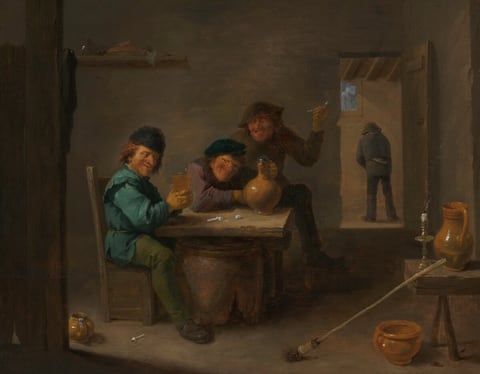
  2. Three pale-skinned people gather around a wooden table in a dimly lit tavern as a fourth person urinates against a wall in a back room in this horizontal painting. The table is a square board resting on a broken barrel. All three men at the table have prominent, reddened noses set in wide faces, and they wear clothing and hats in tones of spruce blue, olive green, muted purple, gray, or brown. One man sits on the left side of the table, holding a glass of beer with both hands. He wears what might be a furry cap. His face is turned slightly toward us but he looks down and to our right. The other seated man is across from us. He grins widely as he hunches over one forearm and holds the neck of a lidded ceramic jug with his other hand. He has a long, chunky chin and stares out at us from under a prominent brow ridge. The third man here stands behind, holding up a white clay pipe. His mouth is open, his eyes slitted, possibly crossed, and he hunches down. One foot rests on a low wooden box, a foot warmer. Another white clay pipe and the broken bowl of a pipe sit on the table, and another pipe lies by the first man’s feet. Also across the floor are two pots and a stubby broom, the long handle of which lies against a table holding a brass candlestick. A wisp of smoke rises from the wick in the candle stub. A shelf hung on the wall near the upper left corner of the painting holds a glass vessel and perhaps a plate. Two wooden beams line the left edge of the composition, and a cloth is draped over a nail there. The floor and wall are nearly uniform taupe gray. A rectangular doorway opens into the next room, in the top right corner of the painting. There a man stands facing the wall with both hands down in front of his torso. A window is set high in the wall there and the timbered ceiling is visible. The artist signed the lower left corner the painting, “D Teniers f.” The first two digits of the date read “16.”
    Peasants in a TavernDavid Teniers the Younger, c. 1633Courtesy National Gallery of Art, Washington
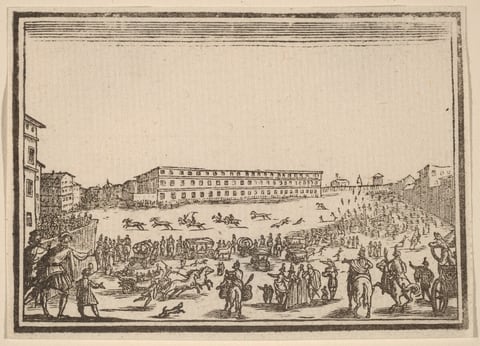
  3. The image shows a wide aerial view of a public gathering. Buildings line the horizon overlooking the scene below. The detailed illustration features various individuals and animals in motion, including groups of people, horse riders, and carts. The monochromatic color palette contributes to a classic aesthetic.
    Piazza Presso alla Porta al PratoEdouard Eckman, 1621Courtesy National Gallery of Art, Washington
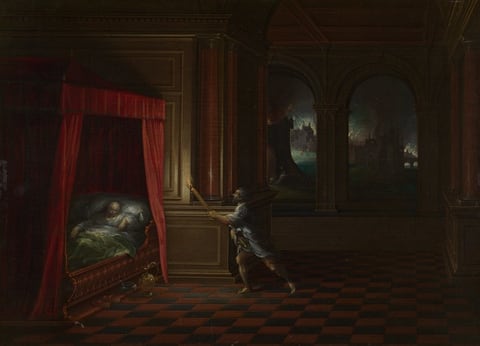
  4. A work made of oil on panel.
    Aeneas Rescuing Anchises from Burning TroyHendrick van Steenwijck, the Younger, c. 1610Courtesy of the Art Institute of Chicago

Third room, north wall
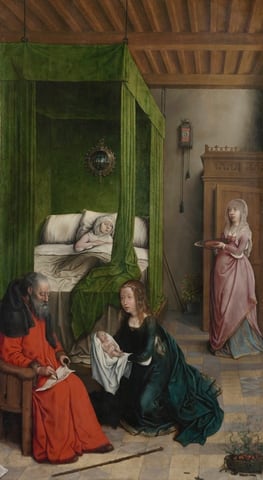
  1. The Birth and Naming of John the Baptist, by Juan de Flandes, 1496–99
    The Birth and Naming of John the BaptistJuan de Flandes, 1496–99Courtesy of the Cleveland Museum of Art
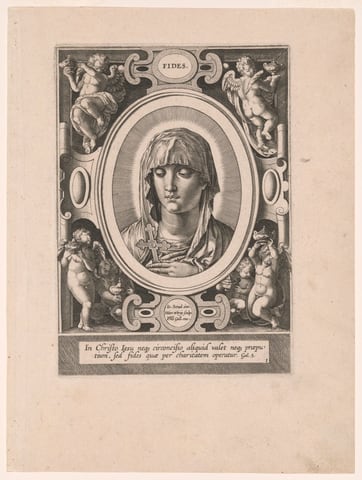
  2. A work made of engraving on ivory laid paper.
    Fides, plate 1 from The Seven VirtuesHieronymous Wierix, c. 1598Courtesy of the Art Institute of Chicago