Floor plan

Time and placeThe 20th century

The 20th century

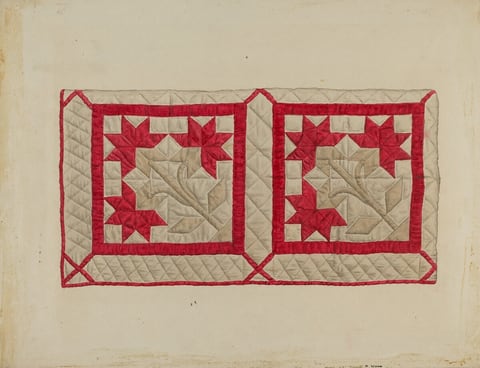
The image shows two large quilt blocks with a matching design, side by side. Each block consists of red and beige fabric with quilted stitching creating a textured appearance. The color palette includes primarily red, beige, and dark stitching outlining the patterns. The quilt blocks are placed centrally on a light-colored surface.
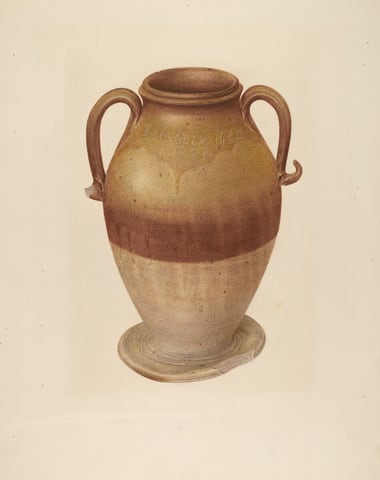
The image shows a large ceramic vase with two curved handles positioned near the top on either side. The vase has an earthy color palette with shades of brown, beige, and a subtle hint of reddish-brown forming a band around its middle. The vase is centrally placed on a flat surface, and both handles extend outward at the top.
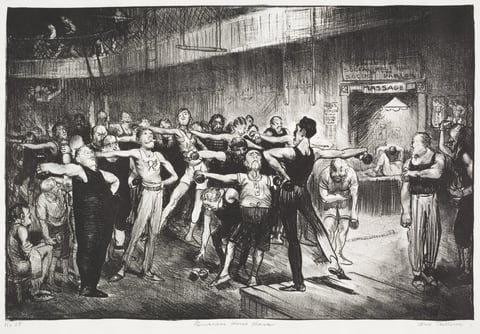
Business Men's Class, by George Bellows, 1916
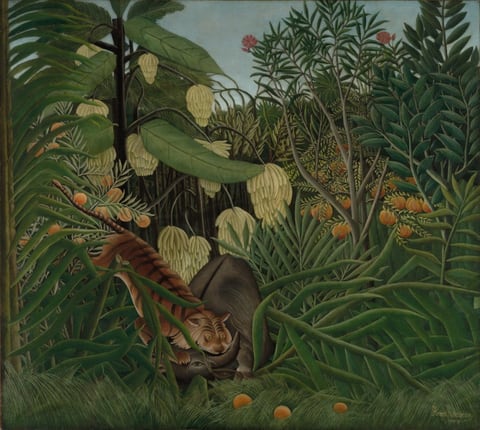
Fight Between a Tiger and a Buffalo, by Henri Rousseau, 1908
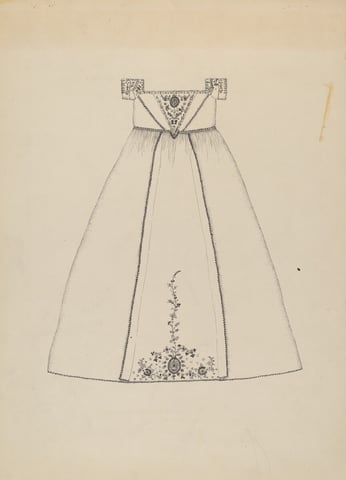
This is a drawing of a dress design. The illustration features a dress with a square neckline, adorned with embroidery around the bust area. The dress has a high waistline with a gathered skirt. The lower part of the dress also features floral embroidery patterns. The design emphasizes fine lines and delicate patterns.
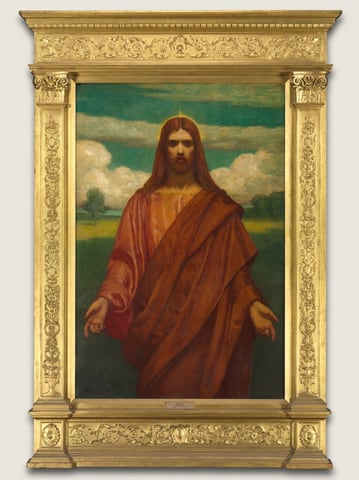
Christ, by Kenyon Cox, 1905

The works in this room are listed below.

Works in this room

Works made in the 20th century, anywhere in the world.

Section 1, north wall

  1. The image shows two large quilt blocks with a matching design, side by side. Each block consists of red and beige fabric with quilted stitching creating a textured appearance. The color palette includes primarily red, beige, and dark stitching outlining the patterns. The quilt blocks are placed centrally on a light-colored surface.
    Patchwork QuiltPaul Ward, c. 1936Courtesy National Gallery of Art, Washington
  2. The image shows a large ceramic vase with two curved handles positioned near the top on either side. The vase has an earthy color palette with shades of brown, beige, and a subtle hint of reddish-brown forming a band around its middle. The vase is centrally placed on a flat surface, and both handles extend outward at the top.
    VaseIsadore Goldberg, c. 1939Courtesy National Gallery of Art, Washington
  3. Business Men's Class, by George Bellows, 1916
    Business Men's ClassGeorge Bellows, 1916Courtesy of the Cleveland Museum of Art

Section 1, south wall

  1. Fight Between a Tiger and a Buffalo, by Henri Rousseau, 1908
    Fight Between a Tiger and a BuffaloHenri Rousseau, 1908Courtesy of the Cleveland Museum of Art
  2. This is a drawing of a dress design. The illustration features a dress with a square neckline, adorned with embroidery around the bust area. The dress has a high waistline with a gathered skirt. The lower part of the dress also features floral embroidery patterns. The design emphasizes fine lines and delicate patterns.
    Baptismal DressEvelyn Bailey, c. 1936Courtesy National Gallery of Art, Washington
  3. Christ, by Kenyon Cox, 1905
    ChristKenyon Cox, 1905Courtesy of the Cleveland Museum of Art

Section 2, south wall
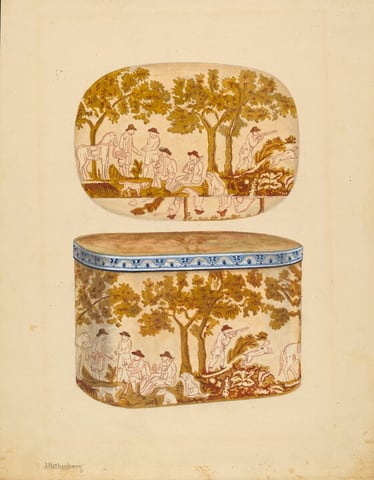
  1. This is a painting of a decorative box with pastoral scenes. The box has an oval lid and rectangular base adorned with intricate pastoral scenes in earthy tones. The scenes depict landscapes with trees, hills, and figures engaged in various activities against a warm backdrop. The lid has a similar scene, creating a cohesive decorative theme. The style resembles 19th-century European art focusing on pastoral genre scenes and decorative arts. The artwork delicately balances detail and composition, evoking calm and nostalgia.
    BandboxJohn Tarantino, c. 1937Courtesy National Gallery of Art, Washington
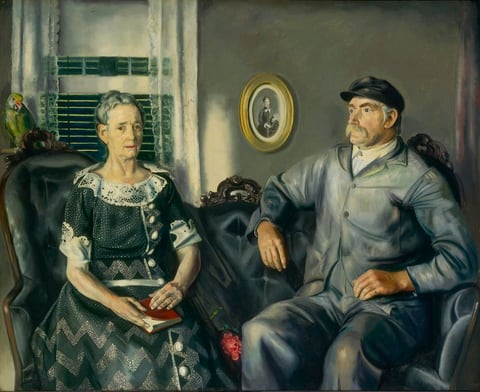
  2. Mr. and Mrs. Phillip Wase, by George Bellows, 1924
    Mr. and Mrs. Phillip WaseGeorge Bellows, 1924Courtesy of the Smithsonian American Art Museum
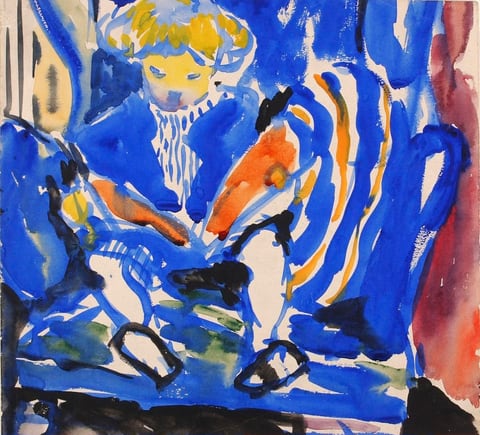
  3. Child Reading, by H. Lyman Saÿen, 1915-1918
    Child ReadingH. Lyman Saÿen, 1915-1918Courtesy of the Smithsonian American Art Museum
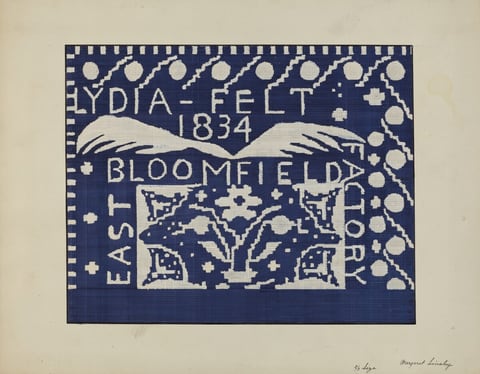
  4. This is a drawing of a textile design. The image consists of a pattern with the text "LYDIA FELT 1834 BLOOMFIELD" displayed along with decorative motifs of abstract leaves and floral shapes in a contrasting color against a dark background. The composition also includes the word "EAST" placed vertically and "YORK" placed horizontally. The combination of geometric shapes and organic elements forms a unified aesthetic typical of traditional textile patterns.
    CoverletMargaret Linsley, c. 1940Courtesy National Gallery of Art, Washington

Section 2, north wall
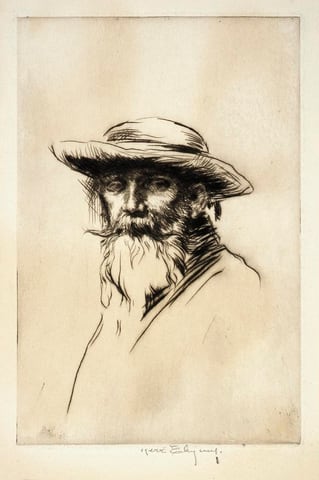
  1. Head of an Old Man, by Kerr Eby, ca. 1918
    Head of an Old ManKerr Eby, ca. 1918Courtesy of the Smithsonian American Art Museum
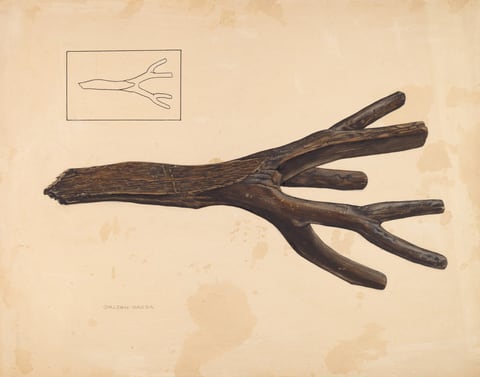
  2. A brown tree branch with several thick, bifurcated limbs is central in the image. The background is a muted beige with aged discoloration marks. The branch is oriented horizontally, with its thicker end on the left and split limbs extending to the right. In the top left corner, there is a rectangular inset with a simplified line drawing of the branch's shape.
    BootjackLloyd A. Davidson, c. 1942Courtesy National Gallery of Art, Washington
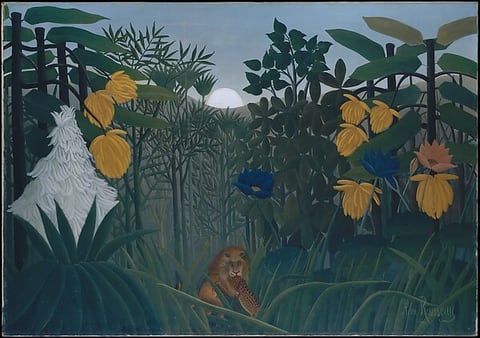
  3. The Repast of the Lion, by Henri Rousseau, ca. 1907
    The Repast of the LionHenri Rousseau, ca. 1907Courtesy of The Metropolitan Museum of Art
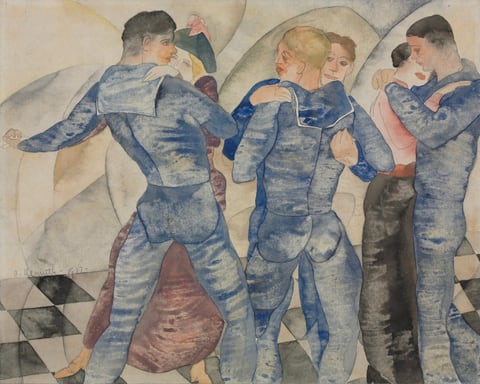
  4. Dancing Sailors, by Charles Demuth, 1917
    Dancing SailorsCharles Demuth, 1917Courtesy of the Cleveland Museum of Art
Section 3, north wall

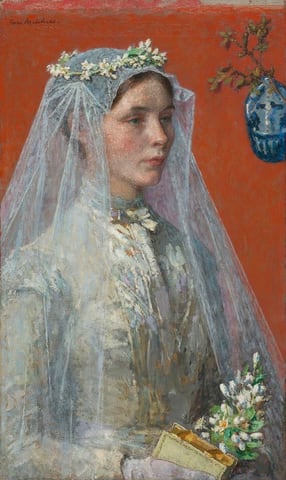
  1. The Bride, by Gari Melchers, ca. 1907
    The BrideGari Melchers, ca. 1907Courtesy of the Smithsonian American Art Museum
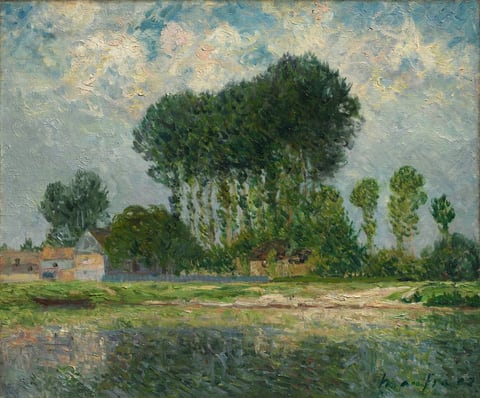
  2. The River, by Maxime Maufra, 1902
    The RiverMaxime Maufra, 1902Courtesy of the Cleveland Museum of Art