Floor plan

Time and placeThe 19th century

The 19th century

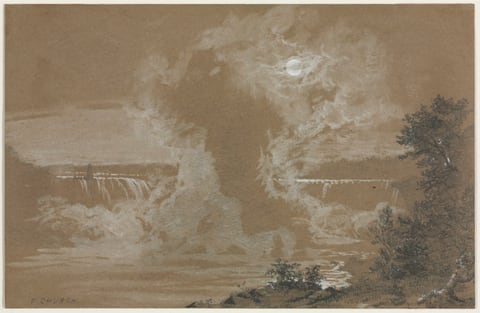
Niagara Falls by Moonlight, by Frederic Edwin Church, probably 1856
A work made of oil on canvas.
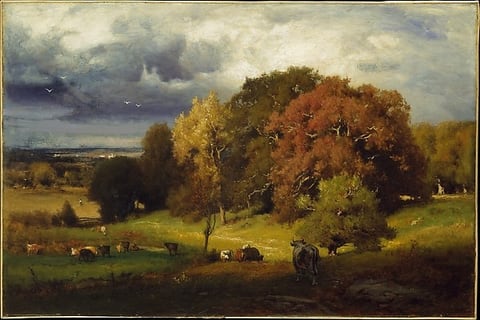
Autumn Oaks, by George Inness, ca. 1878
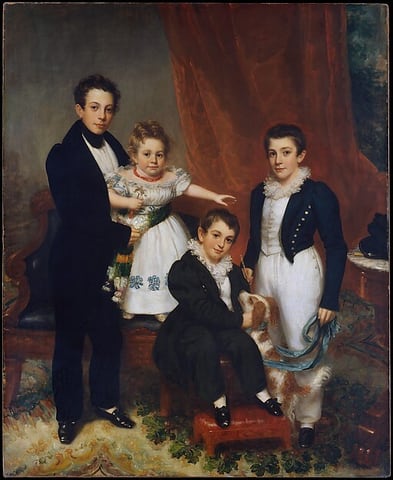
The Knapp Children, by Samuel Lovett Waldo, ca. 1833–34
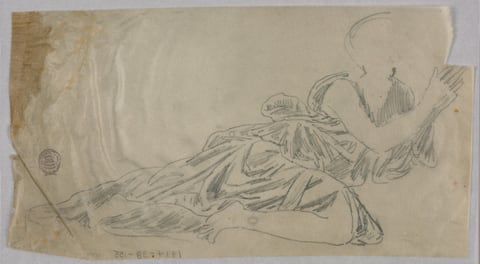
DRAPERY STUDY
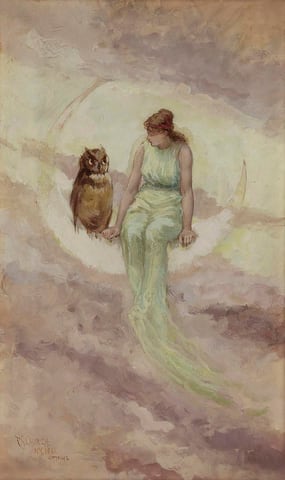
The Witch's Daughter, by Frederick Stuart Church, 1881
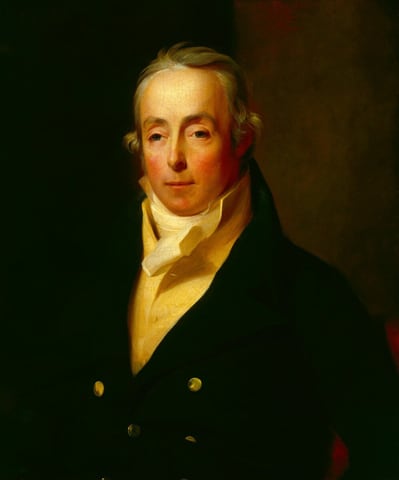
This painting is a portrait of a man from the waist up. He is facing us, with pale skin, thin lips, rosy cheeks, light green eyes, and gray hair styled into curls around his ears. He has a neutral expression. The man is wearing a dark coat with gold buttons on the front, with a pale-yellow shirt underneath and a white cravat around his neck. The background is a dark and indistinct brown color.

The works in this room are listed below.

Works in this room

Works made in the 19th century, anywhere in the world.

Section 1, north wall

  1. Niagara Falls by Moonlight, by Frederic Edwin Church, probably 1856
    Niagara Falls by MoonlightFrederic Edwin Church, probably 1856Courtesy of the Cleveland Museum of Art
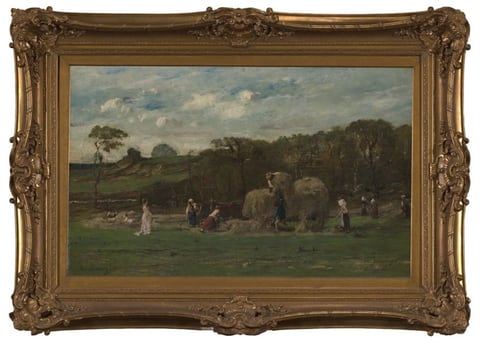
  2. A work made of oil on canvas.
    Loading HayMihály Munkácsy, c. 1886-87Courtesy of the Art Institute of Chicago
  3. Autumn Oaks, by George Inness, ca. 1878
    Autumn OaksGeorge Inness, ca. 1878Courtesy of The Metropolitan Museum of Art

Section 1, south wall

  1. The Knapp Children, by Samuel Lovett Waldo, ca. 1833–34
    The Knapp ChildrenSamuel Lovett Waldo, ca. 1833–34Courtesy of The Metropolitan Museum of Art
  2. DRAPERY STUDY
    Drapery StudyFrancis Augustus Lathrop, ca. 1895Courtesy of Cooper Hewitt, Smithsonian Design Museum
  3. The Witch's Daughter, by Frederick Stuart Church, 1881
    The Witch's DaughterFrederick Stuart Church, 1881Courtesy of the Smithsonian American Art Museum
  4. This painting is a portrait of a man from the waist up. He is facing us, with pale skin, thin lips, rosy cheeks, light green eyes, and gray hair styled into curls around his ears. He has a neutral expression. The man is wearing a dark coat with gold buttons on the front, with a pale-yellow shirt underneath and a white cravat around his neck. The background is a dark and indistinct brown color.
    Abraham KintzingThomas Sully, 1815Courtesy National Gallery of Art, Washington

Section 2, south wall
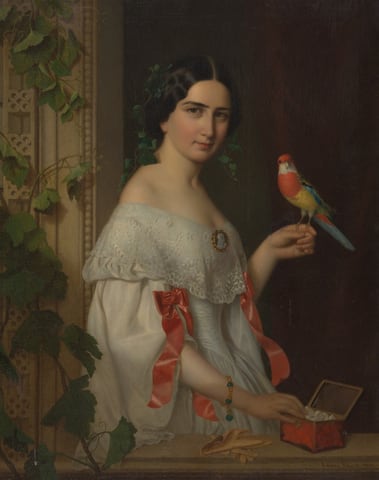
  1. A work made of oil on canvas.
    Untitled (Lady with a Parakeet)August (Ágost) Canzi, 1856Courtesy of the Art Institute of Chicago
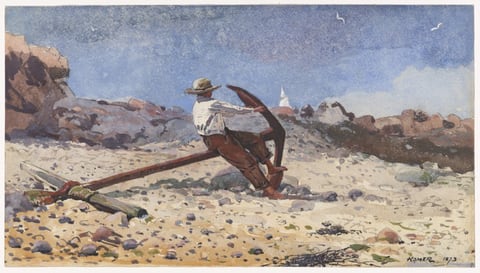
  2. Boy with Anchor, by Winslow Homer, 1873
    Boy with AnchorWinslow Homer, 1873Courtesy of the Cleveland Museum of Art
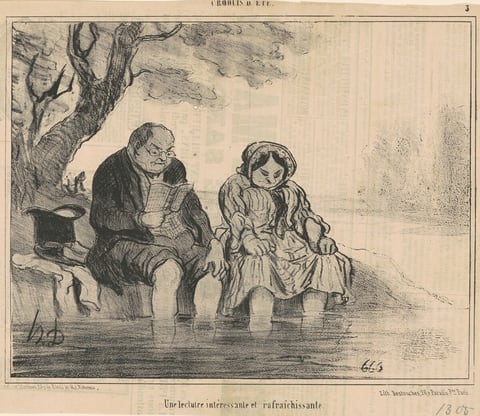
  3. The image shows two individuals seated outdoors near a body of water with their feet submerged. Both individuals are seen from head to toe. The person on the left is seated with a slightly hunched posture, reading a document or a book. They have a balding head, wear glasses, a dark suit with the coat draped over their knees, and a top hat placed on the ground. The individual on the right is sitting upright with a scarf over their hair. They wear a long dress with a shawl, and their hands rest on their lap. The background features a bare tree and a rough, sketched environment. The sky and landscape are depicted in shades of light and dark.
    Une lecture intéressante et rafraichissanteHonoré Daumier, 1854Courtesy National Gallery of Art, Washington
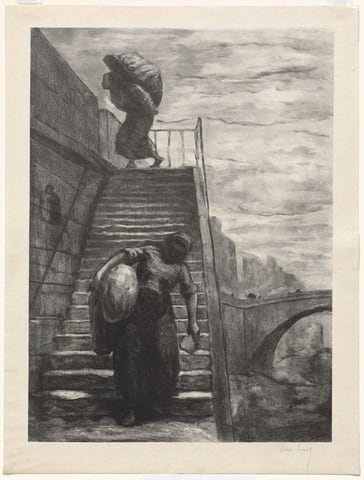
  4. Washerwomen Descending a Quai Staircase, by Alexandre Lunois, 1888
    Washerwomen Descending a Quai StaircaseAlexandre Lunois, 1888Courtesy of the Cleveland Museum of Art

Section 2, north wall
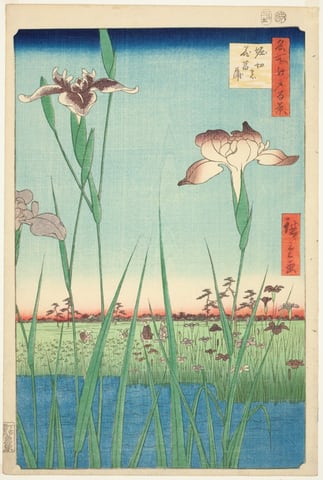
  1. A work made of color woodblock print; oban.
    Irises at Horikiri (Horikiri no hanashobu), from the series "One Hundred Famous Views of Edo (Meisho Edo hyakkei)"Utagawa Hiroshige, 1857Courtesy of the Art Institute of Chicago
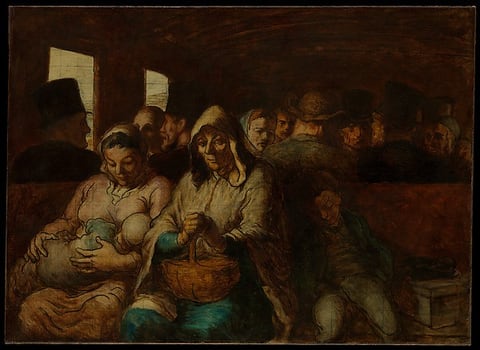
  2. The Third-Class Carriage, by Honoré Daumier, 1864
    The Third-Class CarriageHonoré Daumier, 1864Courtesy of The Metropolitan Museum of Art
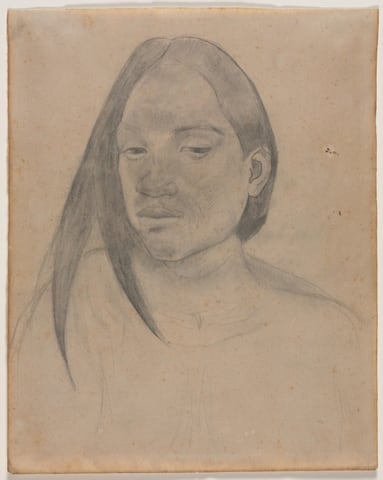
  3. Head of a Tahitian Woman, by Paul Gauguin, 1891
    Head of a Tahitian WomanPaul Gauguin, 1891Courtesy of the Cleveland Museum of Art

Section 3, north wall
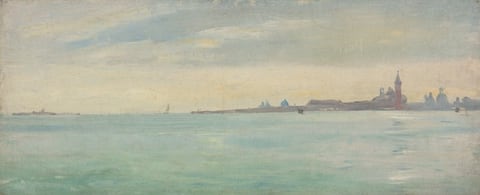
  1. A work made of oil on paper, mounted on canvas.
    Venice Seen from the Public GardenJean Jules Antoine Lecomte du Noüy, 1873Courtesy of the Art Institute of Chicago
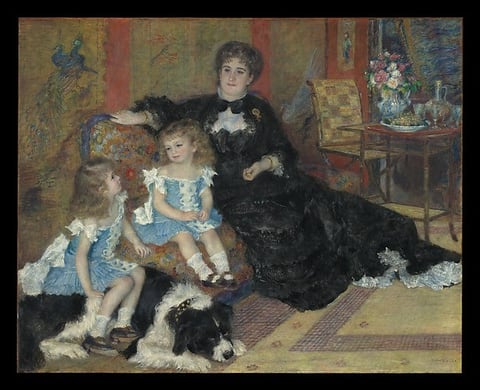
  2. Madame Georges Charpentier (Marguerite-Louise Lemonnier, 1848–1904) and Her Children, Georgette-Berthe (1872–1945) and Paul-Emile-Charles (1875–1895), by Pierre-Auguste Renoir, 1878
    Madame Georges Charpentier (Marguerite-Louise Lemonnier, 1848–1904) and Her Children, Georgette-Berthe (1872–1945) and Paul-Emile-Charles (1875–1895)Pierre-Auguste Renoir, 1878Courtesy of The Metropolitan Museum of Art