Floor plan

Time and placeThe 19th century

The 19th century

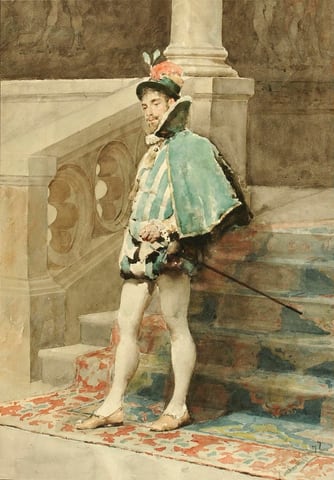
Study of a Courtier, by Carlo Randanini, 1877
A work made of oil on canvas.
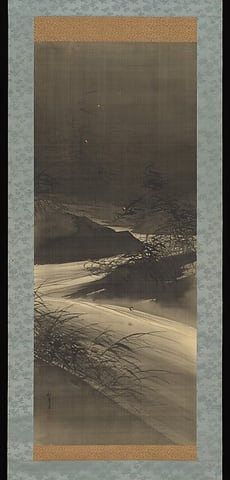
Fireflies Over the Uji River by Moonlight, by Suzuki Shōnen
A work made of watercolor and gouache, heightened with white gouache, over graphite selectively gum varnished on cream wove card.
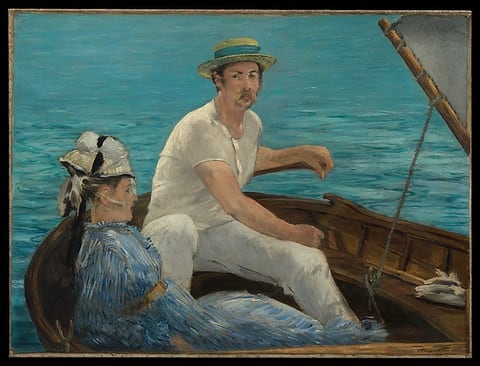
Boating, by Édouard Manet, 1874
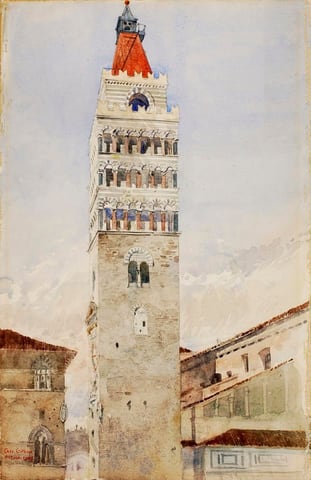
Cathedral Tower, Pistoia, Italy, by Cass Gilbert, 1898
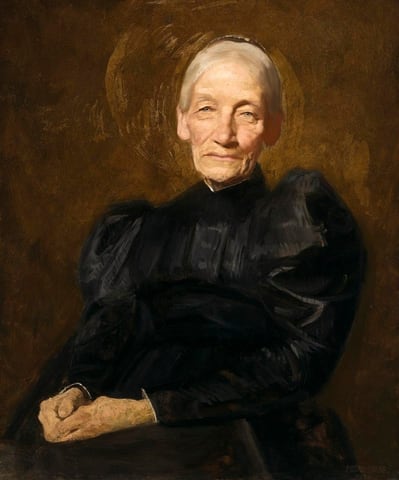
Artist: Robert Bolling Brandegee, Sitter: Sarah Porter, Current owner: National Portrait Gallery, Smithsonian Institution
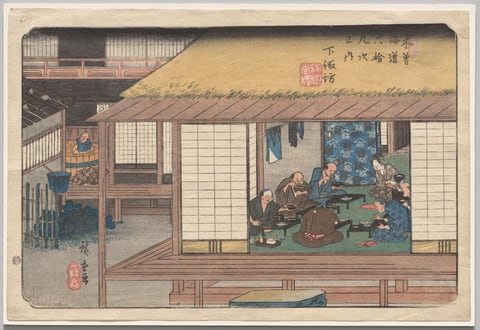
Shimosuwa, from Sixty-Nine Stations of the Kisokaidō, by Utagawa Hiroshige, 1835–38

The works in this room are listed below.

Works in this room

Works made in the 19th century, anywhere in the world.

Section 1, north wall

  1. Study of a Courtier, by Carlo Randanini, 1877
    Study of a CourtierCarlo Randanini, 1877Courtesy of the Smithsonian American Art Museum
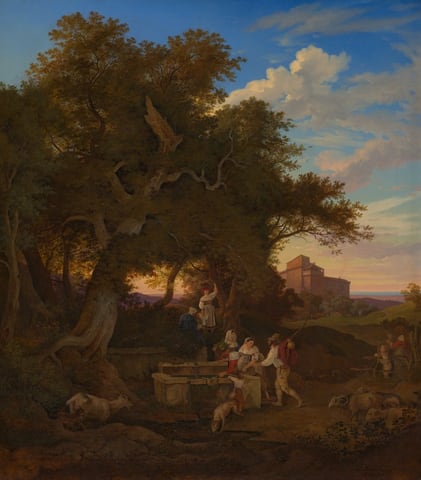
  2. A work made of oil on canvas.
    The Fountain at GrottaferrataAdrian Ludwig (Ludwig) Richter, 1832Courtesy of the Art Institute of Chicago
  3. Fireflies Over the Uji River by Moonlight, by Suzuki Shōnen
    Fireflies Over the Uji River by MoonlightSuzuki ShōnenCourtesy of The Metropolitan Museum of Art
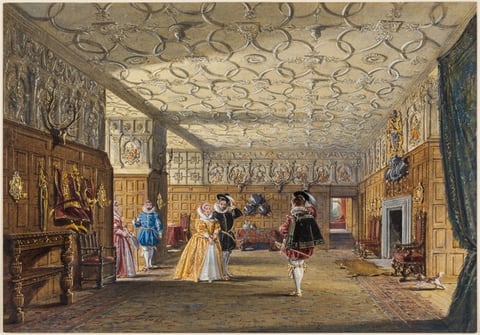
  4. A work made of watercolor and gouache, heightened with white gouache, over graphite selectively gum varnished on cream wove card.
    The Hall, Levens, WestmorelandJoseph Nash, n.d.Courtesy of the Art Institute of Chicago

Section 1, south wall

  1. Boating, by Édouard Manet, 1874
    BoatingÉdouard Manet, 1874Courtesy of The Metropolitan Museum of Art
  2. Cathedral Tower, Pistoia, Italy, by Cass Gilbert, 1898
    Cathedral Tower, Pistoia, ItalyCass Gilbert, 1898Courtesy of the Smithsonian American Art Museum
  3. Artist: Robert Bolling Brandegee, Sitter: Sarah Porter, Current owner: National Portrait Gallery, Smithsonian Institution
    Sarah PorterRobert Bolling Brandegee, 1896Courtesy of the National Portrait Gallery, Smithsonian Institution
  4. Shimosuwa, from Sixty-Nine Stations of the Kisokaidō, by Utagawa Hiroshige, 1835–38
    Shimosuwa, from Sixty-Nine Stations of the KisokaidōUtagawa Hiroshige, 1835–38Courtesy of the Cleveland Museum of Art

Section 2, south wall
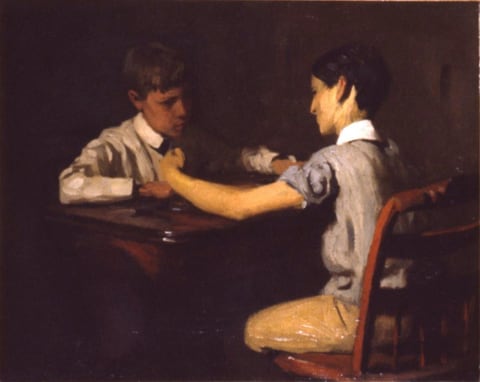
  1. Checker Players, by Thomas Anshutz, ca. 1895
    Checker PlayersThomas Anshutz, ca. 1895Courtesy of the Smithsonian American Art Museum
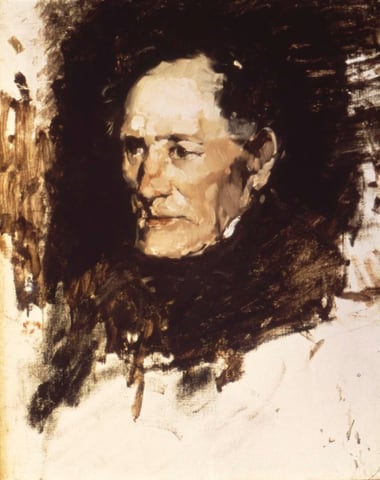
  2. Head of an Old Man, by Frank Duveneck, ca. 1877-1879
    Head of an Old ManFrank Duveneck, ca. 1877-1879Courtesy of the Smithsonian American Art Museum
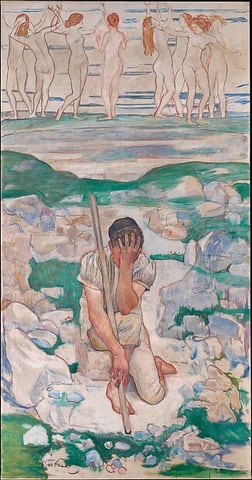
  3. The Dream of the Shepherd (Der Traum des Hirten), by Ferdinand Hodler, 1896
    The Dream of the Shepherd (Der Traum des Hirten)Ferdinand Hodler, 1896Courtesy of The Metropolitan Museum of Art
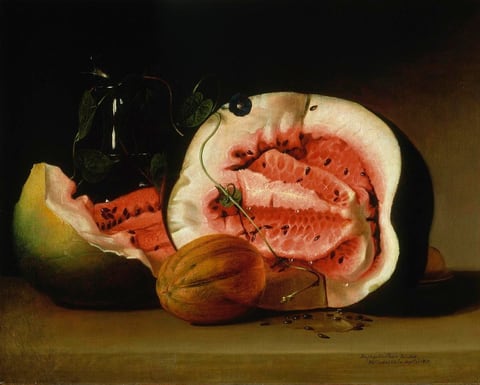
  4. Melons and Morning Glories, by Raphaelle Peale, 1813
    Melons and Morning GloriesRaphaelle Peale, 1813Courtesy of the Smithsonian American Art Museum

Section 2, north wall
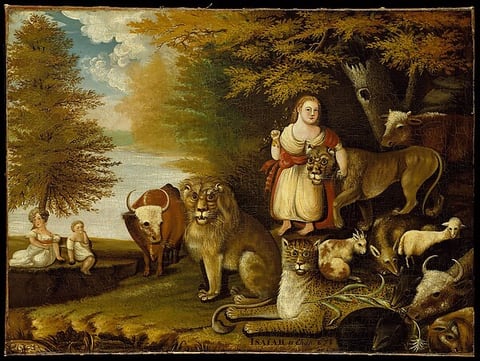
  1. Peaceable Kingdom, by Edward Hicks, ca. 1830–32
    Peaceable KingdomEdward Hicks, ca. 1830–32Courtesy of The Metropolitan Museum of Art
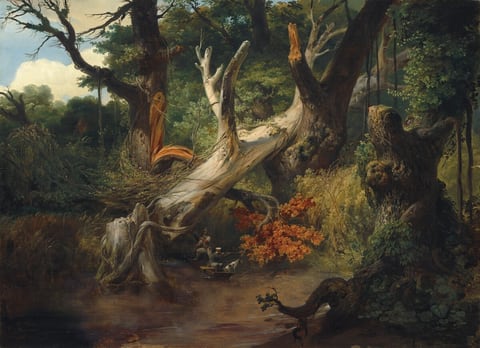
  2. A leafless, ash-white tree trunk has fallen from a broken stump into the wide V of a neighboring tree at the edge of a body of water near a verdant forest in this horizontal landscape painting. The fallen trunk creates a diagonal from near the lower left corner to the upper right. As it fell, it sheared off a substantial branch from a neighboring tree with a dark trunk. The bark where the damaged branch has pulled away is honey-orange, the same color as the leaves at the canopy, which has been pinned under the fallen trunk. Trees, vines, and other vegetation fill the space around and beyond this pair. In the lower right corner of the painting, vines grow over a broken stump, which deep in shadow. Between the stump and fallen tree, the peanut-brown surface of the water is smooth. Tiny in scale beneath the fallen tree and easily overlooked, there are two men and a dog in a boat. One man stands at the back of the boat and pushes it along with a long pole. He wears a tall, brown, cloth hat, a white shirt rolled up to the elbows under a blue vest, and loose-fitting pants. A second man wears a flat-topped, white hat with a black brim, a long, forest-green jacket, and tight-fitting slate-blue pants. He braces a rifle against one shoulder and shoots into the forest. The dog is white with brown spots, and it stands with its front paws on the edge of the boat, presumably ready to spring after the target. A patch of blue sky with puffy white clouds is seen above the trees in the upper left corner. The artist signed and dated the work in the lower right corner: “H. Vernet Rome 1833.”
    Hunting in the Pontine MarshesHorace Vernet, 1833Courtesy National Gallery of Art, Washington

Section 3, north wall
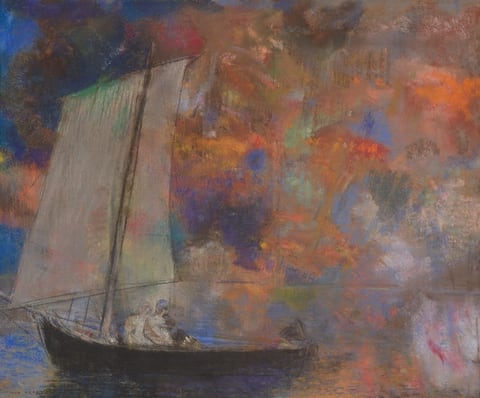
  1. Pastel drawing of two figures in a sailboat, bright multi-colored clouds.
    Flower CloudsOdilon Redon, c. 1903Courtesy of the Art Institute of Chicago
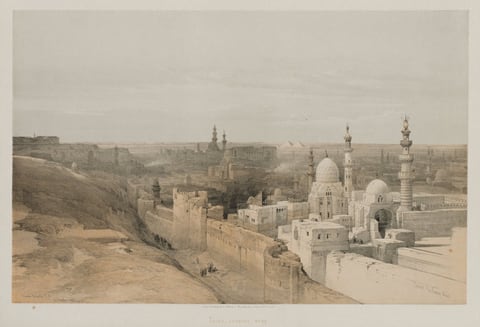
  2. Egypt and Nubia, Volume III, No. 26, Cairo, Looking West, by Louis Haghe, 1848
    Egypt and Nubia, Volume III, No. 26, Cairo, Looking WestLouis Haghe, 1848Courtesy of the Cleveland Museum of Art