Floor plan

Time and placeThe 19th century

The 19th century

A work made of oil on canvas.
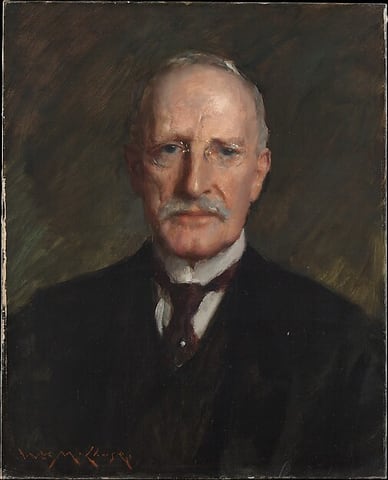
Edward Guthrie Kennedy, by William Merritt Chase, ca. 1895
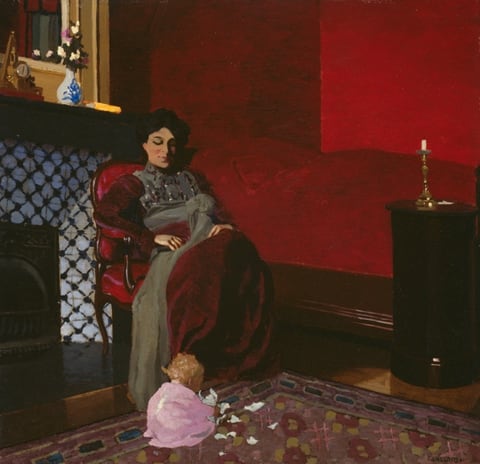
Painting of a stately woman seated on a red velvet chair in a blood-red room, a blue-white fireplace to her left. She glances down at the floor with a serene expression toward a tiny blond child—a baby—who sits on the floor tearing up paper, her pink-clad back facing the viewer.
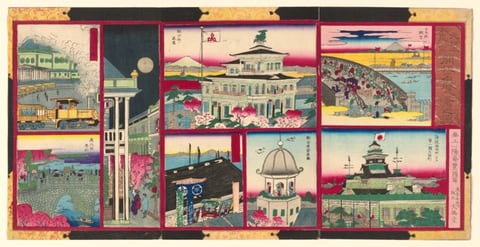
A work made of color woodblock print; oban triptych.
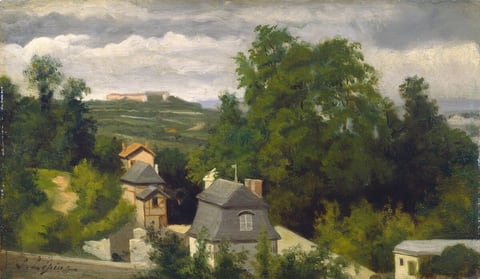
The painting shows an elevated perspective overlooking a landscape with green hills and leafy trees. Closest to us, there are cream-colored buildings among dense foliage. These buildings have roofs in shades of pale blue-gray and reddish-brown, and the one in the center has wispy white smoke coming out of a chimney. In the distance on the left, a large, low structure sits atop a hill, with faint paths winding towards it through the green landscape. Beyond the trees, the distant landscape on the right is painted in shades of pale blue and green. The sky above is filled with puffy clouds in shades of gray.
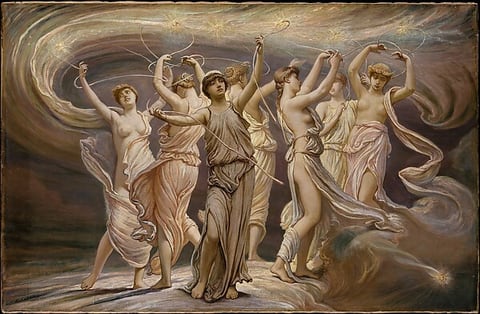
The Pleiades, by Elihu Vedder, 1885
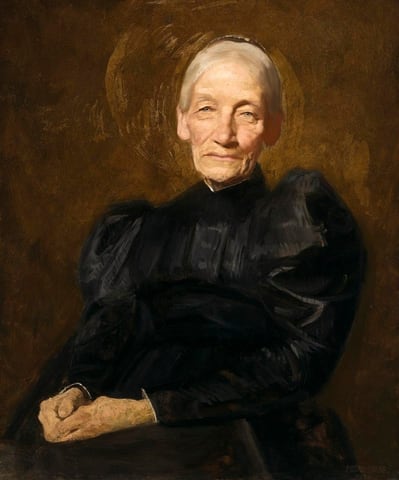
Artist: Robert Bolling Brandegee, Sitter: Sarah Porter, Current owner: National Portrait Gallery, Smithsonian Institution

The works in this room are listed below.

Works in this room

Works made in the 19th century, anywhere in the world.

Section 1, north wall

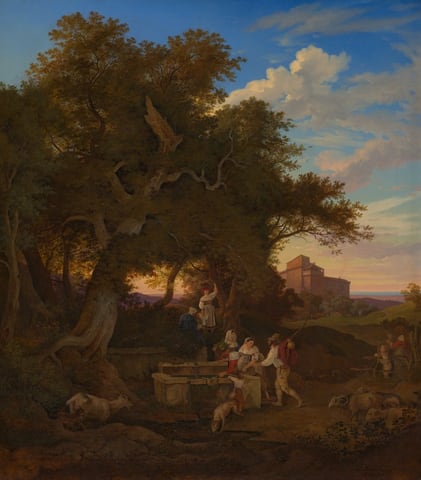
  1. A work made of oil on canvas.
    The Fountain at GrottaferrataAdrian Ludwig (Ludwig) Richter, 1832Courtesy of the Art Institute of Chicago
  2. Edward Guthrie Kennedy, by William Merritt Chase, ca. 1895
    Edward Guthrie KennedyWilliam Merritt Chase, ca. 1895Courtesy of The Metropolitan Museum of Art
  3. Painting of a stately woman seated on a red velvet chair in a blood-red room, a blue-white fireplace to her left. She glances down at the floor with a serene expression toward a tiny blond child—a baby—who sits on the floor tearing up paper, her pink-clad back facing the viewer.
    The Red Room, EtretatFélix Vallotton, 1899Courtesy of the Art Institute of Chicago
  4. A work made of color woodblock print; oban triptych.
    Eight Modern Views of Famous Places in Tokyo of Great Japan (Dai Nippon Tokyo kaika meisho hakkei no zu)Utagawa Kunisada II (Kunimasa III, Toyokuni IV), 1875Courtesy of the Art Institute of Chicago

Section 1, south wall

  1. The painting shows an elevated perspective overlooking a landscape with green hills and leafy trees. Closest to us, there are cream-colored buildings among dense foliage. These buildings have roofs in shades of pale blue-gray and reddish-brown, and the one in the center has wispy white smoke coming out of a chimney. In the distance on the left, a large, low structure sits atop a hill, with faint paths winding towards it through the green landscape. Beyond the trees, the distant landscape on the right is painted in shades of pale blue and green. The sky above is filled with puffy clouds in shades of gray.
    View on the Outskirts of CaenStanislas Lépine, 1872/1875Courtesy National Gallery of Art, Washington
  2. The Pleiades, by Elihu Vedder, 1885
    The PleiadesElihu Vedder, 1885Courtesy of The Metropolitan Museum of Art
  3. Artist: Robert Bolling Brandegee, Sitter: Sarah Porter, Current owner: National Portrait Gallery, Smithsonian Institution
    Sarah PorterRobert Bolling Brandegee, 1896Courtesy of the National Portrait Gallery, Smithsonian Institution

Section 2, south wall
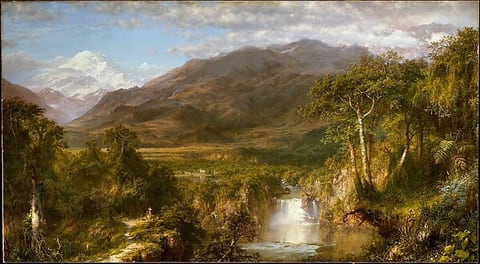
  1. Heart of the Andes, by Frederic Edwin Church, 1859
    Heart of the AndesFrederic Edwin Church, 1859Courtesy of The Metropolitan Museum of Art
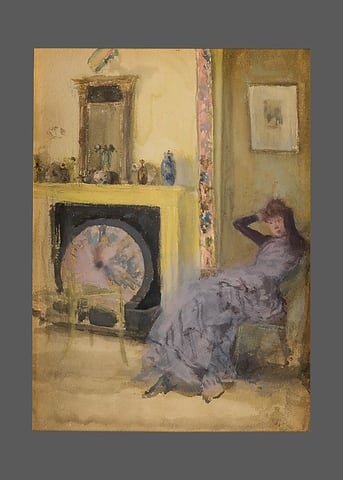
  2. The Yellow Room, by James McNeill Whistler, ca. 1883–84
    The Yellow RoomJames McNeill Whistler, ca. 1883–84Courtesy of The Metropolitan Museum of Art
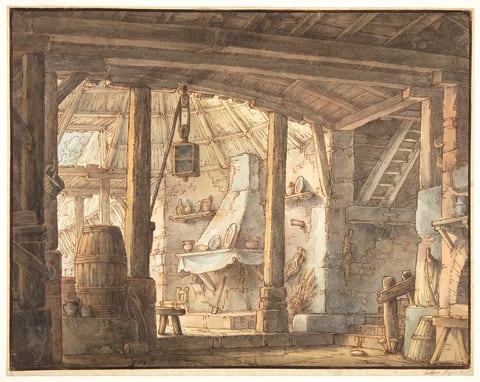
  3. RUSTIC INTERIOR: STAGE DESIGN FOR THE TEATRO DE' FELICINI, BOLOGNA
    Rustic Interior: Stage Design for the Teatro de' Felicini, BolognaAntonio Giuseppe Basoli, ca. 1810Courtesy of Cooper Hewitt, Smithsonian Design Museum

Section 2, north wall
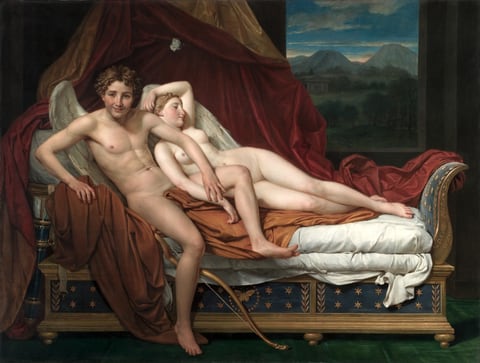
  1. Cupid and Psyche, by Jacques-Louis David, 1817
    Cupid and PsycheJacques-Louis David, 1817Courtesy of the Cleveland Museum of Art
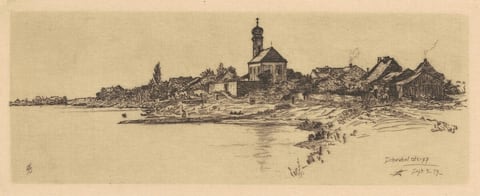
  2. The image shows a village scene viewed from a low vantage point near a water's edge. A row of small, closely packed buildings and a church with an onion-shaped dome are prominently featured. There are gentle slopes leading towards the structures. The image uses fine, detailed line work to depict texture and depth in the buildings and natural landscape. The lines are delicate and varied, creating a sense of detail and softness. The color palette is monochromatic, with dark ink on a pale background, resulting in a classic and timeless feel.
    SchwabelweissOtto Henry Bacher, 1879Courtesy National Gallery of Art, Washington
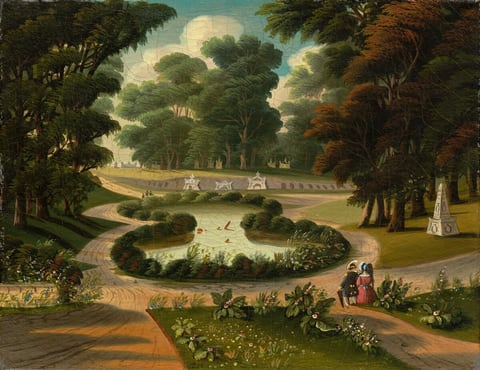
  3. This painting shows a park-like landscape with trees, flowers, bushes, and a pond, all surrounded by light brown paths. The pond is in the center of the park, with light green-blue water framed by bushes, ferns, and tall flowers. Across from the pond are three large, white structures that could be mausoleums. Behind them is a hill with trees and more white graves or mausoleums on top of it. On either side of the pond, past the paths that encircle it, are tall trees with leaves in shades of dark green and brown. On the right side is a tall white structure that could be a grave or a monument. At the bottom of the painting, the paths curve up over a small hill in front of the pond. In between the paths are sections of grass dotted with small pink and white flowers. On the right side of the painting, a couple walks down the hill towards the pond. The person on the left wears a long blue coat decorated with gold buttons and a large, plumed hat, while the person on the right wears a pink gown and blue bonnet. Above the scene, the sky is blue, with puffy white clouds.
    Mount Auburn CemeteryThomas Chambers, mid 19th centuryCourtesy National Gallery of Art, Washington

Section 3, north wall
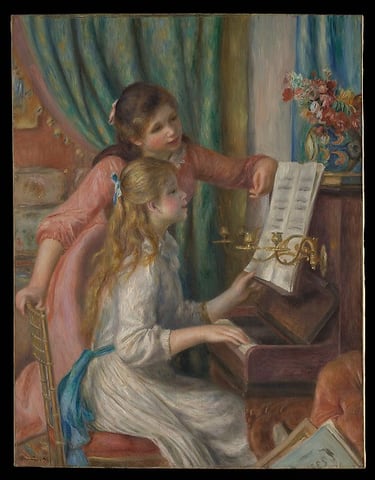
  1. Two Young Girls at the Piano, by Pierre-Auguste Renoir, 1892
    Two Young Girls at the PianoPierre-Auguste Renoir, 1892Courtesy of The Metropolitan Museum of Art
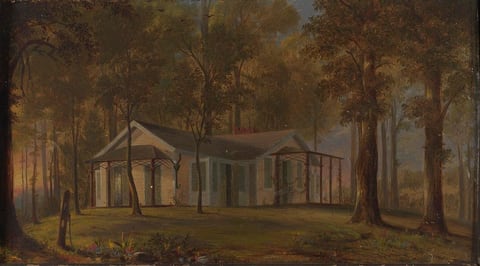
  2. Kalorama Cottage, by John Ferguson Weir, ca. 1860
    Kalorama CottageJohn Ferguson Weir, ca. 1860Courtesy of the Smithsonian American Art Museum
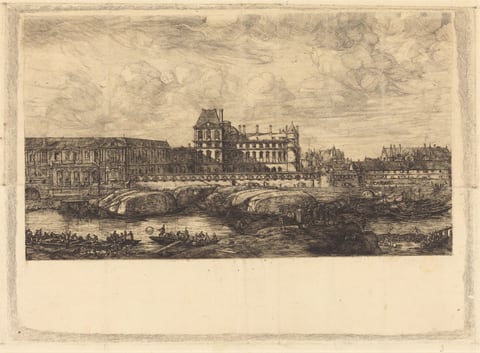
  3. The image features a riverside scene with a large building in the center and smaller structures in the background. The sky is filled with clouds, and there are boats on the water. The artwork is done in an etching style, with detailed lines showing architectural elements, boats, and water ripples. The color scheme is monochromatic in shades of brown and black.
    L'ancien Louvre d'après une peinture de Zeeman, 1651 (The Old Louvre, from a Painting by Zeeman, l651)Charles Meryon, 1866Courtesy National Gallery of Art, Washington