Floor plan

Time and place19th-century United States
19th-century United States
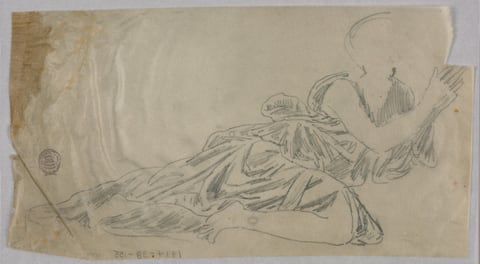
DRAPERY STUDY
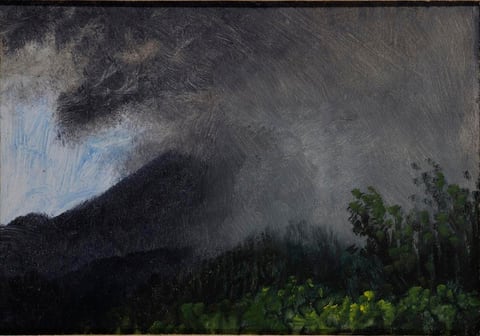
Albert Bierstadt
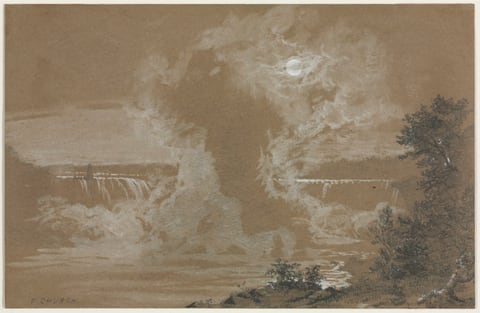
Niagara Falls by Moonlight, by Frederic Edwin Church, probably 1856
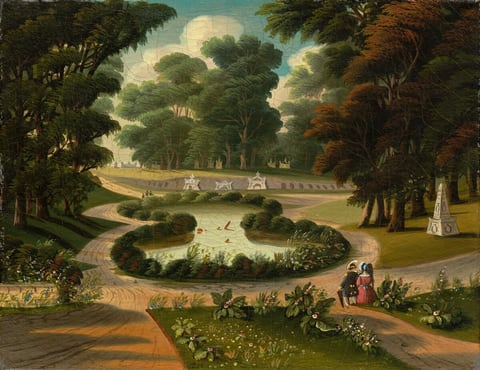
This painting shows a park-like landscape with trees, flowers, bushes, and a pond, all surrounded by light brown paths. The pond is in the center of the park, with light green-blue water framed by bushes, ferns, and tall flowers. Across from the pond are three large, white structures that could be mausoleums. Behind them is a hill with trees and more white graves or mausoleums on top of it. On either side of the pond, past the paths that encircle it, are tall trees with leaves in shades of dark green and brown. On the right side is a tall white structure that could be a grave or a monument. At the bottom of the painting, the paths curve up over a small hill in front of the pond. In between the paths are sections of grass dotted with small pink and white flowers. On the right side of the painting, a couple walks down the hill towards the pond. The person on the left wears a long blue coat decorated with gold buttons and a large, plumed hat, while the person on the right wears a pink gown and blue bonnet. Above the scene, the sky is blue, with puffy white clouds.
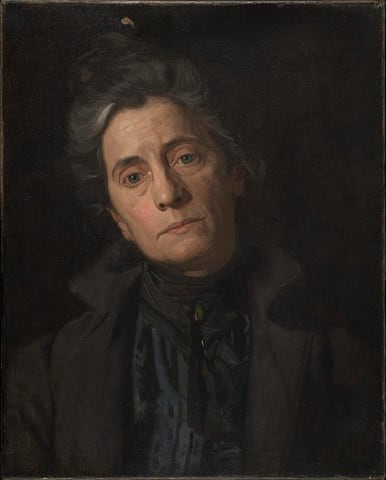
Thomas Eakins
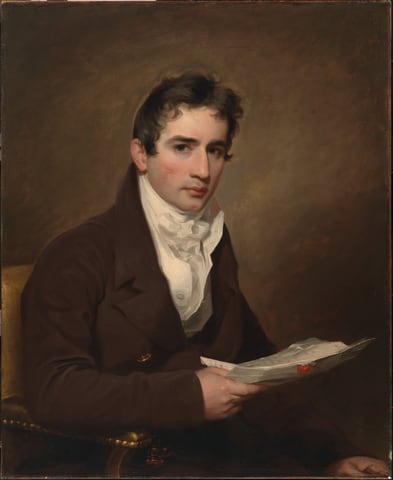
Artist: Thomas Sully, Sitter: John Sergeant, Current owner: National Portrait Gallery, Smithsonian Institution
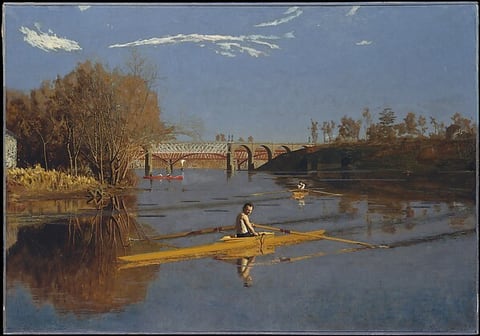
The Champion Single Sculls (Max Schmitt in a Single Scull), by Thomas Eakins, 1871

The works in this room are listed below.

Works in this room

Works made in the United States in the 19th century.

Section 1, north wall

  1. DRAPERY STUDY
    Drapery StudyFrancis Augustus Lathrop, ca. 1895Courtesy of Cooper Hewitt, Smithsonian Design Museum
  2. Albert Bierstadt
    Gathering StormAlbert Bierstadt, (c. 1857-1858)Courtesy of the Hirshhorn Museum and Sculpture Garden, Smithsonian Institution
  3. Niagara Falls by Moonlight, by Frederic Edwin Church, probably 1856
    Niagara Falls by MoonlightFrederic Edwin Church, probably 1856Courtesy of the Cleveland Museum of Art
  4. This painting shows a park-like landscape with trees, flowers, bushes, and a pond, all surrounded by light brown paths. The pond is in the center of the park, with light green-blue water framed by bushes, ferns, and tall flowers. Across from the pond are three large, white structures that could be mausoleums. Behind them is a hill with trees and more white graves or mausoleums on top of it. On either side of the pond, past the paths that encircle it, are tall trees with leaves in shades of dark green and brown. On the right side is a tall white structure that could be a grave or a monument. At the bottom of the painting, the paths curve up over a small hill in front of the pond. In between the paths are sections of grass dotted with small pink and white flowers. On the right side of the painting, a couple walks down the hill towards the pond. The person on the left wears a long blue coat decorated with gold buttons and a large, plumed hat, while the person on the right wears a pink gown and blue bonnet. Above the scene, the sky is blue, with puffy white clouds.
    Mount Auburn CemeteryThomas Chambers, mid 19th centuryCourtesy National Gallery of Art, Washington

Section 1, south wall

  1. Thomas Eakins
    Portrait of Mrs. Thomas EakinsThomas Eakins, (c. 1899)Courtesy of the Hirshhorn Museum and Sculpture Garden, Smithsonian Institution
  2. Artist: Thomas Sully, Sitter: John Sergeant, Current owner: National Portrait Gallery, Smithsonian Institution
    John SergeantThomas Sully, 1811Courtesy of the National Portrait Gallery, Smithsonian Institution
  3. The Champion Single Sculls (Max Schmitt in a Single Scull), by Thomas Eakins, 1871
    The Champion Single Sculls (Max Schmitt in a Single Scull)Thomas Eakins, 1871Courtesy of The Metropolitan Museum of Art

Section 2, south wall
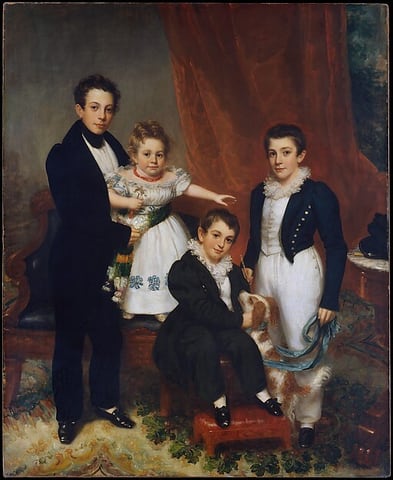
  1. The Knapp Children, by Samuel Lovett Waldo, ca. 1833–34
    The Knapp ChildrenSamuel Lovett Waldo, ca. 1833–34Courtesy of The Metropolitan Museum of Art
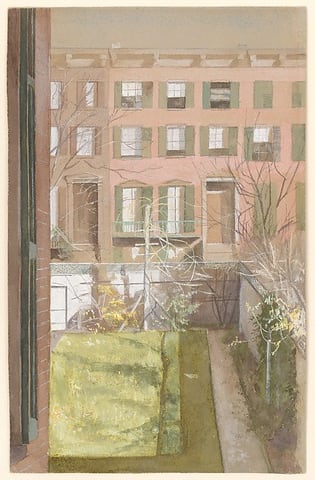
  2. Garden View, Brooklyn, by Fidelia Bridges, ca. 1867
    Garden View, BrooklynFidelia Bridges, ca. 1867Courtesy of The Metropolitan Museum of Art
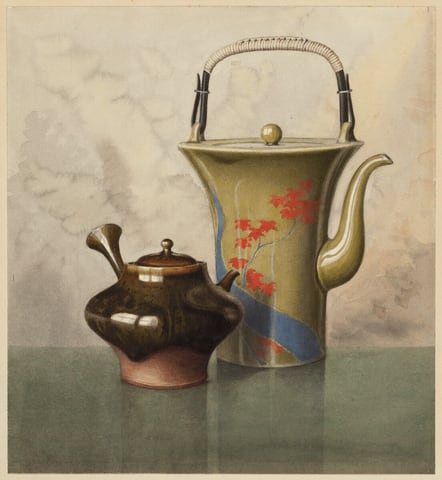
  3. There are two teapots in the image. The larger teapot has a decorative pattern of red leaves and blue curve on an olive-green background, with a white handle. The smaller teapot has a dark brown glossy finish. The color palette consists of earthy tones like browns, olive green, red, and blue. The larger teapot is positioned slightly to the right, behind the smaller one, which is in the foreground on a reflective green surface. The background has a light beige appearance.
    Asian Tea PotsHenry Farrer, n.d.Courtesy National Gallery of Art, Washington

Section 2, north wall
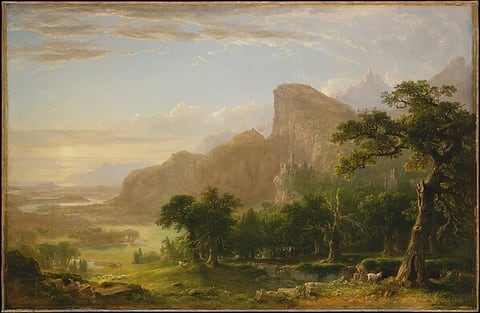
  1. Landscape—Scene from "Thanatopsis", by Asher Brown Durand, 1850
    Landscape—Scene from "Thanatopsis"Asher Brown Durand, 1850Courtesy of The Metropolitan Museum of Art
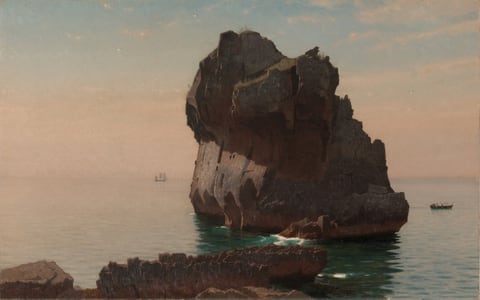
  2. Capri, by William Stanley Haseltine, 1869
    CapriWilliam Stanley Haseltine, 1869Courtesy of the Cleveland Museum of Art
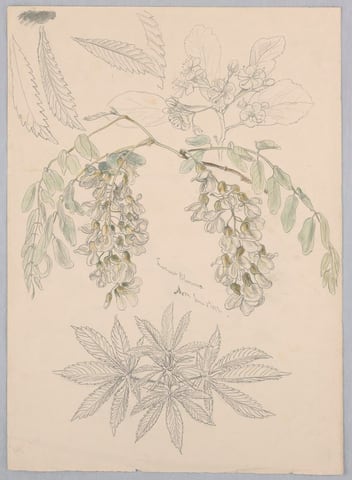
  3. LOCUST BLOSSOMS
    Locust BlossomsSamuel Colman, June 6, 1877Courtesy of Cooper Hewitt, Smithsonian Design Museum

Section 3, north wall
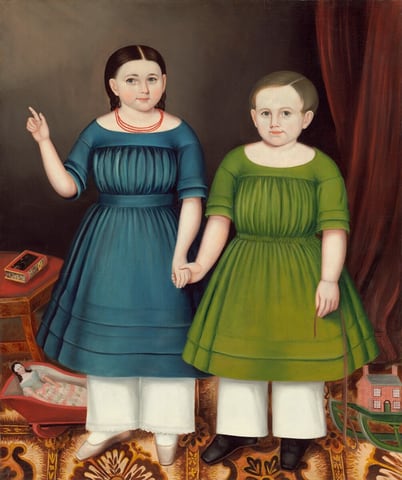
  1. The image features two young children standing side by side. The child on the left extends one arm sideways and has the other arm lowered, while the child on the right has both arms relaxed by their sides, one holding a string. Both children have round faces with light complexions; the child on the left has dark brown hair styled in waves down to the shoulders, while the child on the right has light brown hair. The child on the left is dressed in a blue dress with a loosely gathered waist and short sleeves, white stockings, white shoes, and a red beaded necklace. The child on the right wears a green dress with similar design features, white stockings, and black shoes. Near their feet are a toy doll in a red cradle and a small toy house. In the background, there is a plain dark wall, a deep red drapery, a carpet with elaborate patterns, and a small wooden table with a box on top.
    Mary and Francis WilcoxJoseph Whiting Stock, 1845Courtesy National Gallery of Art, Washington
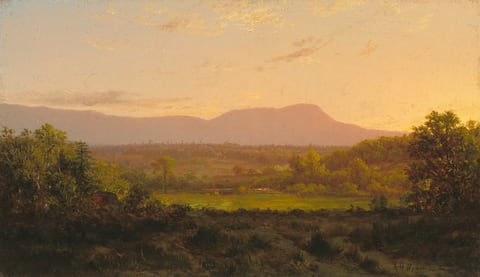
  2. The painting depicts a rural landscape at sunset or sunrise. The horizon is slightly above the center, showing distant pale-pink and purple mountains against the sky. Closest to us is an area with dark green bushes and vegetation, leading to a lighter green field surrounded by green-and-brown trees. The palette is warm and earthy, with greens and browns in the bottom transitioning to purples and pinks in the distance. The sky is a pale-yellow color that fades into light blue towards the top left corner, and faint yellow and gray clouds drift across it.
    Peaceful ValleyAlexander Helwig Wyant, c. 1872Courtesy National Gallery of Art, Washington
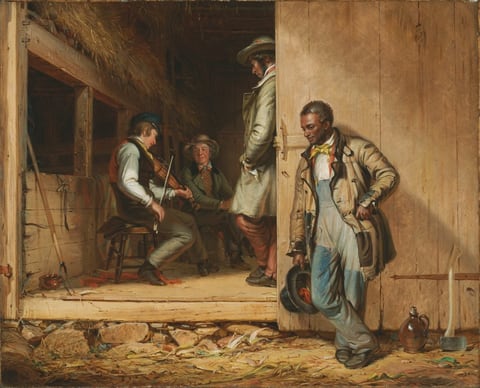
  3. The Power of Music, by William Sidney Mount, 1847
    The Power of MusicWilliam Sidney Mount, 1847Courtesy of the Cleveland Museum of Art