Floor plan

Time and place19th-century United States
19th-century United States
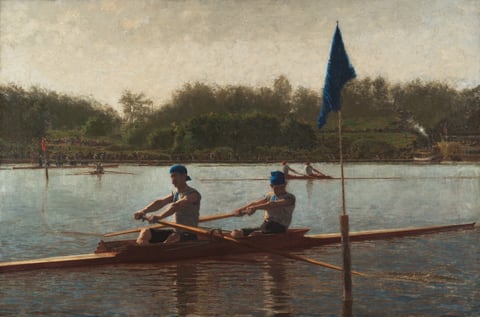
The Biglin Brothers Turning the Stake, by Thomas Eakins, 1873
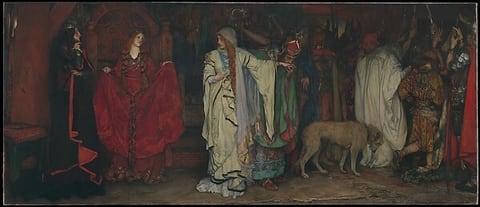
"King Lear," Act I, Scene I, by Edwin Austin Abbey, 1898
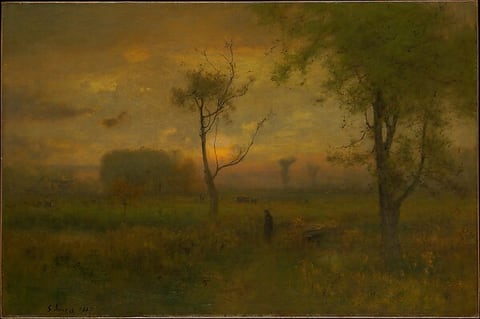
Sunrise, by George Inness, 1887
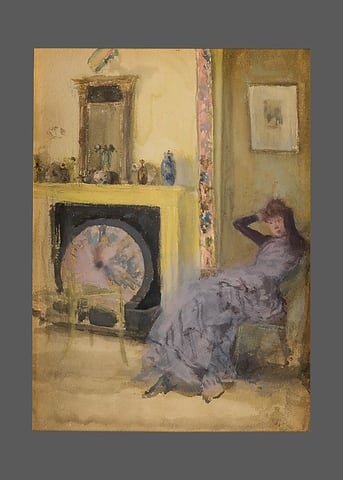
The Yellow Room, by James McNeill Whistler, ca. 1883–84
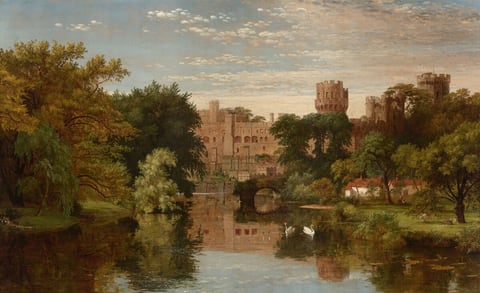
This painting features a landscape with a calm body of water dominating the lower portion. The view is slightly elevated, overlooking the water that reflects the surrounding greenery and sky. Two white swans glide on the river, which is surrounded by green trees and shrubs. In the distance, a large tan castle with multiple towers and crenellations stands above the trees. In front of the castle, on the right side of the painting, a smaller structure with white walls and red roofs sits, surrounded by greenery. One or two people appear to sit out in front of it, and on the right sheep lay in the soft green grass. The color palette includes deep greens, soft browns, and varying shades of blue.
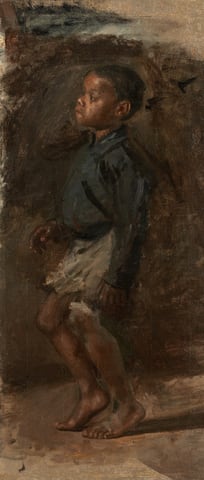
Study for "The Dancing Lesson": The Boy, by Thomas Eakins, probably 1877

The works in this room are listed below.

Works in this room

Works made in the United States in the 19th century.

Section 1, north wall

  1. The Biglin Brothers Turning the Stake, by Thomas Eakins, 1873
    The Biglin Brothers Turning the StakeThomas Eakins, 1873Courtesy of the Cleveland Museum of Art
  2. "King Lear," Act I, Scene I, by Edwin Austin Abbey, 1898
    "King Lear," Act I, Scene IEdwin Austin Abbey, 1898Courtesy of The Metropolitan Museum of Art

Section 1, south wall

  1. Sunrise, by George Inness, 1887
    SunriseGeorge Inness, 1887Courtesy of The Metropolitan Museum of Art
  2. The Yellow Room, by James McNeill Whistler, ca. 1883–84
    The Yellow RoomJames McNeill Whistler, ca. 1883–84Courtesy of The Metropolitan Museum of Art
  3. This painting features a landscape with a calm body of water dominating the lower portion. The view is slightly elevated, overlooking the water that reflects the surrounding greenery and sky. Two white swans glide on the river, which is surrounded by green trees and shrubs. In the distance, a large tan castle with multiple towers and crenellations stands above the trees. In front of the castle, on the right side of the painting, a smaller structure with white walls and red roofs sits, surrounded by greenery. One or two people appear to sit out in front of it, and on the right sheep lay in the soft green grass. The color palette includes deep greens, soft browns, and varying shades of blue.
    Warwick Castle, EnglandJasper Francis Cropsey, 1857Courtesy National Gallery of Art, Washington
  4. Study for "The Dancing Lesson": The Boy, by Thomas Eakins, probably 1877
    Study for "The Dancing Lesson": The BoyThomas Eakins, probably 1877Courtesy National Gallery of Art, Washington

Section 2, south wall
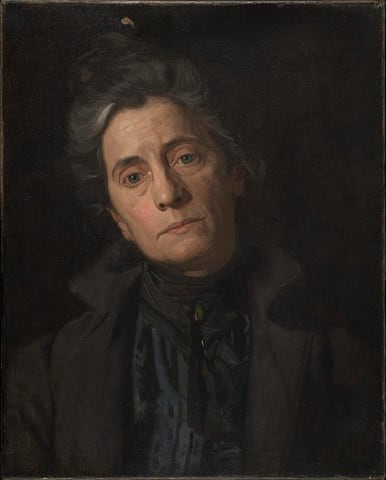
  1. Thomas Eakins
    Portrait of Mrs. Thomas EakinsThomas Eakins, (c. 1899)Courtesy of the Hirshhorn Museum and Sculpture Garden, Smithsonian Institution
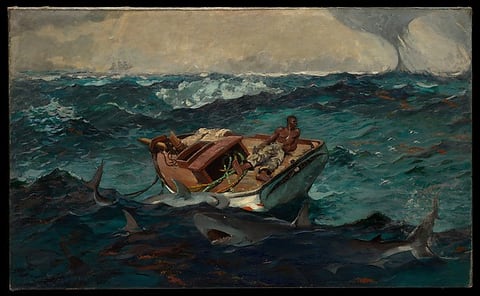
  2. The Gulf Stream, by Winslow Homer, 1899; reworked by 1906
    The Gulf StreamWinslow Homer, 1899; reworked by 1906Courtesy of The Metropolitan Museum of Art
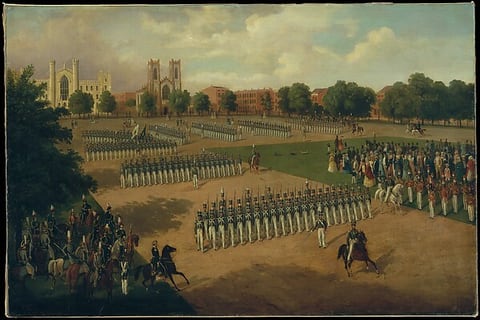
  3. Seventh Regiment on Review, Washington Square, New York, by Otto Boetticher, 1851
    Seventh Regiment on Review, Washington Square, New YorkOtto Boetticher, 1851Courtesy of The Metropolitan Museum of Art
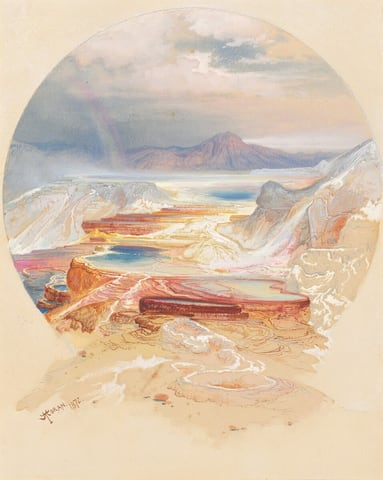
  4. This painting shows a view looking out over a vast landscape. Most of the painting is circular, with a small part of the bottom bleeding out of the circle towards us. The top third of the circle shows a mountain range with a large purple peak in the distance. In front of the mountain is a faint rainbow. A body of water flows from in front of the mountain to the bottom of the painting, weaving in between shorter white peaks. Towards the bottom, the water appears to flow into small, layered pools of various bright colors including yellow, orange, red, pink, blue, and teal. The sky is a light blue-gray color. The background of the painting outside of the circle is plain paper.
    Minerva Terrace, YellowstoneThomas Moran, 1872Courtesy National Gallery of Art, Washington

Section 2, north wall
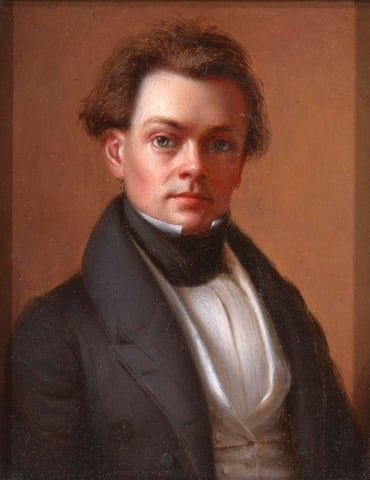
  1. Self-Portrait, by Oliver Tarbell Eddy, ca. 1850
    Self-PortraitOliver Tarbell Eddy, ca. 1850Courtesy of the Smithsonian American Art Museum
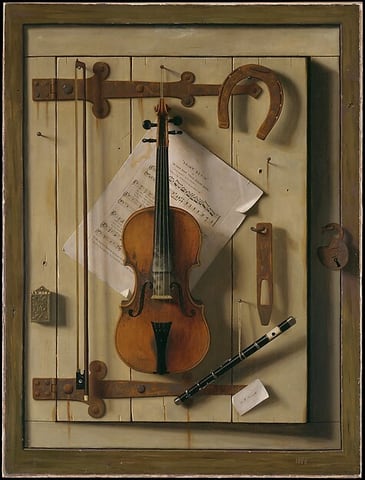
  2. Still Life—Violin and Music, by William Michael Harnett, 1888
    Still Life—Violin and MusicWilliam Michael Harnett, 1888Courtesy of The Metropolitan Museum of Art
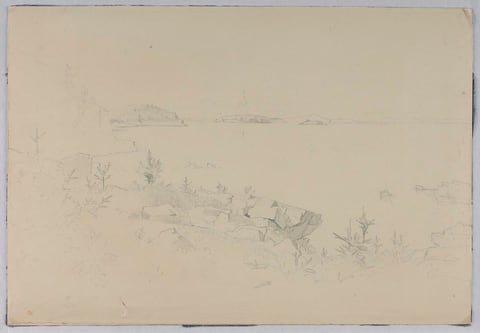
  3. STUDY OF SEASCAPE. PORCUPINE ISLANDS, BAR HARBOR, ME
    Study of seascape. Porcupine Islands, Bar Harbor, MEWilliam Stanley Haseltine, 1859Courtesy of Cooper Hewitt, Smithsonian Design Museum
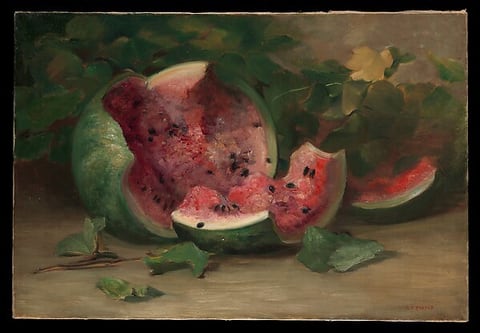
  4. Untitled (Cracked Watermelon), by Charles Ethan Porter, ca. 1890
    Untitled (Cracked Watermelon)Charles Ethan Porter, ca. 1890Courtesy of The Metropolitan Museum of Art

Section 3, north wall
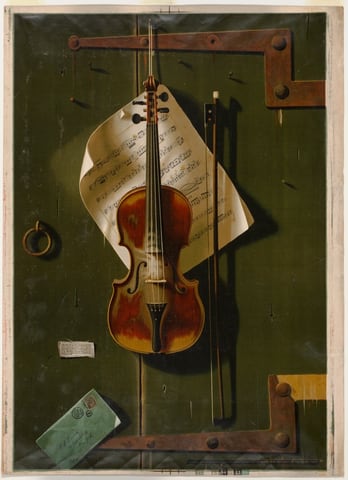
  1. A work made of color lithograph on paper.
    The Old ViolinWilliam Michael Harnett, 1887Courtesy of the Art Institute of Chicago
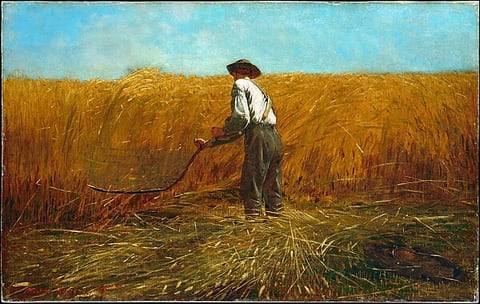
  2. The Veteran in a New Field, by Winslow Homer, 1865
    The Veteran in a New FieldWinslow Homer, 1865Courtesy of The Metropolitan Museum of Art