Floor plan

Time and placeThe 18th century

The 18th century

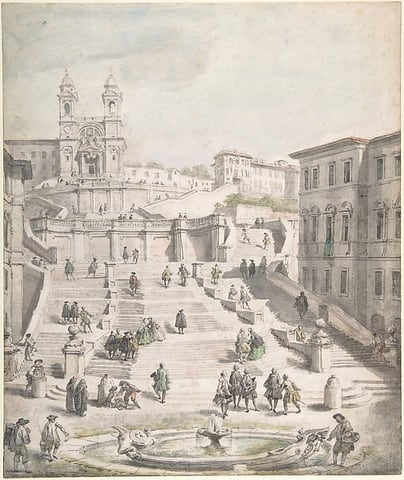
Scalinata della Trinità dei Monti, by Giovanni Paolo Panini, ca. 1756–58
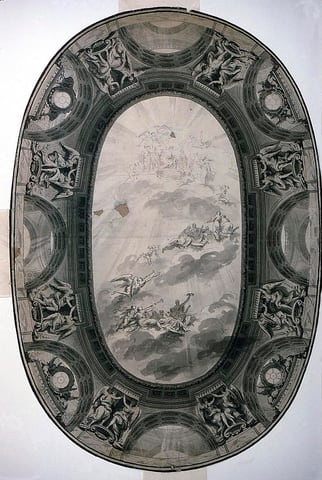
PROJECT FOR THE PAINTED DECORATION OF THE CEILING OF A HALL (PAINTED OVAL CEILING)
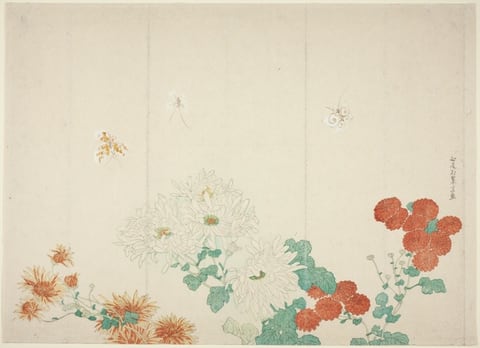
A work made of color woodblock print; surimono.
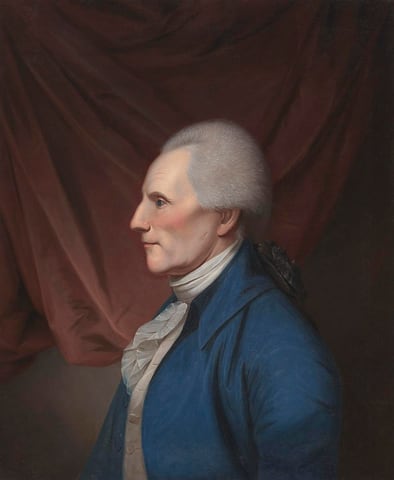
Artist: Charles Willson Peale, Sitter: Richard Henry Lee, Current owner: National Portrait Gallery, Smithsonian Institution
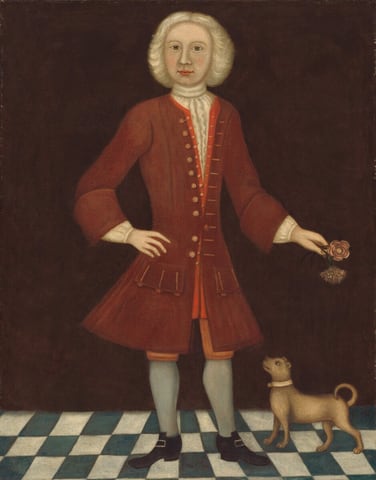
Jonathan Bentham, c. 1725
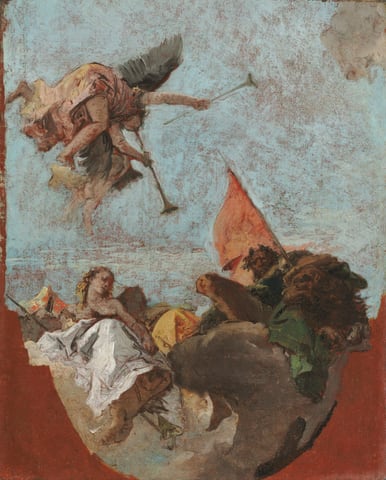
Sketch for a Ceiling, by Giovanni Battista Tiepolo, 1750s
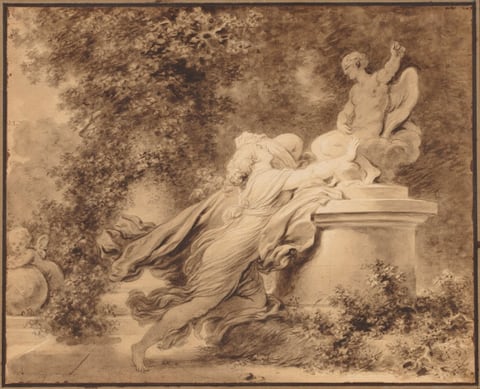
Invocation to Love, by Jean Honoré Fragonard, c. 1781
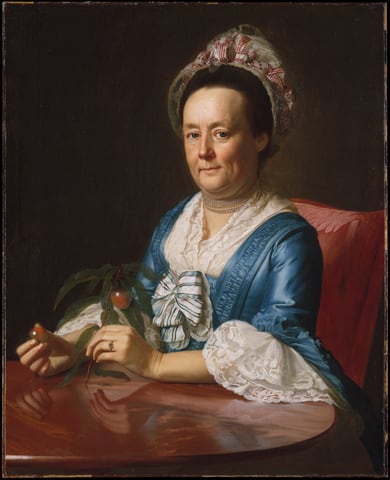
Mrs. John Winthrop, by John Singleton Copley, 1773

The works in this room are listed below.

Works in this room

Works made in the 18th century, anywhere in the world.

First room, north wall

  1. Scalinata della Trinità dei Monti, by Giovanni Paolo Panini, ca. 1756–58
    Scalinata della Trinità dei MontiGiovanni Paolo Panini, ca. 1756–58Courtesy of The Metropolitan Museum of Art
  2. PROJECT FOR THE PAINTED DECORATION OF THE CEILING OF A HALL (PAINTED OVAL CEILING)
    Project for the Painted Decoration of the Ceiling of a Hall (Painted Oval Ceiling)Jean Baptiste Marie Pierre, 1761Courtesy of Cooper Hewitt, Smithsonian Design Museum
  3. A work made of color woodblock print; surimono.
    Three Types of ChrysanthemumsKitao Shigemasa, c. 1790Courtesy of the Art Institute of Chicago
  4. Artist: Charles Willson Peale, Sitter: Richard Henry Lee, Current owner: National Portrait Gallery, Smithsonian Institution
    Richard Henry LeeCharles Willson Peale, c. 1795-1805Courtesy of the National Portrait Gallery, Smithsonian Institution

First room, south wall

  1. Jonathan Bentham, c. 1725
    Jonathan BenthamUnrecorded American maker, c. 1725Courtesy National Gallery of Art, Washington
  2. Sketch for a Ceiling, by Giovanni Battista Tiepolo, 1750s
    Sketch for a CeilingGiovanni Battista Tiepolo, 1750sCourtesy of the Cleveland Museum of Art
  3. Invocation to Love, by Jean Honoré Fragonard, c. 1781
    Invocation to LoveJean Honoré Fragonard, c. 1781Courtesy of the Cleveland Museum of Art
  4. Mrs. John Winthrop, by John Singleton Copley, 1773
    Mrs. John WinthropJohn Singleton Copley, 1773Courtesy of The Metropolitan Museum of Art

Second room, south wall
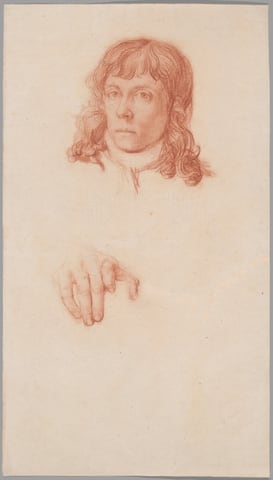
  1. A work made of red chalk on cream laid paper.
    Self-PortraitJohn Flaxman, c. 1779Courtesy of the Art Institute of Chicago
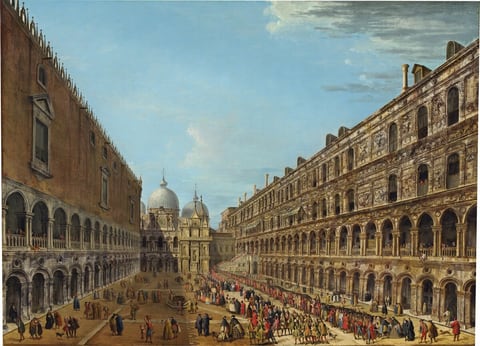
  2. This painting depicts a square seen from above, surrounded by elegant architectural structures. On the left side, there is a large building with a red-brown facade and arched white windows with columns. On the right, there is an ornate off-white structure with arches and detailed stonework. Both of these long buildings stretch from the sides of the painting towards the center, where they converge at a gray building with tall spires and large blue domes behind it. In the square there are countless people in colorful attire, wearing shades of pink, red, blue, green, yellow, black, and blue. There are men, women, and children, and those with visible faces all appear to have light skin. Some wear white masks with bird-like noses. On the right, there is a long line of people engaging in a procession or gathering. People also line the windows of the two buildings on either side of the square. The painting is incredibly detailed, capturing architectural elements and the bustling crowd. The color palette features earthy tones for the architecture and vibrant colors for the people, all set below a pale blue sky with a few white-and-gray clouds.
    Procession in the Courtyard of the Ducal Palace, VeniceAntonio Joli, 1742 or afterCourtesy National Gallery of Art, Washington
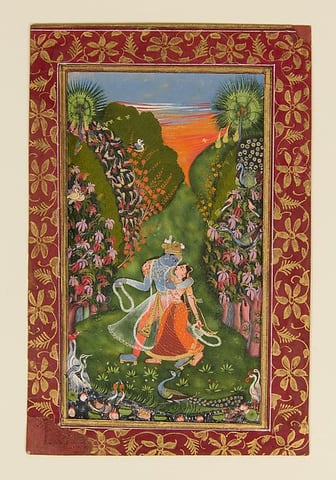
  3. Radha and Krishna Walk in a Flowering Grove (recto); Krishna Fluting (verso), by the Kota Master, ca. 1720 (recto); ca. 1750–75 (verso)
    Radha and Krishna Walk in a Flowering Grove (recto); Krishna Fluting (verso)the Kota Master, ca. 1720 (recto); ca. 1750–75 (verso)Courtesy of The Metropolitan Museum of Art

Second room, north wall
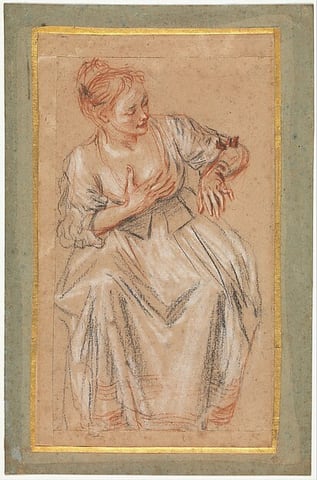
  1. Seated Woman, by Antoine Watteau, 1716–17
    Seated WomanAntoine Watteau, 1716–17Courtesy of The Metropolitan Museum of Art
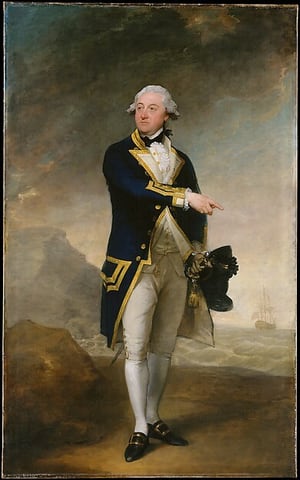
  2. Captain John Gell, by Gilbert Stuart, 1785
    Captain John GellGilbert Stuart, 1785Courtesy of The Metropolitan Museum of Art
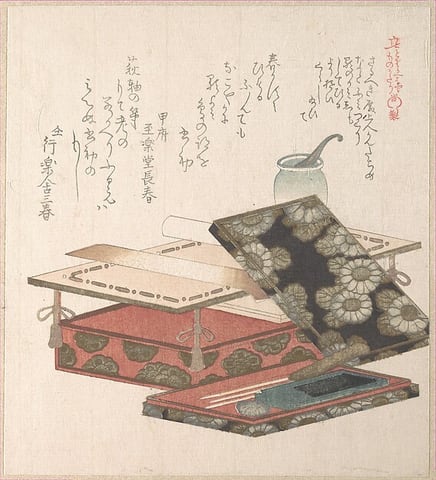
  3. Table and Writing Set, by Kubo Shunman, 19th century
    Table and Writing SetKubo Shunman, 19th centuryCourtesy of The Metropolitan Museum of Art

Third room, north wall
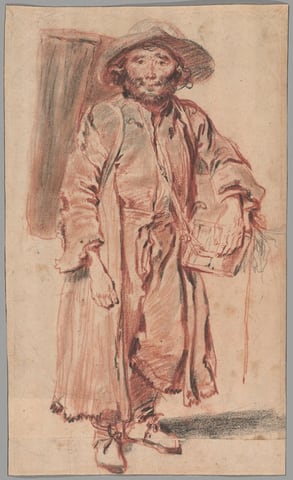
  1. Chalk drawing with red and black shading of man carrying crate and pack.
    The Old SavoyardAntoine Watteau, c. 1715Courtesy of the Art Institute of Chicago
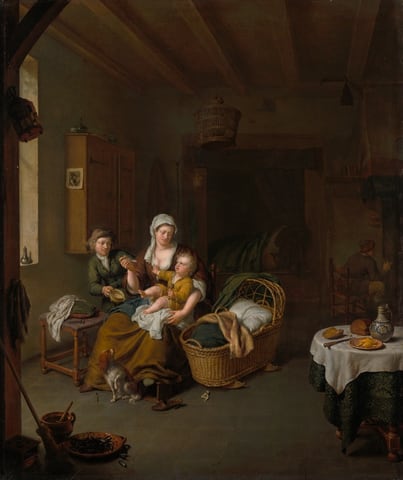
  2. Painting of a scene in a dimly-lit, cavernous room with a bassinet and small table. A shaft of light falls on four figures: a light-skinned woman in a white head covering, a baby on her lap, a male figure at her side, and a small dog at their feet. The couple feeds the fussing baby from a bowl, smiling.
    A Mother Feeding her Child (The Happy Mother)Willem van Mieris, 1707Courtesy of the Art Institute of Chicago