Floor plan

Time and place18th-century United States
18th-century United States
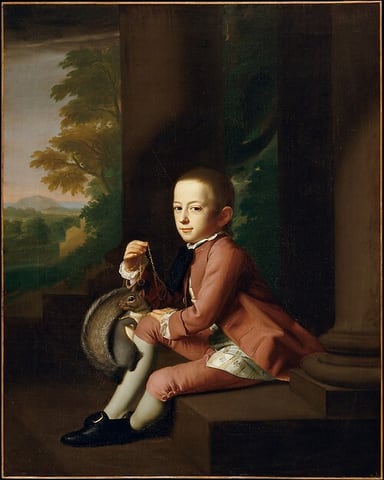
Daniel Crommelin Verplanck, by John Singleton Copley, 1771
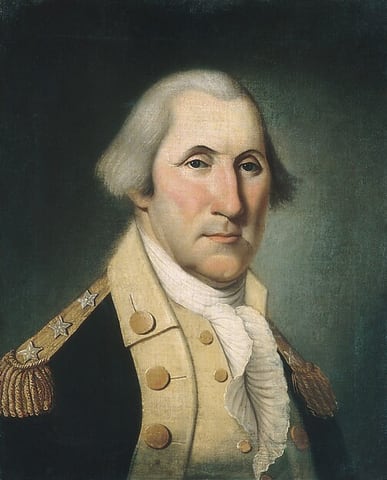
George Washington, by Charles Willson Peale, ca. 1779–81
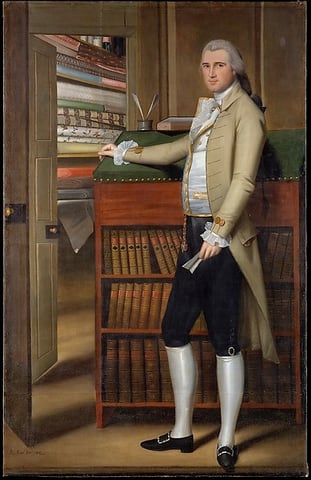
Elijah Boardman, by Ralph Earl, 1789
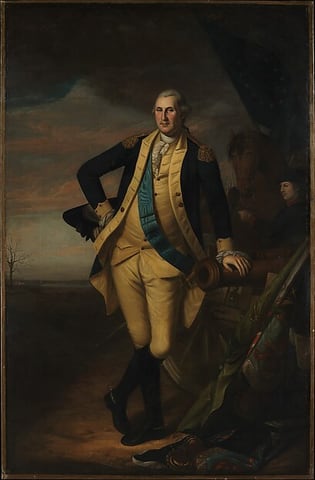
George Washington, by Charles Peale Polk, ca. 1790
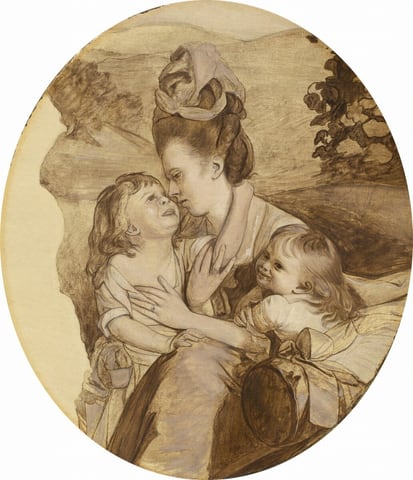
Sketch for The Copley Family, by John Singleton Copley, 1776

The works in this room are listed below.

Works in this room

Works made in the United States in the 18th century.

First room, north wall

  1. Daniel Crommelin Verplanck, by John Singleton Copley, 1771
    Daniel Crommelin VerplanckJohn Singleton Copley, 1771Courtesy of The Metropolitan Museum of Art
  2. George Washington, by Charles Willson Peale, ca. 1779–81
    George WashingtonCharles Willson Peale, ca. 1779–81Courtesy of The Metropolitan Museum of Art

First room, south wall

  1. Elijah Boardman, by Ralph Earl, 1789
    Elijah BoardmanRalph Earl, 1789Courtesy of The Metropolitan Museum of Art
  2. George Washington, by Charles Peale Polk, ca. 1790
    George WashingtonCharles Peale Polk, ca. 1790Courtesy of The Metropolitan Museum of Art
  3. Sketch for The Copley Family, by John Singleton Copley, 1776
    Sketch for The Copley FamilyJohn Singleton Copley, 1776Courtesy National Gallery of Art, Washington

Second room, south wall
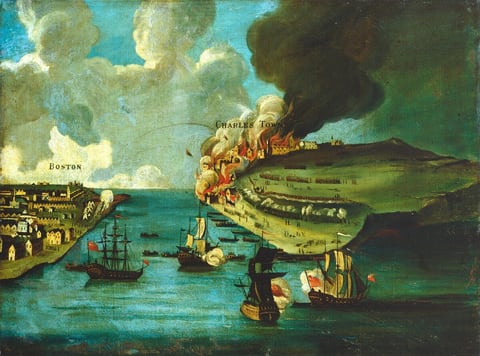
  1. We look across and down at a channel of water separating two landmasses labeled "Boston" and "Charles Town" in this horizontal landscape painting. Four three-masted ships are in the aquamarine-blue harbor between us and the land. Three of them have their sails unfurled and smoke billows from the broad, starboard side of each. Tidy rows of brown houses line the area of Boston. A puff of white smoke rises from the farthest point. Two arrow-shaped missiles, perhaps projectiles on fire, arc toward Charles Town, where billowing gray plumes of smoke rise from vivid orange fire on the far side of the landmass. Rowboats bring soldiers to the shore of Charles Town, close to where hundreds of soldiers line up and fire at each other. Much of the rest of Charles Town is a hill leading to sheer cliffs to our right. Tan and gray-colored smoke mixes among bright white clouds against a pale blue sky on the top half of the painting.
    Attack on Bunker's Hill, with the Burning of Charles TownUnrecorded American maker, 1783 or afterCourtesy National Gallery of Art, Washington
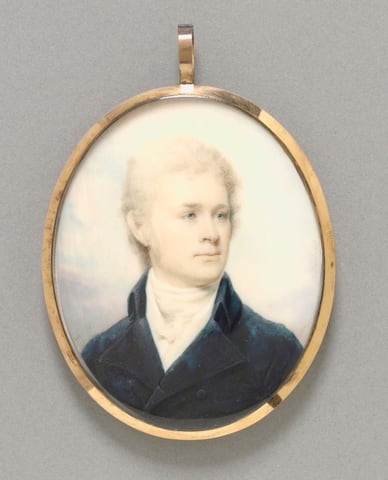
  2. James Alexander Ross Cuthbert, by Edward Greene Malbone, 1799
    James Alexander Ross CuthbertEdward Greene Malbone, 1799Courtesy of the Cleveland Museum of Art
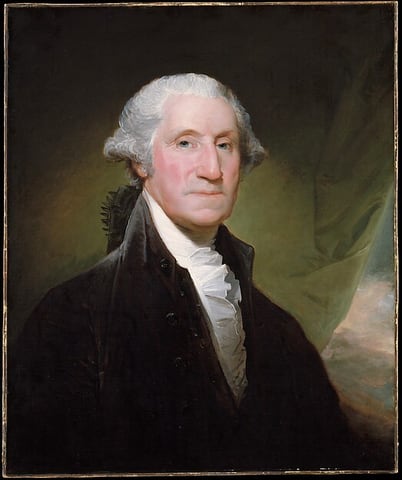
  3. George Washington, by Gilbert Stuart, begun 1795
    George WashingtonGilbert Stuart, begun 1795Courtesy of The Metropolitan Museum of Art
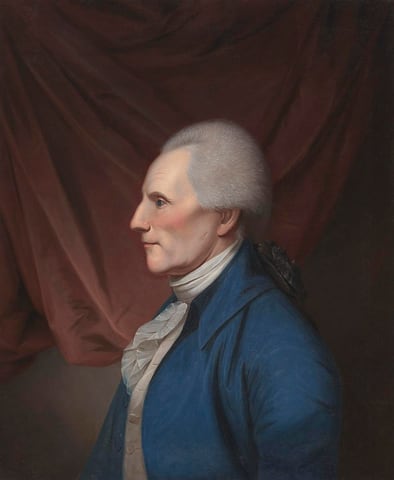
  4. Artist: Charles Willson Peale, Sitter: Richard Henry Lee, Current owner: National Portrait Gallery, Smithsonian Institution
    Richard Henry LeeCharles Willson Peale, c. 1795-1805Courtesy of the National Portrait Gallery, Smithsonian Institution

Second room, north wall
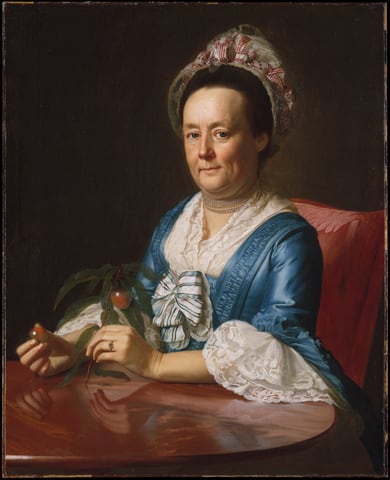
  1. Mrs. John Winthrop, by John Singleton Copley, 1773
    Mrs. John WinthropJohn Singleton Copley, 1773Courtesy of The Metropolitan Museum of Art
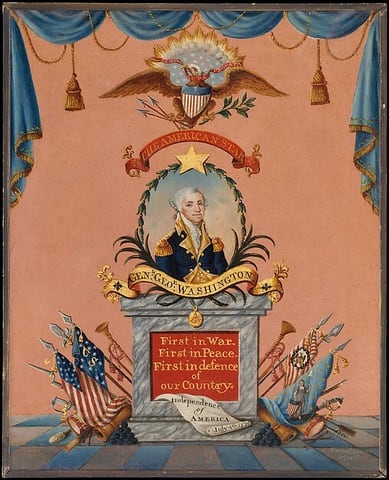
  2. The American Star (George Washington), by Frederick Kemmelmeyer, ca. 1803
    The American Star (George Washington)Frederick Kemmelmeyer, ca. 1803Courtesy of The Metropolitan Museum of Art
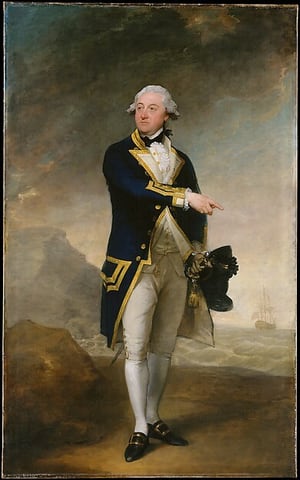
  3. Captain John Gell, by Gilbert Stuart, 1785
    Captain John GellGilbert Stuart, 1785Courtesy of The Metropolitan Museum of Art

Third room, north wall
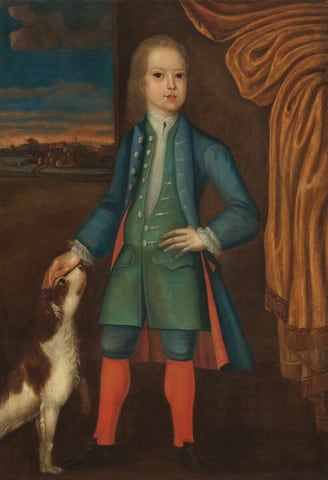
  1. Boy in Blue Coat, c. 1730
    Boy in Blue CoatUnrecorded American maker, c. 1730Courtesy National Gallery of Art, Washington
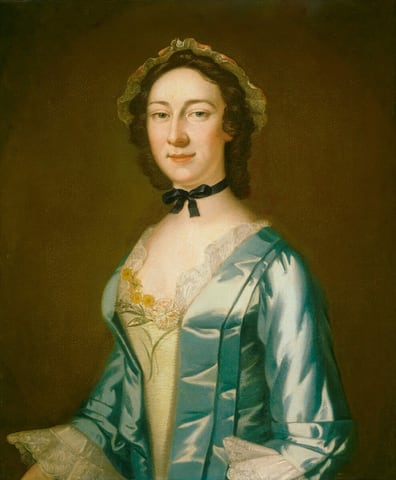
  2. Mary Walton Morris, by John Wollaston, 1749/1752
    Mary Walton MorrisJohn Wollaston, 1749/1752Courtesy National Gallery of Art, Washington

Third room, south wall
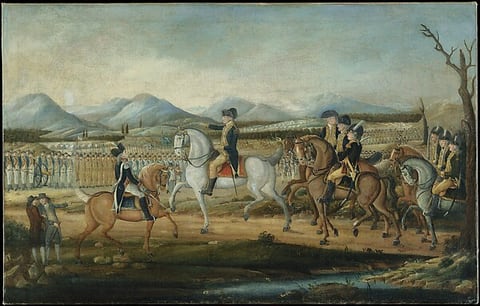
  1. Washington Reviewing the Western Army at Fort Cumberland, Maryland, by Frederick Kemmelmeyer, after 1795
    Washington Reviewing the Western Army at Fort Cumberland, MarylandFrederick Kemmelmeyer, after 1795Courtesy of The Metropolitan Museum of Art
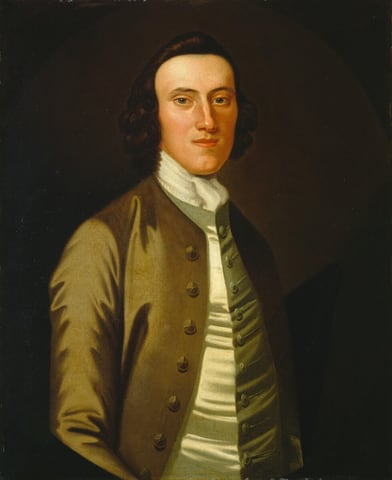
  2. The image displays a painted portrait of an individual, showing the upper half of the body prominently. The person is positioned facing slightly toward the viewer's left with their gaze directed forward. They have defined facial features with a smooth complexion and medium-length, curly brown hair that frames their face. The attire consists of an elegant coat with distinct buttons and a high-collared shirt underneath. There is a subtle shine and texture to the clothing. There are no visible jewelry pieces, and the person is not holding any objects. The background is a dark, neutral color, contrasting with the lighter tones of the person's skin and clothing.
    A Gentleman of the Morris FamilyJohn Wollaston, 1749/1752Courtesy National Gallery of Art, Washington