Floor plan

Time and placeThe 18th century

The 18th century

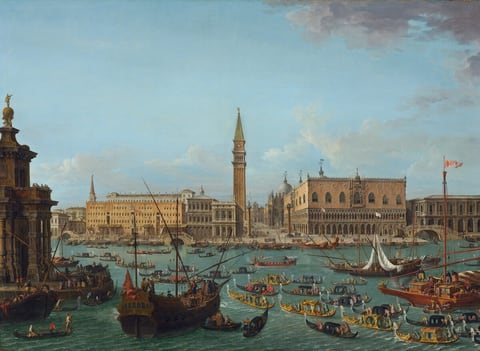
The painting depicts many large and small ships on blue-green water. Gondolas in shades of gold, black, red, and blue drift across the water, small people on them pushing long poles through the water. There are also large sailboats and long boats with several rowers. They create a colorful mix. On the left, a large brown building with columns is visible. Some of the boats pull up to it, and many people in colorful clothing are visible on the shore. Behind the water are more large buildings in shades of brown, cream, and tan, with even more people visible on the streets below them. There is a large tower in the center of the painting, and several blue domes are visible in the distance. The sky is light blue, with white and gray clouds drifting across it.
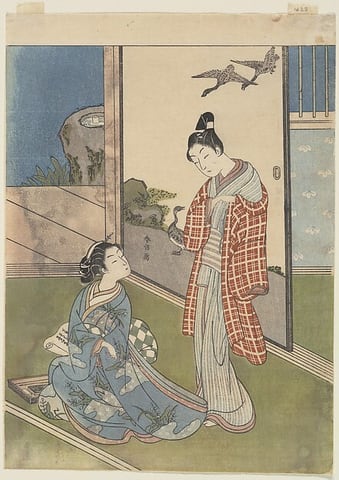
A Girl Writing a Letter, by Suzuki Harunobu, 18th century
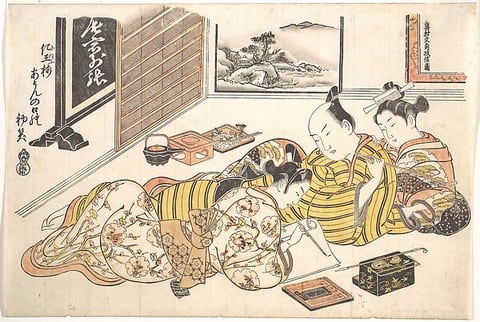
Plate from the Erotic Book Mounds of Dyed Colors: A Pattern Book for the Boudoir (Someiro no yama neya no hinagata), First Month, by Okumura Masanobu, ca. 1736–44
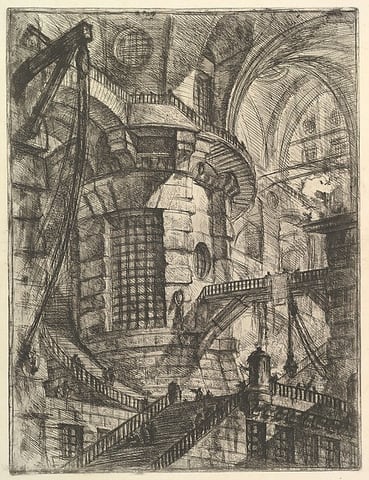
The Round Tower, from "Carceri d'invenzione" (Imaginary Prisons), by Giovanni Battista Piranesi, ca. 1749–50
A work made of color woodblock print; hosoban.
Seven Jeweled Mountain, late 1800s

The works in this room are listed below.

Works in this room

Works made in the 18th century, anywhere in the world.

First room, north wall

  1. The painting depicts many large and small ships on blue-green water. Gondolas in shades of gold, black, red, and blue drift across the water, small people on them pushing long poles through the water. There are also large sailboats and long boats with several rowers. They create a colorful mix. On the left, a large brown building with columns is visible. Some of the boats pull up to it, and many people in colorful clothing are visible on the shore. Behind the water are more large buildings in shades of brown, cream, and tan, with even more people visible on the streets below them. There is a large tower in the center of the painting, and several blue domes are visible in the distance. The sky is light blue, with white and gray clouds drifting across it.
    Procession of Gondolas in the Bacino di San Marco, VeniceAntonio Joli, 1742 or afterCourtesy National Gallery of Art, Washington
  2. A Girl Writing a Letter, by Suzuki Harunobu, 18th century
    A Girl Writing a LetterSuzuki Harunobu, 18th centuryCourtesy of The Metropolitan Museum of Art
  3. Plate from the Erotic Book Mounds of Dyed Colors: A Pattern Book for the Boudoir (Someiro no yama neya no hinagata), First Month, by Okumura Masanobu, ca. 1736–44
    Plate from the Erotic Book Mounds of Dyed Colors: A Pattern Book for the Boudoir (Someiro no yama neya no hinagata), First MonthOkumura Masanobu, ca. 1736–44Courtesy of The Metropolitan Museum of Art

First room, south wall

  1. The Round Tower, from "Carceri d'invenzione" (Imaginary Prisons), by Giovanni Battista Piranesi, ca. 1749–50
    The Round Tower, from "Carceri d'invenzione" (Imaginary Prisons)Giovanni Battista Piranesi, ca. 1749–50Courtesy of The Metropolitan Museum of Art
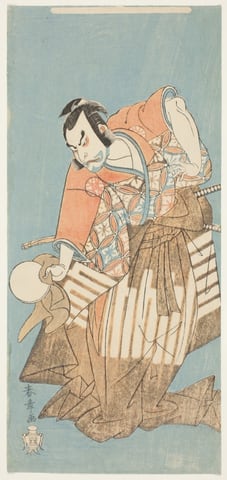
  2. A work made of color woodblock print; hosoban.
    Actor Nakamura Nakazô I as Osada no Tarô in The Genji Clan Now at Its Zenith (Ima o sakari suehiro Genji)Katsukawa Shunshō, About 1768Courtesy of the Art Institute of Chicago
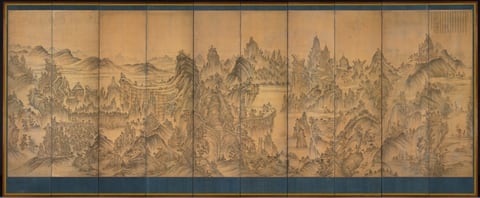
  3. Seven Jeweled Mountain, late 1800s
    Seven Jeweled MountainUnrecorded Korean maker, late 1800sCourtesy of the Cleveland Museum of Art

Second room, south wall
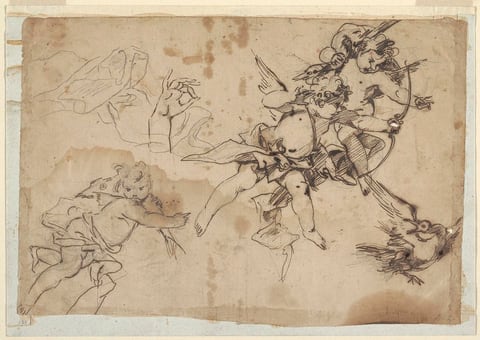
  1. STUDY FOR A PAINTING ON THEME OF CALLISTO
    Study for a Painting on Theme of CallistoFilippo Falciatore, ca. 1750Courtesy of Cooper Hewitt, Smithsonian Design Museum
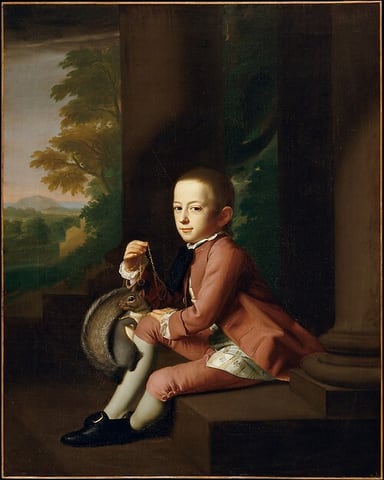
  2. Daniel Crommelin Verplanck, by John Singleton Copley, 1771
    Daniel Crommelin VerplanckJohn Singleton Copley, 1771Courtesy of The Metropolitan Museum of Art
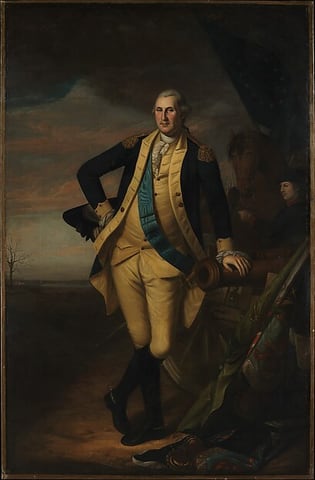
  3. George Washington, by Charles Willson Peale, ca. 1779–81
    George WashingtonCharles Willson Peale, ca. 1779–81Courtesy of The Metropolitan Museum of Art

Second room, north wall
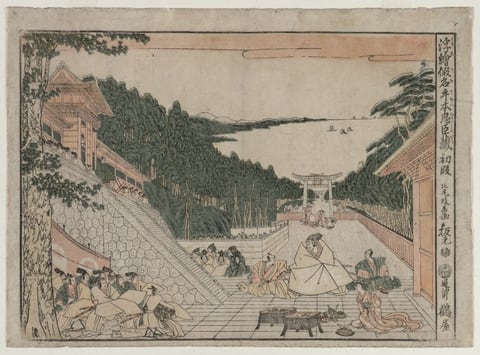
  1. Chushingura: Act I (from the series Perspective Pictures for The Treasure House of Loyalty), by Kitao Masayoshi, c. 1790s
    Chushingura: Act I (from the series Perspective Pictures for The Treasure House of Loyalty)Kitao Masayoshi, c. 1790sCourtesy of the Cleveland Museum of Art
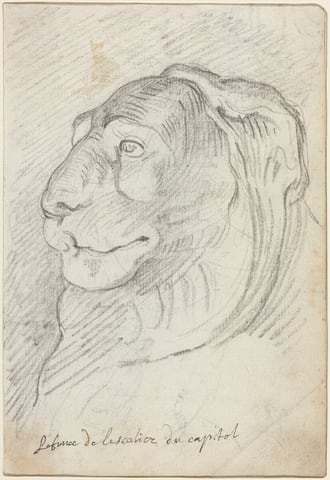
  2. This is a detailed sketch of a lion's head, positioned to show its profile. The drawing features the lion's broad nose, rounded mouth, large eye, and flowing mane. The facial features are depicted with various curves and lines. The sketch is on textured paper with pencil shading creating variations in the background. Handwritten text at the bottom reads "Leone de l'Escalier du capitol."
    Lion's Head from the Capitoline StaircaseAugustin Pajou, 1752/1756Courtesy National Gallery of Art, Washington
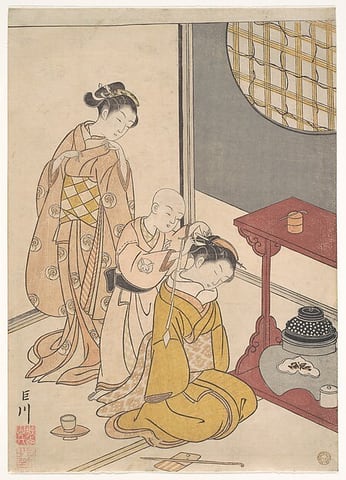
  3. Night Rain at the Double-Shelf Stand, from the series Eight Parlor Views (Zashiki hakkei), by Suzuki Harunobu, ca. 1766
    Night Rain at the Double-Shelf Stand, from the series Eight Parlor Views (Zashiki hakkei)Suzuki Harunobu, ca. 1766Courtesy of The Metropolitan Museum of Art
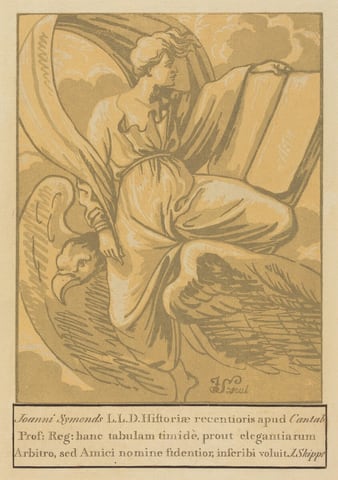
  4. This is a drawing of a winged figure seated on a bird. The image depicts a figure with flowing robes, wings outstretched, holding an open book in one hand. The figure appears to be looking off to the side, with a serene expression. The lower part of the image includes a bird upon which the figure is seated. The bird's head is turned slightly upwards, following the direction in which the figure is gazing. The image is rendered in a warm, monochromatic palette. In the lower section of the image, there is some text, likely Latin.
    Saint John the EvangelistJohn Skippe, 1771Courtesy National Gallery of Art, Washington

Third room, north wall
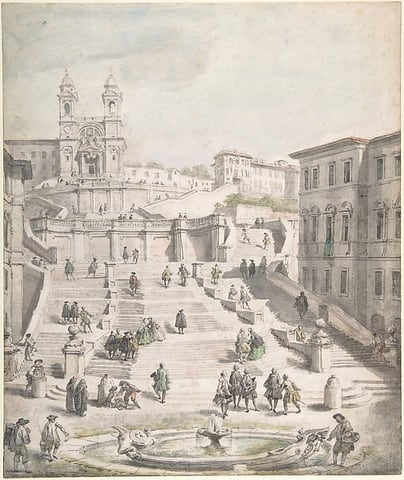
  1. Scalinata della Trinità dei Monti, by Giovanni Paolo Panini, ca. 1756–58
    Scalinata della Trinità dei MontiGiovanni Paolo Panini, ca. 1756–58Courtesy of The Metropolitan Museum of Art
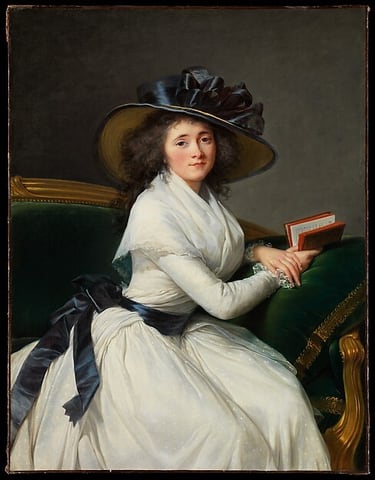
  2. Comtesse de la Châtre (Marie Charlotte Louise Perrette Aglaé Bontemps, 1762–1848), by Elisabeth Louise Vigée Le Brun, 1789
    Comtesse de la Châtre (Marie Charlotte Louise Perrette Aglaé Bontemps, 1762–1848)Elisabeth Louise Vigée Le Brun, 1789Courtesy of The Metropolitan Museum of Art
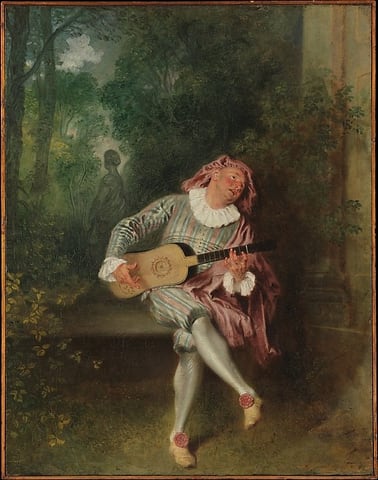
  3. Mezzetin, by Antoine Watteau, ca. 1718–20
    MezzetinAntoine Watteau, ca. 1718–20Courtesy of The Metropolitan Museum of Art