Floor plan

Time and placeThe 17th century

The 17th century

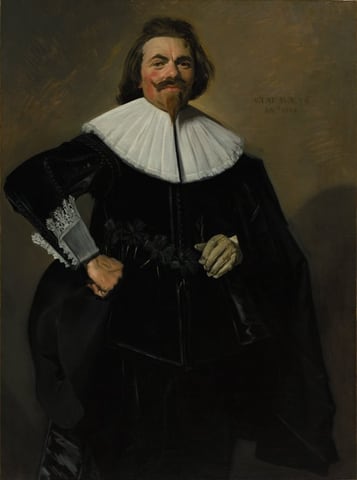
Portrait of Tieleman Roosterman, by Frans Hals, 1634
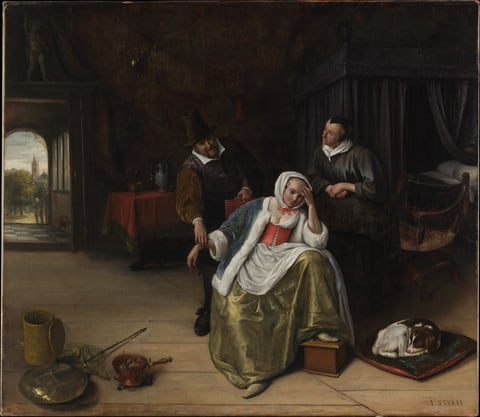
The Lovesick Maiden, by Jan Steen, ca. 1660
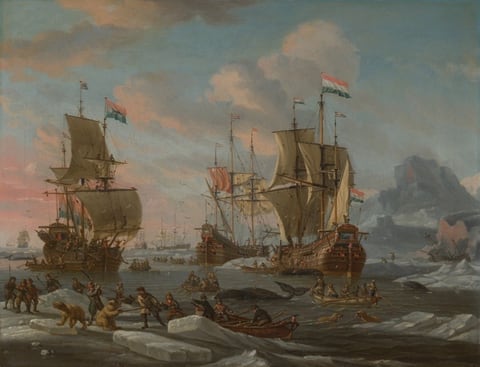
A work made of oil on canvas.
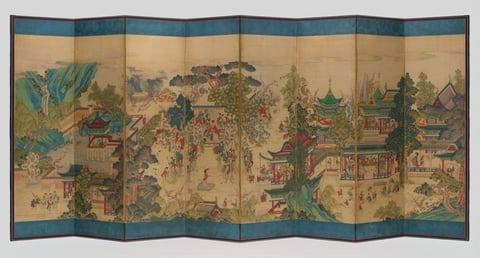
A work made of ink and color on silk.
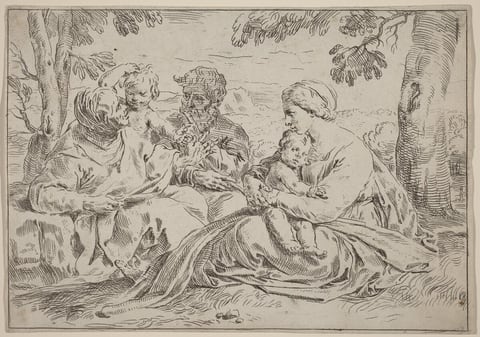
The artwork depicts four human figures, two males and two females, seated. One woman holds a baby, while one man holds a young child. The figures have different hairstyles and clothing, sitting in a natural setting with trees and hills in the background. The scene is drawn in a sketch-like style, focusing on lines and expressions.

The works in this room are listed below.

Works in this room

Works made in the 17th century, anywhere in the world.

Section 1, north wall

  1. Portrait of Tieleman Roosterman, by Frans Hals, 1634
    Portrait of Tieleman RoostermanFrans Hals, 1634Courtesy of the Cleveland Museum of Art
  2. The Lovesick Maiden, by Jan Steen, ca. 1660
    The Lovesick MaidenJan Steen, ca. 1660Courtesy of The Metropolitan Museum of Art
  3. A work made of oil on canvas.
    The Dutch Whaling FleetAbraham Storck, c. 1695Courtesy of the Art Institute of Chicago

Section 1, south wall

  1. A work made of ink and color on silk.
    Joyous Banquet of Guo Ziyi (곽분양행락도)Unrecorded Korean maker, Joseon dynasty (1392–1910), 19th centuryCourtesy of the Art Institute of Chicago
  2. The artwork depicts four human figures, two males and two females, seated. One woman holds a baby, while one man holds a young child. The figures have different hairstyles and clothing, sitting in a natural setting with trees and hills in the background. The scene is drawn in a sketch-like style, focusing on lines and expressions.
    The Holy FamilySimone CantariniCourtesy National Gallery of Art, Washington

Section 2, south wall
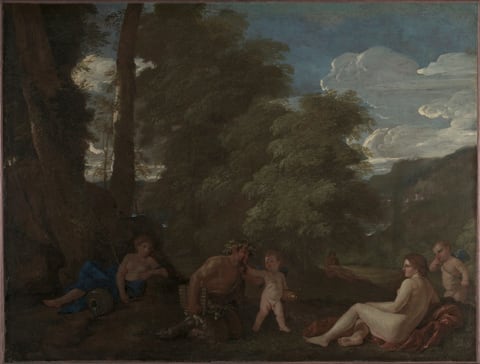
  1. Nymphs and a Satyr (Amor Vincit Omnia), by Nicolas Poussin, c. 1625–27
    Nymphs and a Satyr (Amor Vincit Omnia)Nicolas Poussin, c. 1625–27Courtesy of the Cleveland Museum of Art
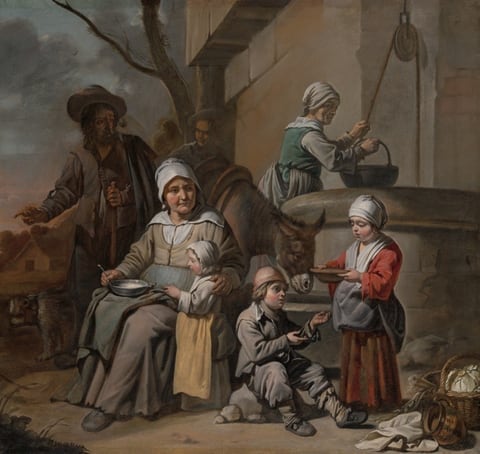
  2. A work made of oil on canvas.
    Peasant Family at a WellThe Master of the Children's Caps, 1650/60Courtesy of the Art Institute of Chicago

Section 2, north wall
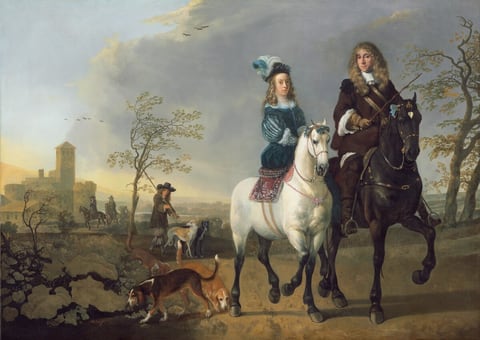
  1. An elegantly dressed man and woman ride horses toward us and to our right in a landscape with low, rolling hills, stone buildings, and trees in this horizontal painting. The two horses and riders take up the right half of the composition. Both people have pale skin and look at us. The woman has a high forehead, a straight nose, a round face, and curly blond hair falling to her shoulders. She wears a sapphire-blue dress with slashed sleeves to reveal a white garment beneath. Her hat is adorned with blue and white feathers, and she wears a string of pearls around her neck. The legs of her white horse darken to black below the knees, and the bridle is tied with blue bows near the horse’s ears. The sidesaddle sits on a woven, rug-like blanket. Next to her, to our right, the man rides a larger chestnut-brown horse with a white triangle between its eyes. The man looks at us out of the corners of his dark eyes under gathered brows. He has a long, straight nose and is cleanshaven, though a hint of a five o’clock shadow slightly darkens his cleft chin. His light brown hair falls in curls down past his shoulders, and he wears a dark brown coat with voluminous white fabric rippling out above tan-colored gloves. He holds a riding crop in his right hand, on our left, resting against his hip. Near the white horse’s feet, to our left, a dark brown dog with a white nose sniffs at a plant. Behind it, another reddish-brown dog sniffs the ground near the horse’s back hoof. A third dog stands beyond, partially obscured by bushes and plants growing in the lower left corner of the canvas. A man wearing a tall black, wide-brimmed hat and carrying a long staff leads two slender dogs resembling grayhounds on leashes along the path, a little behind the riders. Two more elegantly dressed men ride horses toward us father back on the path. Sand-colored stone buildings, hazy in the distance, are clustered around a squared tower, possibly a bell tower, to our left. The land dips gently to the horizon line in the deep distance. The riders are silhouetted against a swirling slate-blue cloud that fills most of the sky in the top two-thirds of the painting. The sky clears to pale blue to our left and then warms to golden yellow along the horizon, beyond the buildings. The artist signed the painting near the lower left corner: “A. Cuijp.”
    Lady and Gentleman on HorsebackAelbert Cuyp, c. 1655, reworked 1660/1665Courtesy National Gallery of Art, Washington
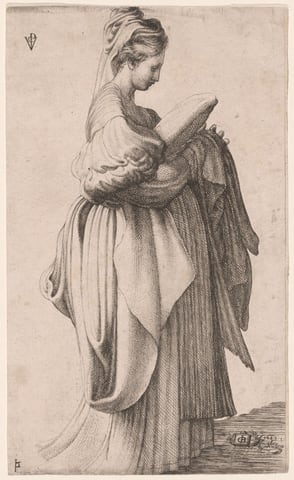
  2. A work made of etching in black ink on cream laid paper.
    A Young Woman Holding a CushionMonogrammist VCP, 1643Courtesy of the Art Institute of Chicago
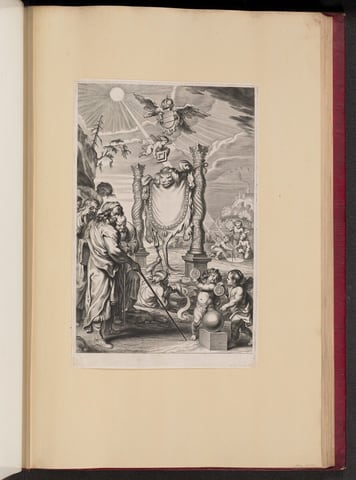
  3. This is a drawing of a mythological or allegorical scene. The scene features various figures of different ages engaged in activities around a central structure resembling an ornate draped curtain held up by columns. There is a celestial element shining down from the top, and an emblem or coat of arms held by winged figures at the very top. The figures are dressed in flowing robes and interact with each other and objects such as a globe and a staff. The composition is rich with symbolism, typical of artwork focused on narrative depth and storytelling.
    Title Page for G. de St. Vincent, Opus Geometricum Quadraturae CirculiCornelis Galle II, 1647Courtesy National Gallery of Art, Washington

Section 3, north wall
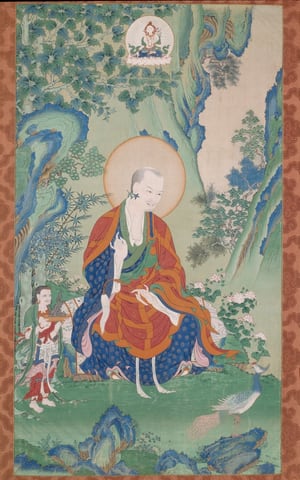
  1. A scene in green, orange, and blue depicts a large robed figure seated prominently in the foreground, a small standing figure beside him, and a tiny, seated, floating figure above him, mountains in the background.
    Arhat Vanavasin, One of the Sixteen Great Arhats, from a Set of Twenty-ThreeTibeto-Chinese, late 17th/early 18th centuryCourtesy of the Art Institute of Chicago
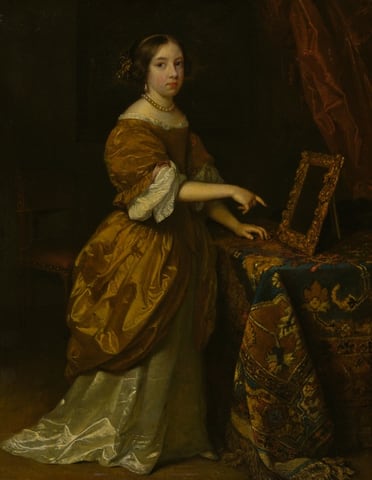
  2. A work made of oil on panel.
    Girl Standing before a MirrorCaspar Netscher, 1668Courtesy of the Art Institute of Chicago
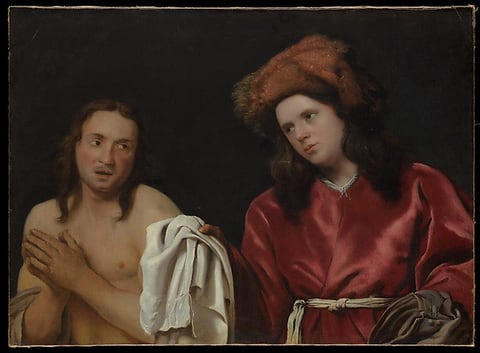
  3. Clothing the Naked, by Michiel Sweerts, ca. 1661
    Clothing the NakedMichiel Sweerts, ca. 1661Courtesy of The Metropolitan Museum of Art
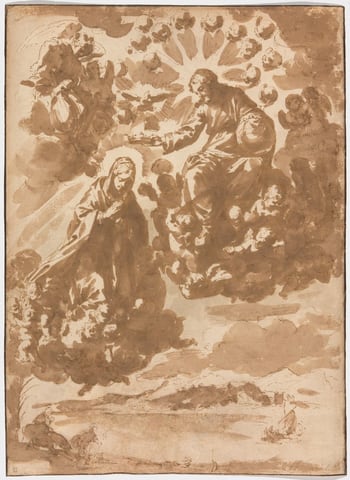
  4. A work made of pen and brown ink and brush and brown wash on ivory laid paper, laid down on cream laid paper.
    The Coronation of the Virgin and The Flight into EgyptJan de Bisschop, 1648/71Courtesy of the Art Institute of Chicago

Section 3, south wall
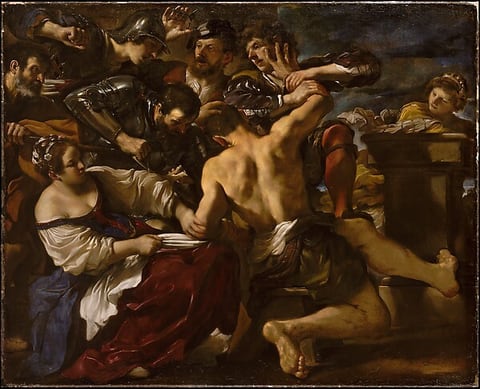
  1. Samson Captured by the Philistines, by Guercino (Giovanni Francesco Barbieri), 1619
    Samson Captured by the PhilistinesGuercino (Giovanni Francesco Barbieri), 1619Courtesy of The Metropolitan Museum of Art
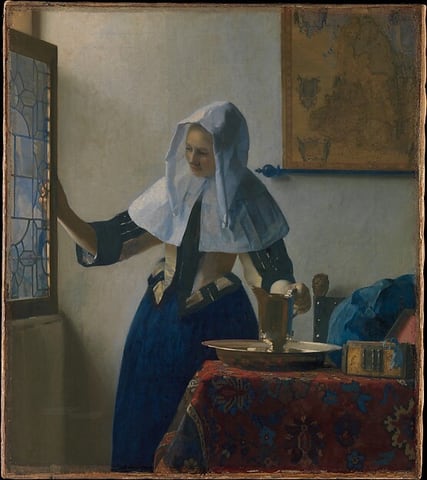
  2. Young Woman with a Water Pitcher, by Johannes Vermeer, ca. 1662
    Young Woman with a Water PitcherJohannes Vermeer, ca. 1662Courtesy of The Metropolitan Museum of Art