Floor plan

Time and place17th-century Italy

17th-century Italy

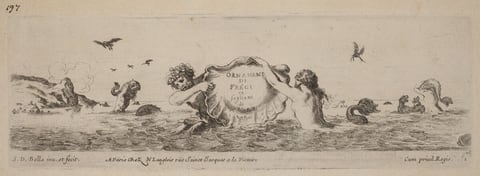
This is a drawing of mythical sea creatures in a marine landscape. The central figures are depicted as mythical beings, possibly mermen, with human torsos and fish-like tails, partially submerged in water. One figure prominently holds a large seashell with text written on it. Around them are various other marine creatures and features such as a distant rocky shore, birds flying in the sky, and waves creating a dynamic setting. The drawing is detailed in line work.
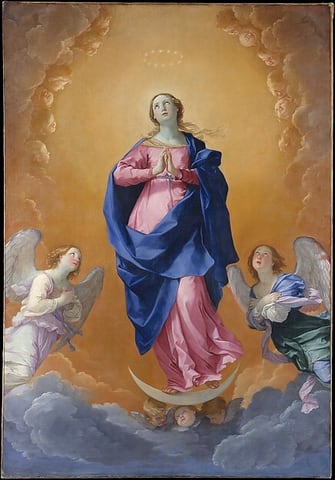
The Immaculate Conception, by Guido Reni, 1627
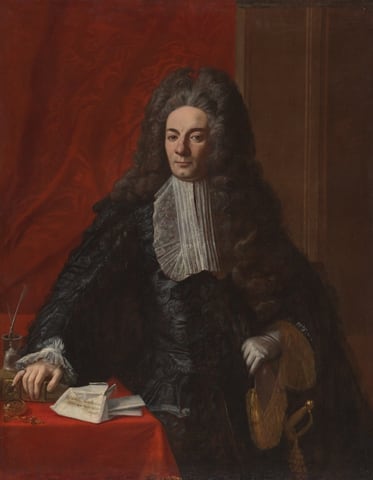
A work made of oil on canvas.
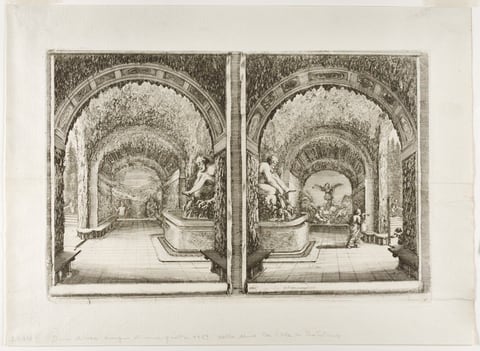
A work made of etching on ivory laid paper.
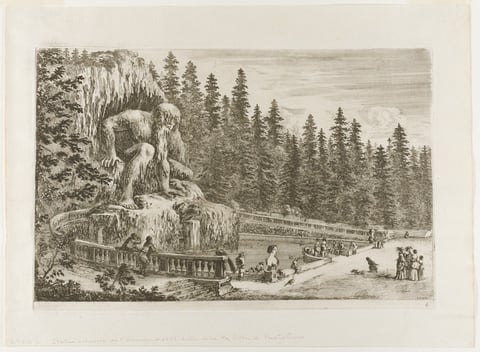
A work made of etching in black on ivory laid paper.
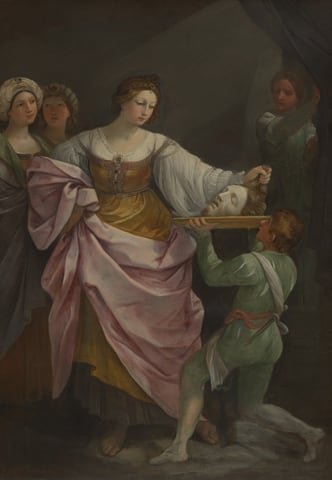
Large painting of woman, in gold and pink dress, placing severed head on platter.

The works in this room are listed below.

Works in this room

Works made in Italy in the 17th century.

First room, north wall

  1. This is a drawing of mythical sea creatures in a marine landscape. The central figures are depicted as mythical beings, possibly mermen, with human torsos and fish-like tails, partially submerged in water. One figure prominently holds a large seashell with text written on it. Around them are various other marine creatures and features such as a distant rocky shore, birds flying in the sky, and waves creating a dynamic setting. The drawing is detailed in line work.
    Title Page for "Ornamenti di fregi e fogliani"Stefano della Bella, probably 1648Courtesy National Gallery of Art, Washington
  2. The Immaculate Conception, by Guido Reni, 1627
    The Immaculate ConceptionGuido Reni, 1627Courtesy of The Metropolitan Museum of Art
  3. A work made of oil on canvas.
    Jacopo ButeraFrancesco Solimena, c. 1695Courtesy of the Art Institute of Chicago

First room, south wall

  1. A work made of etching on ivory laid paper.
    The Grotto of Pan and FameStefano della Bella, 1653/55Courtesy of the Art Institute of Chicago
  2. A work made of etching in black on ivory laid paper.
    The Colossal Statue of the Apennines, from Views of Villa di PratolinoStefano della Bella, c. 1653Courtesy of the Art Institute of Chicago
  3. Large painting of woman, in gold and pink dress, placing severed head on platter.
    Salome with the Head of Saint John the BaptistGuido Reni, c. 1639–42Courtesy of the Art Institute of Chicago

Second room, south wall
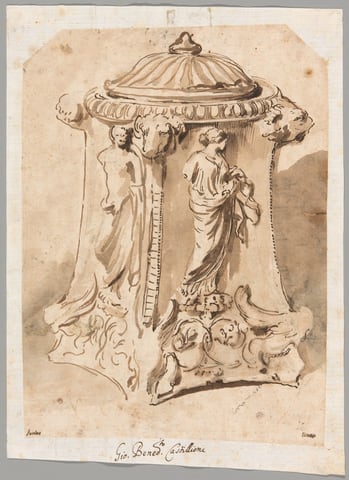
  1. A work made of pen and brown ink and brush and brown wash, over graphite, on cream laid paper laid down on off-white laid paper.
    Antique Carved Marble Candelabra BaseAndrea di Lione, 1642/44 or 1647/51Courtesy of the Art Institute of Chicago
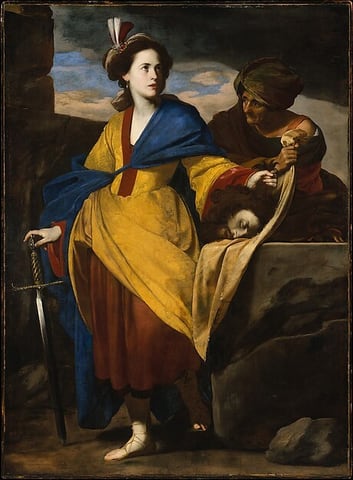
  2. Judith with the Head of Holofernes, by Massimo Stanzione, ca. 1640
    Judith with the Head of HolofernesMassimo Stanzione, ca. 1640Courtesy of The Metropolitan Museum of Art
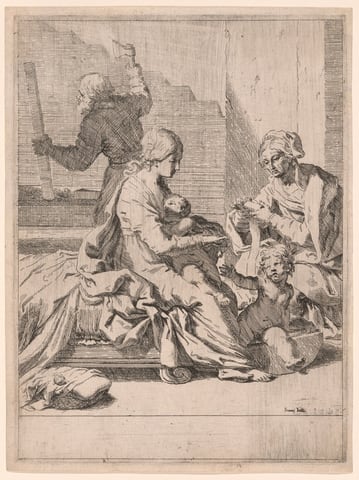
  3. A work made of etching in black on cream laid paper.
    Holy Family with Saint Elizabeth and Saint John the BaptistElisabetta Sirani, 1650/60Courtesy of the Art Institute of Chicago
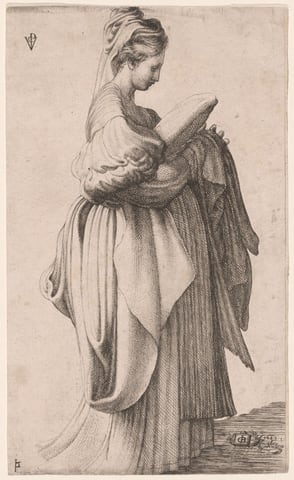
  4. A work made of etching in black ink on cream laid paper.
    A Young Woman Holding a CushionMonogrammist VCP, 1643Courtesy of the Art Institute of Chicago

Second room, north wall
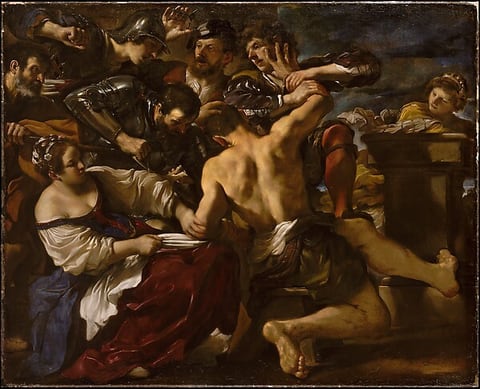
  1. Samson Captured by the Philistines, by Guercino (Giovanni Francesco Barbieri), 1619
    Samson Captured by the PhilistinesGuercino (Giovanni Francesco Barbieri), 1619Courtesy of The Metropolitan Museum of Art
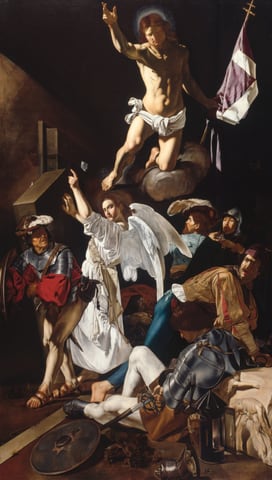
  2. A work made of oil on canvas.
    The ResurrectionCecco del Caravaggio, c. 1619-20Courtesy of the Art Institute of Chicago

Third room, north wall
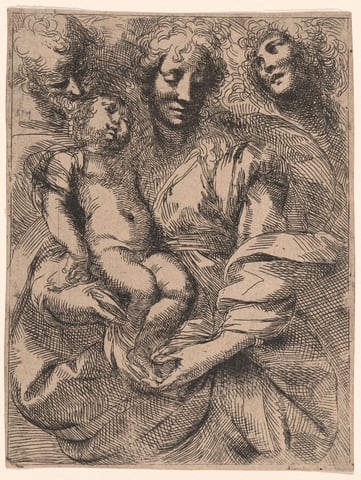
  1. A work made of etching in black on tan laid paper.
    The Holy FamilyGiulio Cesare Procaccini, 1613/15Courtesy of the Art Institute of Chicago
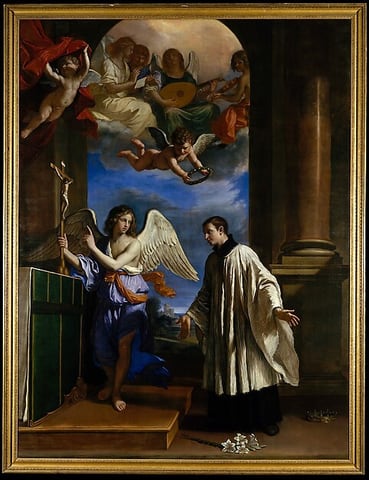
  2. The Vocation of Saint Aloysius (Luigi) Gonzaga, by Guercino (Giovanni Francesco Barbieri), ca. 1650
    The Vocation of Saint Aloysius (Luigi) GonzagaGuercino (Giovanni Francesco Barbieri), ca. 1650Courtesy of The Metropolitan Museum of Art

Third room, south wall
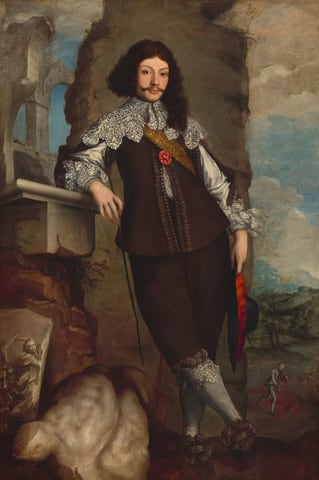
  1. Lodovico Widmann, by Tiberio Tinelli, probably 1637
    Lodovico WidmannTiberio Tinelli, probably 1637Courtesy National Gallery of Art, Washington
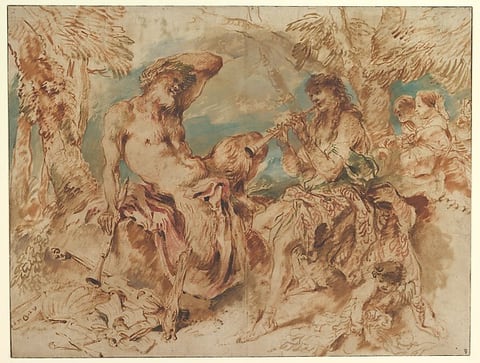
  2. Youth Playing a Pipe for a Satyr, by Giovanni Benedetto Castiglione, 1645–50
    Youth Playing a Pipe for a SatyrGiovanni Benedetto Castiglione, 1645–50Courtesy of The Metropolitan Museum of Art