Floor plan

Time and place17th-century Italy

17th-century Italy

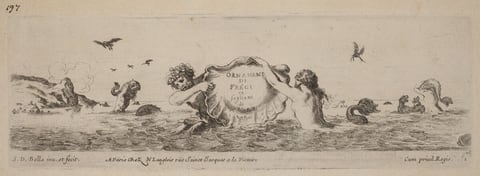
This is a drawing of mythical sea creatures in a marine landscape. The central figures are depicted as mythical beings, possibly mermen, with human torsos and fish-like tails, partially submerged in water. One figure prominently holds a large seashell with text written on it. Around them are various other marine creatures and features such as a distant rocky shore, birds flying in the sky, and waves creating a dynamic setting. The drawing is detailed in line work.
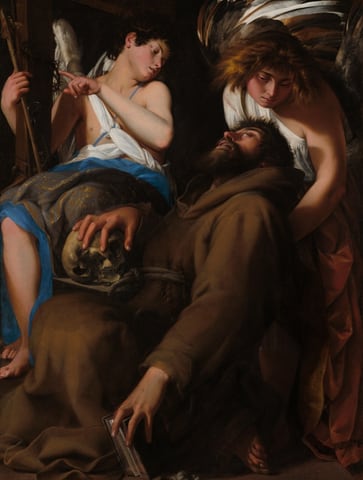
A work made of oil on canvas.
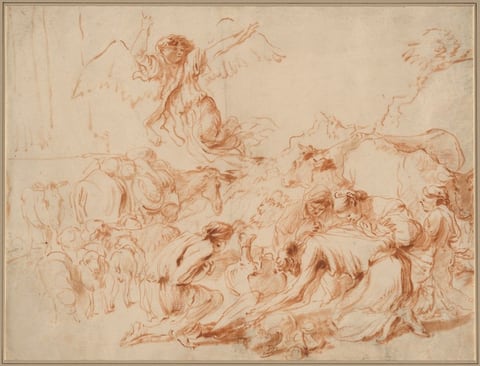
A work made of red oil paint on ivory laid paper.
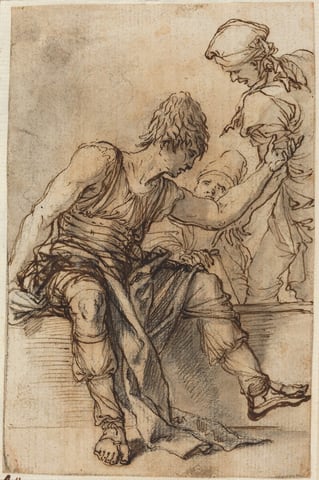
The image shows a drawing of three figures. The central figure is seated, leaning slightly forward with one arm outstretched towards the standing figures. They have short, slightly messy hair, traditional clothing, and muscular limbs. The standing figures on the right are partially obscured but appear to interact with the seated figure. One of them is extending their arm towards the seated figure. The individuals wear layered clothing, with one wearing a head covering. The background is simple, emphasizing the interaction between the figures. The drawing style is classical or historical, using ink and wash for texture and depth.
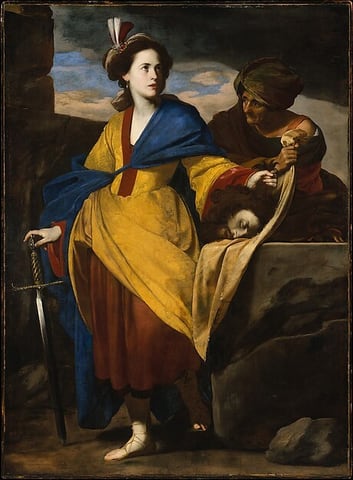
Judith with the Head of Holofernes, by Massimo Stanzione, ca. 1640

The works in this room are listed below.

Works in this room

Works made in Italy in the 17th century.

First room, north wall

  1. This is a drawing of mythical sea creatures in a marine landscape. The central figures are depicted as mythical beings, possibly mermen, with human torsos and fish-like tails, partially submerged in water. One figure prominently holds a large seashell with text written on it. Around them are various other marine creatures and features such as a distant rocky shore, birds flying in the sky, and waves creating a dynamic setting. The drawing is detailed in line work.
    Title Page for "Ornamenti di fregi e fogliani"Stefano della Bella, probably 1648Courtesy National Gallery of Art, Washington
  2. A work made of oil on canvas.
    The Ecstasy of Saint FrancisGiovanni Baglione, 1601Courtesy of the Art Institute of Chicago
  3. A work made of red oil paint on ivory laid paper.
    The Angel Departing from the Family of Tobit (?)Giovanni Benedetto Castiglione, c. 1655Courtesy of the Art Institute of Chicago

First room, south wall

  1. The image shows a drawing of three figures. The central figure is seated, leaning slightly forward with one arm outstretched towards the standing figures. They have short, slightly messy hair, traditional clothing, and muscular limbs. The standing figures on the right are partially obscured but appear to interact with the seated figure. One of them is extending their arm towards the seated figure. The individuals wear layered clothing, with one wearing a head covering. The background is simple, emphasizing the interaction between the figures. The drawing style is classical or historical, using ink and wash for texture and depth.
    Youth Sitting on a Wall in Conversation with Two MenSalvator Rosa, c. 1656/1657Courtesy National Gallery of Art, Washington
  2. Judith with the Head of Holofernes, by Massimo Stanzione, ca. 1640
    Judith with the Head of HolofernesMassimo Stanzione, ca. 1640Courtesy of The Metropolitan Museum of Art

Second room, south wall
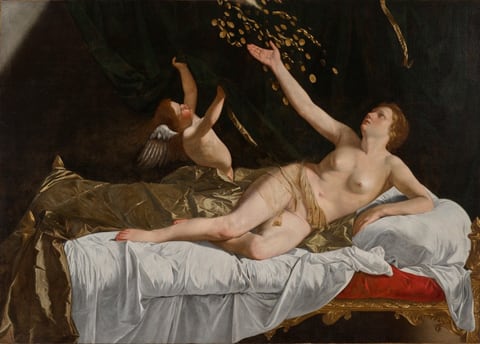
  1. Danaë, by Orazio Gentileschi, c. 1623
    DanaëOrazio Gentileschi, c. 1623Courtesy of the Cleveland Museum of Art
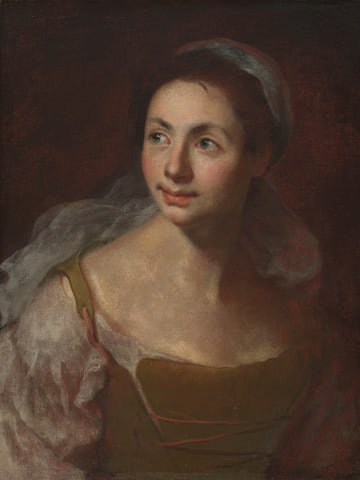
  2. A work made of oil on canvas.
    Portrait of a GirlFrancesco Solimena, c. 1700Courtesy of the Art Institute of Chicago

Second room, north wall
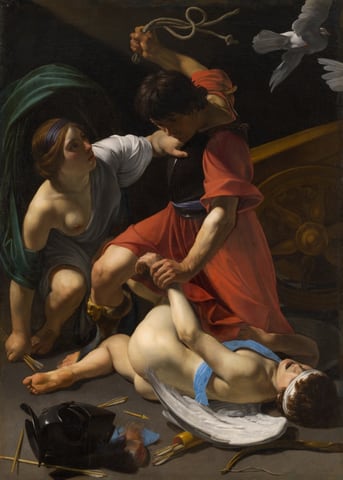
  1. Large painting of cupid being whipped, a woman tries to hold back the a man in red dress.
    Cupid ChastisedBartolomeo Manfredi, 1613Courtesy of the Art Institute of Chicago
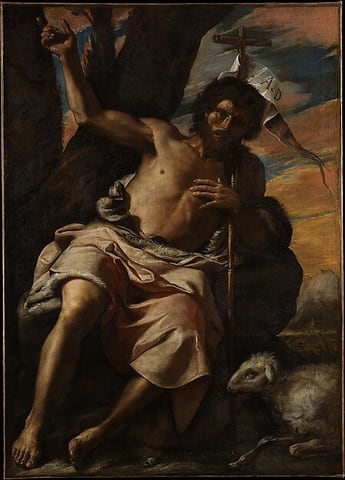
  2. Saint John the Baptist Preaching, by Mattia Preti (Il Cavalier Calabrese), ca. 1650
    Saint John the Baptist PreachingMattia Preti (Il Cavalier Calabrese), ca. 1650Courtesy of The Metropolitan Museum of Art
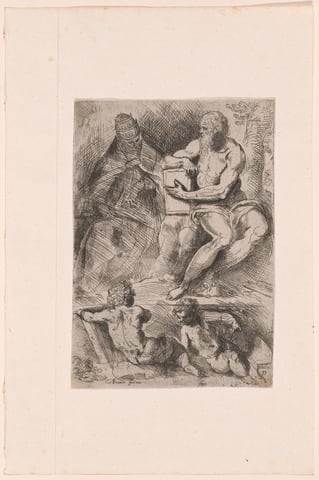
  3. A work made of etching in black on cream laid paper.
    Saint Jerome and a Pope with Two Putti (Saint Jerome and Pope Damasus)Jacopo Palma il Giovane, c. 1611Courtesy of the Art Institute of Chicago

Third room, north wall
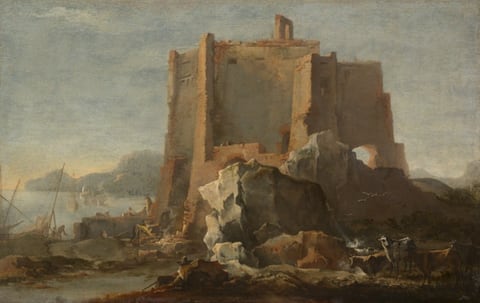
  1. A work made of oil on canvas.
    Landscape with Rock and FortressDomenico Gargiuli (Micco Spadaro), c. 1645Courtesy of the Art Institute of Chicago
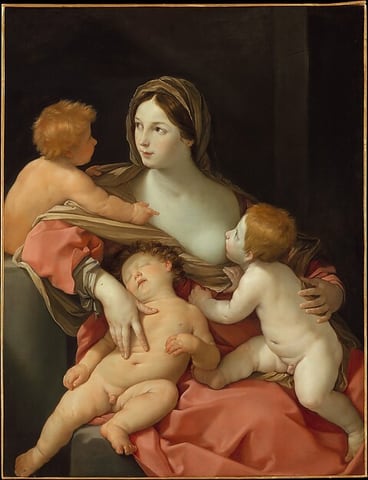
  2. Charity, by Guido Reni, ca. 1630
    CharityGuido Reni, ca. 1630Courtesy of The Metropolitan Museum of Art

Third room, south wall
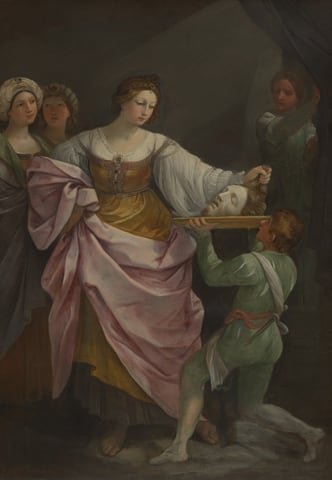
  1. Large painting of woman, in gold and pink dress, placing severed head on platter.
    Salome with the Head of Saint John the BaptistGuido Reni, c. 1639–42Courtesy of the Art Institute of Chicago
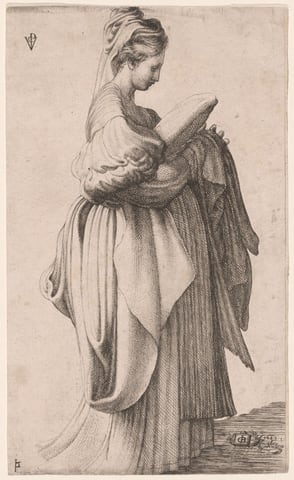
  2. A work made of etching in black ink on cream laid paper.
    A Young Woman Holding a CushionMonogrammist VCP, 1643Courtesy of the Art Institute of Chicago

Fourth room, south wall
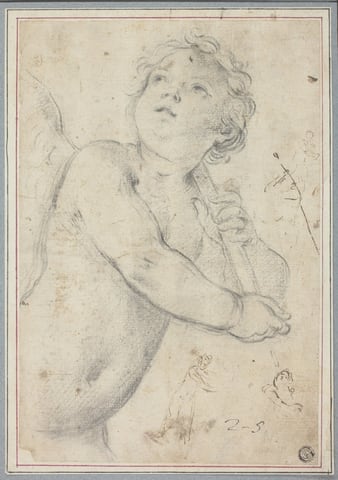
  1. A work made of black chalk with pen and brown ink on cream laid paper.
    Putto Holding StaffGuido Reni, n.d.Courtesy of the Art Institute of Chicago
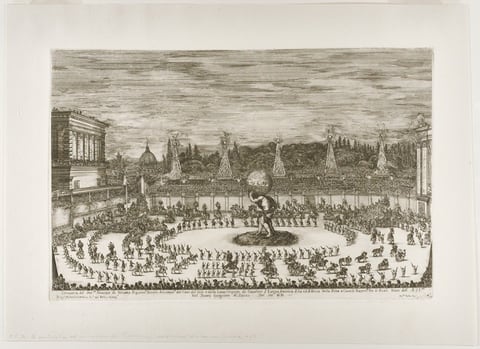
  2. A work made of etching on ivory laid paper.
    Equestrian Ballet in the Amphitheater of the Boboli GardensStefano della Bella, 1661Courtesy of the Art Institute of Chicago