Floor plan

Time and place17th-century Italy

17th-century Italy

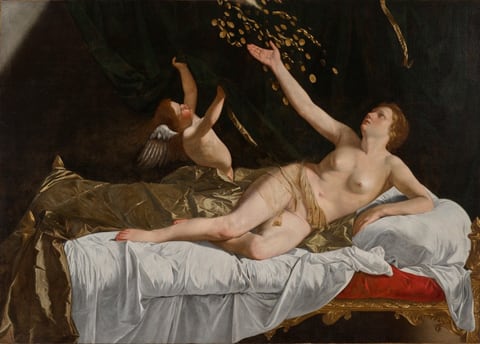
Danaë, by Orazio Gentileschi, c. 1623
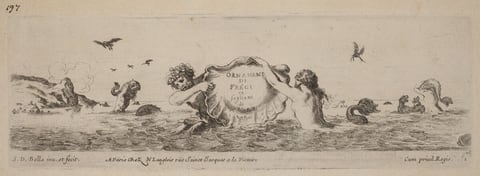
This is a drawing of mythical sea creatures in a marine landscape. The central figures are depicted as mythical beings, possibly mermen, with human torsos and fish-like tails, partially submerged in water. One figure prominently holds a large seashell with text written on it. Around them are various other marine creatures and features such as a distant rocky shore, birds flying in the sky, and waves creating a dynamic setting. The drawing is detailed in line work.
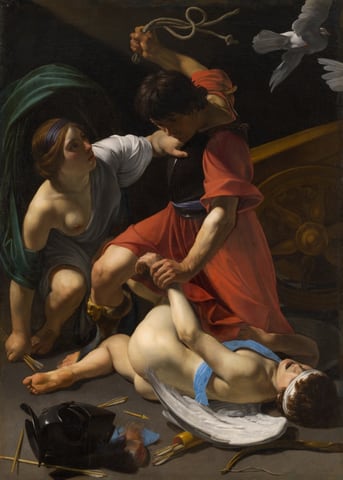
Large painting of cupid being whipped, a woman tries to hold back the a man in red dress.
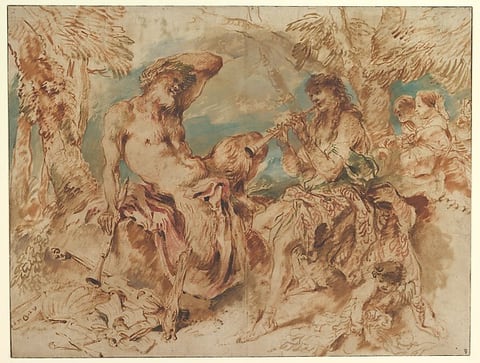
Youth Playing a Pipe for a Satyr, by Giovanni Benedetto Castiglione, 1645–50
A work made of oil on canvas.

The works in this room are listed below.

Works in this room

Works made in Italy in the 17th century.

First room, north wall

  1. Danaë, by Orazio Gentileschi, c. 1623
    DanaëOrazio Gentileschi, c. 1623Courtesy of the Cleveland Museum of Art
  2. This is a drawing of mythical sea creatures in a marine landscape. The central figures are depicted as mythical beings, possibly mermen, with human torsos and fish-like tails, partially submerged in water. One figure prominently holds a large seashell with text written on it. Around them are various other marine creatures and features such as a distant rocky shore, birds flying in the sky, and waves creating a dynamic setting. The drawing is detailed in line work.
    Title Page for "Ornamenti di fregi e fogliani"Stefano della Bella, probably 1648Courtesy National Gallery of Art, Washington

First room, south wall

  1. Large painting of cupid being whipped, a woman tries to hold back the a man in red dress.
    Cupid ChastisedBartolomeo Manfredi, 1613Courtesy of the Art Institute of Chicago
  2. Youth Playing a Pipe for a Satyr, by Giovanni Benedetto Castiglione, 1645–50
    Youth Playing a Pipe for a SatyrGiovanni Benedetto Castiglione, 1645–50Courtesy of The Metropolitan Museum of Art
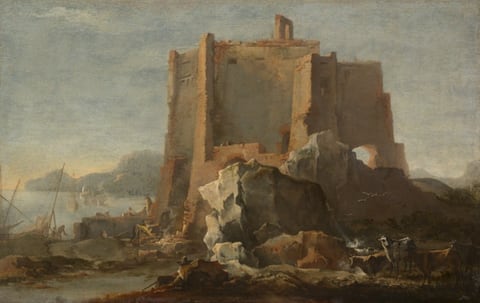
  3. A work made of oil on canvas.
    Landscape with Rock and FortressDomenico Gargiuli (Micco Spadaro), c. 1645Courtesy of the Art Institute of Chicago

Second room, south wall
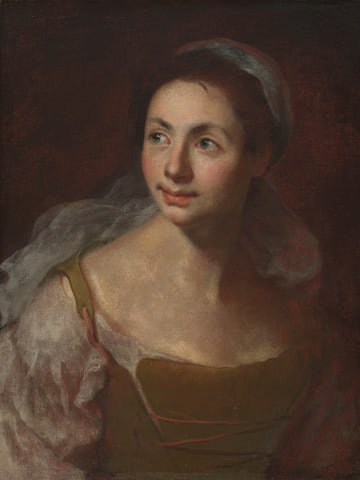
  1. A work made of oil on canvas.
    Portrait of a GirlFrancesco Solimena, c. 1700Courtesy of the Art Institute of Chicago
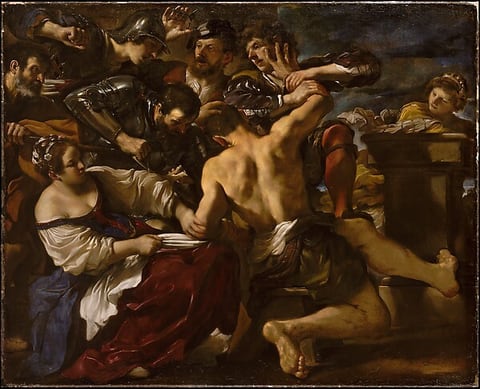
  2. Samson Captured by the Philistines, by Guercino (Giovanni Francesco Barbieri), 1619
    Samson Captured by the PhilistinesGuercino (Giovanni Francesco Barbieri), 1619Courtesy of The Metropolitan Museum of Art
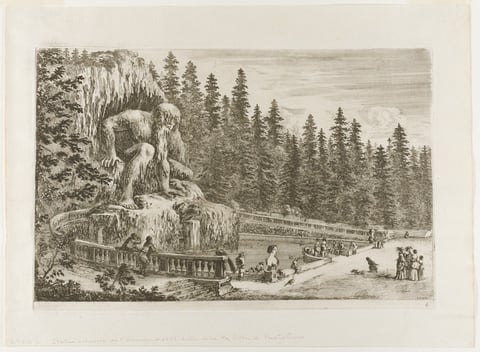
  3. A work made of etching in black on ivory laid paper.
    The Colossal Statue of the Apennines, from Views of Villa di PratolinoStefano della Bella, c. 1653Courtesy of the Art Institute of Chicago

Second room, north wall
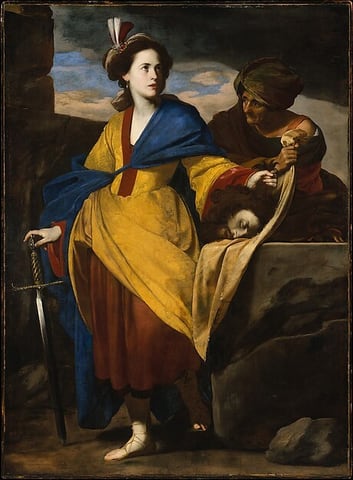
  1. Judith with the Head of Holofernes, by Massimo Stanzione, ca. 1640
    Judith with the Head of HolofernesMassimo Stanzione, ca. 1640Courtesy of The Metropolitan Museum of Art
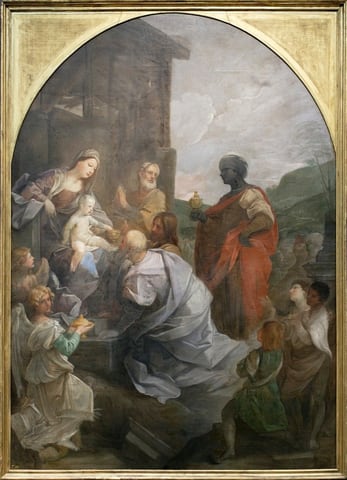
  2. Adoration of the Magi, by Guido Reni, 1642
    Adoration of the MagiGuido Reni, 1642Courtesy of the Cleveland Museum of Art

Third room, north wall
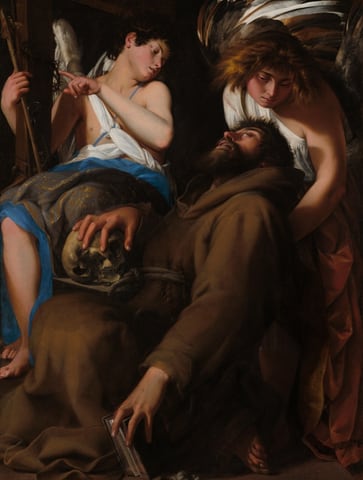
  1. A work made of oil on canvas.
    The Ecstasy of Saint FrancisGiovanni Baglione, 1601Courtesy of the Art Institute of Chicago
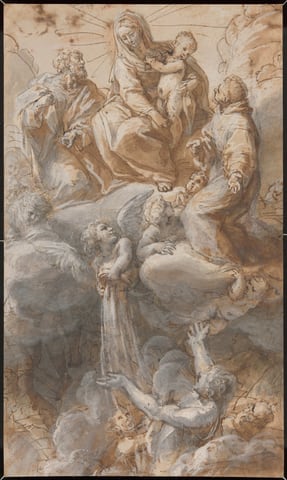
  2. A work made of pen and brown ink, brown and gray wash, and white opaque watercolor (recto) and pen and brown-black ink (verso) on laid paper.
    The Virgin and Saint Joseph with Saint Anthony of Padua Seated in the Heavens Interceding for the Souls in Purgatory, While an Angel Pours Fluid from a Vase onto the Crowd Below (recto and verso)Pietro Antonio di Pietri, 1690/1710Courtesy of the Art Institute of Chicago
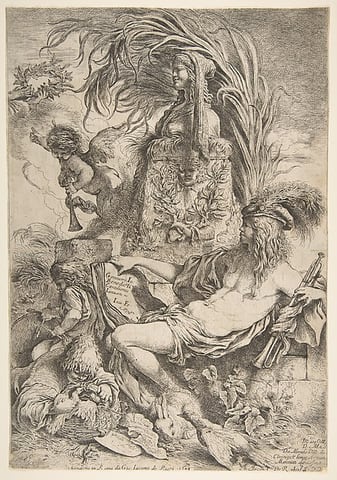
  3. The Genius of Castiglione, by Giovanni Benedetto Castiglione, ca. 1645–47 (published 1648)
    The Genius of CastiglioneGiovanni Benedetto Castiglione, ca. 1645–47 (published 1648)Courtesy of The Metropolitan Museum of Art
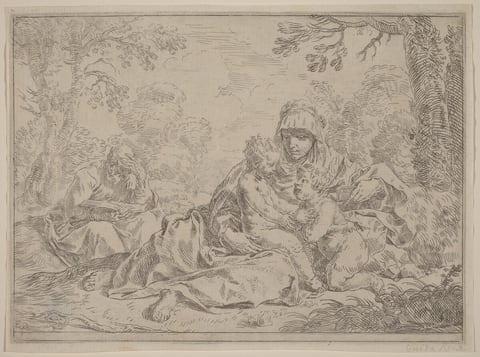
  4. The image shows an etching of four individuals, two adults, and two children. The main adult is sitting with a child on each knee. This person is wearing a hooded cloak with soft facial features. The children have curly hair and are reaching towards each other. The second adult is seated behind them, wearing a loose robe and appears to be holding something, possibly a book. The background features trees, bushes, foliage, and a calm sky.
    The Holy FamilySimone CantariniCourtesy National Gallery of Art, Washington

Third room, south wall
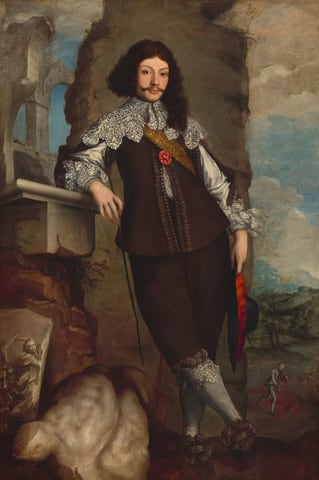
  1. Lodovico Widmann, by Tiberio Tinelli, probably 1637
    Lodovico WidmannTiberio Tinelli, probably 1637Courtesy National Gallery of Art, Washington
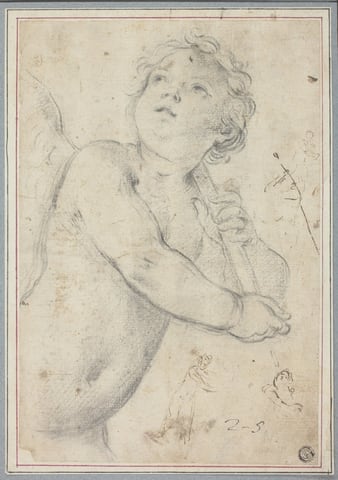
  2. A work made of black chalk with pen and brown ink on cream laid paper.
    Putto Holding StaffGuido Reni, n.d.Courtesy of the Art Institute of Chicago