Floor plan

Time and placeThe 16th century

The 16th century

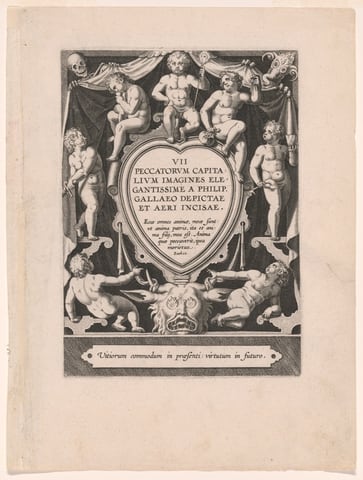
A work made of engraving on paper.
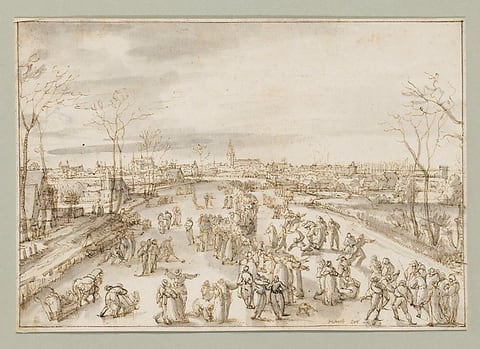
Ice skaters on the Amstel in Amsterdam, by Hans Bol, 1589
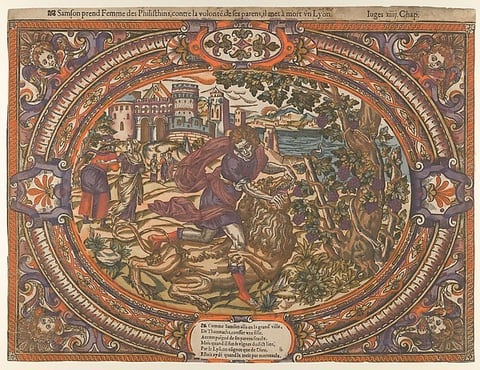
Samson and the Lion, from "The Story of Samson", ca. 1560–80
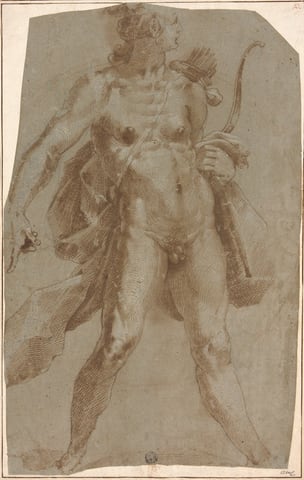
A work made of pen and brown ink, heightened with lead white (partly discolored), over black chalk, on blue laid paper, laid down on ivory laid paper.
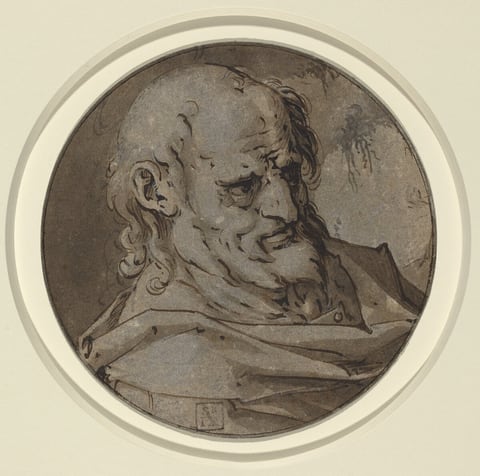
The image features the upper body and head of a man in a circular frame. The man is facing slightly to the side and downward, with his body oriented to the left and his head turned towards the viewer. He has a prominent forehead, a defined nose, a furrowed brow, and a scrunched face. His hair is thinning on top, with longer strands curling around the back and sides of his head. The man has a beard with similar curled texture as his hair. He is wearing a garment that drapes over his shoulders, with visible folds and a texture that suggests a substantial fabric. No jewelry or objects are in his hands, as they are not visible in this image. The background is plain with a light, sketchy look, focusing attention on the man as the central figure in the circular composition.
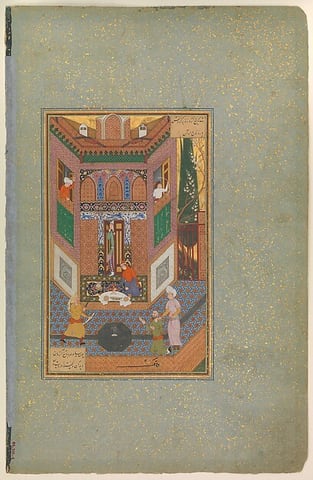
"A Ruffian Spares the Life of a Poor Man", Folio 4v from a Mantiq al-Tayr (Language of the Birds), by Farid al-Din `Attar, ca. 1600

The works in this room are listed below.

Works in this room

Works made in the 16th century, anywhere in the world.

Section 1, north wall

  1. A work made of engraving on paper.
    Title page, from The Seven VicesHieronymous Wierix, c. 1598Courtesy of the Art Institute of Chicago
  2. Ice skaters on the Amstel in Amsterdam, by Hans Bol, 1589
    Ice skaters on the Amstel in AmsterdamHans Bol, 1589Courtesy of The Metropolitan Museum of Art
  3. Samson and the Lion, from "The Story of Samson", ca. 1560–80
    Samson and the Lion, from "The Story of Samson"Unrecorded French maker, ca. 1560–80Courtesy of The Metropolitan Museum of Art

Section 1, south wall

  1. A work made of pen and brown ink, heightened with lead white (partly discolored), over black chalk, on blue laid paper, laid down on ivory laid paper.
    ApolloJan Harmensz. Muller, c. 1600-1620Courtesy of the Art Institute of Chicago
  2. The image features the upper body and head of a man in a circular frame. The man is facing slightly to the side and downward, with his body oriented to the left and his head turned towards the viewer. He has a prominent forehead, a defined nose, a furrowed brow, and a scrunched face. His hair is thinning on top, with longer strands curling around the back and sides of his head. The man has a beard with similar curled texture as his hair. He is wearing a garment that drapes over his shoulders, with visible folds and a texture that suggests a substantial fabric. No jewelry or objects are in his hands, as they are not visible in this image. The background is plain with a light, sketchy look, focusing attention on the man as the central figure in the circular composition.
    Head of an ApostleHendrick GoltziusCourtesy National Gallery of Art, Washington
  3. "A Ruffian Spares the Life of a Poor Man", Folio 4v from a Mantiq al-Tayr (Language of the Birds), by Farid al-Din `Attar, ca. 1600
    "A Ruffian Spares the Life of a Poor Man", Folio 4v from a Mantiq al-Tayr (Language of the Birds)Farid al-Din `Attar, ca. 1600Courtesy of The Metropolitan Museum of Art

Section 2, south wall
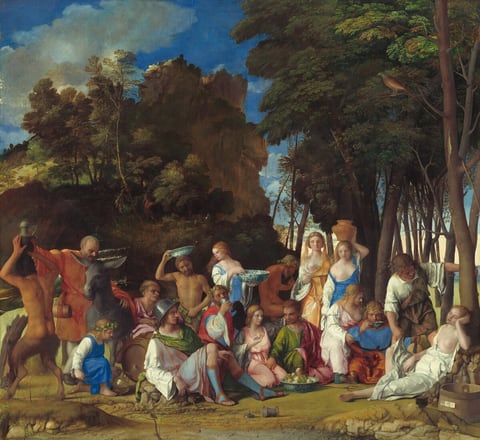
  1. Six women, eight men, two satyrs, and one child gather in pairs and trios in a loose row that spans the width of this nearly square painting. They are set within a landscape with craggy rocks, cliffs, and trees. Most of the people face us, and the men, women, and child have pale skin. The two satyrs have men’s torsos and furry goat’s legs, and they have darker, olive complexions. Most of the men wear voluminous, knee-length togas wrapped in short robes in shades of white, topaz blue, grass green, coral orange, or rose pink. Most of the women wear long, dress-like garments in tones of shell pink, apricot orange, or lapis blue over white sleeves. For all but one woman, their garments have fallen off one shoulder to reveal a round, firm breast. Several objects are strewn on the rocky, dirt ground in front of the group, including a wide, wooden bucket with a piece of paper affixed to its front to our right, a glass goblet, a pitchfork, a large blue and white ceramic dish filled with grapes and small yellow fruits, and an overturned cup near the center. Cliff-like, craggy rocks rise steeply behind the group to our left, filling much of the sky opposite a tall grove of leafy, dark green trees to our right. A few puffy white clouds float across the vivid blue sky. The slip of paper on the barrel has been inscribed, “joannes bellinus venetus p MDXIIII.”
    The Feast of the GodsGiovanni Bellini, 1514/1529Courtesy National Gallery of Art, Washington
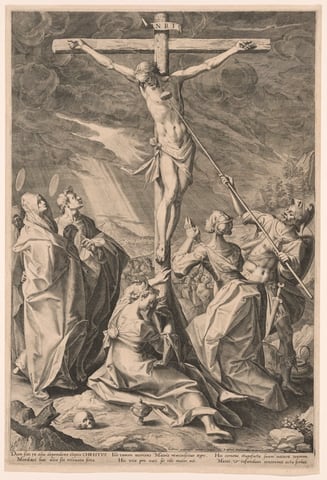
  2. A work made of engraving in black on cream laid paper.
    Christ on the CrossRaphael Sadeler, I, 1590Courtesy of the Art Institute of Chicago

Section 2, north wall
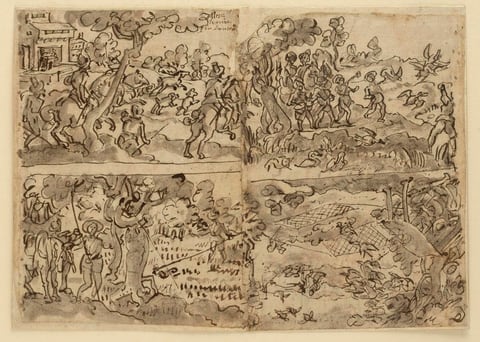
  1. 1901-39-151-a: DEER HUNT WITH HOUNDS [ABOVE]; SKYLARK HUNT WITH FALCONS [BELOW]; 1901-39-151-b: GOOSE AND DUCK HUNT WITH FALCONS [ABOVE RIGHT]; GOOSE HUNT [BELOW RIGHT]
    Goose and Duck Hunt with Falcons [above right]; Goose Hunt [below right]Jan van der Straet, called Stradanus, ca. 1596-99Courtesy of Cooper Hewitt, Smithsonian Design Museum
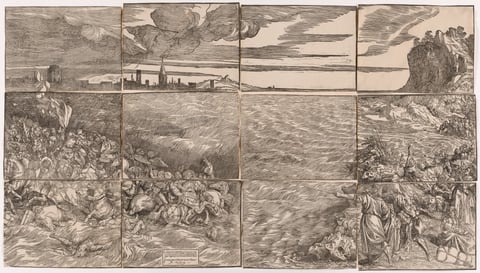
  2. The Submersion of Pharaoh's Army in the Red Sea, by Titian, 1514–15, printed 1549
    The Submersion of Pharaoh's Army in the Red SeaTitian, 1514–15, printed 1549Courtesy of the Cleveland Museum of Art

Section 3, north wall
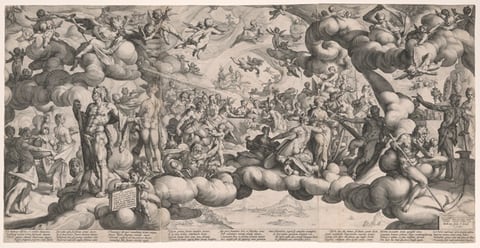
  1. A work made of engraving on three joined sheets of ivory laid paper.
    The Wedding of Cupid and PsycheHendrick Goltzius, 1587Courtesy of the Art Institute of Chicago
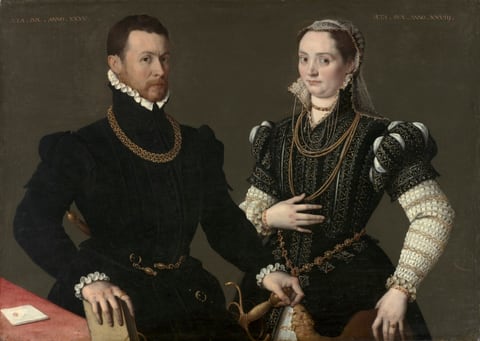
  2. Portrait of a Couple, c. 1580–88
    Portrait of a CoupleUnrecorded Italian maker, c. 1580–88Courtesy of the Cleveland Museum of Art

Section 3, south wall
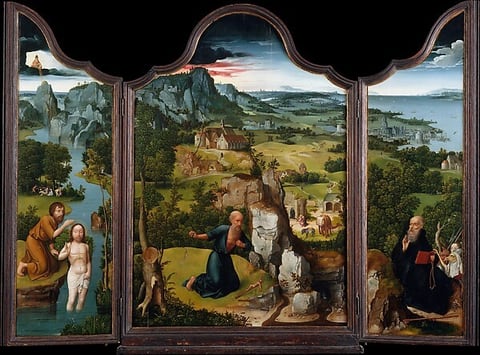
  1. The Penitence of Saint Jerome, by Joachim Patinir, ca. 1515
    The Penitence of Saint JeromeJoachim Patinir, ca. 1515Courtesy of The Metropolitan Museum of Art
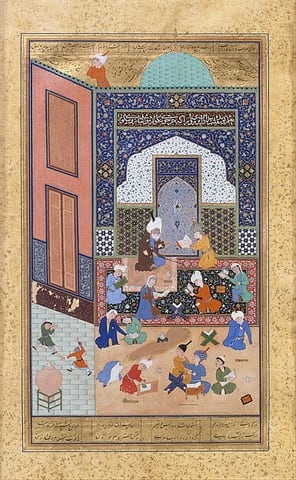
  2. "Laila and Majnun in School", Folio 129 from a Khamsa (Quintet) of Nizami of Ganja, by Nizami, dated 931 AH/1524–25 CE
    "Laila and Majnun in School", Folio 129 from a Khamsa (Quintet) of Nizami of GanjaNizami, dated 931 AH/1524–25 CECourtesy of The Metropolitan Museum of Art

Section 4, south wall
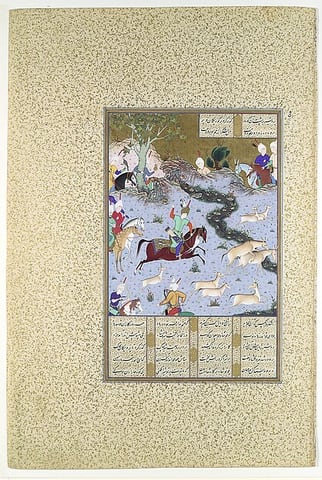
  1. "Bahram Gur Pins the Coupling Onagers", Folio 568r from the Shahnama (Book of Kings) of Shah Tahmasp, by Abu'l Qasim Firdausi, ca. 1530–35
    "Bahram Gur Pins the Coupling Onagers", Folio 568r from the Shahnama (Book of Kings) of Shah TahmaspAbu'l Qasim Firdausi, ca. 1530–35Courtesy of The Metropolitan Museum of Art
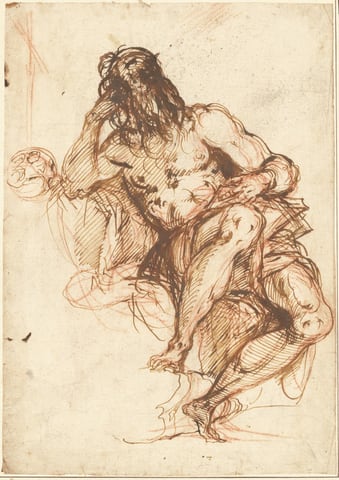
  2. The image shows a sketch of a seated bearded figure holding an orb. The figure appears muscular, with a beard merging into long hair. The face is not detailed, and draped fabric covers part of the body. There is no jewelry, and the background is plain.
    Saint JeromeAlessandro Vittoria, 1565/1570Courtesy National Gallery of Art, Washington