Floor plan

Time and place16th-century Netherlands
16th-century Netherlands
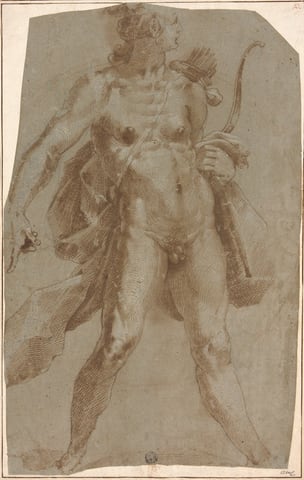
A work made of pen and brown ink, heightened with lead white (partly discolored), over black chalk, on blue laid paper, laid down on ivory laid paper.
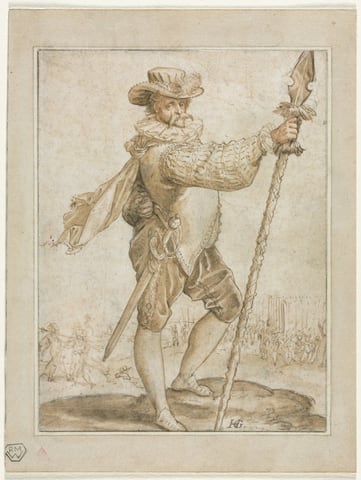
Standing Officer Holding a Boar's Spear, by Hendrick Goltzius, 1586
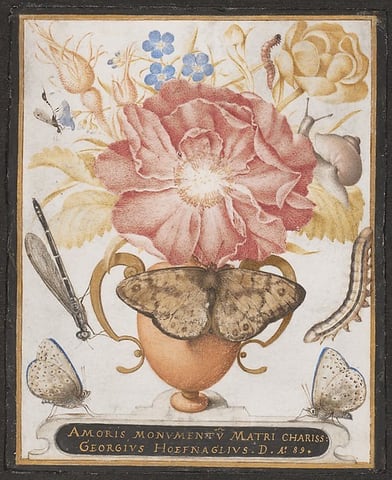
Still Life with Flowers, a Snail and Insects, by Joris Hoefnagel, 1589
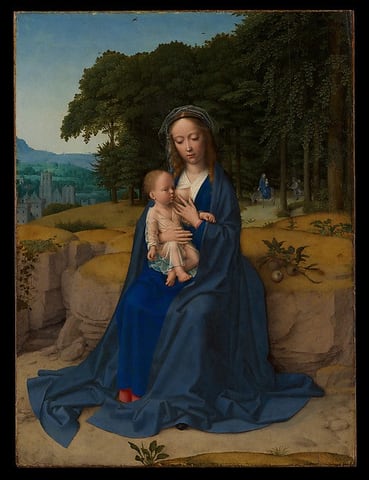
The Rest on the Flight into Egypt, by Gerard David, ca. 1512–15
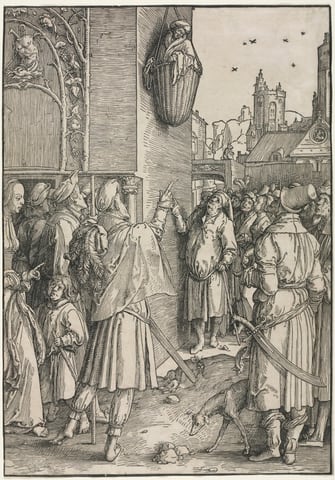
The Power of Women: The Poet Virgil Suspended in a Basket, by Lucas van Leyden, c. 1512
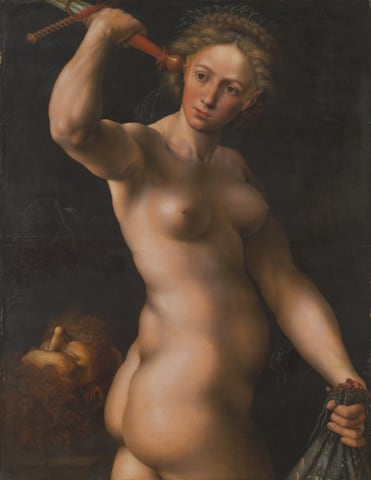
Painting of Judith, naked, holding sword, with head of Holophernes.
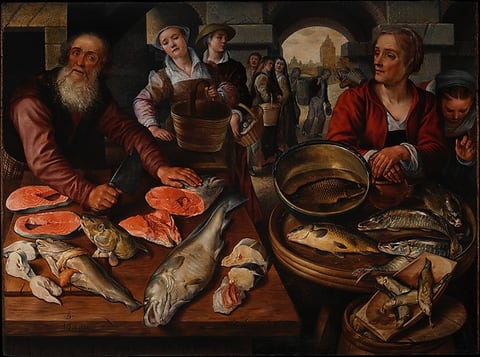
Fish Market, by Joachim Beuckelaer, 1568

The works in this room are listed below.

Works in this room

Works made in the Netherlands in the 16th century.

First room, north wall

  1. A work made of pen and brown ink, heightened with lead white (partly discolored), over black chalk, on blue laid paper, laid down on ivory laid paper.
    ApolloJan Harmensz. Muller, c. 1600-1620Courtesy of the Art Institute of Chicago
  2. Standing Officer Holding a Boar's Spear, by Hendrick Goltzius, 1586
    Standing Officer Holding a Boar's SpearHendrick Goltzius, 1586Courtesy of the Cleveland Museum of Art
  3. Still Life with Flowers, a Snail and Insects, by Joris Hoefnagel, 1589
    Still Life with Flowers, a Snail and InsectsJoris Hoefnagel, 1589Courtesy of The Metropolitan Museum of Art
  4. The Rest on the Flight into Egypt, by Gerard David, ca. 1512–15
    The Rest on the Flight into EgyptGerard David, ca. 1512–15Courtesy of The Metropolitan Museum of Art

First room, south wall

  1. The Power of Women: The Poet Virgil Suspended in a Basket, by Lucas van Leyden, c. 1512
    The Power of Women: The Poet Virgil Suspended in a BasketLucas van Leyden, c. 1512Courtesy of the Cleveland Museum of Art
  2. Painting of Judith, naked, holding sword, with head of Holophernes.
    JudithJan Sanders van Hemessen, c. 1540Courtesy of the Art Institute of Chicago
  3. Fish Market, by Joachim Beuckelaer, 1568
    Fish MarketJoachim Beuckelaer, 1568Courtesy of The Metropolitan Museum of Art

Second room, south wall
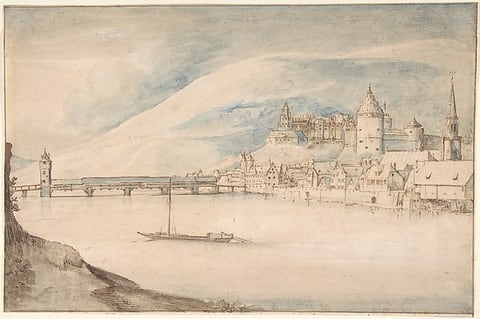
  1. View of Heidelberg, by Jan Brueghel the Elder, ca. 1588–89
    View of HeidelbergJan Brueghel the Elder, ca. 1588–89Courtesy of The Metropolitan Museum of Art
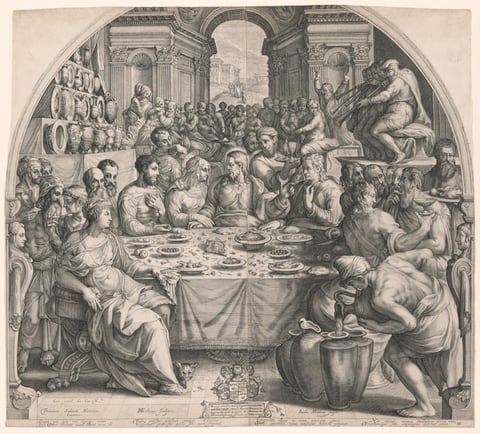
  2. A work made of engraving on two joined sheets of ivory laid paper.
    The Wedding at CanaHendrick Goltzius, c. 1590-1610Courtesy of the Art Institute of Chicago
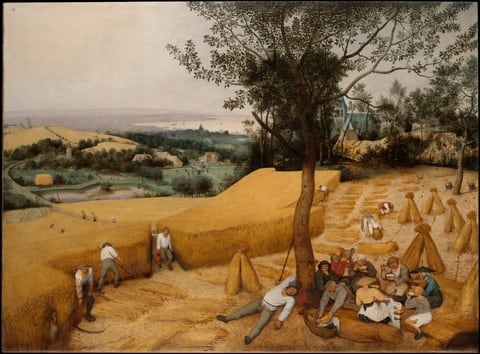
  3. The Harvesters, by Pieter Bruegel, 1565
    The HarvestersPieter Bruegel, 1565Courtesy of The Metropolitan Museum of Art

Second room, north wall
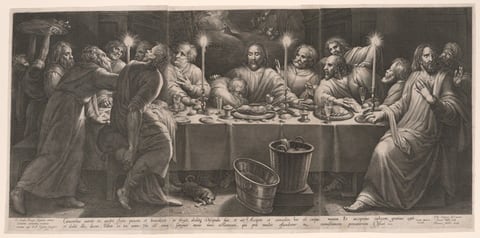
  1. A work made of engraving on three joined sheets of laid paper.
    The Last SupperJan Harmensz. Muller, 1594Courtesy of the Art Institute of Chicago
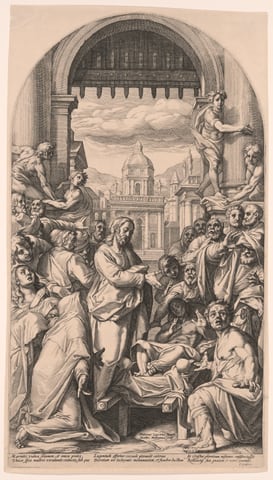
  2. A work made of engraving in black on cream laid paper.
    Christ Raises the Dead Son of the Widow of NainJacob Matham, 1593/94Courtesy of the Art Institute of Chicago
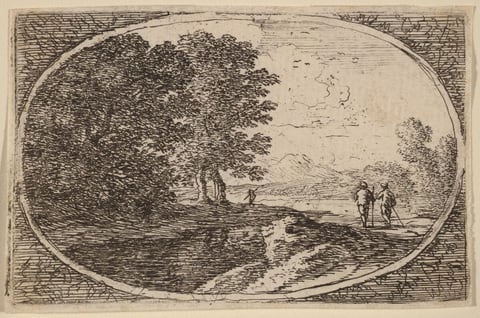
  3. The image shows a landscape scene viewed from an elevated perspective. The horizon is low, with mountains visible in the distance. The scene features detailed brushstroke technique and a monochromatic palette. Trees dominate the left side, with two figures walking along a path towards the horizon. The color palette is black and white, accentuating details, light, and shadow.
    Three Men Carrying StaffsHerman van SwaneveltCourtesy National Gallery of Art, Washington

Third room, north wall
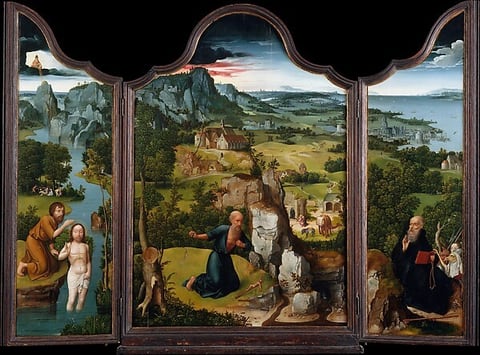
  1. The Penitence of Saint Jerome, by Joachim Patinir, ca. 1515
    The Penitence of Saint JeromeJoachim Patinir, ca. 1515Courtesy of The Metropolitan Museum of Art
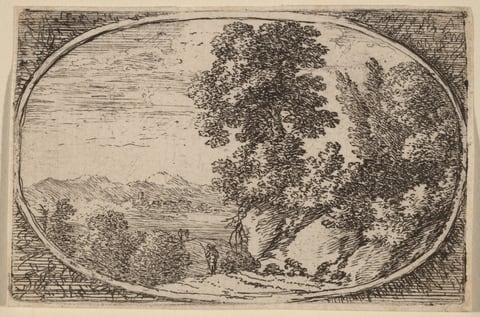
  2. The image shows a landscape viewed from above. The scene is oval, framed by tree branches on each side. Distant mountains form a boundary near the top. Delicate, finely executed lines create detailed foliage and landscape features. A winding path with a small figure adds scale. Lush trees climb upwards, with a muted color palette of the paper and dark brown and black lines providing contrast.
    The Boulder Crowned with TreesHerman van SwaneveltCourtesy National Gallery of Art, Washington
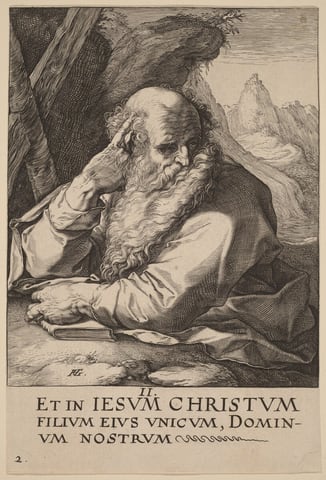
  3. The image shows an elderly man seated from the waist up. He is angled slightly away from the viewer, resting his head on one hand and leaning on the other arm. The man has a deeply lined face, a large beard, curly hair, and appears focused on something outside the frame. He wears flowing garments and a book is under his arm. In the background, there are rugged, mountainous rock formations. Ornate text frames the image at the bottom.
    Saint AndrewHendrick Goltzius, probably 1589Courtesy National Gallery of Art, Washington