Floor plan

West wing: Old MastersBaroque and Rococo

Baroque and Rococo

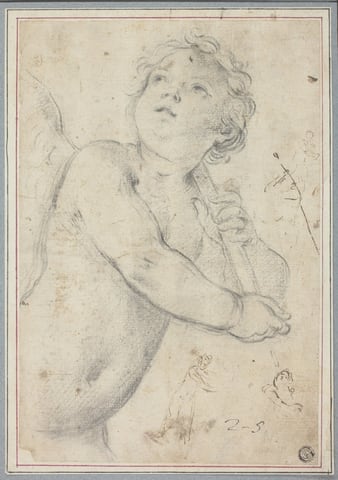
A work made of black chalk with pen and brown ink on cream laid paper.
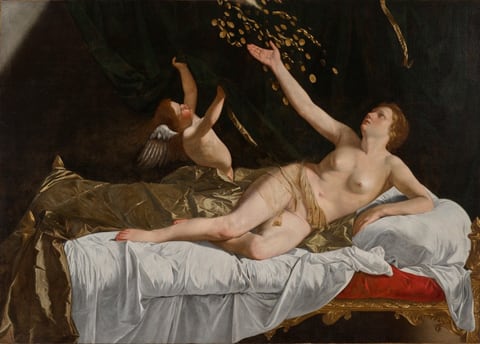
Danaë, by Orazio Gentileschi, c. 1623
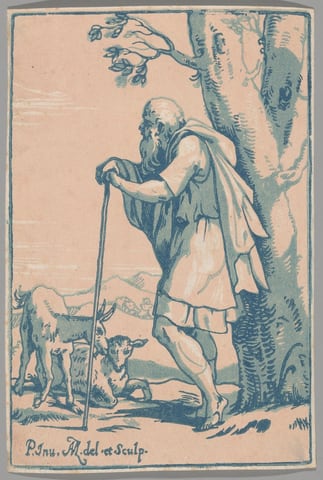
A work made of chiaroscuro woodcut, from three blocks in pink, dark blue, and light blue, on cream laid paper.
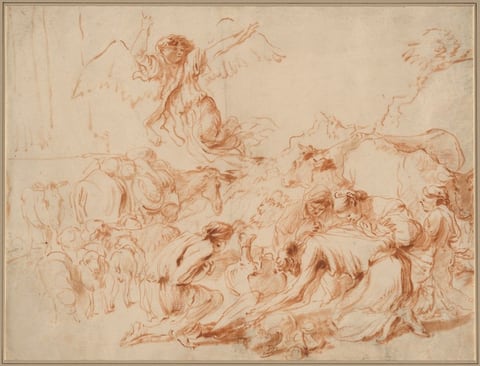
A work made of red oil paint on ivory laid paper.
A work made of pen and brown ink and brush and brown wash, over black and red chalk, heightened with white opaque watercolor, on joined sheets of laid paper, mounted to paperboard.
A work made of oil on canvas.

The works in this room are listed below.

Works in this room

Drama, movement and deep shadow in the 1600s, then the light, playful decoration of eighteenth-century Europe.

First room, north wall

  1. A work made of black chalk with pen and brown ink on cream laid paper.
    Putto Holding StaffGuido Reni, n.d.Courtesy of the Art Institute of Chicago
  2. Danaë, by Orazio Gentileschi, c. 1623
    DanaëOrazio Gentileschi, c. 1623Courtesy of the Cleveland Museum of Art
  3. A work made of chiaroscuro woodcut, from three blocks in pink, dark blue, and light blue, on cream laid paper.
    The Old ShepherdConte Antonio Maria Zanetti, the Elder, 1722Courtesy of the Art Institute of Chicago

First room, south wall

  1. A work made of red oil paint on ivory laid paper.
    The Angel Departing from the Family of Tobit (?)Giovanni Benedetto Castiglione, c. 1655Courtesy of the Art Institute of Chicago
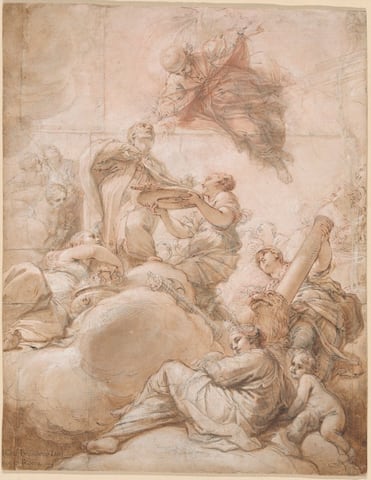
  2. A work made of pen and brown ink and brush and brown wash, over black and red chalk, heightened with white opaque watercolor, on joined sheets of laid paper, mounted to paperboard.
    Allegory of the Elevation of Cardinal Deacon Oddone Colonna to the Papal Chair as Pope Martin VBenedetto Luti, 1700Courtesy of the Art Institute of Chicago
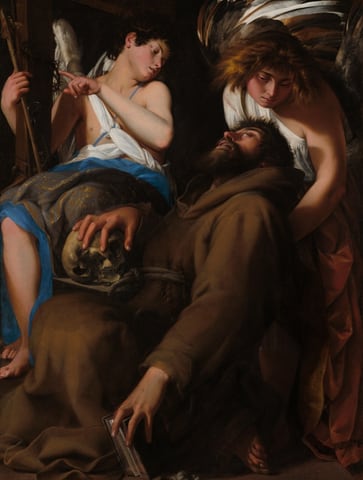
  3. A work made of oil on canvas.
    The Ecstasy of Saint FrancisGiovanni Baglione, 1601Courtesy of the Art Institute of Chicago

Second room, south wall
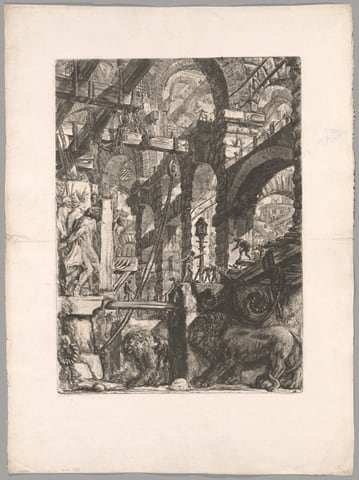
  1. A work made of etching and engraving on heavy ivory laid paper.
    The Lion Bas-Reliefs, plate 5 from Imaginary PrisonsGiovanni Battista Piranesi, 1761Courtesy of the Art Institute of Chicago
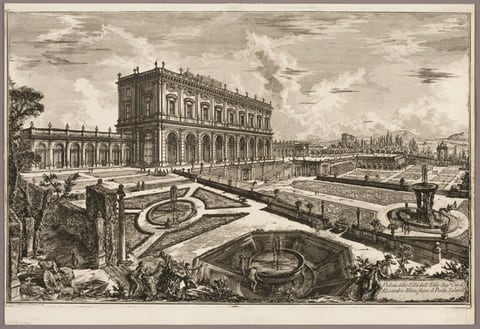
  2. A work made of etching on ivory laid paper.
    View of the Villa of His Eminence Cardinal Alessandro Albani, outside Porta Salaria, from Views of RomeGiovanni Battista Piranesi, 1769, published 1800–07Courtesy of the Art Institute of Chicago
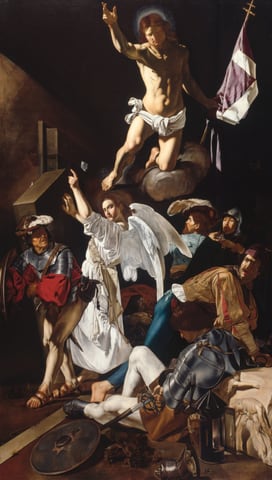
  3. A work made of oil on canvas.
    The ResurrectionCecco del Caravaggio, c. 1619-20Courtesy of the Art Institute of Chicago

Second room, north wall
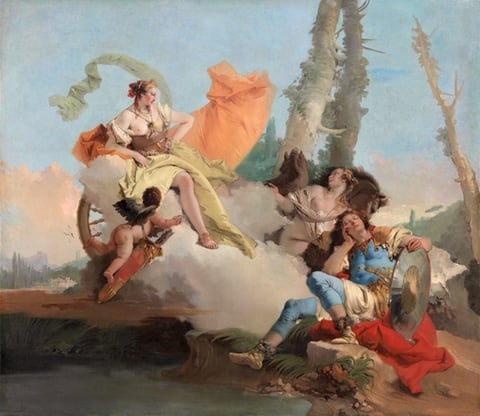
  1. Large painting of soldier asleep outdoors surrounded by two women and a cupid.
    Armida Encounters the Sleeping RinaldoGiovanni Battista Tiepolo, c. 1742–45Courtesy of the Art Institute of Chicago

  2. The Supper at Emmaus, by Giovanni Battista Piazzetta, c. 1720
    The Supper at EmmausGiovanni Battista Piazzetta, c. 1720Courtesy of the Cleveland Museum of Art

Third room, north wall
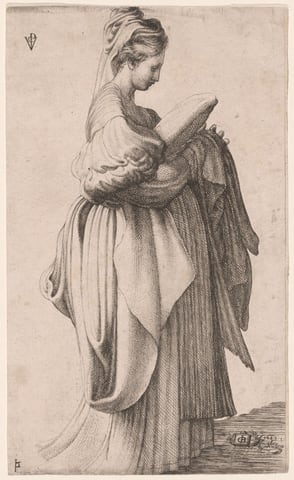
  1. A work made of etching in black ink on cream laid paper.
    A Young Woman Holding a CushionMonogrammist VCP, 1643Courtesy of the Art Institute of Chicago
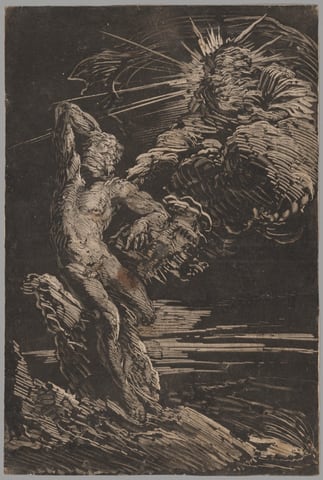
  2. Drawing of god, radiating light, reaching down from clouds, touching male figure.
    The Creation of AdamGiovanni Benedetto Castiglione, c. 1645/50Courtesy of the Art Institute of Chicago
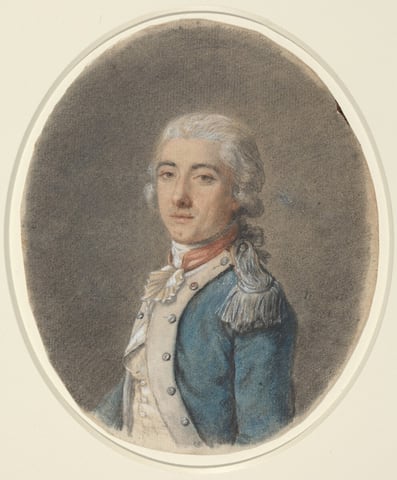
  3. The image displays an oval portrait of a man's upper torso. He is turned slightly to the right, looking directly at the viewer with a composed expression. The man has pale skin, defined facial features, softly arched eyebrows, a subtle mustache, and styled hair in an 18th-century fashion. He wears a blue coat with white lapels, silver buttons, and a silver-fringed epaulet on the shoulder, along with a cravat and waistcoat. The background is a smooth, neutral gray.
    Portrait of a Man in a Military UniformUnrecorded French maker, 18th centuryCourtesy National Gallery of Art, Washington

Third room, south wall
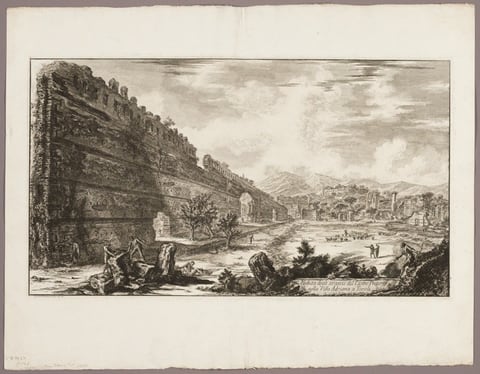
  1. A work made of etching on heavy ivory laid paper.
    View of the Remains of the Praetorian Fort [the Poecile], Hadrian's Villa, Tivoli, from Views of RomeGiovanni Battista Piranesi, 1770Courtesy of the Art Institute of Chicago
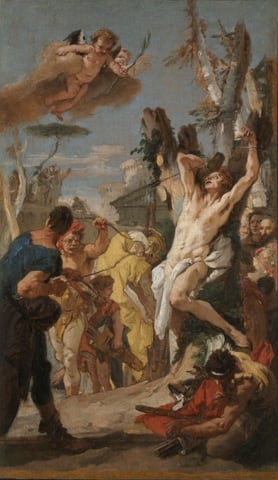
  2. Study for "The Martyrdom of Saint Sebastian" (for the Augustinian monastery at Diessen, Germany), by Giovanni Battista Tiepolo, 1739
    Study for "The Martyrdom of Saint Sebastian" (for the Augustinian monastery at Diessen, Germany)Giovanni Battista Tiepolo, 1739Courtesy of the Cleveland Museum of Art