Ukiyo-e
Works in this room
Japanese woodblock prints of the floating world: actors, courtesans, landscapes and the sea.
Section 1, north wall
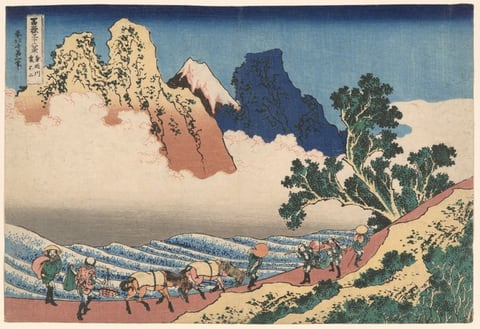
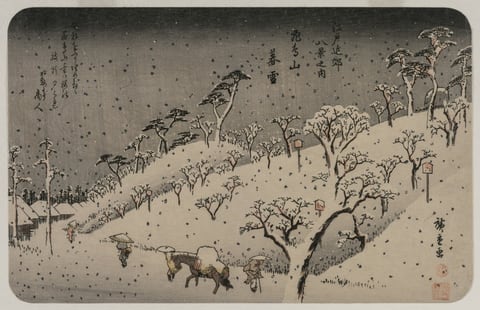
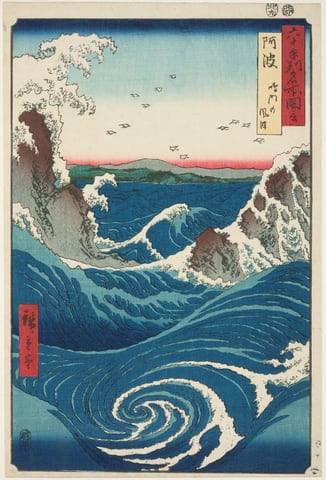
The Back of Mount Fuji Seen from Minobu River (Minobugawa Urafuji), from the series Thirty-Six Views of Mount Fuji (Fugaku sanjūrokkei)Katsushika Hokusai, 1830-33Courtesy of the Art Institute of Chicago Evening Snow at Asuka Hill, from the series Eight Views of the Environs of EdoUtagawa Hiroshige, c. 1837–38Courtesy of the Cleveland Museum of Art Awa Province: Naruto Whirlpools (Awa, Naruto no fūha), from the series Famous Places in the Sixty-Odd Provinces (Rokujūyoshmeisho zue)Utagawa Hiroshige, 1855Courtesy of the Art Institute of Chicago
Section 1, south wall
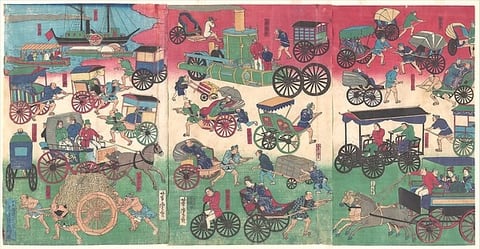
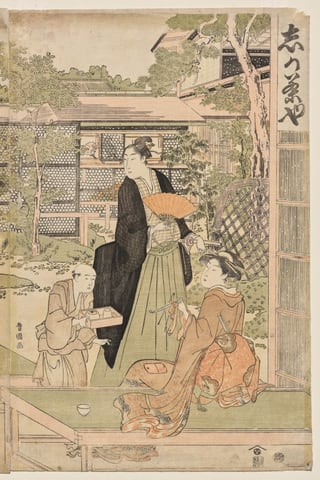
Vehicles on the Streets of TokyoUtagawa Yoshitora, 1870Courtesy of The Metropolitan Museum of Art The Shika TeahouseUtagawa Toyokuni, early 1790sCourtesy of the Cleveland Museum of Art
Section 2, south wall
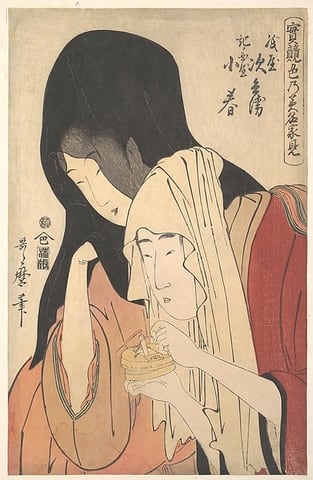
Jihei of Kamiya Eloping with the Geisha Koharu of Kinokuniya, from the series “True Feelings Compared: The Founts of Love” (Jitsu kurabe iro no Minakami)Kitagawa Utamaro, ca. 1798–99Courtesy of The Metropolitan Museum of Art 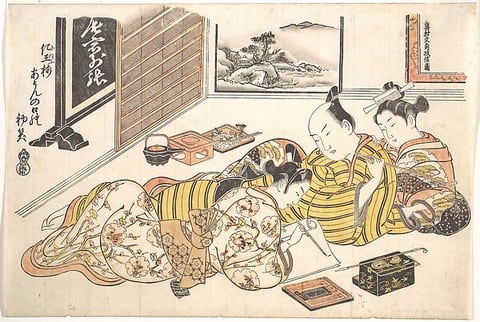
Plate from the Erotic Book Mounds of Dyed Colors: A Pattern Book for the Boudoir (Someiro no yama neya no hinagata), First MonthOkumura Masanobu, ca. 1736–44Courtesy of The Metropolitan Museum of Art 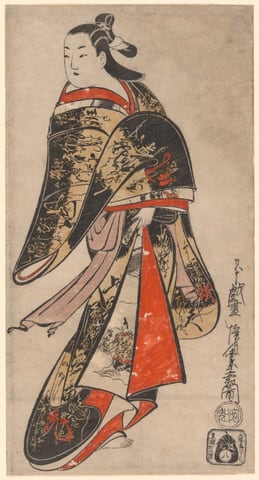
Courtesan WalkingKaigetsudo Anchi, c. 1714Courtesy of the Art Institute of Chicago
Section 2, north wall
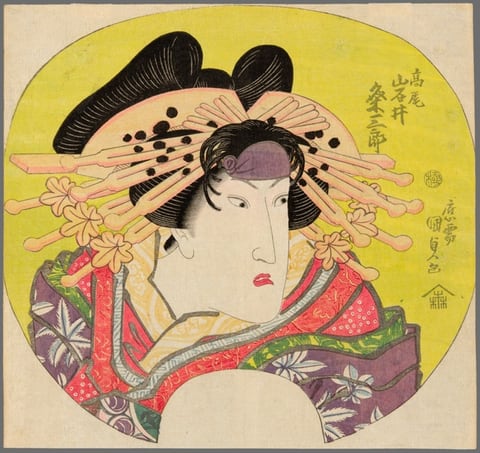
Iwai Kumesaburo II as the Courtesan Takao in Banzei Okuni KabukiUtagawa Kunisada, c. 1827Courtesy of the Art Institute of Chicago 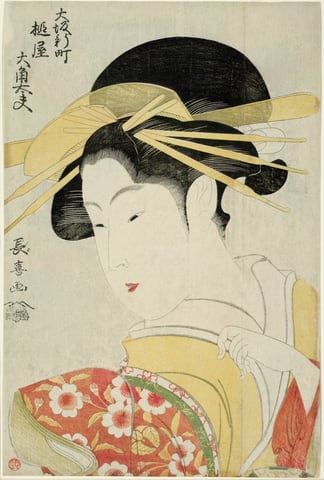
Osumi, a Tayu of the Tsuchiya in the Shinmachi Quarter in OsakaEishosai Choki, c. 1796/97Courtesy of the Art Institute of Chicago
Section 3, north wall
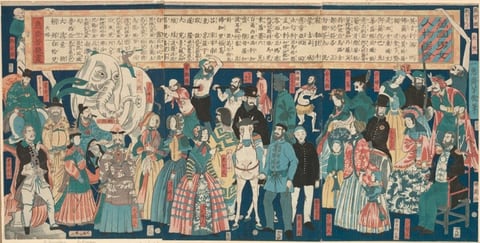
Picture of Men and Women from Many Countries (Bankoku danjo jinbutsu zue)Utagawa Yoshiiku, 1861Courtesy of the Art Institute of Chicago 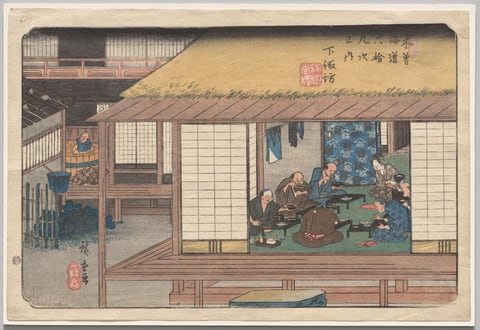
Shimosuwa, from Sixty-Nine Stations of the KisokaidōUtagawa Hiroshige, 1835–38Courtesy of the Cleveland Museum of Art
Section 3, south wall
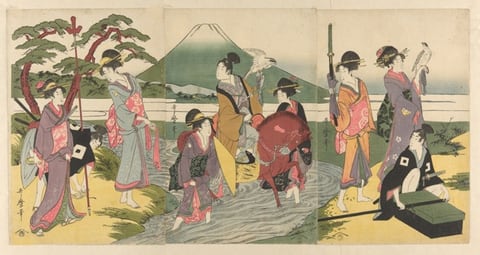
Young man and his party crossing a stream before Mt. FujiKitagawa Utamaro, c. 1798/1800Courtesy of the Art Institute of Chicago 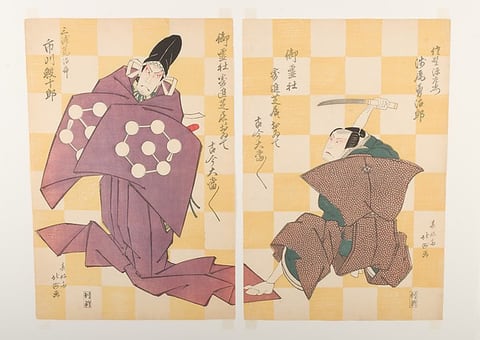
Kabuki Actors Asao Yūjirō as Sano Genzaemon and Ichikawa Ebijūrō I as Miura Arajirō, in the play Keisei Sano no FunabashiShunkōsai Hokushū, 1822Courtesy of The Metropolitan Museum of Art
Section 4, south wall
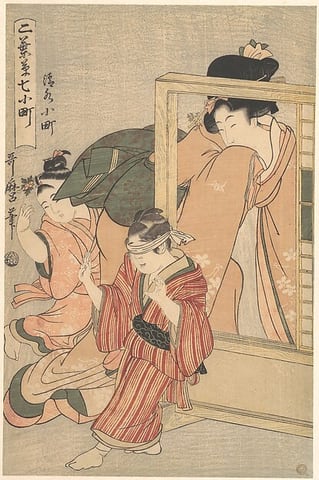
Kiyomizu Komachi, from the series Futabagusa nana KomachiKitagawa Utamaro, 1790sCourtesy of The Metropolitan Museum of Art 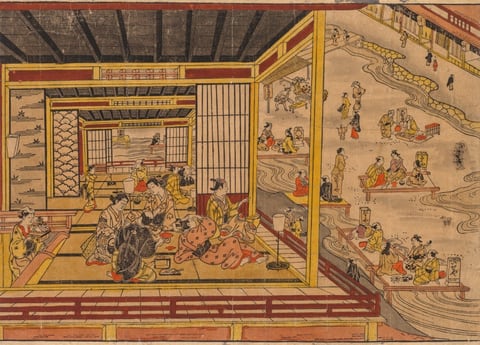
Tea House Beside the Kamo River in KyotoNishimura Shigenaga (Japanese, 1697(?)-1756), 1740sCourtesy of the Cleveland Museum of Art