Ukiyo-e
Works in this room
Japanese woodblock prints of the floating world: actors, courtesans, landscapes and the sea.
Section 1, north wall
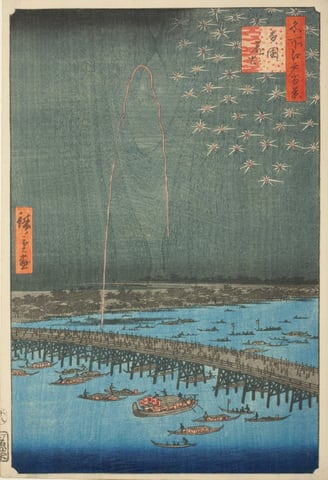
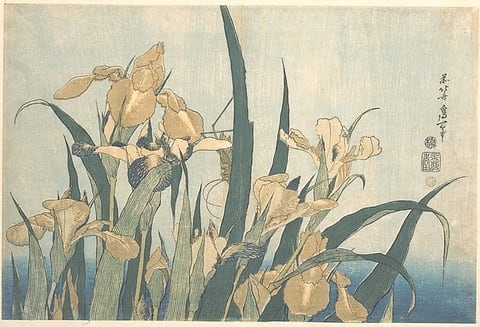
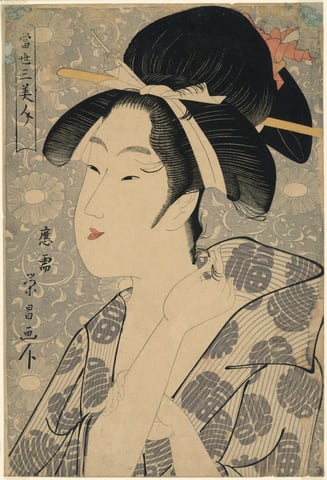
Fireworks at Ryōgoku (Ryōgoku hanabi), from the series One Hundred Famous Views of Edo (Meisho Edo hyakkei)Utagawa Hiroshige, 1858Courtesy of the Art Institute of Chicago Grasshopper and IrisKatsushika Hokusai, late 1820sCourtesy of The Metropolitan Museum of Art Three Beauties of Our Time (Tosei san bijin)Chokosai Eisho, n.d.Courtesy of the Art Institute of Chicago
Section 1, south wall
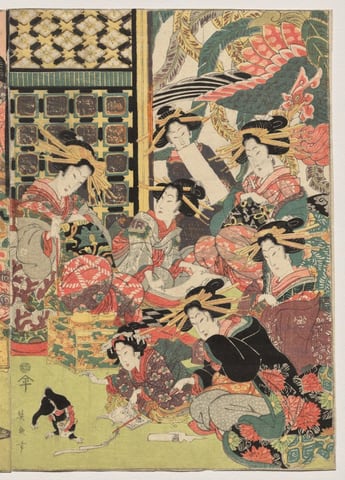
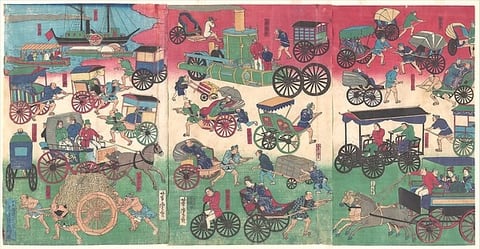
A Picture of the Viewing in the Pleasure QuartersKikukawa Eizan, 1810sCourtesy of the Cleveland Museum of Art Vehicles on the Streets of TokyoUtagawa Yoshitora, 1870Courtesy of The Metropolitan Museum of Art
Section 2, south wall
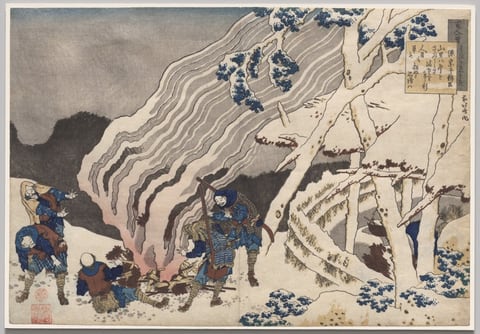
Poem by Minamoto no Muneyuki from the series One Hundred Poems by One Hundred Poets Explained by the NurseKatsushika Hokusai, 1835–36Courtesy of the Cleveland Museum of Art 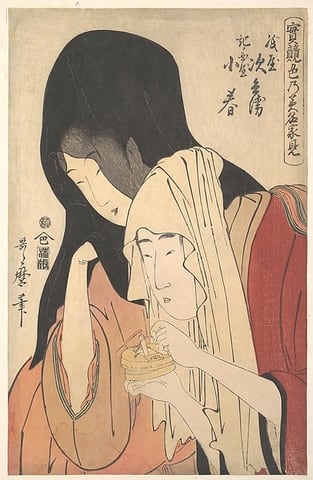
Jihei of Kamiya Eloping with the Geisha Koharu of Kinokuniya, from the series “True Feelings Compared: The Founts of Love” (Jitsu kurabe iro no Minakami)Kitagawa Utamaro, ca. 1798–99Courtesy of The Metropolitan Museum of Art 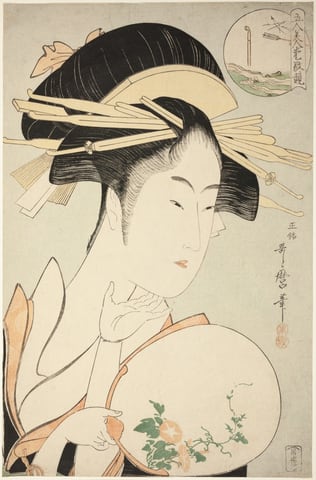
Kisegawa of the Matsubaya, from the series "Comparing the Charms of Five Beauties (Gonin bijin aikyo kurabe)"Kitagawa Utamaro, c. 1795/96Courtesy of the Art Institute of Chicago
Section 2, north wall
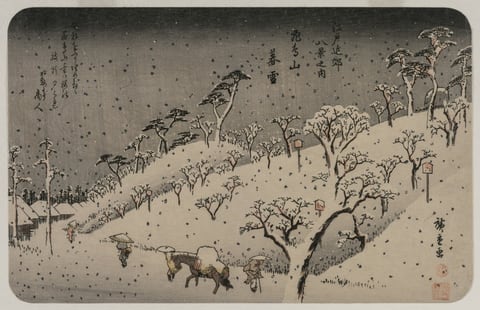
Evening Snow at Asuka Hill, from the series Eight Views of the Environs of EdoUtagawa Hiroshige, c. 1837–38Courtesy of the Cleveland Museum of Art 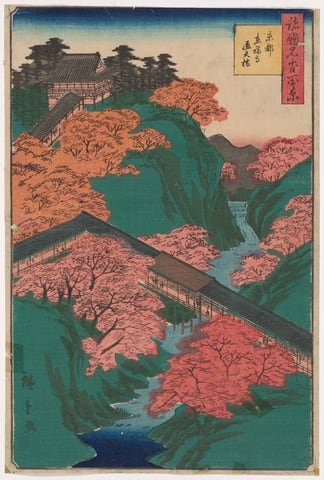
Tsuten-kyo Bridge, Tofuku Temple, Kyoto (Kyoto Tofukuji Tsutenkyo bashi) from the series “One Hundred Famous Views in the Various Provinces (Shokoku meisho hyakkei)”Utagawa Hiroshige II, 1859Courtesy of the Art Institute of Chicago 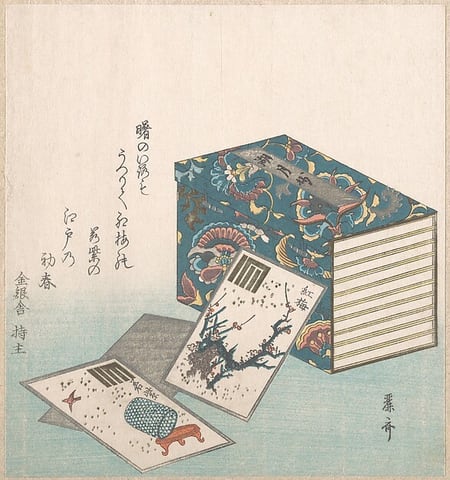
Books and CardsReisai, 18th–19th centuryCourtesy of The Metropolitan Museum of Art
Section 3, north wall
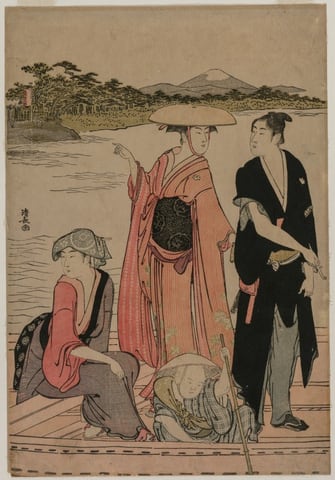
Passengers in a Ferry Boat on the Sumida RiverTorii Kiyonaga, 1784Courtesy of the Cleveland Museum of Art 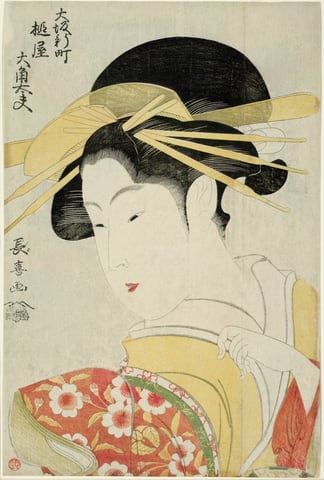
Osumi, a Tayu of the Tsuchiya in the Shinmachi Quarter in OsakaEishosai Choki, c. 1796/97Courtesy of the Art Institute of Chicago 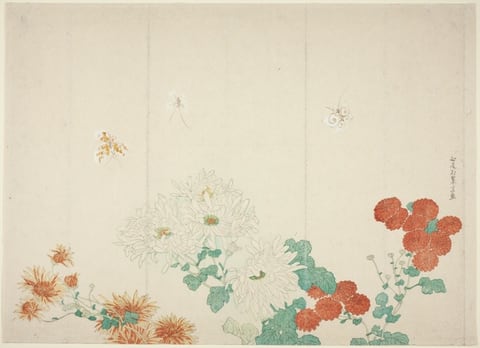
Three Types of ChrysanthemumsKitao Shigemasa, c. 1790Courtesy of the Art Institute of Chicago
Section 3, south wall
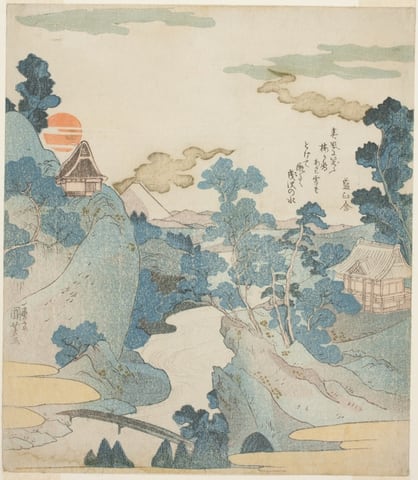
Distant View of Mount Fuji at Dawn from HakoneUtagawa Kuniyoshi, c. 1828/30Courtesy of the Art Institute of Chicago 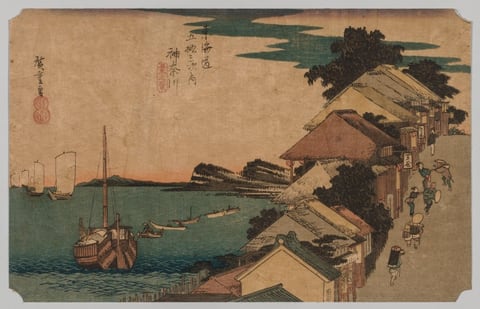
Kanagawa, Inland Sea: Top of the StreetUtagawa Hiroshige, 1797–1858Courtesy of the Cleveland Museum of Art