Floor plan

Style galleriesPrints of the 17th century
Prints of the 17th century
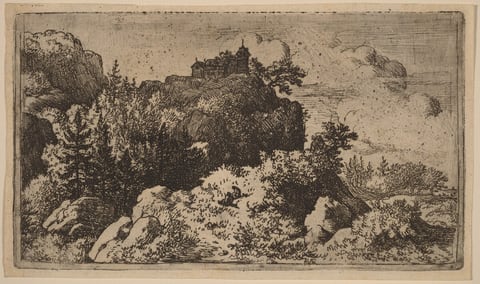
The image shows a slightly elevated perspective of a rugged landscape with dense vegetation and rock formations. The horizon is high in the upper third of the image, with a distant building or castle on a hill. The structure is silhouetted against the sky and partially obscured by foliage. Intricate line work and hatching create detailed textures and shading, especially in the trees and clouds. The color palette is monochromatic, using varying shades of brown and sepia to give the artwork an antiquated and rustic appearance.
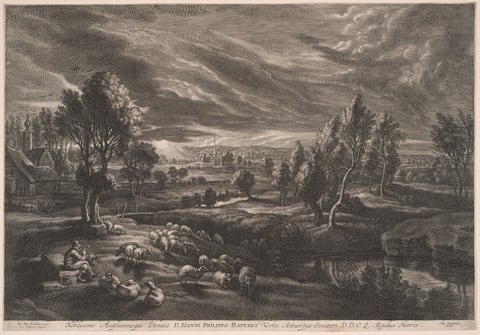
A work made of engraving on ivory laid paper.
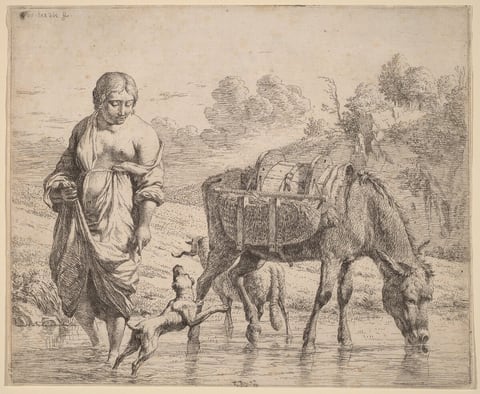
The image shows a woman standing close to us, slightly turned to the side, looking down, with a hand supporting her draped attire and the other grasping a stick. Next to her, a donkey drinks from a shallow stream, carrying a large wicker basket with barrels inside. A dog is splashing in the water beside them. The horizon is low, meeting a rise of land with trees and shrubs, leading the eye to a distant pathway where a couple of small figures can be seen. The sky above has sketchily rendered clouds. The style involves fine, detailed linework, characteristic of etching, emphasizing textures such as the fur of the donkey and the folds of the fabric. The color palette is monochromatic, relying on various intensities of ink and line density to render shadows and highlights.
A work made of engraving in black on cream laid paper.

The works in this room are listed below.

Works in this room

Prints made in the 17th century, from every museum.

Section 1, north wall

  1. The image shows a slightly elevated perspective of a rugged landscape with dense vegetation and rock formations. The horizon is high in the upper third of the image, with a distant building or castle on a hill. The structure is silhouetted against the sky and partially obscured by foliage. Intricate line work and hatching create detailed textures and shading, especially in the trees and clouds. The color palette is monochromatic, using varying shades of brown and sepia to give the artwork an antiquated and rustic appearance.
    Firs in the DefileAllart van Everdingen, probably c. 1645/1656Courtesy National Gallery of Art, Washington
  2. A work made of engraving on ivory laid paper.
    Landscape with Sheep, from The Small LandscapesSchelte Adamsz. Bolswert, c. 1638Courtesy of the Art Institute of Chicago

Section 1, south wall

  1. The image shows a woman standing close to us, slightly turned to the side, looking down, with a hand supporting her draped attire and the other grasping a stick. Next to her, a donkey drinks from a shallow stream, carrying a large wicker basket with barrels inside. A dog is splashing in the water beside them. The horizon is low, meeting a rise of land with trees and shrubs, leading the eye to a distant pathway where a couple of small figures can be seen. The sky above has sketchily rendered clouds. The style involves fine, detailed linework, characteristic of etching, emphasizing textures such as the fur of the donkey and the folds of the fabric. The color palette is monochromatic, relying on various intensities of ink and line density to render shadows and highlights.
    Woman Crossing a StreamKarel Dujardin, 1662Courtesy National Gallery of Art, Washington
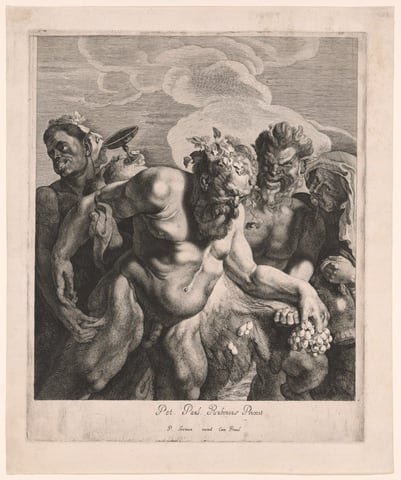
  2. A work made of engraving in black on cream laid paper.
    Drunken SilenusJonas Suyderhoef, 1642Courtesy of the Art Institute of Chicago

Section 2, south wall
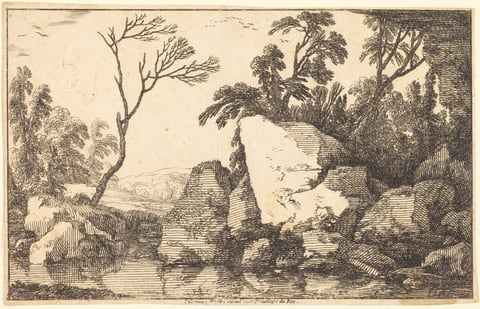
  1. The image is a landscape view with a natural scene depicted in fine etching. The horizon is situated towards the middle of the composition, where the land gently rises, and a subtle outline of distant hills is visible. Large rocks and foliage are depicted close to us, with a lone, barren tree extending upwards on the left side. The etching features intricate and well-defined brushstrokes, including thin lines and cross-hatching to create texture and depth. The color palette is monochromatic, with dark tones against a lighter background. In the distance, additional clusters of trees can be seen, rendered with similar linework to convey movement and detail.
    A Rocky PondLaurent de La Hyre, 1640Courtesy National Gallery of Art, Washington
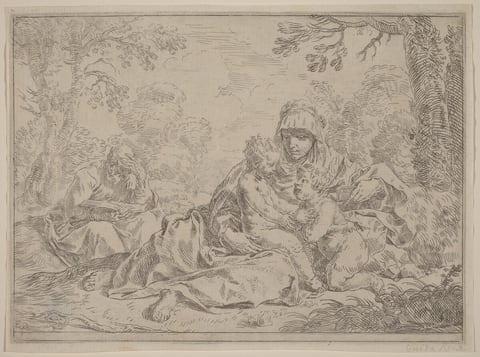
  2. The image shows an etching of four individuals, two adults, and two children. The main adult is sitting with a child on each knee. This person is wearing a hooded cloak with soft facial features. The children have curly hair and are reaching towards each other. The second adult is seated behind them, wearing a loose robe and appears to be holding something, possibly a book. The background features trees, bushes, foliage, and a calm sky.
    The Holy FamilySimone CantariniCourtesy National Gallery of Art, Washington

Section 2, north wall
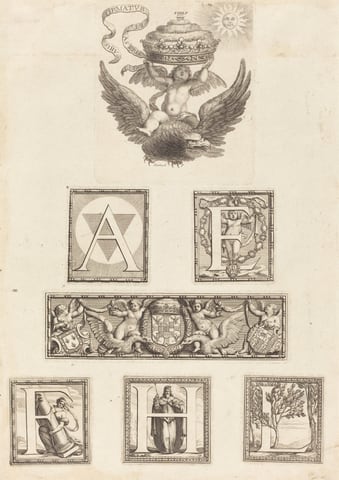
  1. This image features intricately designed ornate letters of the alphabet surrounded by elaborate illustrations. The top of the composition shows a cherub riding on an eagle, holding a crown above their head. A ribbon with inscriptions unfurls around the crown, and a sun with a human face is visible in the corner. The letters "A," "F," "D," "H," and another "H" are decorated with classical elements like putti, garlands, and mythological figures. The central panel is adorned with heraldic symbols, angelic figures, and coats of arms. The overall style of the artwork reflects baroque or renaissance decorative artistry, known for its ornamental details and classical themes.
    PendantRobert NanteuilCourtesy National Gallery of Art, Washington
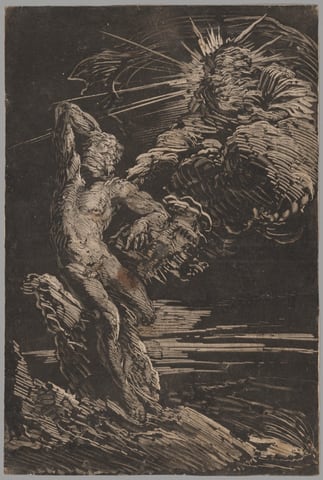
  2. Drawing of god, radiating light, reaching down from clouds, touching male figure.
    The Creation of AdamGiovanni Benedetto Castiglione, c. 1645/50Courtesy of the Art Institute of Chicago
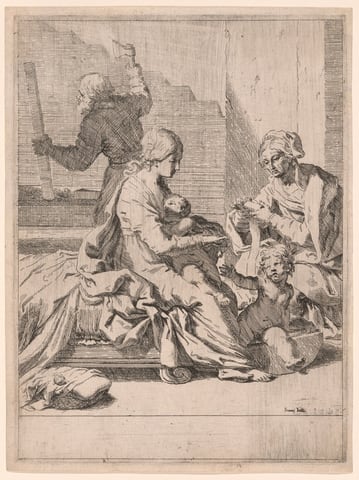
  3. A work made of etching in black on cream laid paper.
    Holy Family with Saint Elizabeth and Saint John the BaptistElisabetta Sirani, 1650/60Courtesy of the Art Institute of Chicago

Section 3, north wall
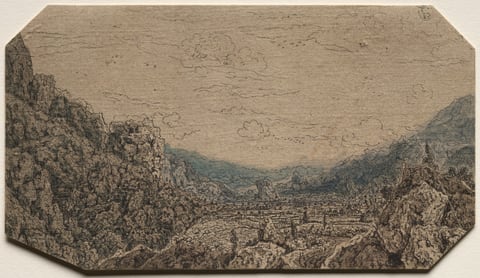
  1. Enclosed Valley, by Hercules Seghers, c. 1623–30
    Enclosed ValleyHercules Seghers, c. 1623–30Courtesy of the Cleveland Museum of Art
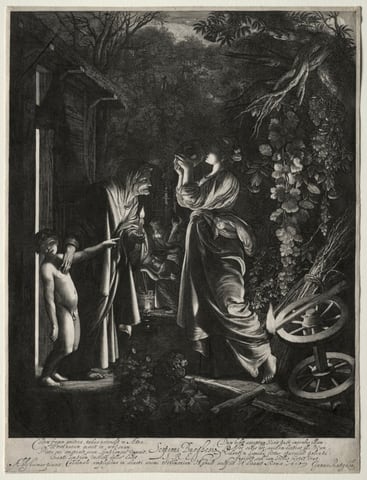
  2. The Mocking of Ceres, by Hendrik Goudt, 1610
    The Mocking of CeresHendrik Goudt, 1610Courtesy of the Cleveland Museum of Art
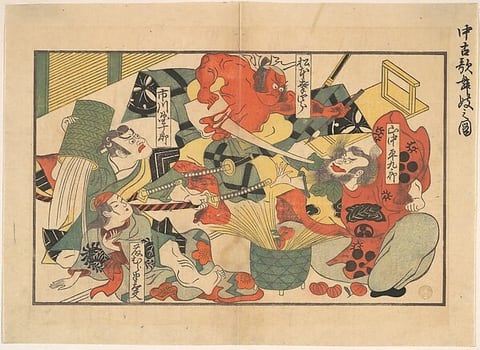
  3. The Advent of a Demon; Scene from a Performance in an old Kabuki Theatre
    The Advent of a Demon; Scene from a Performance in an old Kabuki TheatreUnrecorded Japanese makerCourtesy of The Metropolitan Museum of Art

Section 3, south wall
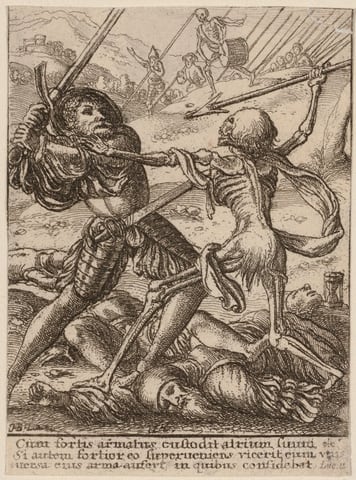
  1. A work made of etching in black on ivory wove paper.
    The Knight and Death, from The Dance of DeathWenceslaus Hollar, 1651Courtesy of the Art Institute of Chicago
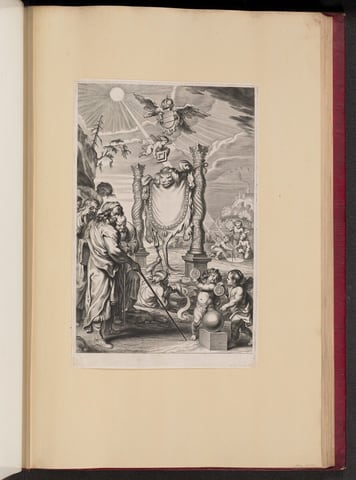
  2. This is a drawing of a mythological or allegorical scene. The scene features various figures of different ages engaged in activities around a central structure resembling an ornate draped curtain held up by columns. There is a celestial element shining down from the top, and an emblem or coat of arms held by winged figures at the very top. The figures are dressed in flowing robes and interact with each other and objects such as a globe and a staff. The composition is rich with symbolism, typical of artwork focused on narrative depth and storytelling.
    Title Page for G. de St. Vincent, Opus Geometricum Quadraturae CirculiCornelis Galle II, 1647Courtesy National Gallery of Art, Washington

Section 4, south wall
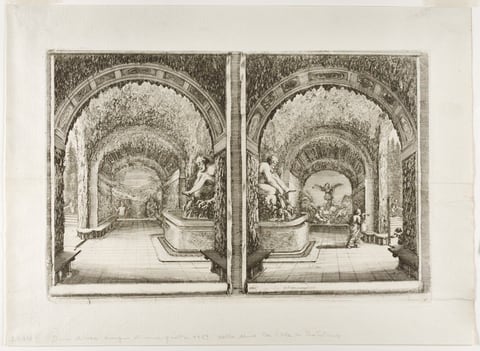
  1. A work made of etching on ivory laid paper.
    The Grotto of Pan and FameStefano della Bella, 1653/55Courtesy of the Art Institute of Chicago
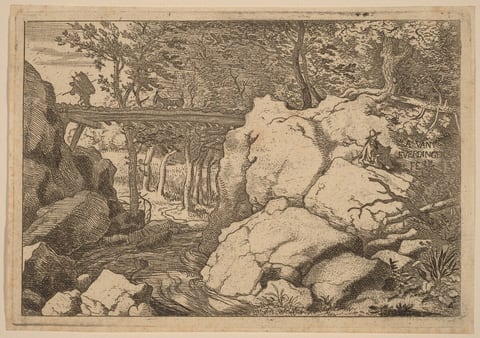
  2. The image shows a landscape with rocky terrain, trees, and a stream. In the foreground, there is a bridge with a traveler and a dog crossing over the stream. The scene features detailed linework and cross-hatching to depict texture. The color palette is monochrome brown, resembling an etching or drawing style.
    Goat on a small BridgeAllart van Everdingen, probably c. 1645/1656Courtesy National Gallery of Art, Washington