Floor plan

Style galleriesParis Salon painting
Paris Salon painting
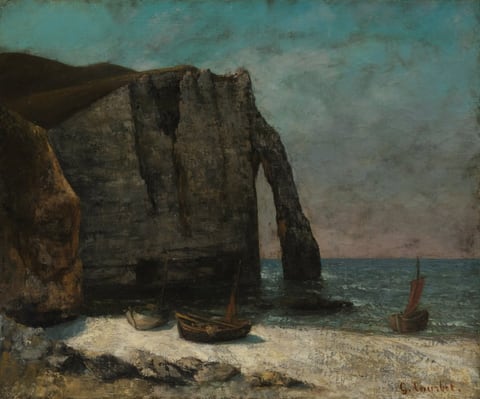
The Cliff at Étretat, by Gustave Courbet, after 1872
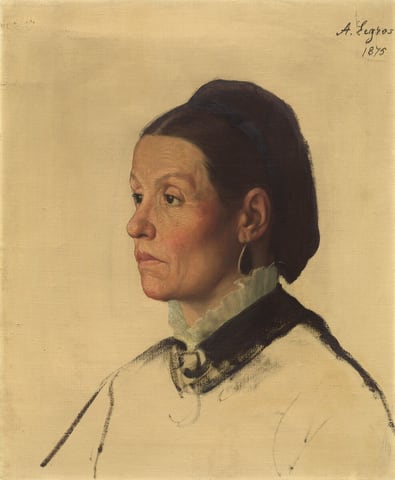
The image portrays a woman in a profile view, with her head turned towards the left. She has medium-length dark hair styled back, wearing a high-collared garment with ruffled edges. She has a sharp nose, defined cheekbones, and a firm chin. The background is a plain, light-colored canvas, and the artist's signature "A. Legros" and the year "1875" are seen in the upper right corner.
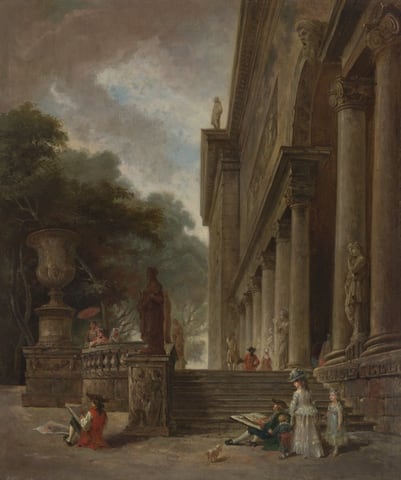
A work made of oil on panel.
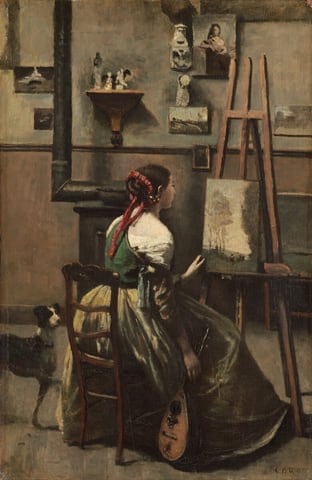
A young, pale-skinned woman sits with her back to us as she looks at a painting on an easel in a studio in this vertical painting. She sits in a ladder-back wood chair so her knees angle away from us, toward the back right corner of the studio. We look onto the side of her right cheek as she leans forward. Her brown hair is combed back and twisted into a bun wrapped with a raspberry-red ribbon that trails down her back. Touches of pearl white, pale pink, and silvery gray suggest flowers by the ear we can see. A cream-white chemise falls off the shoulder closer to us, under a grass-green bodice. She holds a mandolin down by her right side, which is closer to us, to nestle in the folds of her voluminous, olive-green skirt. She reaches forward with her other hand to touch the lower left corner of the painting resting on the easel. That vertically-oriented scene is loosely painted and shows a few people gathered in a landscape. A white and black dog stands with one front leg lifted to the left of the woman's chair, looking at her. The wall opposite us is parchment white over a strip of molding, like a high chair rail, and muted mauve pink below. An L-shaped pipe leads to an iron stove to our left of center. A narrow shelf tucked into the L of the pipe holds three hand-sized sculptures or casts. Small paintings and plaster casts hang around it on the wall above the molding. The artist signed the painting in the lower right: “COROT.”
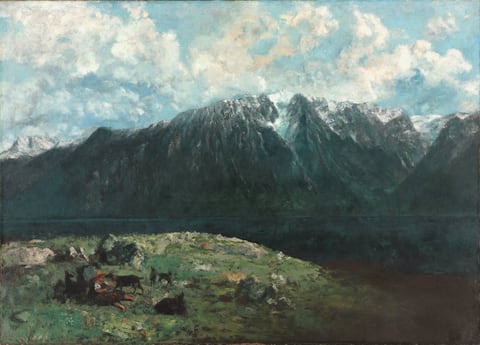
Panoramic View of the Alps, Les Dents du Midi, by Gustave Courbet, 1877
A work made of oil on canvas.

The works in this room are listed below.

Works in this room

Painting made for the great annual exhibition in Paris, and the realists who argued with it.

First room, north wall

  1. The Cliff at Étretat, by Gustave Courbet, after 1872
    The Cliff at ÉtretatGustave Courbet, after 1872Courtesy of the Cleveland Museum of Art
  2. The image portrays a woman in a profile view, with her head turned towards the left. She has medium-length dark hair styled back, wearing a high-collared garment with ruffled edges. She has a sharp nose, defined cheekbones, and a firm chin. The background is a plain, light-colored canvas, and the artist's signature "A. Legros" and the year "1875" are seen in the upper right corner.
    Portrait of a WomanAlphonse Legros, 1875Courtesy National Gallery of Art, Washington
  3. A work made of oil on panel.
    Colonnade and Gardens of the Medici PalaceStyle of Hubert Robert, After 1870Courtesy of the Art Institute of Chicago
  4. A young, pale-skinned woman sits with her back to us as she looks at a painting on an easel in a studio in this vertical painting. She sits in a ladder-back wood chair so her knees angle away from us, toward the back right corner of the studio. We look onto the side of her right cheek as she leans forward. Her brown hair is combed back and twisted into a bun wrapped with a raspberry-red ribbon that trails down her back. Touches of pearl white, pale pink, and silvery gray suggest flowers by the ear we can see. A cream-white chemise falls off the shoulder closer to us, under a grass-green bodice. She holds a mandolin down by her right side, which is closer to us, to nestle in the folds of her voluminous, olive-green skirt. She reaches forward with her other hand to touch the lower left corner of the painting resting on the easel. That vertically-oriented scene is loosely painted and shows a few people gathered in a landscape. A white and black dog stands with one front leg lifted to the left of the woman's chair, looking at her. The wall opposite us is parchment white over a strip of molding, like a high chair rail, and muted mauve pink below. An L-shaped pipe leads to an iron stove to our left of center. A narrow shelf tucked into the L of the pipe holds three hand-sized sculptures or casts. Small paintings and plaster casts hang around it on the wall above the molding. The artist signed the painting in the lower right: “COROT.”
    Corot's Studio: Woman Seated Before an Easel, a Mandolin in her HandJean Baptiste Camille Corot, c. 1868Courtesy National Gallery of Art, Washington

First room, south wall

  1. Panoramic View of the Alps, Les Dents du Midi, by Gustave Courbet, 1877
    Panoramic View of the Alps, Les Dents du MidiGustave Courbet, 1877Courtesy of the Cleveland Museum of Art
  2. A work made of oil on canvas.
    LandscapeMarcel Ordinaire, 1867Courtesy of the Art Institute of Chicago

Second room, south wall
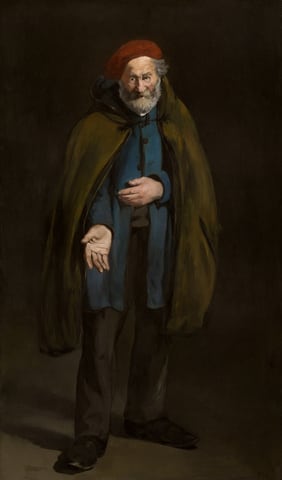
  1. A work made of oil on canvas.
    Beggar with a Duffle Coat (Philosopher)Édouard Manet, 1865–67Courtesy of the Art Institute of Chicago
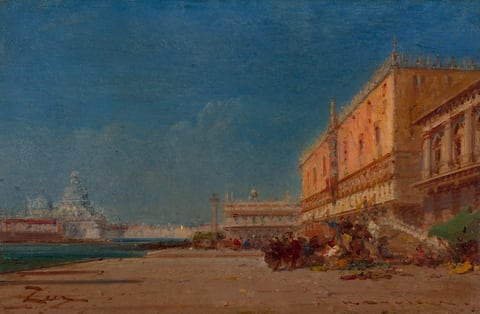
  2. A work made of oil on panel.
    Venice from the Riva looking toward the Piazzale San MarcoFélix Ziem, c. 1890Courtesy of the Art Institute of Chicago
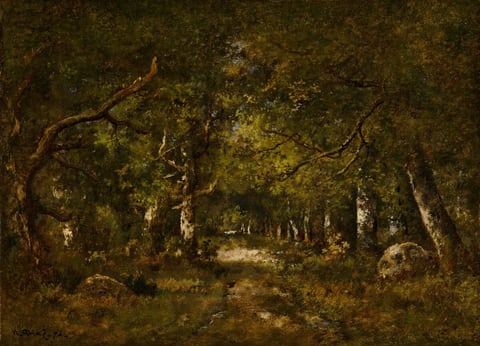
  3. The painting depicts a forest floor under tall trees, with a grassy path leading into the distance. The sky is obscured by dense green foliage and tree limbs. Rocks and shrubs are visible on the ground, and the forest stretches into the distance. The trees are dark brown, with patches of white suggesting dappled light coming in through the branches above. The leaves and ground are mostly dark green, with some patches of brown, lighter green, and yellow.
    Forest SceneNarcisse Diaz de la Peña, 1874Courtesy National Gallery of Art, Washington

Second room, north wall
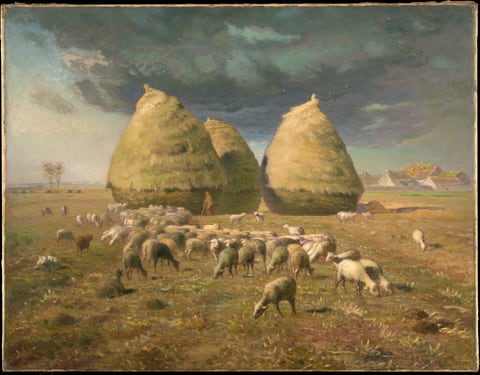
  1. Haystacks: Autumn, by Jean-François Millet, ca. 1874
    Haystacks: AutumnJean-François Millet, ca. 1874Courtesy of The Metropolitan Museum of Art
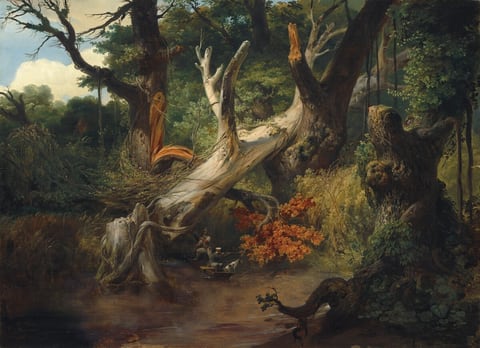
  2. A leafless, ash-white tree trunk has fallen from a broken stump into the wide V of a neighboring tree at the edge of a body of water near a verdant forest in this horizontal landscape painting. The fallen trunk creates a diagonal from near the lower left corner to the upper right. As it fell, it sheared off a substantial branch from a neighboring tree with a dark trunk. The bark where the damaged branch has pulled away is honey-orange, the same color as the leaves at the canopy, which has been pinned under the fallen trunk. Trees, vines, and other vegetation fill the space around and beyond this pair. In the lower right corner of the painting, vines grow over a broken stump, which deep in shadow. Between the stump and fallen tree, the peanut-brown surface of the water is smooth. Tiny in scale beneath the fallen tree and easily overlooked, there are two men and a dog in a boat. One man stands at the back of the boat and pushes it along with a long pole. He wears a tall, brown, cloth hat, a white shirt rolled up to the elbows under a blue vest, and loose-fitting pants. A second man wears a flat-topped, white hat with a black brim, a long, forest-green jacket, and tight-fitting slate-blue pants. He braces a rifle against one shoulder and shoots into the forest. The dog is white with brown spots, and it stands with its front paws on the edge of the boat, presumably ready to spring after the target. A patch of blue sky with puffy white clouds is seen above the trees in the upper left corner. The artist signed and dated the work in the lower right corner: “H. Vernet Rome 1833.”
    Hunting in the Pontine MarshesHorace Vernet, 1833Courtesy National Gallery of Art, Washington
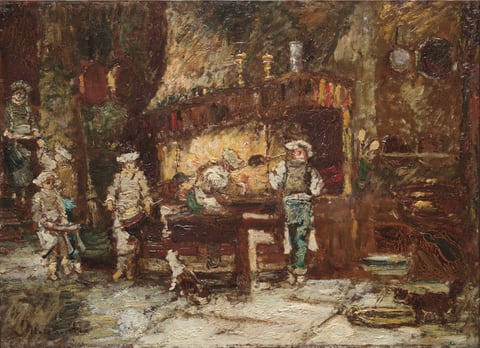
  3. The Kitchen of the Rôtisserie des Deux Paons, by Adolphe Monticelli, c. 1875–1881
    The Kitchen of the Rôtisserie des Deux PaonsAdolphe Monticelli, c. 1875–1881Courtesy of the Cleveland Museum of Art

Third room, north wall
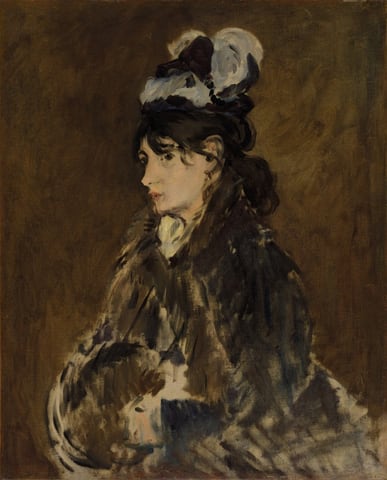
  1. Berthe Morisot with a Muff, by Édouard Manet, c. 1871–72
    Berthe Morisot with a MuffÉdouard Manet, c. 1871–72Courtesy of the Cleveland Museum of Art
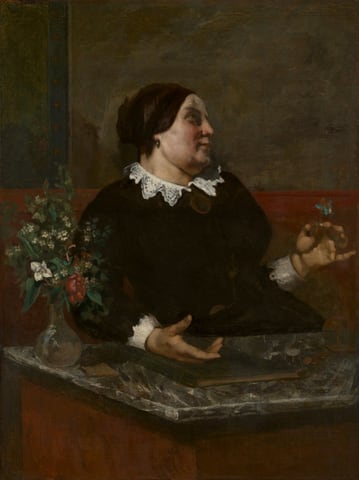
  2. Dark portrait of older woman in black dress with lace collar, flowers.
    Mère GrégoireGustave Courbet, 1855, reworked 1857–59Courtesy of the Art Institute of Chicago

Third room, south wall
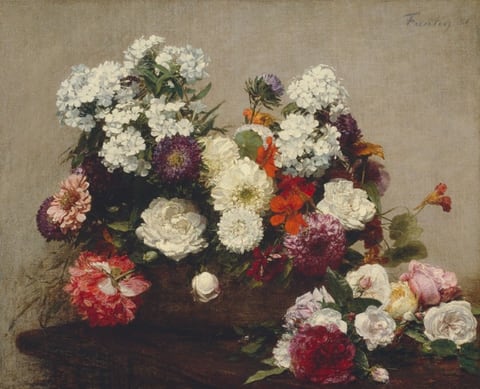
  1. A work made of oil on canvas.
    Still Life with FlowersHenri Fantin-Latour, 1881Courtesy of the Art Institute of Chicago
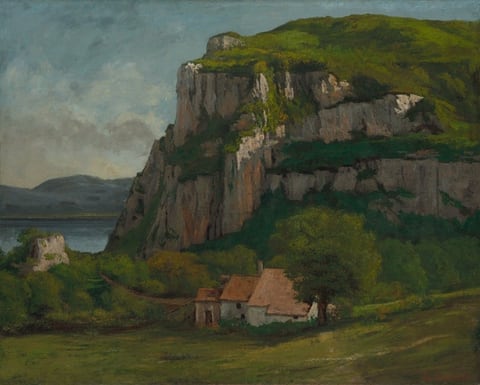
  2. A work made of oil on canvas.
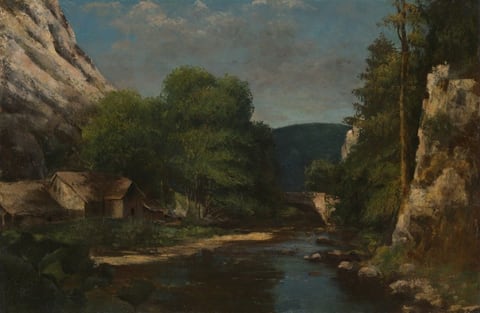
    The Rock of HautepierreGustave Courbet, c. 1869Courtesy of the Art Institute of Chicago