Floor plan

Style galleriesThe Northern Renaissance
The Northern Renaissance
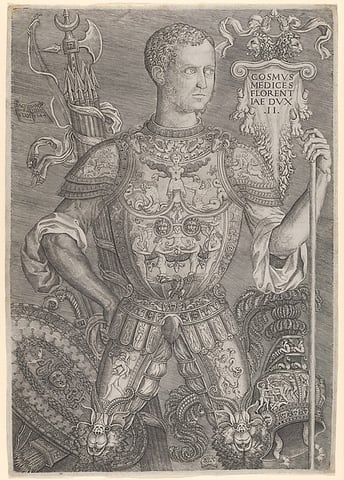
Portrait of Cosimo de' Medici in full armor, his left hand resting on a staff, by Niccolò della Casa, 1544
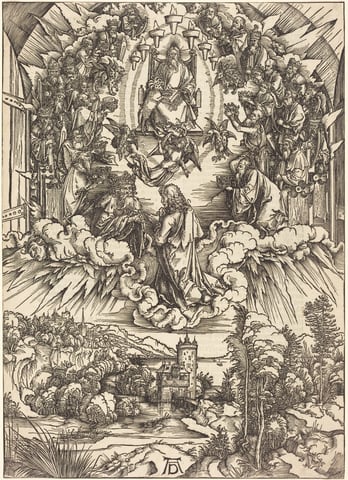
The image features a celestial scene with multiple figures depicted from head to waist. Two central figures are engaged in a conversation amidst clouds. One figure appears seated, possibly on a throne, holding a book. Both figures have long hair and beards. The robes worn by the figures are detailed. Other figures surround them in a semi-circle, some wearing crowns, holding items like bowls. Heavenly hosts with wings are seen above. The background shows a detailed landscape with trees, a river, and castles nestled in hills.
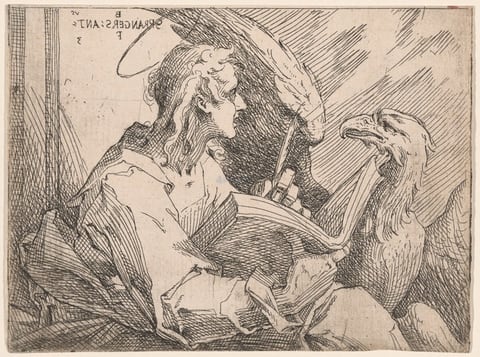
A work made of etching on ivory laid paper.
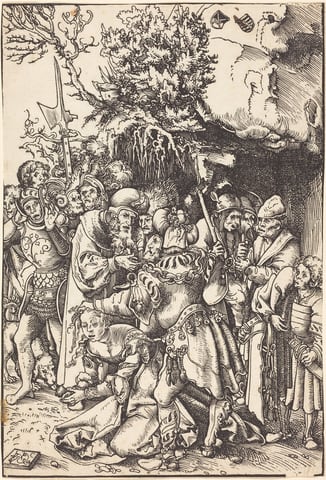
This is a drawing of a group of medieval figures and a tree. The image depicts a dense gathering of figures, all wearing elaborate period costumes, including helmets, robes, and armor. Their expressions vary. At the top, a leafy tree dominates the background alongside swirling clouds. The foreground hints at an interaction among the individuals, possibly a scene of discourse or judgment. Several personal items and tools are on the ground. The attention to detail and the use of line to create intricate patterns and textures are notable features of this work. This is in the style of Albrecht Dürer.
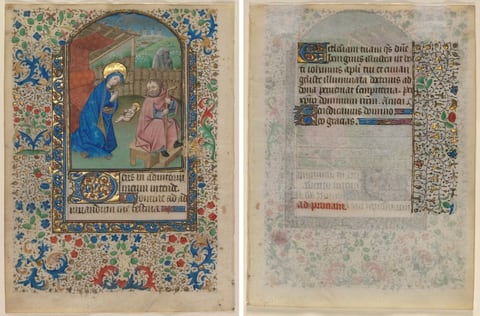
Leaf from a Book of Hours: The Nativity (recto) and Text (verso), c. 1430
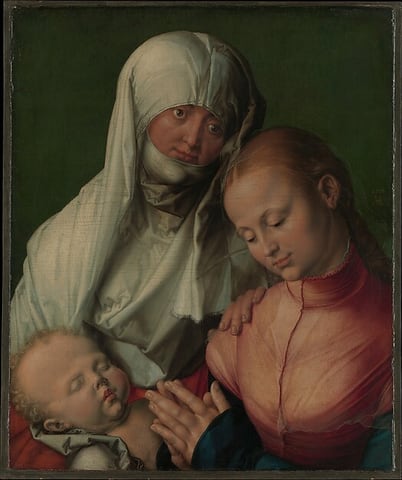
Virgin and Child with Saint Anne, by Albrecht Dürer, probably 1519

The works in this room are listed below.

Works in this room

Dürer's prints, Holbein's portraits and the art of northern Europe in the 1500s.

Section 1, north wall

  1. Portrait of Cosimo de' Medici in full armor, his left hand resting on a staff, by Niccolò della Casa, 1544
    Portrait of Cosimo de' Medici in full armor, his left hand resting on a staffNiccolò della Casa, 1544Courtesy of The Metropolitan Museum of Art
  2. The image features a celestial scene with multiple figures depicted from head to waist. Two central figures are engaged in a conversation amidst clouds. One figure appears seated, possibly on a throne, holding a book. Both figures have long hair and beards. The robes worn by the figures are detailed. Other figures surround them in a semi-circle, some wearing crowns, holding items like bowls. Heavenly hosts with wings are seen above. The background shows a detailed landscape with trees, a river, and castles nestled in hills.
    Saint John before God and the EldersAlbrecht Dürer, probably c. 1496/1498Courtesy National Gallery of Art, Washington
  3. A work made of etching on ivory laid paper.
    St. John the EvangelistBartholomaeus Spranger, c. 1590Courtesy of the Art Institute of Chicago

Section 1, south wall

  1. This is a drawing of a group of medieval figures and a tree. The image depicts a dense gathering of figures, all wearing elaborate period costumes, including helmets, robes, and armor. Their expressions vary. At the top, a leafy tree dominates the background alongside swirling clouds. The foreground hints at an interaction among the individuals, possibly a scene of discourse or judgment. Several personal items and tools are on the ground. The attention to detail and the use of line to create intricate patterns and textures are notable features of this work. This is in the style of Albrecht Dürer.
    The Martyrdom of Saint BarbaraLucas Cranach the ElderCourtesy National Gallery of Art, Washington
  2. Leaf from a Book of Hours: The Nativity (recto) and Text (verso), c. 1430
    Leaf from a Book of Hours: The Nativity (recto) and Text (verso)Unrecorded French maker, c. 1430Courtesy of the Cleveland Museum of Art
  3. Virgin and Child with Saint Anne, by Albrecht Dürer, probably 1519
    Virgin and Child with Saint AnneAlbrecht Dürer, probably 1519Courtesy of The Metropolitan Museum of Art

Section 2, south wall
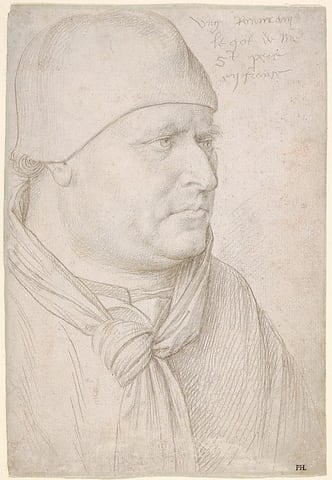
  1. Portrait of Alain de Coëtivy (1407–1474), by Jean Fouquet, ca. 1451–55
    Portrait of Alain de Coëtivy (1407–1474)Jean Fouquet, ca. 1451–55Courtesy of The Metropolitan Museum of Art
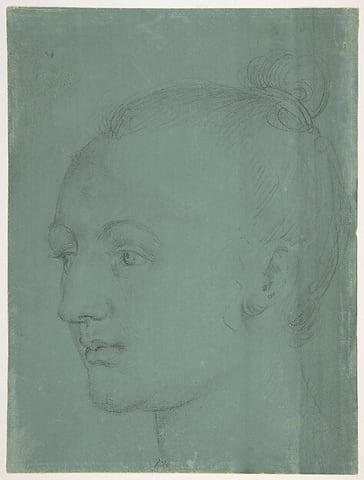
  2. Head of a Young Woman, by Albrecht Dürer, 1522
    Head of a Young WomanAlbrecht Dürer, 1522Courtesy of The Metropolitan Museum of Art
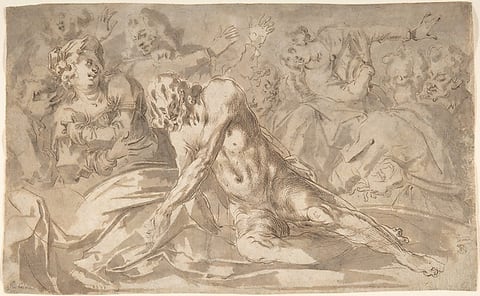
  3. The Raising of Lazarus, by Jacques Bellange, ca. 1606–8
    The Raising of LazarusJacques Bellange, ca. 1606–8Courtesy of The Metropolitan Museum of Art

Section 2, north wall
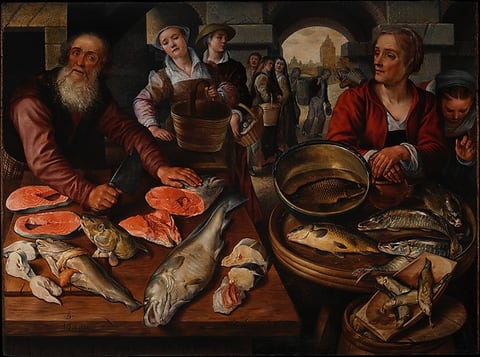
  1. Fish Market, by Joachim Beuckelaer, 1568
    Fish MarketJoachim Beuckelaer, 1568Courtesy of The Metropolitan Museum of Art
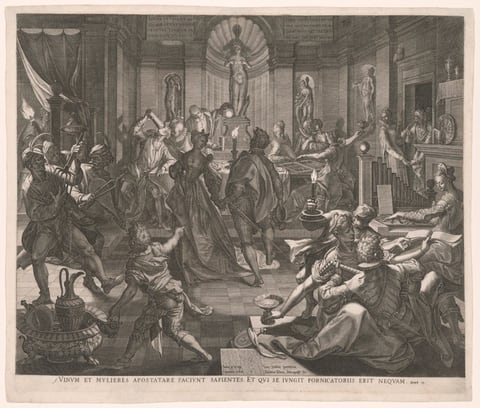
  2. A work made of engraving in black on cream laid paper.
    The Carnival (or the Prodigal Son)Jan Sadeler, I, 1588Courtesy of the Art Institute of Chicago

Section 3, north wall
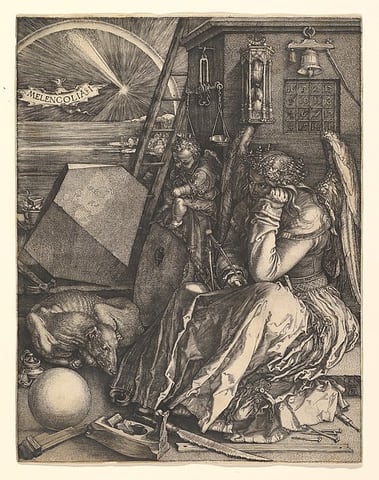
  1. Melencolia I, by Albrecht Dürer, 1514
    Melencolia IAlbrecht Dürer, 1514Courtesy of The Metropolitan Museum of Art
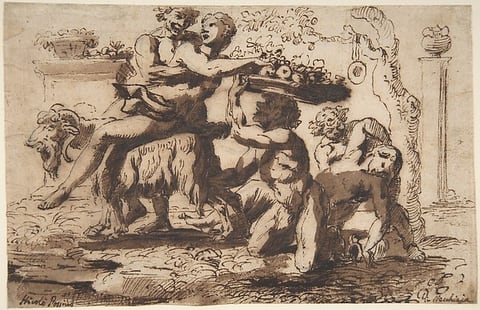
  2. Bacchanal, by Nicolas Poussin, ca. 1635–36
    BacchanalNicolas Poussin, ca. 1635–36Courtesy of The Metropolitan Museum of Art
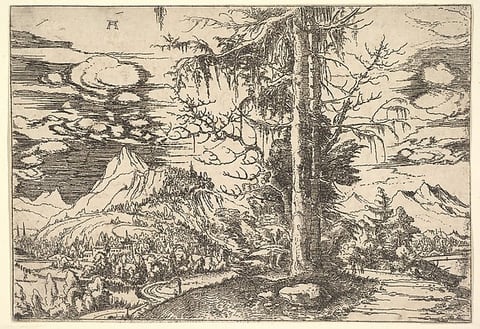
  3. Landscape with a Double Spruce, by Albrecht Altdorfer, ca. 1521–22
    Landscape with a Double SpruceAlbrecht Altdorfer, ca. 1521–22Courtesy of The Metropolitan Museum of Art

Section 3, south wall
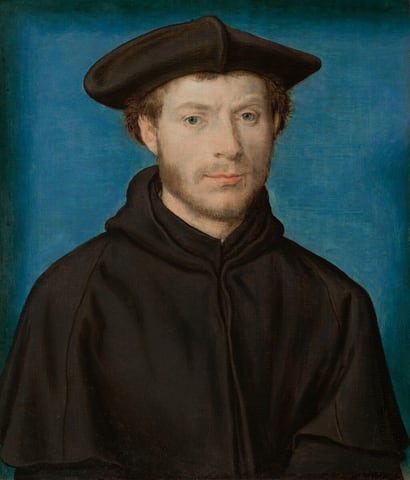
  1. This painting shows a man from the waist up. He is facing forward and gazes out at us. He has fair skin, light brown hair, a thin mustache and beard, and light green eyes. His expression is mostly neutral, although his peach lips are slightly turned up at the edges. He is wearing a black garment with a high collar and a hood and a black flat cap on his head. The background is plain blue, fading to black around the edges of the painting.
    Portrait of a ManCorneille de Lyon, c. 1536/1540Courtesy National Gallery of Art, Washington
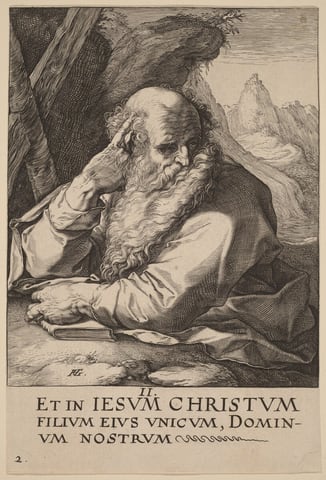
  2. The image shows an elderly man seated from the waist up. He is angled slightly away from the viewer, resting his head on one hand and leaning on the other arm. The man has a deeply lined face, a large beard, curly hair, and appears focused on something outside the frame. He wears flowing garments and a book is under his arm. In the background, there are rugged, mountainous rock formations. Ornate text frames the image at the bottom.
    Saint AndrewHendrick Goltzius, probably 1589Courtesy National Gallery of Art, Washington