Floor plan

Style galleriesThe Italian Renaissance
The Italian Renaissance
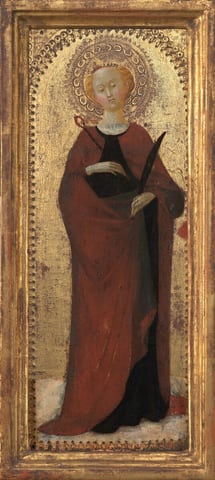
This painting shows a person standing, their head slightly tilted to the left. They have a pale complexion, and short, wavy blonde hair adorned with a thin red crown. They have rosy, pink cheeks, arched eyebrows, a straight nose, and small lips set in a neutral expression. The individual is wearing a long red robe over a black tunic or dress and is holding a long black quill-like object in one hand, and what looks like a thin staff with a red loop at the end in the other. A detailed golden halo surrounds their head, and the background features an ornate gold pattern which is slightly worn and peeling in some places. The painting is bordered by a golden frame.
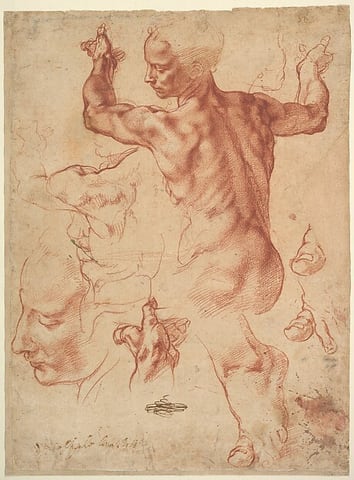
Studies for the Libyan Sibyl (recto); Studies for the Libyan Sibyl and a small Sketch for a Seated Figure (verso), by Michelangelo Buonarroti, ca. 1510–11
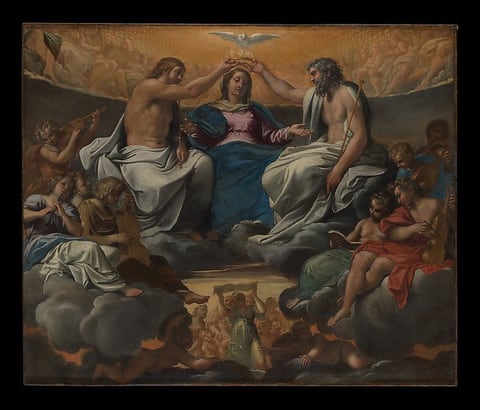
The Coronation of the Virgin, by Annibale Carracci, after 1595
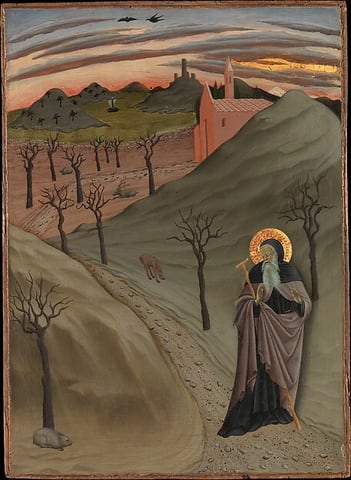
Saint Anthony the Abbot in the Wilderness, by Sano di Pietro (Ansano di Pietro di Mencio), ca. 1440
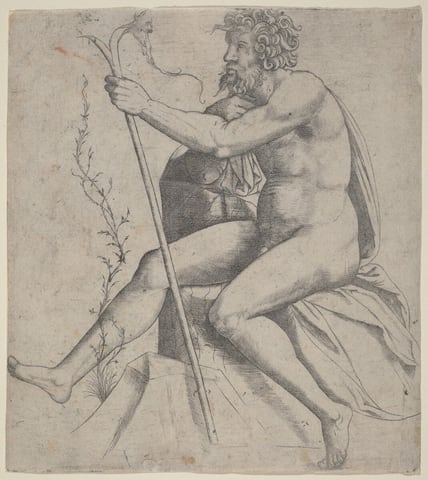
The image shows a man seated with a slight forward tilt. He is muscular, with one leg bent and the other extended. His head is turned to the left in profile, revealing his facial features, which include a large nose, full beard, and curly hair. He appears naked except for a fabric drape over his shoulders. In his left hand, he holds a staff, and there is a plant with twisting vines near him. The background is a shaded rocky surface with no other details.
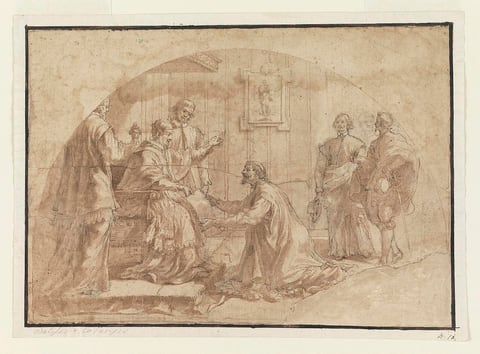
POPE RECEIVING VISITOR
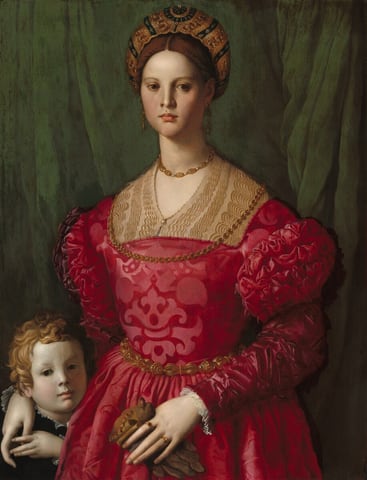
A woman wearing a crimson-red brocade dress and gold jewelry fills most of this vertical portrait, but her right hand, on our left, rests on the shoulder of a young boy tucked into the lower left corner of the panel. The woman and boy both have pale, white skin, and both face and look out at us against an emerald-green curtain that falls behind them. The woman has brown eyes, a straight nose, full pink lips, smooth cheeks, and a long neck. Her brown hair is pulled back under a turban densely embroidered with gold. The woman’s dress has puffed shoulders and decorative slashes on the sleeves. One gold chain rests on her throat and the other falls over her chest. She wears long gold earrings, a gold belt, and two gold rings. She holds a brown leather glove in her left hand. The boy’s face is even with the woman’s waist, and he raises his left hand to hold hers, which is draped over his shoulder. He has curly blond hair and dark eyes, and he wears black with a ruffled white shirt just visible at his collar.

The works in this room are listed below.

Works in this room

Florence, Venice and Rome from 1400 to 1600: perspective, anatomy and the classical past.

First room, north wall

  1. This painting shows a person standing, their head slightly tilted to the left. They have a pale complexion, and short, wavy blonde hair adorned with a thin red crown. They have rosy, pink cheeks, arched eyebrows, a straight nose, and small lips set in a neutral expression. The individual is wearing a long red robe over a black tunic or dress and is holding a long black quill-like object in one hand, and what looks like a thin staff with a red loop at the end in the other. A detailed golden halo surrounds their head, and the background features an ornate gold pattern which is slightly worn and peeling in some places. The painting is bordered by a golden frame.
    Saint ApolloniaSassetta, c. 1435Courtesy National Gallery of Art, Washington
  2. Studies for the Libyan Sibyl (recto); Studies for the Libyan Sibyl and a small Sketch for a Seated Figure (verso), by Michelangelo Buonarroti, ca. 1510–11
    Studies for the Libyan Sibyl (recto); Studies for the Libyan Sibyl and a small Sketch for a Seated Figure (verso)Michelangelo Buonarroti, ca. 1510–11Courtesy of The Metropolitan Museum of Art
  3. The Coronation of the Virgin, by Annibale Carracci, after 1595
    The Coronation of the VirginAnnibale Carracci, after 1595Courtesy of The Metropolitan Museum of Art
  4. Saint Anthony the Abbot in the Wilderness, by Sano di Pietro (Ansano di Pietro di Mencio), ca. 1440
    Saint Anthony the Abbot in the WildernessSano di Pietro (Ansano di Pietro di Mencio), ca. 1440Courtesy of The Metropolitan Museum of Art

First room, south wall

  1. The image shows a man seated with a slight forward tilt. He is muscular, with one leg bent and the other extended. His head is turned to the left in profile, revealing his facial features, which include a large nose, full beard, and curly hair. He appears naked except for a fabric drape over his shoulders. In his left hand, he holds a staff, and there is a plant with twisting vines near him. The background is a shaded rocky surface with no other details.
    Man Seated Holding a Forked StaffGiovanni Antonio da Brescia, c. 1514/1515Courtesy National Gallery of Art, Washington
  2. POPE RECEIVING VISITOR
    Pope Receiving VisitorBelisario Corenzio, 1590–1646Courtesy of Cooper Hewitt, Smithsonian Design Museum
  3. A woman wearing a crimson-red brocade dress and gold jewelry fills most of this vertical portrait, but her right hand, on our left, rests on the shoulder of a young boy tucked into the lower left corner of the panel. The woman and boy both have pale, white skin, and both face and look out at us against an emerald-green curtain that falls behind them. The woman has brown eyes, a straight nose, full pink lips, smooth cheeks, and a long neck. Her brown hair is pulled back under a turban densely embroidered with gold. The woman’s dress has puffed shoulders and decorative slashes on the sleeves. One gold chain rests on her throat and the other falls over her chest. She wears long gold earrings, a gold belt, and two gold rings. She holds a brown leather glove in her left hand. The boy’s face is even with the woman’s waist, and he raises his left hand to hold hers, which is draped over his shoulder. He has curly blond hair and dark eyes, and he wears black with a ruffled white shirt just visible at his collar.
    A Young Woman and Her Little BoyAgnolo Bronzino, c. 1540Courtesy National Gallery of Art, Washington

Second room, south wall
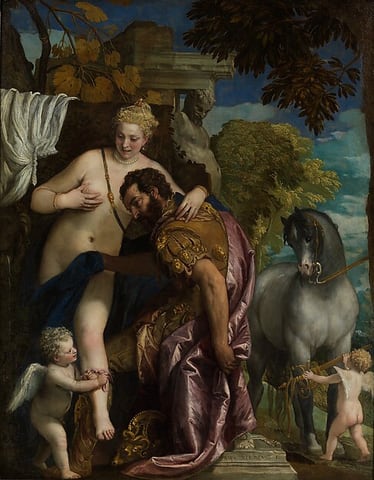
  1. Mars and Venus United by Love, by Paolo Veronese (Paolo Caliari), 1570s
    Mars and Venus United by LovePaolo Veronese (Paolo Caliari), 1570sCourtesy of The Metropolitan Museum of Art
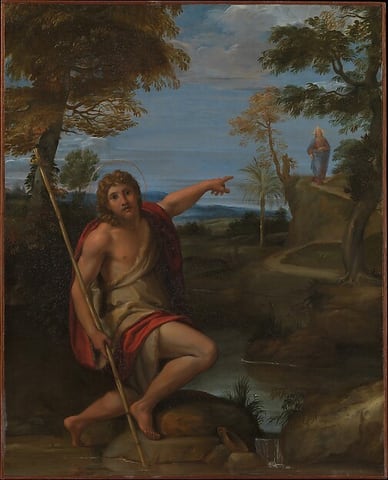
  2. Saint John the Baptist Bearing Witness, by Annibale Carracci, ca. 1600
    Saint John the Baptist Bearing WitnessAnnibale Carracci, ca. 1600Courtesy of The Metropolitan Museum of Art
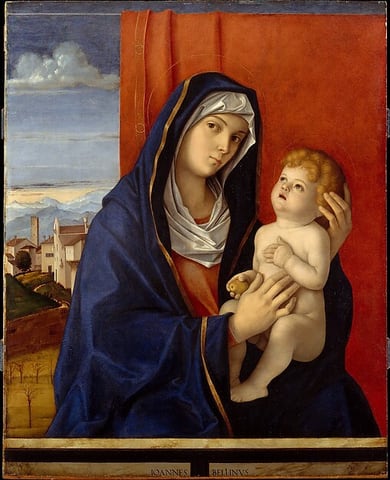
  3. Madonna and Child, by Giovanni Bellini, late 1480s
    Madonna and ChildGiovanni Bellini, late 1480sCourtesy of The Metropolitan Museum of Art

Second room, north wall
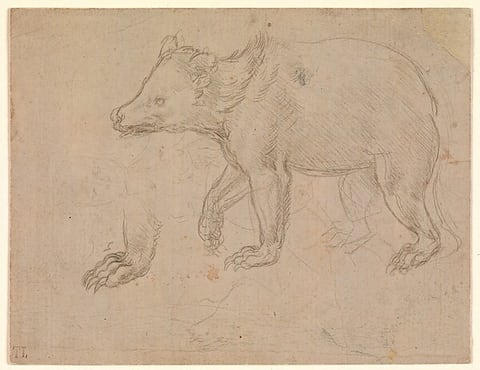
  1. A Bear Walking, by Leonardo da Vinci, ca. 1482–85
    A Bear WalkingLeonardo da Vinci, ca. 1482–85Courtesy of The Metropolitan Museum of Art
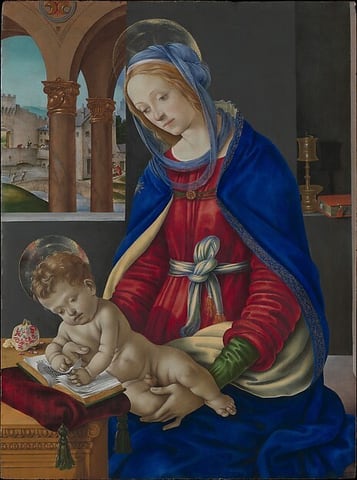
  2. Madonna and Child, by Filippino Lippi, ca. 1483–84
    Madonna and ChildFilippino Lippi, ca. 1483–84Courtesy of The Metropolitan Museum of Art
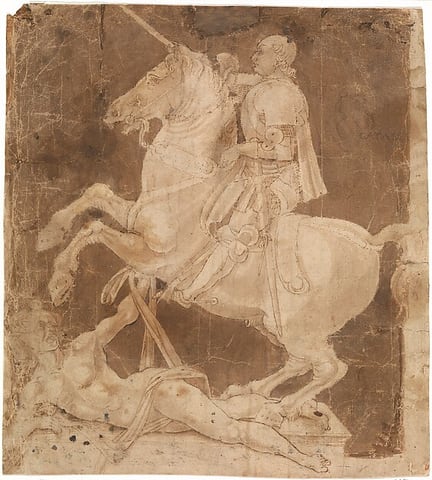
  3. Study for the Equestrian Monument to Francesco Sforza, by Antonio Pollaiuolo, early to mid 1480s
    Study for the Equestrian Monument to Francesco SforzaAntonio Pollaiuolo, early to mid 1480sCourtesy of The Metropolitan Museum of Art
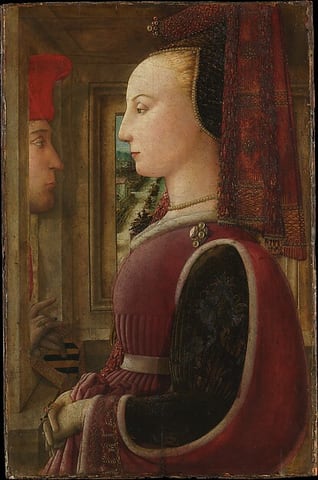
  4. Portrait of a Woman with a Man at a Casement, by Fra Filippo Lippi, ca. 1440
    Portrait of a Woman with a Man at a CasementFra Filippo Lippi, ca. 1440Courtesy of The Metropolitan Museum of Art

Third room, north wall
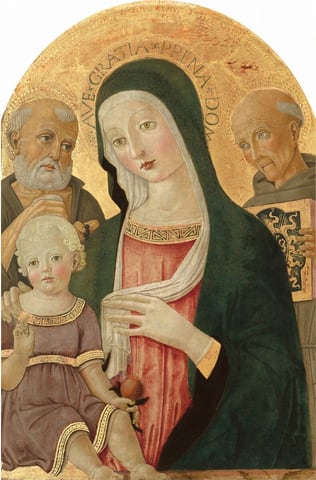
  1. Madonna and Child with Saint Jerome and Saint Bernardino of Siena, by Benvenuto di Giovanni, c. 1480/1485
    Madonna and Child with Saint Jerome and Saint Bernardino of SienaBenvenuto di Giovanni, c. 1480/1485Courtesy National Gallery of Art, Washington
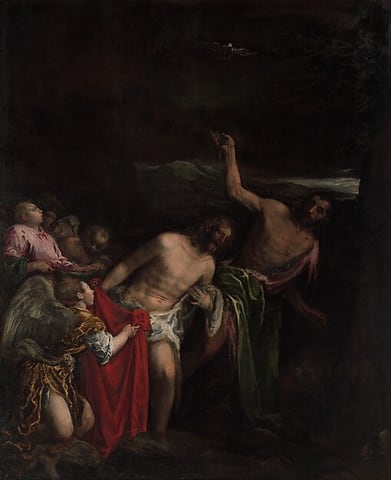
  2. The Baptism of Christ, by Jacopo Bassano, ca. 1590
    The Baptism of ChristJacopo Bassano, ca. 1590Courtesy of The Metropolitan Museum of Art