Floor plan

Style galleriesGeorgian Britain

Georgian Britain

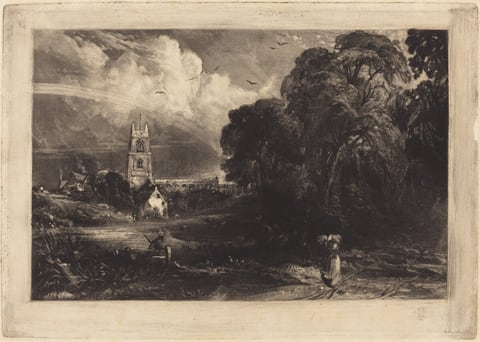
The image displays a landscape with a high vantage point. The horizon is low, with a row of trees. A church tower is off-center to the left. The church is surrounded by trees and buildings. A line of trees is on the right side. The sky has large, expressive clouds. A monochromatic palette of gray is used. A path winds through the scene, with two figures: one person working and another walking.
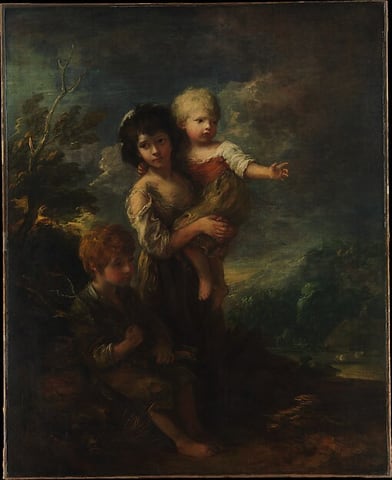
Cottage Children (The Wood Gatherers), by Thomas Gainsborough, 1787
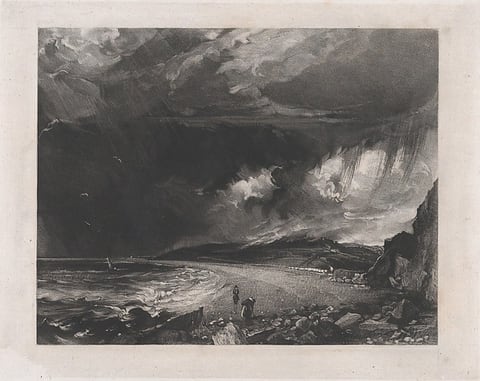
Weymouth Bay, by David Lucas, 1830
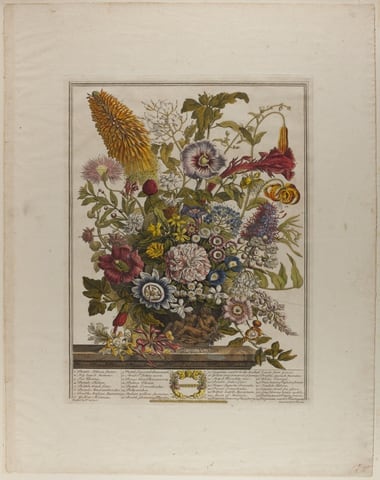
A work made of engraving in black ink with opaque and translucent watercolor on cream laid paper.
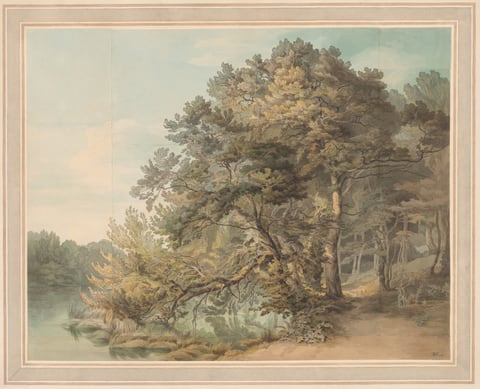
The image shows a forest by a serene, tree-lined body of water. The horizon is high with tall trees extending close to it, creating a sense of depth. The brushstrokes and watercolor application are delicate, capturing textures of leaves and water gently. The color palette includes muted greens, soft browns, and hints of blue and cream. Closest to us is a dense cluster of trees on the right, curving over the water. Across the water, other tree clusters and shrubs recede into the misty background towards the left.
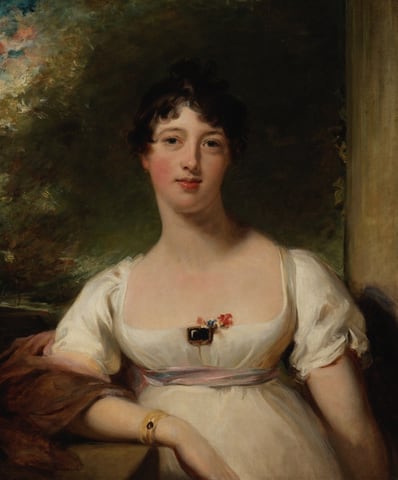
A work made of oil on canvas.
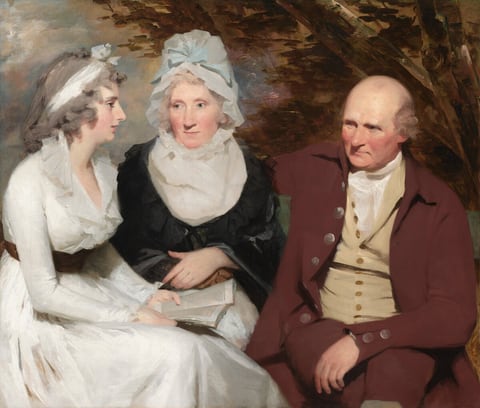
John Johnstone, Betty Johnstone, and Miss Wedderburn, by Sir Henry Raeburn, c. 1790/1795

The works in this room are listed below.

Works in this room

Portraits, conversation pieces and watercolour landscapes from Hogarth to Constable.

Section 1, north wall

  1. The image displays a landscape with a high vantage point. The horizon is low, with a row of trees. A church tower is off-center to the left. The church is surrounded by trees and buildings. A line of trees is on the right side. The sky has large, expressive clouds. A monochromatic palette of gray is used. A path winds through the scene, with two figures: one person working and another walking.
    Stoke-by-NeylandDavid Lucas, 1830Courtesy National Gallery of Art, Washington
  2. Cottage Children (The Wood Gatherers), by Thomas Gainsborough, 1787
    Cottage Children (The Wood Gatherers)Thomas Gainsborough, 1787Courtesy of The Metropolitan Museum of Art
  3. Weymouth Bay, by David Lucas, 1830
    Weymouth BayDavid Lucas, 1830Courtesy of The Metropolitan Museum of Art
  4. A work made of engraving in black ink with opaque and translucent watercolor on cream laid paper.
    August, from Twelve Months of FlowersHenry Fletcher, n.d.Courtesy of the Art Institute of Chicago

Section 1, south wall

  1. The image shows a forest by a serene, tree-lined body of water. The horizon is high with tall trees extending close to it, creating a sense of depth. The brushstrokes and watercolor application are delicate, capturing textures of leaves and water gently. The color palette includes muted greens, soft browns, and hints of blue and cream. Closest to us is a dense cluster of trees on the right, curving over the water. Across the water, other tree clusters and shrubs recede into the misty background towards the left.
    Peamore, DevonJohn White Abbott, 1799Courtesy National Gallery of Art, Washington
  2. A work made of oil on canvas.
    Anna Maria Dashwood, later Marchioness of ElyThomas Lawrence, c. 1805Courtesy of the Art Institute of Chicago
  3. John Johnstone, Betty Johnstone, and Miss Wedderburn, by Sir Henry Raeburn, c. 1790/1795
    John Johnstone, Betty Johnstone, and Miss WedderburnSir Henry Raeburn, c. 1790/1795Courtesy National Gallery of Art, Washington

Section 2, south wall
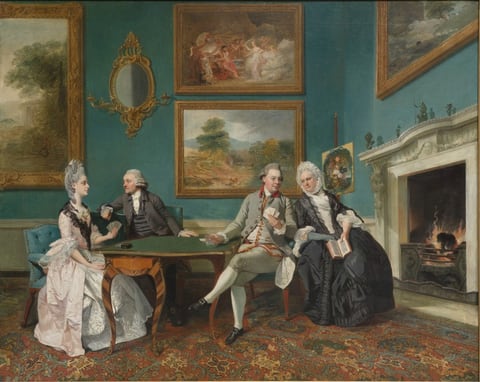
  1. The Dutton Family in the Drawing Room of Sherborne Park, Gloucestershire, by Johann Zoffany, c. 1772
    The Dutton Family in the Drawing Room of Sherborne Park, GloucestershireJohann Zoffany, c. 1772Courtesy of the Cleveland Museum of Art
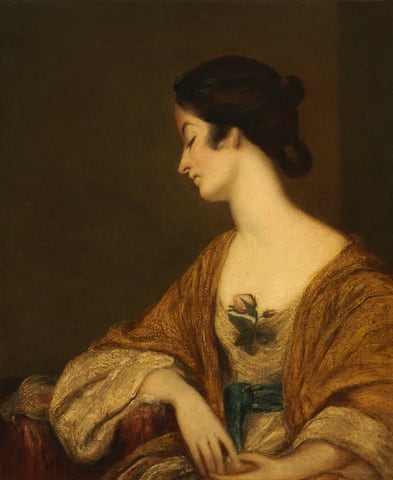
  2. Portrait of Mrs. George Collier, by Joshua Reynolds, 18th century
    Portrait of Mrs. George CollierJoshua Reynolds, 18th centuryCourtesy of the Cleveland Museum of Art
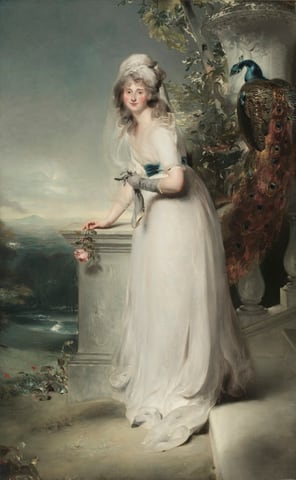
  3. Portrait of Catherine Grey, Lady Manners, by Thomas Lawrence, 1794
    Portrait of Catherine Grey, Lady MannersThomas Lawrence, 1794Courtesy of the Cleveland Museum of Art

Section 2, north wall
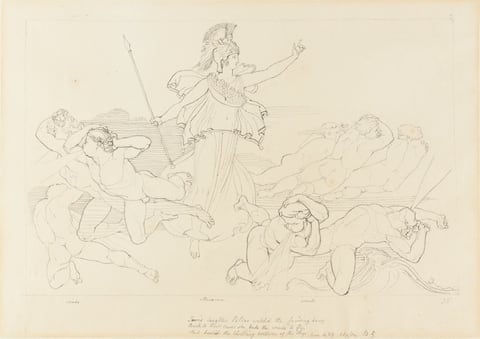
  1. A work made of pen and black ink, over traces of graphite, on tan wove paper, laid down on cream wove paper.
    Athena and the WindsJohn Flaxman, n.d.Courtesy of the Art Institute of Chicago
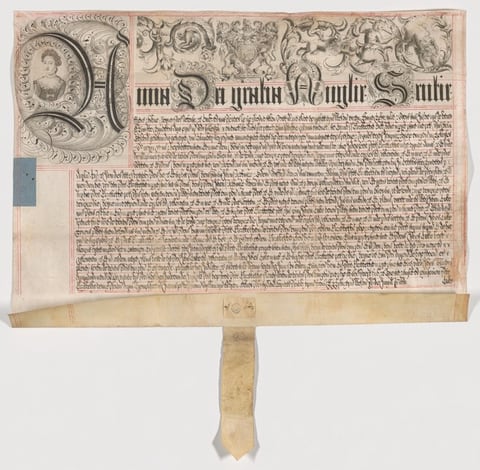
  2. A work made of engraved letterhead, pen and ink calligraphy, and graphite ruling on parchment, folded with strap and (missing) seal.
    Recovery Document (Land Title Grant)Unrecorded British maker, 1702/14 (Queen Anne period)Courtesy of the Art Institute of Chicago
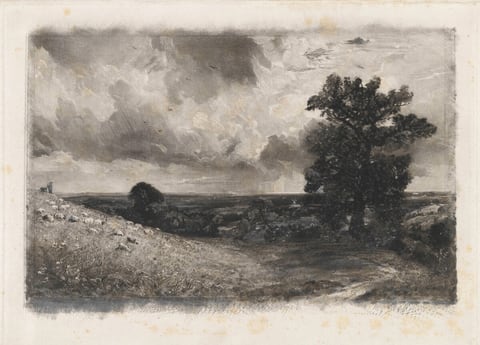
  3. The image shows a landscape with a rolling hill in the foreground sloping downward. The horizon is high, providing a view over fields and sky. Sheep graze on the hill, tended by a person. A large, dark tree is on the right. Brushstrokes vary in the sky and land, with broad strokes for clouds and finer ones for grass and foliage. The color palette is mainly black, white, and shades of grey, highlighting light and shadow.
    NoonDavid Lucas, 1830Courtesy National Gallery of Art, Washington
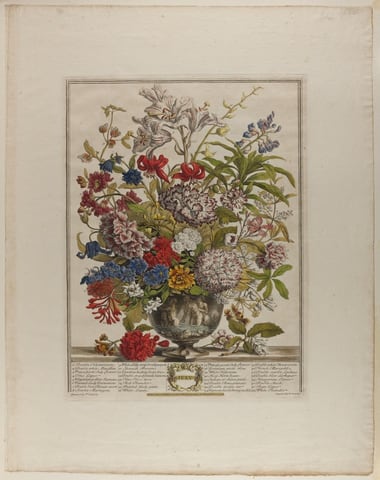
  4. A work made of engraving in black ink with opaque and translucent watercolor on cream laid paper.
    July, from Twelve Months of FlowersHenry Fletcher, n.d.Courtesy of the Art Institute of Chicago

Section 3, north wall
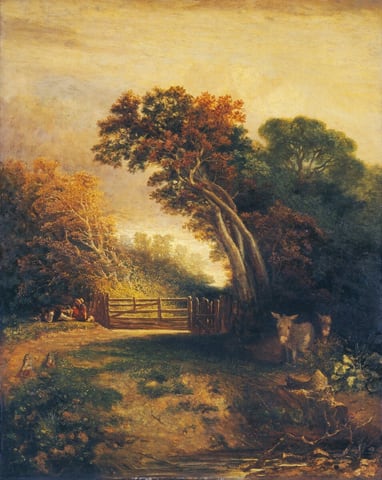
  1. This painting shows a serene pastoral scene with trees, a wooden gate, and foliage extending towards the horizon. Closest to us, there is a low riverbank with some tree branches in the water. Up a grassy dirt hill, two donkeys are visible off to the right, partially hidden by vegetation. On the left, a dirt path leads to the wooden gate. To the left of the gate, two people sit on the grass with a wicker basket between them. The tall trees that rise in the background have leaves in shades of green, yellow, and dark orange. The sky above the scene is yellow with some hints of light blue, and golden light shines down on the landscape.
    Landscape with Picnickers and Donkeys by a GateJoseph Paul, c. 1830-1880Courtesy National Gallery of Art, Washington
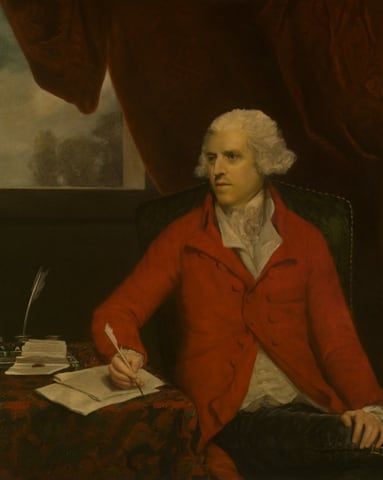
  2. A work made of oil on canvas.
    Sir Thomas Rumbold, Bt.Joshua Reynolds, 1788Courtesy of the Art Institute of Chicago