Floor plan

Style galleriesThe Etching Revival

The Etching Revival

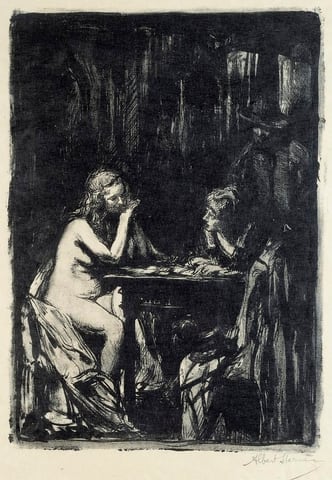
The Stranger, by Albert Sterner, 1916
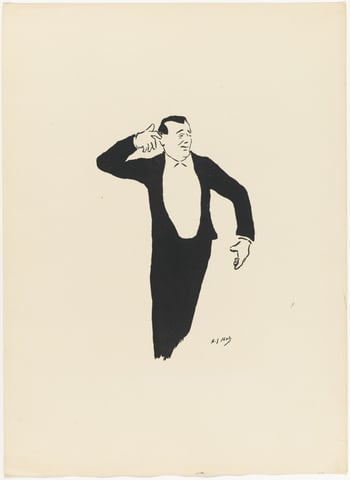
A work made of lithograph on ivory wove paper.
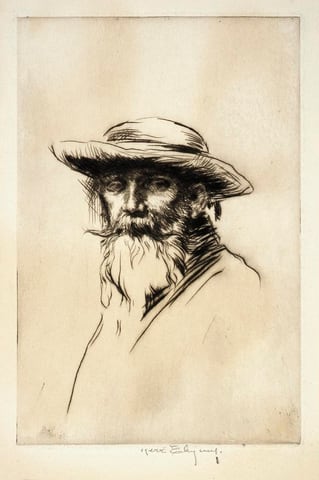
Head of an Old Man, by Kerr Eby, ca. 1918
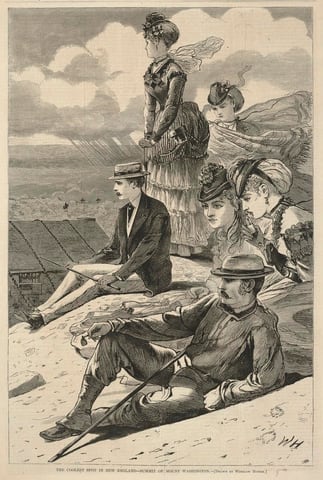
The Coolest Spot in New England--Summit of Mount Washington, from Harper's Bazar, July 23, 1870, by Winslow Homer, 1870
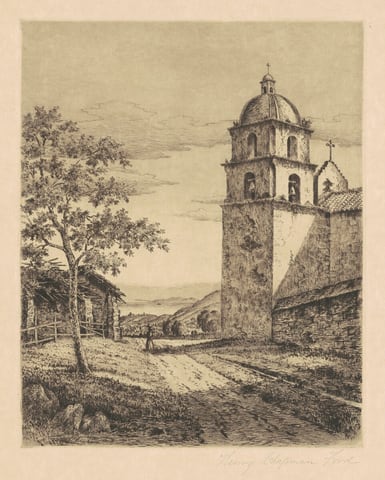
The image features a large building with a domed tower on the right side. The horizon shows hills, trees, and the sky. The brushstrokes give detailed texture to the scene, with a focus on the landscape and architecture. The color palette is sepia-toned. A tree, fence, smaller buildings, and a figure on a path add depth and perspective to the scene.
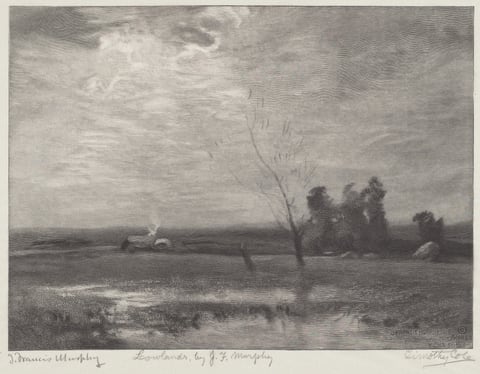
This print displays a landscape with a wide view of flat land stretching towards the horizon. The ground is covered in small black dots, with some bare patches in the bottom center. A few silhouetted trees and a hint of smoke coming up from behind some rocks are visible in the distance. The gray sky dominates the scene with soft, swirling clouds.

The works in this room are listed below.

Works in this room

Artists who took up the etching needle again, from Whistler to the Paris printmakers.

Section 1, north wall

  1. The Stranger, by Albert Sterner, 1916
    The StrangerAlbert Sterner, 1916Courtesy of the Smithsonian American Art Museum
  2. A work made of lithograph on ivory wove paper.
    Paulus, from Le Café-ConcertHenri-Gabriel Ibels, 1893Courtesy of the Art Institute of Chicago
  3. Head of an Old Man, by Kerr Eby, ca. 1918
    Head of an Old ManKerr Eby, ca. 1918Courtesy of the Smithsonian American Art Museum

Section 1, south wall

  1. The Coolest Spot in New England--Summit of Mount Washington, from Harper's Bazar, July 23, 1870, by Winslow Homer, 1870
    The Coolest Spot in New England--Summit of Mount Washington, from Harper's Bazar, July 23, 1870Winslow Homer, 1870Courtesy of the Smithsonian American Art Museum
  2. The image features a large building with a domed tower on the right side. The horizon shows hills, trees, and the sky. The brushstrokes give detailed texture to the scene, with a focus on the landscape and architecture. The color palette is sepia-toned. A tree, fence, smaller buildings, and a figure on a path add depth and perspective to the scene.
    Mission Santa Barbara, Looking SouthHenry Chapman Ford, 1888Courtesy National Gallery of Art, Washington
  3. This print displays a landscape with a wide view of flat land stretching towards the horizon. The ground is covered in small black dots, with some bare patches in the bottom center. A few silhouetted trees and a hint of smoke coming up from behind some rocks are visible in the distance. The gray sky dominates the scene with soft, swirling clouds.
    LowlandsTimothy Cole, 1918Courtesy National Gallery of Art, Washington

Section 2, south wall
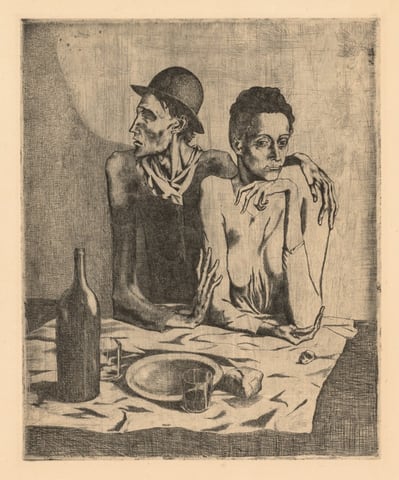
  1. The Frugal Meal, by Pablo Picasso, September 1904, printed 1913
    The Frugal MealPablo Picasso, September 1904, printed 1913Courtesy of the Cleveland Museum of Art
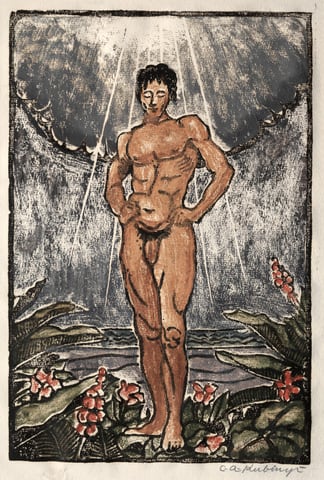
  2. The Creation, by Kálmán Kubinyi, before 1927
    The CreationKálmán Kubinyi, before 1927Courtesy of the Cleveland Museum of Art
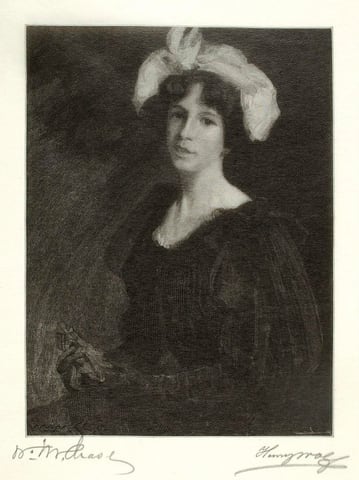
  3. Portrait of Mrs. C--, by Henry Wolf, 1894
    Portrait of Mrs. C--Henry Wolf, 1894Courtesy of the Smithsonian American Art Museum

Section 2, north wall
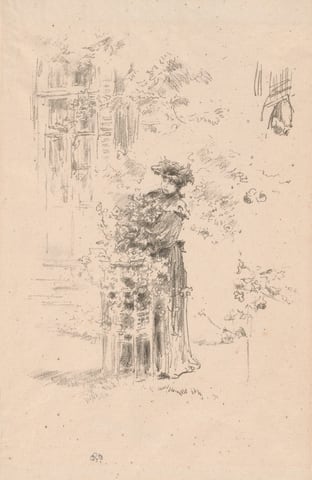
  1. A work made of transfer lithograph in black, with stumping and scraping, on cream laid paper, laid down on a heavy backing sheet.
    La Belle JardinièreJames McNeill Whistler, 1894Courtesy of the Art Institute of Chicago
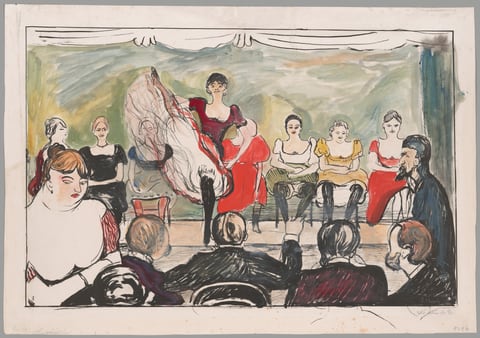
  2. A work made of lithograph in black ink, with additions in brush and red, blue, yellow, green, orange-brown and gray watercolor on ivory wove paper.
    TingletangleEdvard Munch, 1895Courtesy of the Art Institute of Chicago

Section 3, north wall
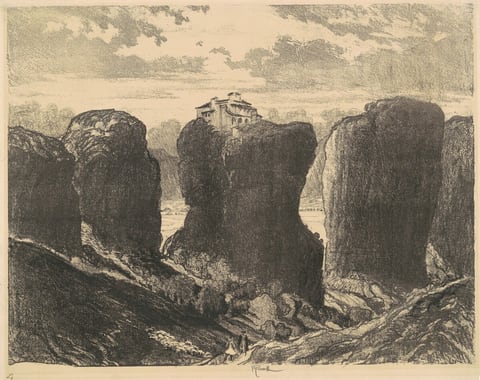
  1. The image depicts a landscape with towering rock formations dominating the scene. The ground is rugged and textured, leading the eye towards the rock pillars in the center. A structure or building is perched atop one of these rocks. The background shows the horizon above the structure, with clouds and sky stretching out beyond. The artwork features detailed brushstrokes adding texture to the rocks. The color palette is monochromatic with varying shades of charcoal or ink, emphasizing the contrast between the rocks and the sky.
    The Cliffs of the TrinityJoseph Pennell, 1913Courtesy National Gallery of Art, Washington
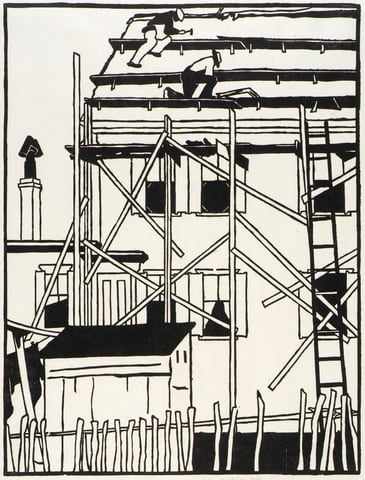
  2. Untitled, by Mildred McMillen, 1915
    UntitledMildred McMillen, 1915Courtesy of the Smithsonian American Art Museum

Section 3, south wall
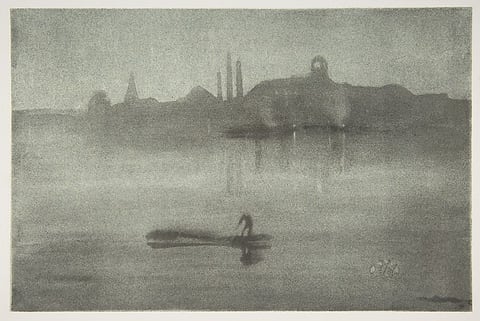
  1. Nocturne (Nocturne: The Thames at Battersea), by James McNeill Whistler, 1878
    Nocturne (Nocturne: The Thames at Battersea)James McNeill Whistler, 1878Courtesy of The Metropolitan Museum of Art
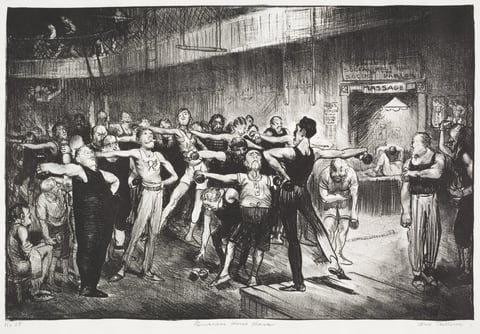
  2. Business Men's Class, by George Bellows, 1916
    Business Men's ClassGeorge Bellows, 1916Courtesy of the Cleveland Museum of Art
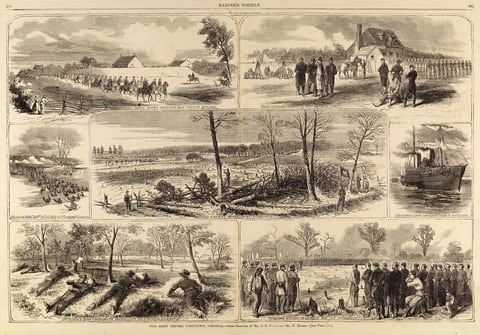
  3. Our Army before Yorktown, Virginia, from Harper's Weekly, May 3, 1862, by Winslow Homer, 1862
    Our Army before Yorktown, Virginia, from Harper's Weekly, May 3, 1862Winslow Homer, 1862Courtesy of the Smithsonian American Art Museum