Floor plan

South wing: ThemesStill Life

Still Life

A work made of oil on canvas.
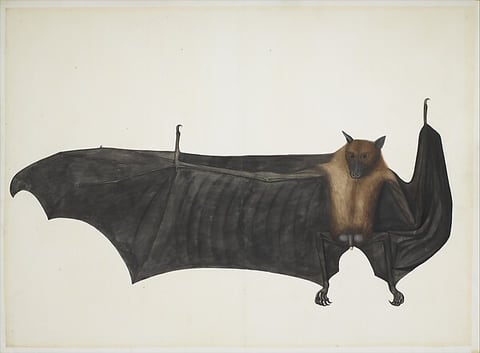
Great Indian Fruit Bat, by Bhawani Das, ca. 1777–82
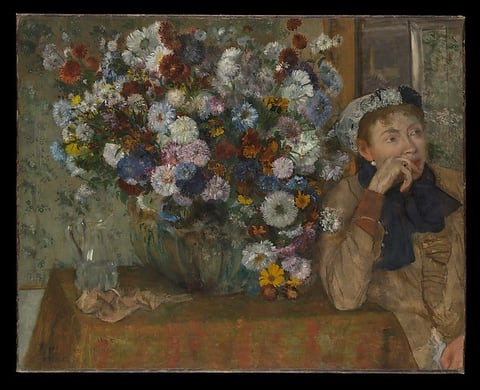
A Woman Seated beside a Vase of Flowers (Madame Paul Valpinçon?), by Edgar Degas, 1865
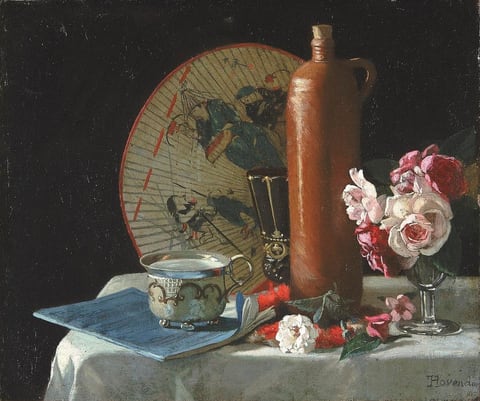
Still Life with Fan and Roses, by Thomas Hovenden, 1874
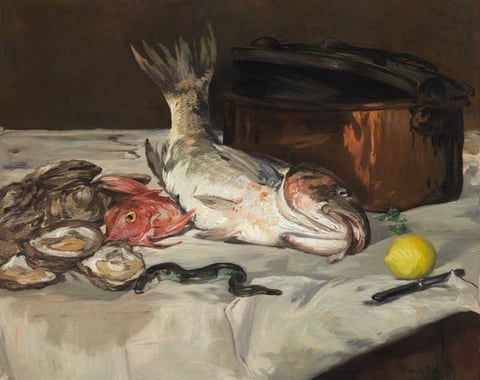
Still-life painting, fish, open oysters, eel, lemon on tablecloth.
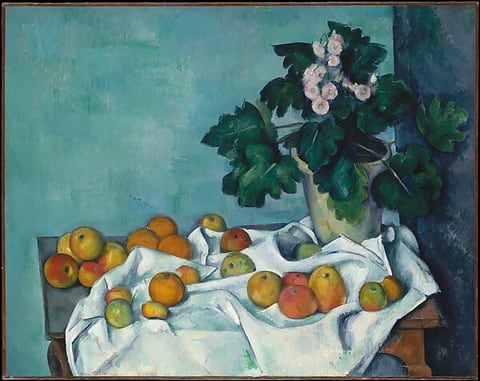
Still Life with Apples and a Pot of Primroses, by Paul Cézanne, ca. 1890
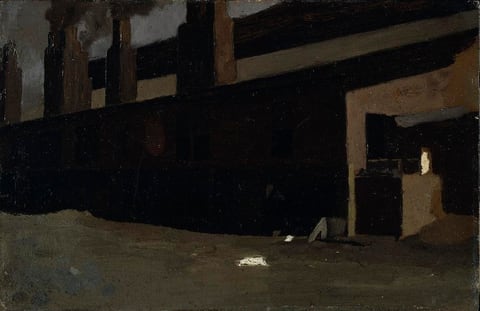
Thomas Anshutz
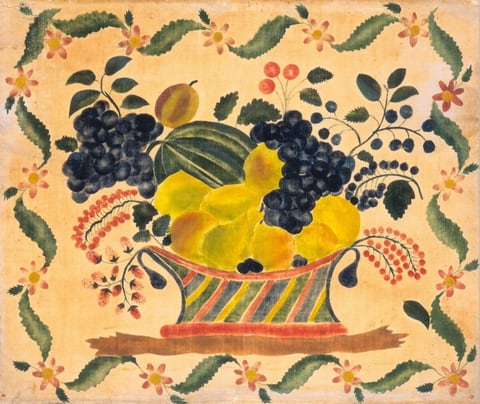
Basket of Fruit, c. 1830

The works in this room are listed below.

Works in this room

A table, a vessel, a few things arranged under a window: still life gave painters a subject they could control completely, and they used it to test light, texture and the passing of time. The genre's quiet surface often carries a moral about abundance and decay.

North wall

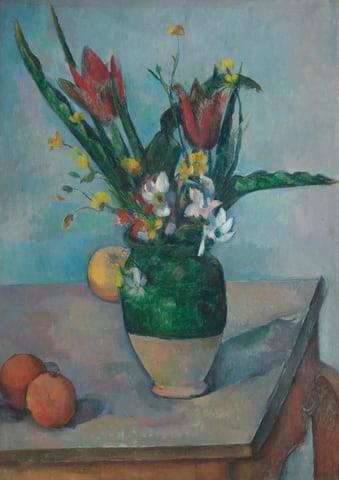
  1. A work made of oil on canvas.
    The Vase of TulipsPaul Cézanne, c. 1890Courtesy of the Art Institute of Chicago
  2. Great Indian Fruit Bat, by Bhawani Das, ca. 1777–82
    Great Indian Fruit BatBhawani Das, ca. 1777–82Courtesy of The Metropolitan Museum of Art
  3. A Woman Seated beside a Vase of Flowers (Madame Paul Valpinçon?), by Edgar Degas, 1865
    A Woman Seated beside a Vase of Flowers (Madame Paul Valpinçon?)Edgar Degas, 1865Courtesy of The Metropolitan Museum of Art
  4. Still Life with Fan and Roses, by Thomas Hovenden, 1874
    Still Life with Fan and RosesThomas Hovenden, 1874Courtesy of the Smithsonian American Art Museum

East wall

  1. Still-life painting, fish, open oysters, eel, lemon on tablecloth.
    Fish (Still Life)Édouard Manet, 1864Courtesy of the Art Institute of Chicago
  2. Still Life with Apples and a Pot of Primroses, by Paul Cézanne, ca. 1890
    Still Life with Apples and a Pot of PrimrosesPaul Cézanne, ca. 1890Courtesy of The Metropolitan Museum of Art
  3. Thomas Anshutz
    Factory--Study for "Ironworkers, Noontime"/Verso: Still Life with OrangeThomas Anshutz, (1880)Courtesy of the Hirshhorn Museum and Sculpture Garden, Smithsonian Institution
  4. Basket of Fruit, c. 1830
    Basket of FruitUnrecorded American maker, c. 1830Courtesy National Gallery of Art, Washington

West wall
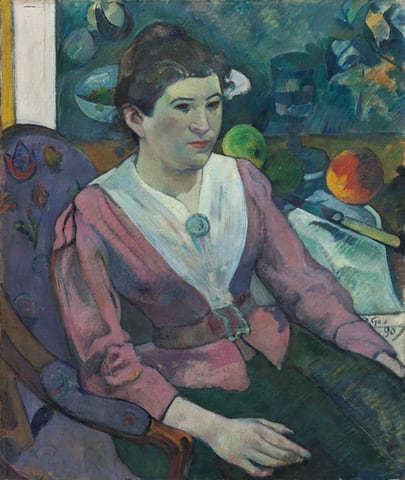
  1. A work made of oil on linen canvas.
    Woman in Front of a Still Life by CezannePaul Gauguin, 1890Courtesy of the Art Institute of Chicago
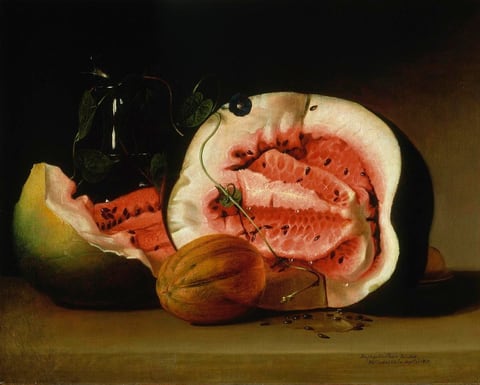
  2. Melons and Morning Glories, by Raphaelle Peale, 1813
    Melons and Morning GloriesRaphaelle Peale, 1813Courtesy of the Smithsonian American Art Museum
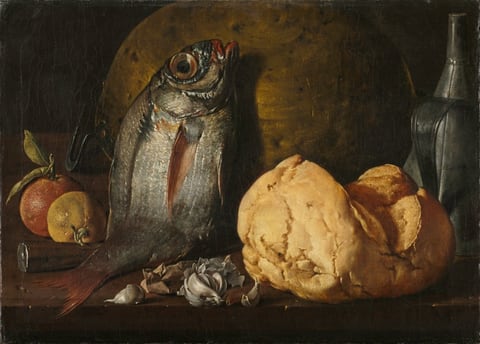
  3. Still Life with Fish, Bread, and Kettle, by Luis Meléndez, c. 1772
    Still Life with Fish, Bread, and KettleLuis Meléndez, c. 1772Courtesy of the Cleveland Museum of Art
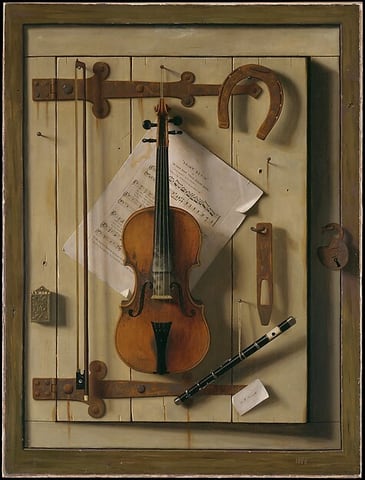
  4. Still Life—Violin and Music, by William Michael Harnett, 1888
    Still Life—Violin and MusicWilliam Michael Harnett, 1888Courtesy of The Metropolitan Museum of Art

South wall
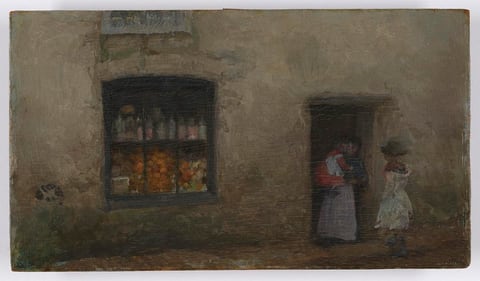
  1. Oil painting
    An Orange Note: Sweet ShopJames McNeill Whistler, 1883 or 1884Courtesy of the National Museum of Asian Art, Smithsonian Institution
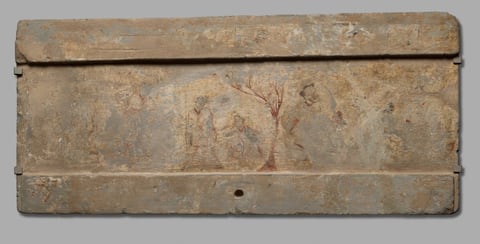
  2. The Killing of Three Warriors with Two Peaches, 202 BCE–220 CE
    The Killing of Three Warriors with Two PeachesUnrecorded Chinese maker, 202 BCE–220 CECourtesy of the Cleveland Museum of Art
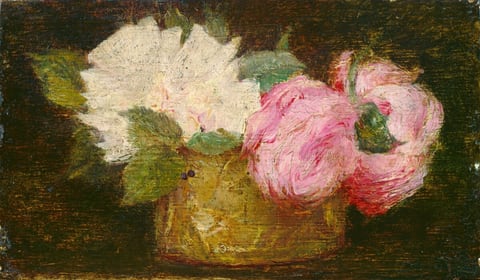
  3. Roses in a Vase, 1880/1900
    Roses in a VaseUnrecorded French maker, 1880/1900Courtesy National Gallery of Art, Washington
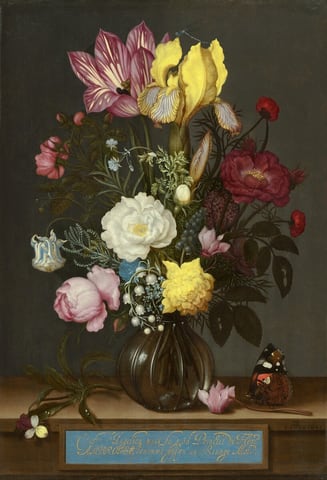
  4. Gathered in a round glass vase, a tall bouquet of flowers in shades of light and deep pink, sunshine yellow, and white with pine-green leaves nearly fills this vertical still life painting. Shown against an gray background, the vase sits on a narrow ledge, perhaps made of wood. A label with looping, cursive French text painted in gold against a baby blue background is affixed to the front of the ledge, along the bottom edge of the composition. The text reads, “C'est l'Angelicq main du grad Peinctre de Flore AMBROISE, renommé jusqu' au Rivage Moré.” A few of the flowers draw the eye, including a tulip and iris at the top of the bouquet. To our left, the tulip is mauve pink with cream-colored streaks, and one petal folds down to reveal the stamen inside. Next to it, a damselfly, an insect like a delicate dragonfly, rests on the vibrant yellow iris. The petals curling down from the iris are veined in muted burgundy red. Flowers filling in the bouquet below include a shell-pink cyclamen, a white gardenia, a closed blue and white striped columbine, a slate-blue grape hyacinth, lily of the valley, pale blue forget-me-nots, and a pink peony interspersed with leaves and greenery. The round glass vase has a narrow opening. A sprig of viola rests to our left of the vase on the ledge, and an orange, black, white, and brown butterfly perches on the stem of a pink cyclamen laying to our right of the vase. The artist signed the painting with a monogram and dated it in dark paint to our right on the face of the ledge: “AB 1621.”
    Bouquet of Flowers in a Glass VaseAmbrosius Bosschaert, 1621Courtesy National Gallery of Art, Washington