Romanticism and Realism
Works in this room
Storms, ruins and feeling from about 1780, then ordinary people and working lives painted as they were, from the 1840s on.
Section 1, north wall
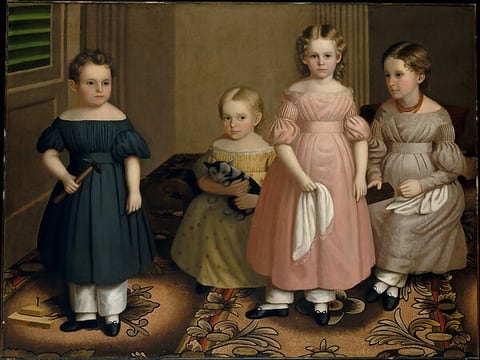
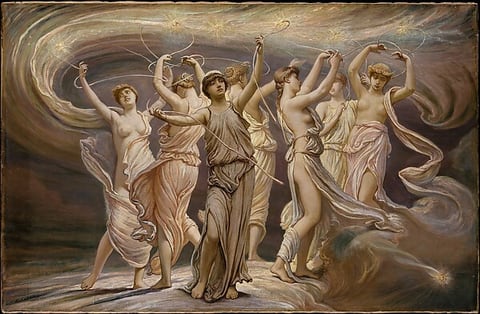
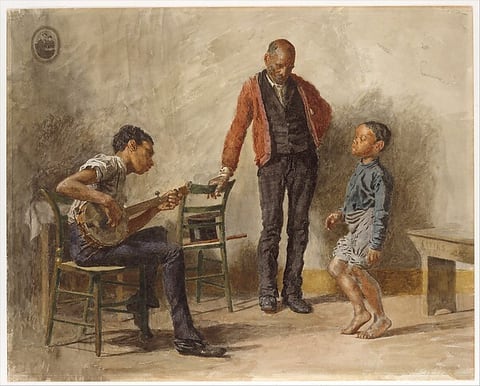
The Alling ChildrenOliver Tarbell Eddy, ca. 1839Courtesy of The Metropolitan Museum of Art The PleiadesElihu Vedder, 1885Courtesy of The Metropolitan Museum of Art The Dancing LessonThomas Eakins, 1878Courtesy of The Metropolitan Museum of Art
Section 1, south wall
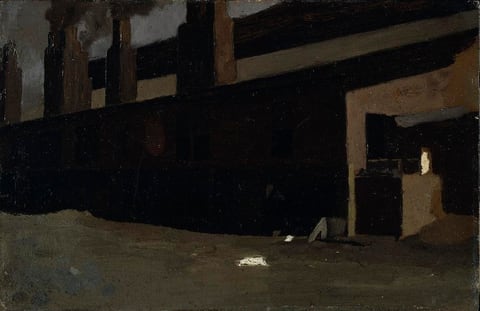
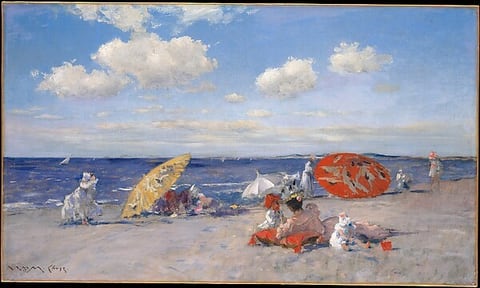
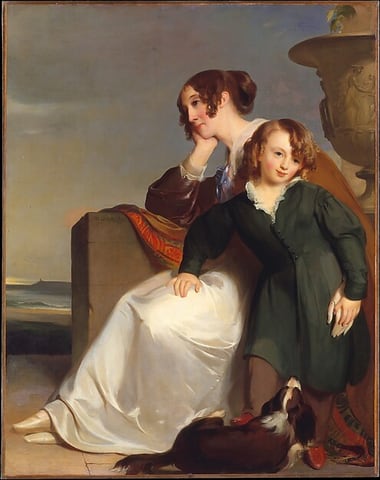
A Village SquareWalter Shirlaw, 1875–80Courtesy of Cooper Hewitt, Smithsonian Design Museum Factory--Study for "Ironworkers, Noontime"/Verso: Still Life with OrangeThomas Anshutz, (1880)Courtesy of the Hirshhorn Museum and Sculpture Garden, Smithsonian Institution At the SeasideWilliam Merritt Chase, ca. 1892Courtesy of The Metropolitan Museum of Art Mother and SonThomas Sully, 1840Courtesy of The Metropolitan Museum of Art
Section 2, south wall
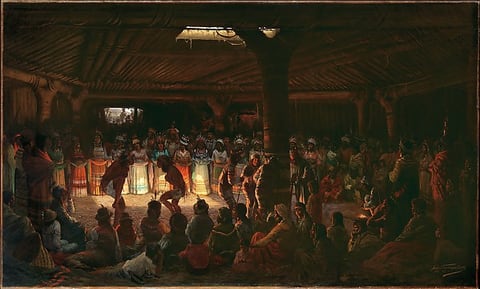
Dance in a Subterranean Roundhouse at Clear Lake, CaliforniaJules Tavernier, 1878Courtesy of The Metropolitan Museum of Art 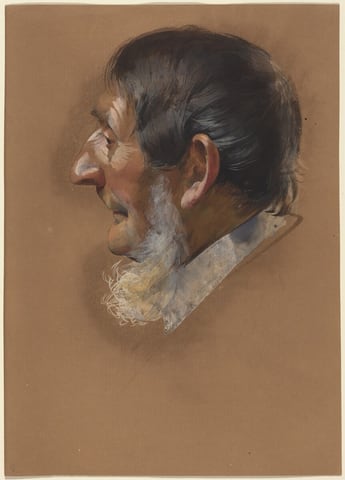
Profile of a Man with SidewhiskersUnrecorded German maker, c. 1850Courtesy National Gallery of Art, Washington 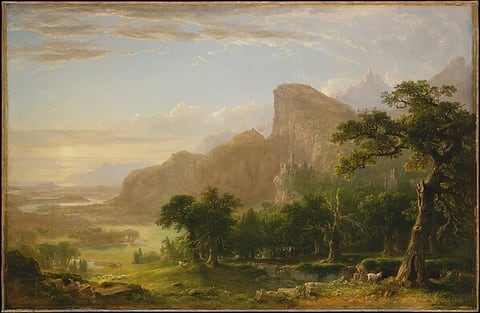
Landscape—Scene from "Thanatopsis"Asher Brown Durand, 1850Courtesy of The Metropolitan Museum of Art
Section 2, north wall
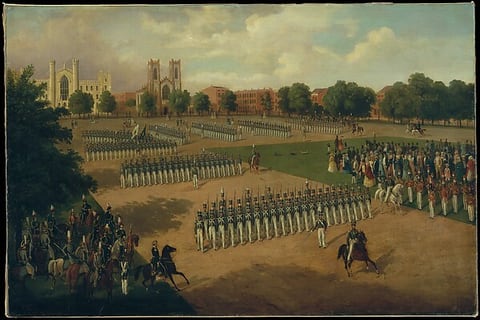
Seventh Regiment on Review, Washington Square, New YorkOtto Boetticher, 1851Courtesy of The Metropolitan Museum of Art 
Child with RosebudPhillip Otto Runge, n.d.Courtesy of the Art Institute of Chicago 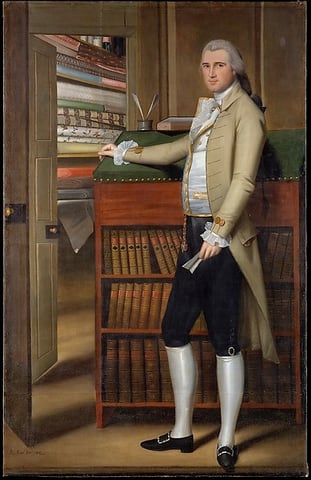
Elijah BoardmanRalph Earl, 1789Courtesy of The Metropolitan Museum of Art
Section 3, north wall

Untitled (Cracked Watermelon)Charles Ethan Porter, ca. 1890Courtesy of The Metropolitan Museum of Art 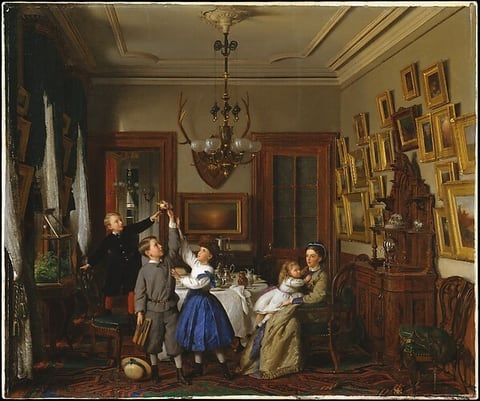
The Contest for the Bouquet: The Family of Robert Gordon in Their New York Dining-RoomSeymour Joseph Guy, 1866Courtesy of The Metropolitan Museum of Art 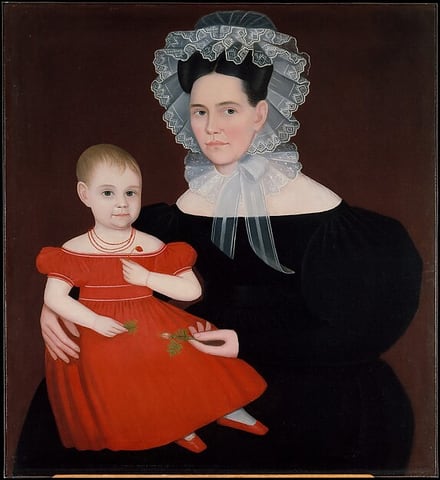
Mrs. Mayer and DaughterAmmi Phillips, 1835–40Courtesy of The Metropolitan Museum of Art