Floor plan

Time and placeSpain

Spain

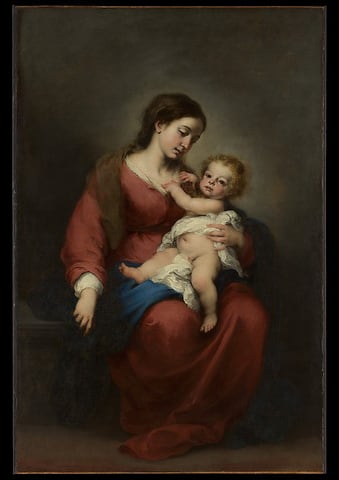
Virgin and Child, by Bartolomé Esteban Murillo, 1670s
A work made of oil on canvas.
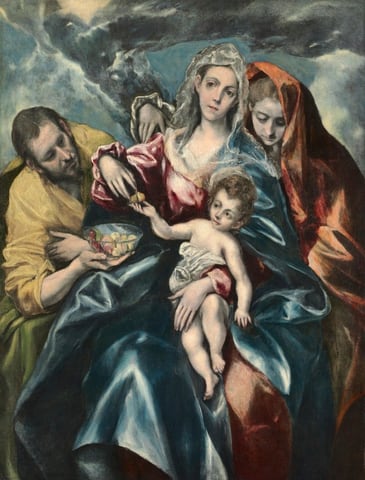
The Holy Family with Mary Magdalen, by El Greco, c. 1590–95
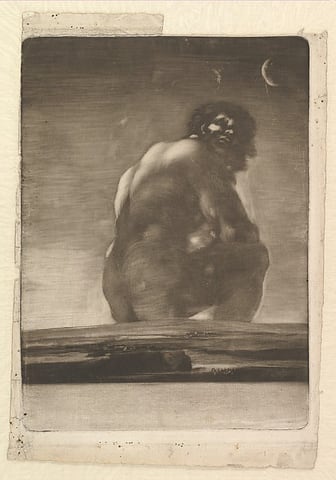
Seated Giant, by Francisco Goya, by 1818 (possibly 1814–18)
A work made of tempera on panel.
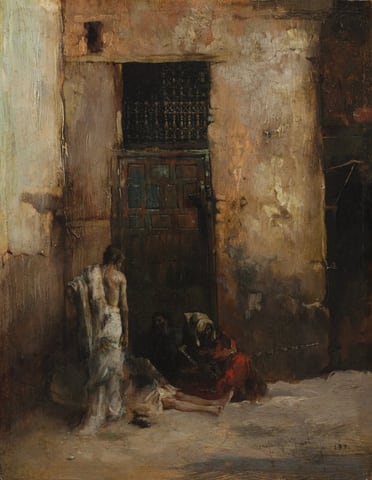
Beggars by a Door, by Mariano Fortuny, 1870
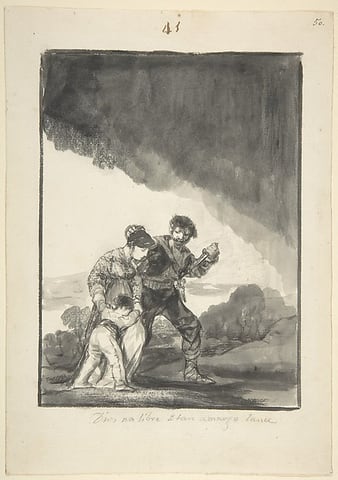
God save us from such a bitter fate; a bandit threatening a woman and a child with a knife, page 41 from the "Black Border Album" (E), by Francisco Goya, ca. 1816–20

The works in this room are listed below.

Works in this room

Works made in Spain, from every century in the collection.

Section 1, north wall

  1. Virgin and Child, by Bartolomé Esteban Murillo, 1670s
    Virgin and ChildBartolomé Esteban Murillo, 1670sCourtesy of The Metropolitan Museum of Art
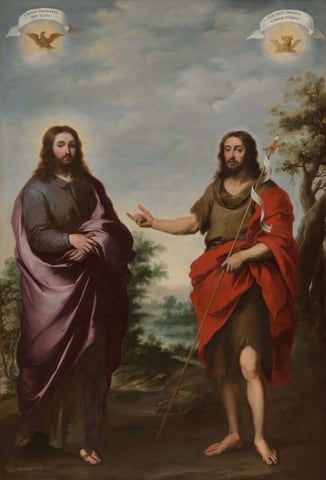
  2. A work made of oil on canvas.
    Ecce Agnus DeiBartolomé Esteban Murillo, c. 1655Courtesy of the Art Institute of Chicago
  3. The Holy Family with Mary Magdalen, by El Greco, c. 1590–95
    The Holy Family with Mary MagdalenEl Greco, c. 1590–95Courtesy of the Cleveland Museum of Art

Section 1, south wall

  1. Seated Giant, by Francisco Goya, by 1818 (possibly 1814–18)
    Seated GiantFrancisco Goya, by 1818 (possibly 1814–18)Courtesy of The Metropolitan Museum of Art
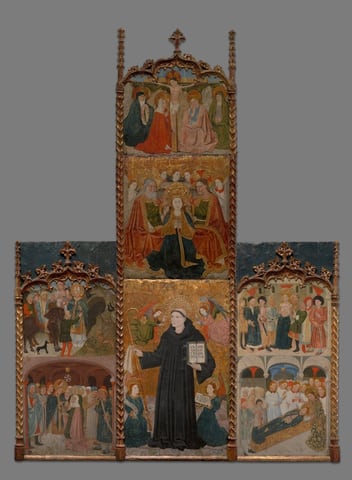
  2. A work made of tempera on panel.
    Retable of Saints Athanasius, Blaise, and AgathaMaster of Riglos, c. 1440–c. 1445Courtesy of the Art Institute of Chicago
  3. Beggars by a Door, by Mariano Fortuny, 1870
    Beggars by a DoorMariano Fortuny, 1870Courtesy of the Cleveland Museum of Art
  4. God save us from such a bitter fate; a bandit threatening a woman and a child with a knife, page 41 from the "Black Border Album" (E), by Francisco Goya, ca. 1816–20
    God save us from such a bitter fate; a bandit threatening a woman and a child with a knife, page 41 from the "Black Border Album" (E)Francisco Goya, ca. 1816–20Courtesy of The Metropolitan Museum of Art

Section 2, south wall
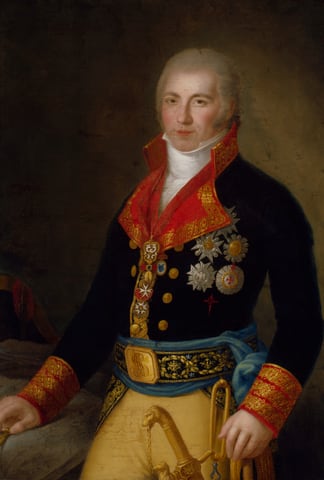
  1. A work made of oil on canvas.
    Manuel GodoyAgustin Esteve y Marqués, 1800–8Courtesy of the Art Institute of Chicago
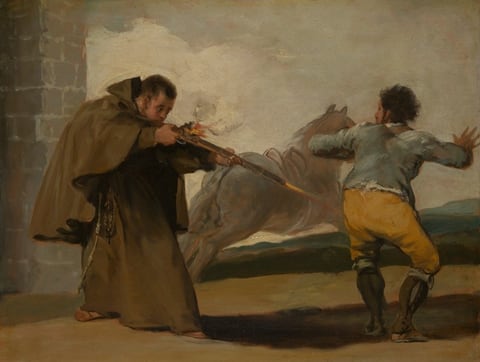
  2. Small painting, friar shoots man with yellow pants as horse runs off.
    Friar Pedro Shoots El Maragato as His Horse Runs OffFrancisco Goya, c. 1806Courtesy of the Art Institute of Chicago
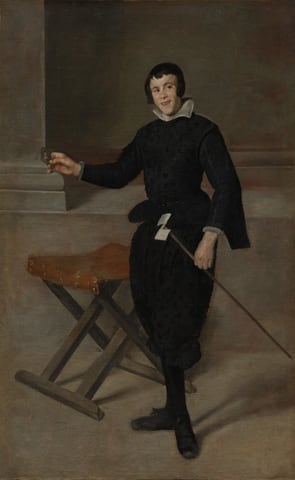
  3. Portrait of the Jester Calabazas, by Diego Velázquez, c. 1631–32
    Portrait of the Jester CalabazasDiego Velázquez, c. 1631–32Courtesy of the Cleveland Museum of Art

Section 2, north wall
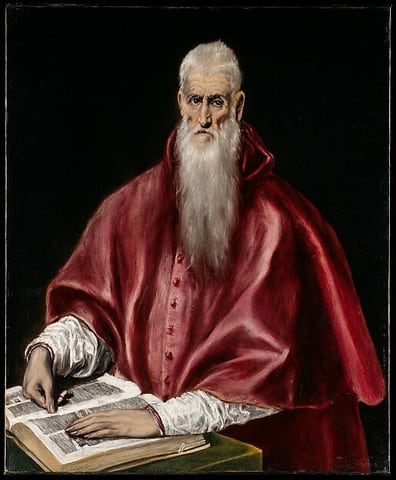
  1. Saint Jerome as Scholar, by El Greco, ca. 1610
    Saint Jerome as ScholarEl Greco, ca. 1610Courtesy of The Metropolitan Museum of Art
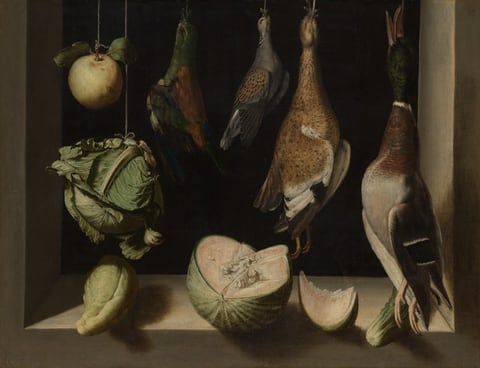
  2. Still life painting of dead waterfowl and vegetables in windowsill.
    Still Life with Game FowlJuan Sánchez Cotán, c. 1600–3Courtesy of the Art Institute of Chicago
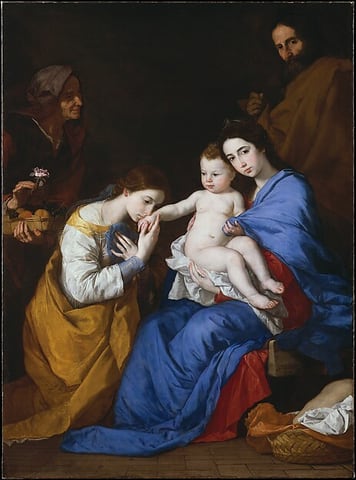
  3. The Holy Family with Saints Anne and Catherine of Alexandria, by Jusepe de Ribera (called Lo Spagnoletto), 1648
    The Holy Family with Saints Anne and Catherine of AlexandriaJusepe de Ribera (called Lo Spagnoletto), 1648Courtesy of The Metropolitan Museum of Art

Section 3, north wall
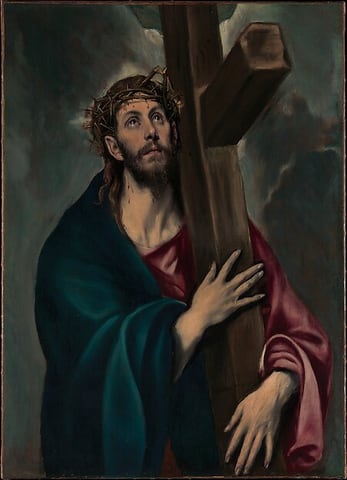
  1. Christ Carrying the Cross, by El Greco, ca. 1577–87
    Christ Carrying the CrossEl Greco, ca. 1577–87Courtesy of The Metropolitan Museum of Art
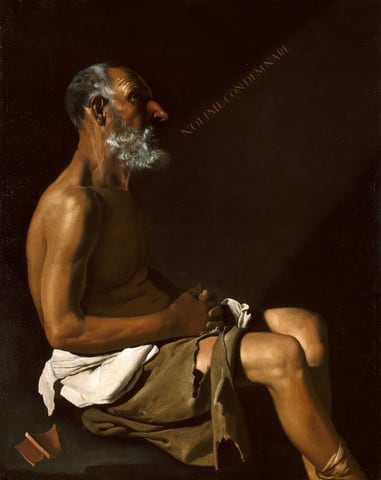
  2. A work made of oil on canvas.
    JobSpanish, c. 1618–c. 1630Courtesy of the Art Institute of Chicago
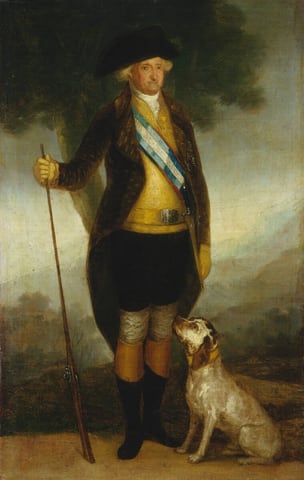
  3. This painting shows a man standing upright, his body slightly turned to the right. He has pale skin and curled white hair under a large black hat, and he wears a long brown jacket over a yellow vest with a white ruffled neck and a wide blue-and-white striped sash over his torso. His pants are black, and he wears tall black boots with brown tops. His hands are covered by yellow gloves, and he is holding a tall, thin rifle on the left, its bottom on the ground. Next to him on the right is a white dog with brown spots and large brown ears. The dog is sitting, looking up at the man. The background features an outdoor setting, with a landscape of hazy hills in shades of pale green and blue below a white and gray sky. There is a tall, dark green tree behind the man, and the ground he stands on is brown.
    Charles IV of Spain as HuntsmanUnrecorded Spanish maker, c. 1799/1800Courtesy National Gallery of Art, Washington