Japan
Works in this room
Works made in Japan, from every century in the collection.
Section 1, north wall
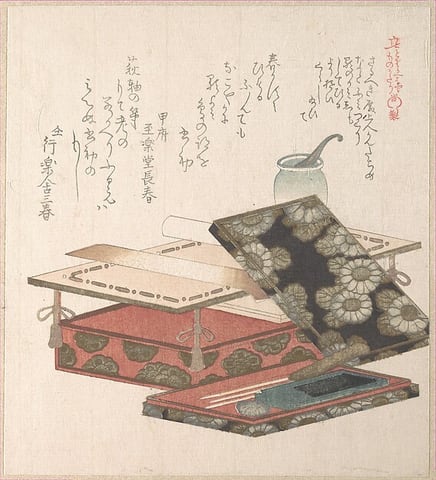
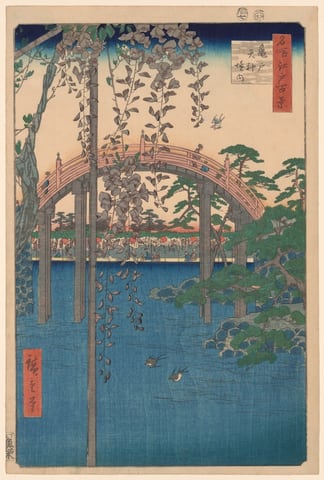
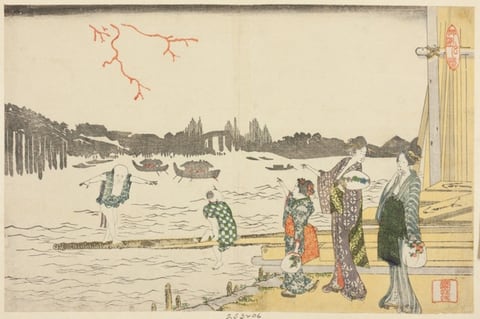
Table and Writing SetKubo Shunman, 19th centuryCourtesy of The Metropolitan Museum of Art Precincts of Kameido Tenjin Shrine (Kameido Tenjin keidai), from the series "One Hundred Famous Views of Edo (Meisho Edo hyakkei)"Utagawa Hiroshige, 1856Courtesy of the Art Institute of Chicago Women and Children Viewing the FireworksKatsushika Hokusai, c. 1798Courtesy of the Art Institute of Chicago
Section 1, south wall
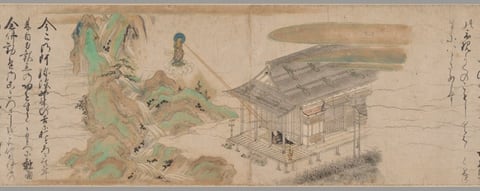
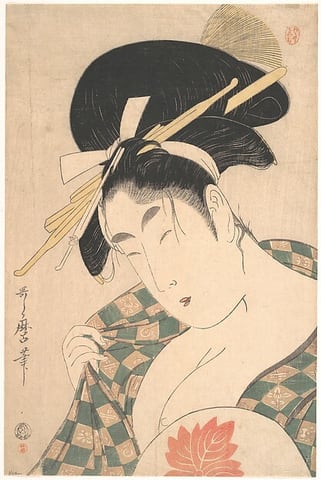
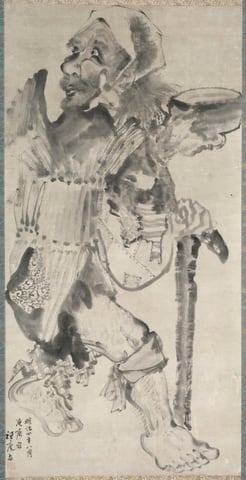
Legends of the Yūzū Nembutsu SectUnrecorded Japanese maker, Kamakura period (1185–1333), 14th centuryCourtesy of the Art Institute of Chicago A CourtesanKitagawa UtamaroCourtesy of The Metropolitan Museum of Art Beggar (Kojiki)Hirafuku Suian, 1871Courtesy of the Cleveland Museum of Art
Section 2, south wall
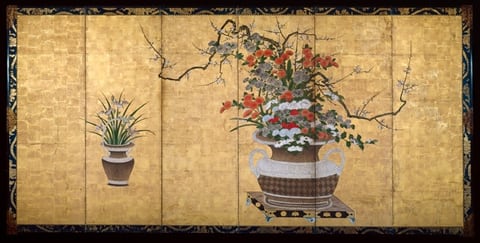
Baskets with Flowers of the Four SeasonsUnrecorded Japanese maker, 19th centuryCourtesy of the Art Institute of Chicago 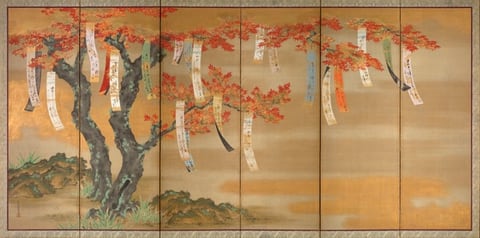
Flowering Cherry and Autumn Maples with Poem SlipsTosa Mitsuoki, 1654/81Courtesy of the Art Institute of Chicago
Section 2, north wall
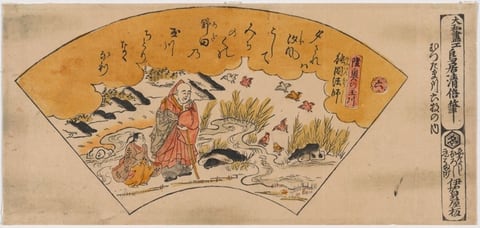
The Priest Kobo Daishi at the Tama River in Kii Province from the series The Six Tama RiversTorii Kiyomasu, c. 1725-1735Courtesy of the Art Institute of Chicago 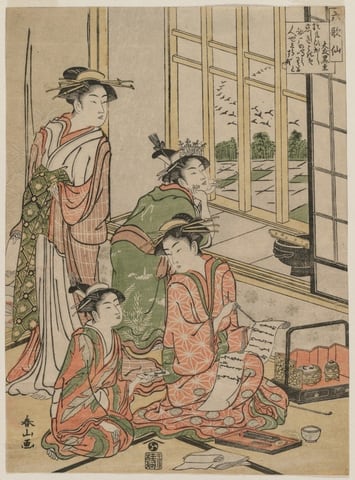
Courtesans at Leisure from the series The Six Immortal PoetsKatsukawa Shunzan, early 1780sCourtesy of the Cleveland Museum of Art 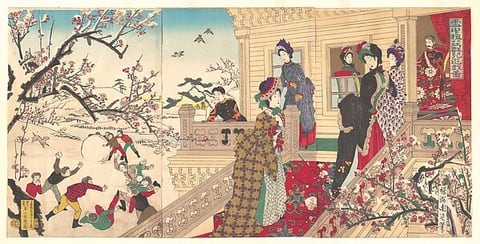
Children Playing in the Snow under Plum Trees in Bloom (Secchū baisō gunji yūgi zu)Yōshū (Hashimoto) Chikanobu, November 1887Courtesy of The Metropolitan Museum of Art 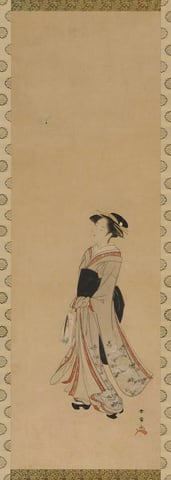
A girl playing battledore and shuttlecockKatsukawa Shunshō, 18th centuryCourtesy of the National Museum of Asian Art, Smithsonian Institution
Section 3, north wall
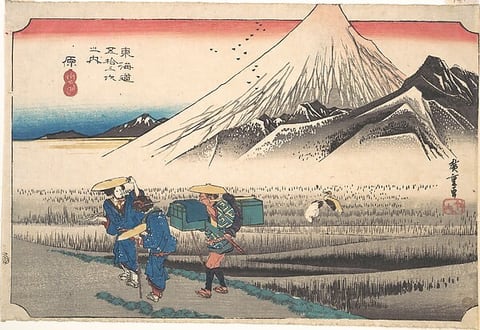
Hara: Mount Fuji in the Morning (Hara, Asa no Fuji), from the series Fifty-Three Stations of the Tōkaidō Road (Tōkaidō gojūsan tsugi), also known as the First Tōkaidō or Great TōkaidōUtagawa Hiroshige, ca. 1833–34Courtesy of The Metropolitan Museum of Art 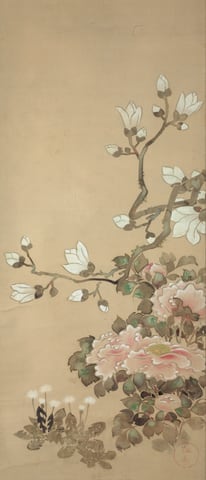
Peonies, Magnolia, and DandelionsTawaraya Sotatsu, UnknownCourtesy of the Art Institute of Chicago 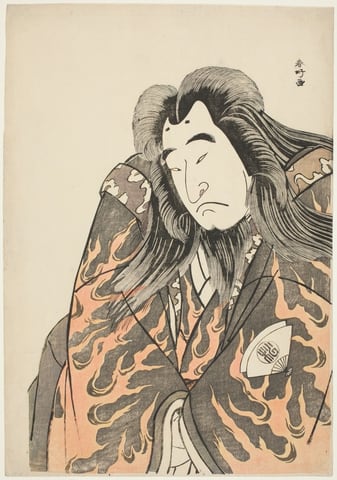
Actor Onoe Matsusuke I as Retired Emperor SutokuKatsukawa Shunkо̄, About 1780Courtesy of the Art Institute of Chicago 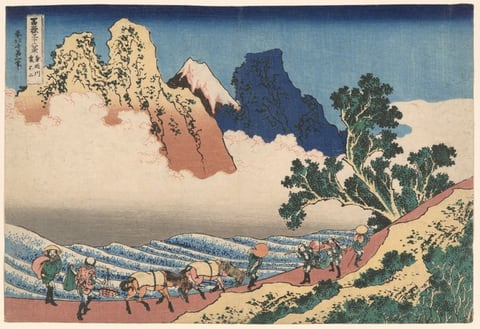
The Back of Mount Fuji Seen from Minobu River (Minobugawa Urafuji), from the series Thirty-Six Views of Mount Fuji (Fugaku sanjūrokkei)Katsushika Hokusai, 1830-33Courtesy of the Art Institute of Chicago