Floor plan

Time and placeThe 20th century

The 20th century

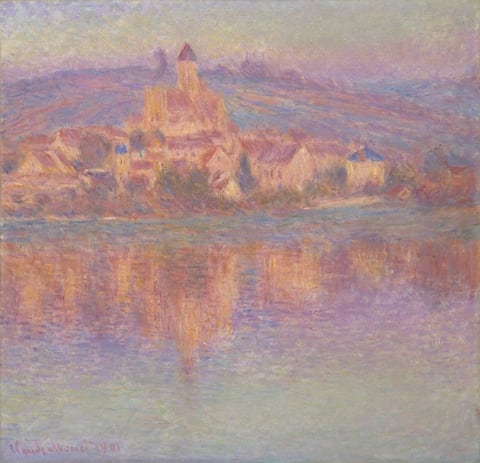
A work made of oil on canvas.
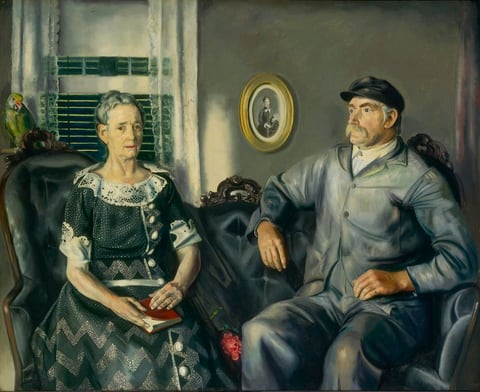
Mr. and Mrs. Phillip Wase, by George Bellows, 1924
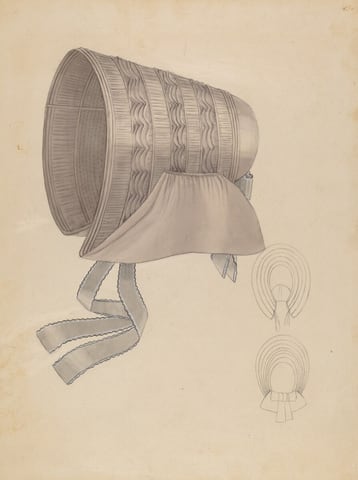
This is an image of a bonnet and its details. The drawing showcases a bonnet with intricate design and texture. The bonnet is viewed from the side, revealing its woven structure with patterns representing fabric pleats or folds. It has a long ribbon hanging from the back, depicted with flowing lines. There are also two smaller sketches showing the bonnet from the back, emphasizing its shape and construction. The background is plain.
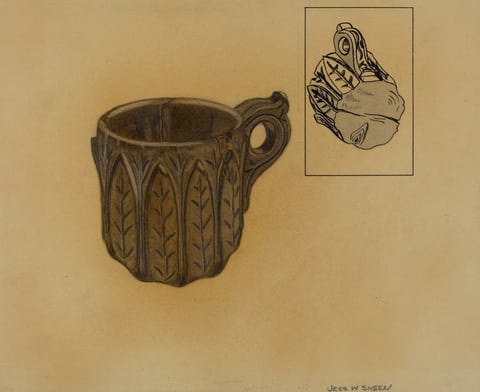
The image shows an illustration of a decorative cup with a relief design and handle to the left. The cup is brown with leaf patterns. The background is light tan. In the top right corner, there is a sketch of the cup's underside.
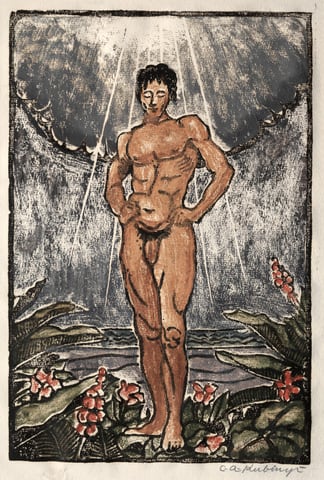
The Creation, by Kálmán Kubinyi, before 1927
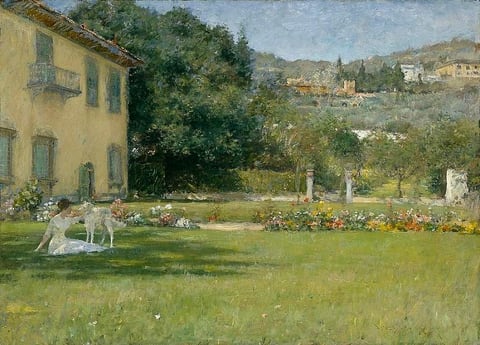
William Merritt Chase
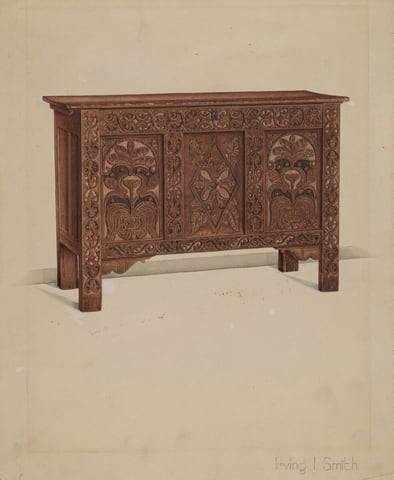
The image shows a large wooden chest with intricate floral patterns on the front panels. The color palette consists of various shades of brown, emphasizing the natural wood tones. The chest is centrally positioned on a plain background with subtle shadows indicating it is slightly elevated.

The works in this room are listed below.

Works in this room

Works made in the 20th century, anywhere in the world.

Section 1, north wall

  1. A work made of oil on canvas.
    VétheuilClaude Monet, 1901Courtesy of the Art Institute of Chicago
  2. Mr. and Mrs. Phillip Wase, by George Bellows, 1924
    Mr. and Mrs. Phillip WaseGeorge Bellows, 1924Courtesy of the Smithsonian American Art Museum
  3. This is an image of a bonnet and its details. The drawing showcases a bonnet with intricate design and texture. The bonnet is viewed from the side, revealing its woven structure with patterns representing fabric pleats or folds. It has a long ribbon hanging from the back, depicted with flowing lines. There are also two smaller sketches showing the bonnet from the back, emphasizing its shape and construction. The background is plain.
    BonnetBessie Forman, c. 1936Courtesy National Gallery of Art, Washington

Section 1, south wall

  1. The image shows an illustration of a decorative cup with a relief design and handle to the left. The cup is brown with leaf patterns. The background is light tan. In the top right corner, there is a sketch of the cup's underside.
    Wooden Shaving MugJesse W. Skeen, c. 1936Courtesy National Gallery of Art, Washington
  2. The Creation, by Kálmán Kubinyi, before 1927
    The CreationKálmán Kubinyi, before 1927Courtesy of the Cleveland Museum of Art
  3. William Merritt Chase
    Good FriendsWilliam Merritt Chase, (c. 1909)Courtesy of the Hirshhorn Museum and Sculpture Garden, Smithsonian Institution
  4. The image shows a large wooden chest with intricate floral patterns on the front panels. The color palette consists of various shades of brown, emphasizing the natural wood tones. The chest is centrally positioned on a plain background with subtle shadows indicating it is slightly elevated.
    ChestIrving I. Smith, c. 1936Courtesy National Gallery of Art, Washington

Section 2, south wall
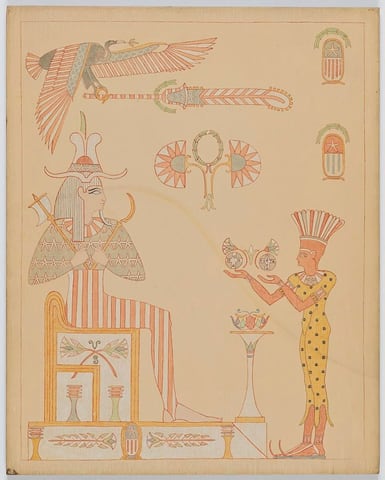
  1. THE TRIUMPH OF UNCLE SAM
    The Triumph of Uncle SamVictor Wilbour, 1917Courtesy of Cooper Hewitt, Smithsonian Design Museum
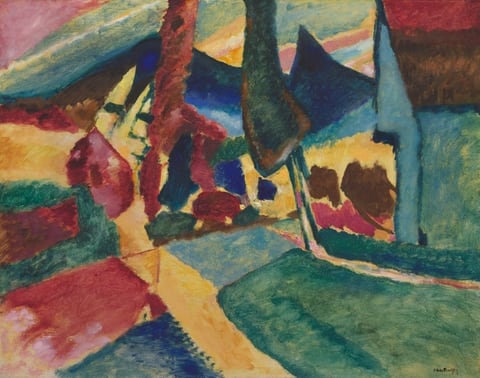
  2. Vibrant yellow, red, blue, and green painting of landscape with trees and mountains.
    Landscape with Two PoplarsVasily Kandinsky, 1912Courtesy of the Art Institute of Chicago
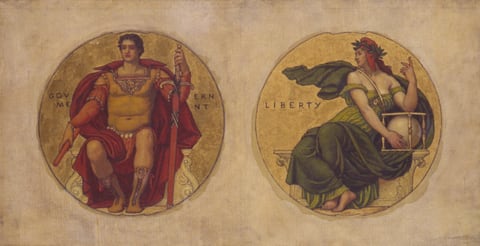
  3. Study for mosaic in the Wisconsin State Capital "Government and Liberty", by Kenyon Cox, ca. 1912
    Study for mosaic in the Wisconsin State Capital "Government and Liberty"Kenyon Cox, ca. 1912Courtesy of the Smithsonian American Art Museum
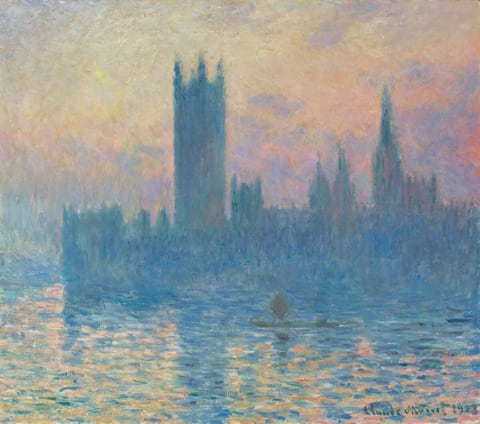
  4. A row of spire-like structures of different heights is silhouetted in azure blue against a soft pink, yellow, peach, and lavender-purple sunset and reflected in a rippling river in this nearly square landscape painting. Along the horizon, the buildings stretch from our right, almost fully across the canvas, and are painted with vertical brushstrokes in cool shades of blue. The sky behind the towers seems hazy with intermingling, pastel-colored clouds. The buildings are reflected in the river, which fills the bottom third of the painting. The surface of the water is painted with short, horizontal brushstrokes in azure blue for the buildings, and apricot, rose, and marigold orange for the sky’s reflection. A streak and smudge of olive-green paint on the water represents a person in a boat near the center of the painting. The artist signed and dated the work in the same olive color at the lower right: “Claude Monet 1903.”
    The Houses of Parliament, SunsetClaude Monet, 1903Courtesy National Gallery of Art, Washington

Section 2, north wall
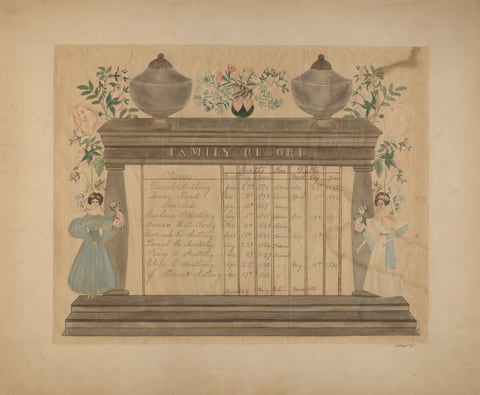
  1. This is a drawing of a decorative family record. The central feature is a structure resembling a classical monument or altar labeled "FAMILY RECORD" at the top. The structure has columns and a pediment with names and dates. Flanking the list are two figures holding flowers, dressed in long gowns of blue and white. Above the structure are two large urns and a floral arrangement with pink flowers and green foliage. The background is a soft, neutral color. Green leaves and small flowers further embellish the scene.
    Family Record of Susan B. AnthonyJohn Wilkes, c. 1937Courtesy National Gallery of Art, Washington
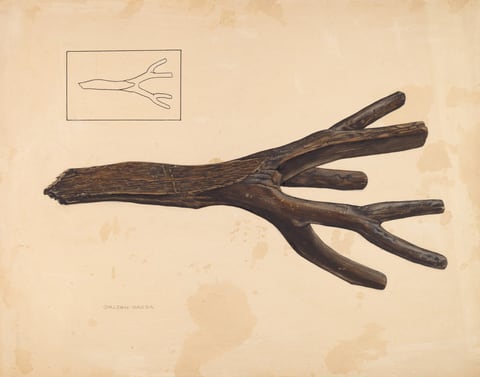
  2. A brown tree branch with several thick, bifurcated limbs is central in the image. The background is a muted beige with aged discoloration marks. The branch is oriented horizontally, with its thicker end on the left and split limbs extending to the right. In the top left corner, there is a rectangular inset with a simplified line drawing of the branch's shape.
    BootjackLloyd A. Davidson, c. 1942Courtesy National Gallery of Art, Washington
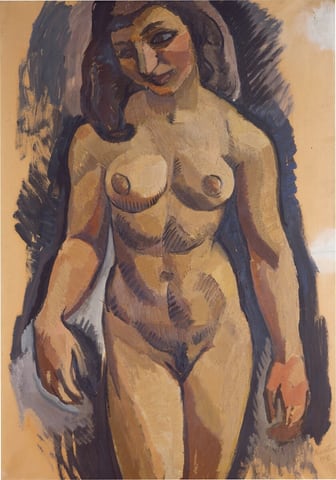
  3. The image is a painting of a woman's nude upper body extending from her head down to her hips, depicted in a standing position with her head slightly tilted to one side. Her facial features are distinct with a strong brow, prominent nose, and full lips, and her long dark hair cascades down to her shoulders. The background features abstract brushstrokes in dark blues and browns, blending into the lighter brown tone of the canvas, enhancing the figure's prominence in the composition. The woman appears naturalistic, with no jewelry or other objects visible in the painting.
    NudeRoger de La Fresnaye, 1910Courtesy National Gallery of Art, Washington

Section 3, north wall
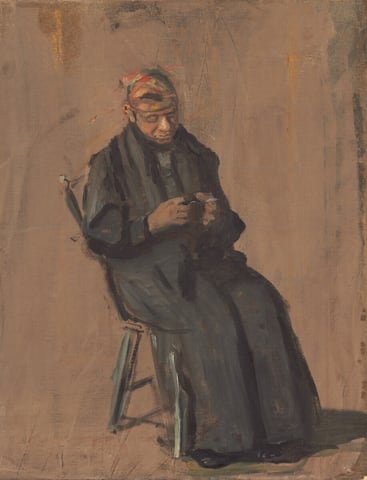
  1. This painting shows a person seated on a stool or chair, wearing a long, dark-blue robe or gown. They are slightly turned toward the right, looking downward at something they hold in their hands, and their head is covered with a cloth or cap. The background is textured with earthy tones, mostly tan with some patches of yellow ochre and gray.
    The ChaperoneThomas Eakins, c. 1908Courtesy National Gallery of Art, Washington
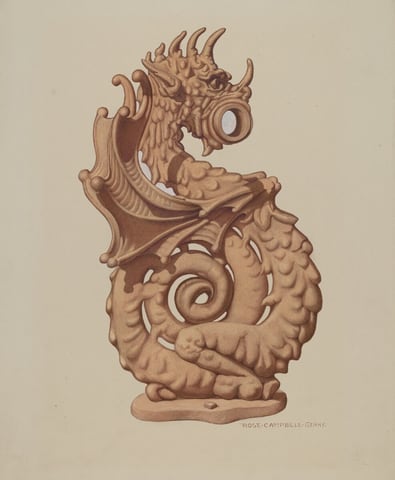
  2. The sculpture depicts a mythical creature resembling a dragon. It has a long spiraled body and an intricate head with spiky protrusions. The sculpture is a warm brown color. The dragon has bat-like wings, an open mouth, detailed texture with scales, and is standing on a small base.
    FenceRose Campbell-Gerke, c. 1941Courtesy National Gallery of Art, Washington