Floor plan

Time and placeThe 20th century

The 20th century

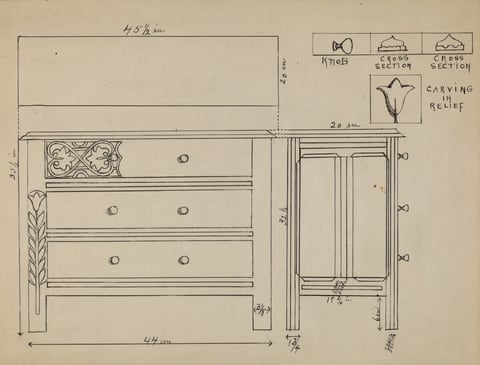
This is a drawing of a furniture design with detailed measurements and decorative elements. The drawing depicts a piece of furniture with a combination of drawers and a cabinet, shown from the front and the side. Specific measurements are provided for various parts of the furniture, such as the width, height, and depth. The design features include a decorative carving in relief on the front panel, a detailed cross-section of the knob, and ornamental patterns on the side. The drawing is technical in nature, likely intended for crafting or woodworking purposes, emphasizing the detailed aspects needed for construction.
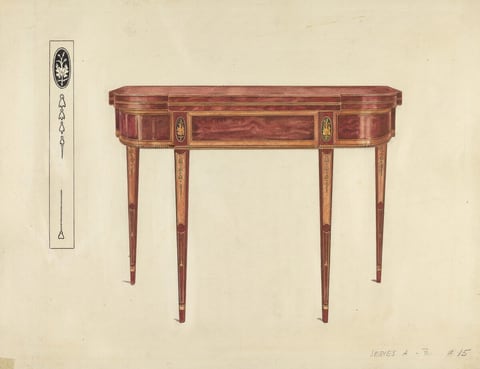
The image shows a wooden side table with a smooth surface and four tapered legs, as well as a decorative drawer front. The table has a rich brown color with gold accents and black inlay details. It is positioned towards the center of the image. On the left, there are design patterns in an oval shape and a thin line drawing. The background is off-white. There are handwritten numbers and letters at the bottom right corner of the image.
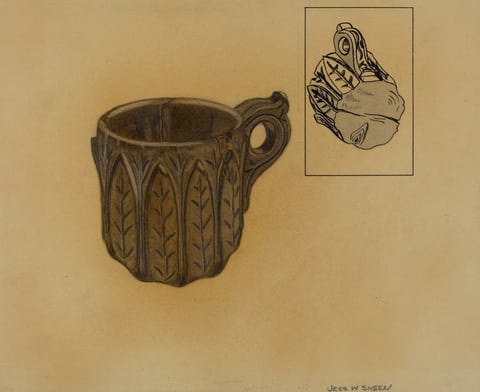
The image shows an illustration of a decorative cup with a relief design and handle to the left. The cup is brown with leaf patterns. The background is light tan. In the top right corner, there is a sketch of the cup's underside.
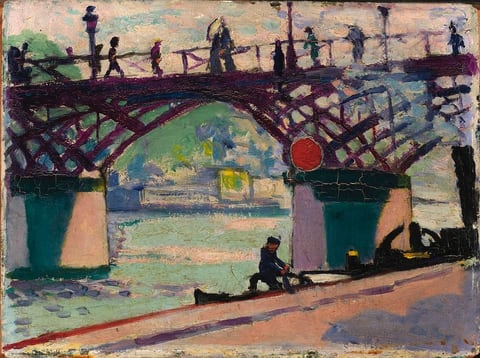
Pont des Arts, by H. Lyman Saÿen, 1908-1911
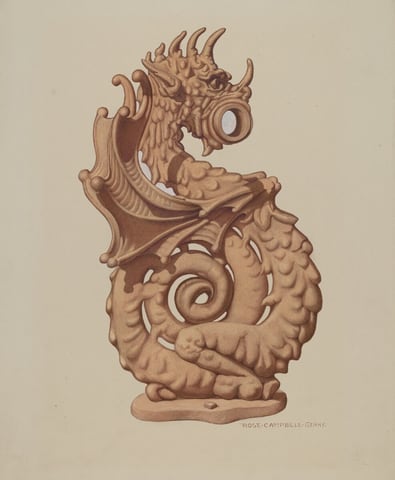
The sculpture depicts a mythical creature resembling a dragon. It has a long spiraled body and an intricate head with spiky protrusions. The sculpture is a warm brown color. The dragon has bat-like wings, an open mouth, detailed texture with scales, and is standing on a small base.
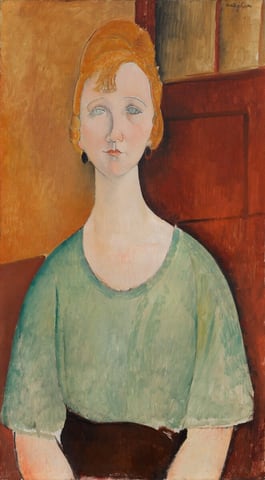
Shown from the lap up, a pale-skinned woman with an oval face and long neck sits facing us in this vertical painting. The portrait is created with areas of mottled colors outlined with black lines. Her body faces us, and she looks out with pale blue eyes, the irises almost white. Her thin eyebrows slope down the sides and her small, dark peach lips are closed. Golden-orange hair is piled atop her head and a few bangs fall onto her high forehead. Black oval earrings hang from her lobes. Her shoulders also slope unnaturally down. Her mint-green shirt has a scooped neckline and elbow-length sleeves, and it appears to be tucked into a brown skirt or pants. The background is honey orange in the top left quadrant, amber brown in the lower left, and a russet brown door with windows across the top fills the right half. The artist signed the top right corner, “modigliani.”
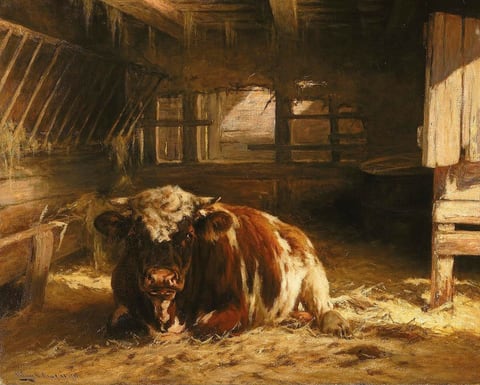
My Day at Home, by William H. Howe, 1906
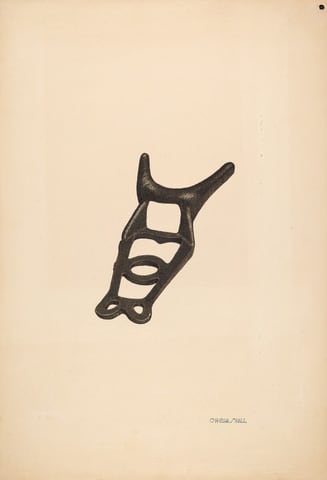
This is a drawing of an abstract shape or artifact. The image features a central black object positioned against a plain, light-colored background. The object has a slightly irregular, elongated triangular form with rounded edges and contours. It includes a series of geometric holes and protrusions. The subtle shadowing suggests a three-dimensional form, yet the drawing maintains a simplicity that emphasizes the object's unique contours and cutouts.

The works in this room are listed below.

Works in this room

Works made in the 20th century, anywhere in the world.

Section 1, north wall

  1. This is a drawing of a furniture design with detailed measurements and decorative elements. The drawing depicts a piece of furniture with a combination of drawers and a cabinet, shown from the front and the side. Specific measurements are provided for various parts of the furniture, such as the width, height, and depth. The design features include a decorative carving in relief on the front panel, a detailed cross-section of the knob, and ornamental patterns on the side. The drawing is technical in nature, likely intended for crafting or woodworking purposes, emphasizing the detailed aspects needed for construction.
    Chest of DrawersFlorence Neal, 1935/1942Courtesy National Gallery of Art, Washington
  2. The image shows a wooden side table with a smooth surface and four tapered legs, as well as a decorative drawer front. The table has a rich brown color with gold accents and black inlay details. It is positioned towards the center of the image. On the left, there are design patterns in an oval shape and a thin line drawing. The background is off-white. There are handwritten numbers and letters at the bottom right corner of the image.
    Card TableFlorence Choate, c. 1953Courtesy National Gallery of Art, Washington
  3. The image shows an illustration of a decorative cup with a relief design and handle to the left. The cup is brown with leaf patterns. The background is light tan. In the top right corner, there is a sketch of the cup's underside.
    Wooden Shaving MugJesse W. Skeen, c. 1936Courtesy National Gallery of Art, Washington
  4. Pont des Arts, by H. Lyman Saÿen, 1908-1911
    Pont des ArtsH. Lyman Saÿen, 1908-1911Courtesy of the Smithsonian American Art Museum

Section 1, south wall

  1. The sculpture depicts a mythical creature resembling a dragon. It has a long spiraled body and an intricate head with spiky protrusions. The sculpture is a warm brown color. The dragon has bat-like wings, an open mouth, detailed texture with scales, and is standing on a small base.
    FenceRose Campbell-Gerke, c. 1941Courtesy National Gallery of Art, Washington
  2. Shown from the lap up, a pale-skinned woman with an oval face and long neck sits facing us in this vertical painting. The portrait is created with areas of mottled colors outlined with black lines. Her body faces us, and she looks out with pale blue eyes, the irises almost white. Her thin eyebrows slope down the sides and her small, dark peach lips are closed. Golden-orange hair is piled atop her head and a few bangs fall onto her high forehead. Black oval earrings hang from her lobes. Her shoulders also slope unnaturally down. Her mint-green shirt has a scooped neckline and elbow-length sleeves, and it appears to be tucked into a brown skirt or pants. The background is honey orange in the top left quadrant, amber brown in the lower left, and a russet brown door with windows across the top fills the right half. The artist signed the top right corner, “modigliani.”
    Girl in a Green BlouseAmedeo Modigliani, 1917Courtesy National Gallery of Art, Washington
  3. My Day at Home, by William H. Howe, 1906
    My Day at HomeWilliam H. Howe, 1906Courtesy of the Smithsonian American Art Museum
  4. This is a drawing of an abstract shape or artifact. The image features a central black object positioned against a plain, light-colored background. The object has a slightly irregular, elongated triangular form with rounded edges and contours. It includes a series of geometric holes and protrusions. The subtle shadowing suggests a three-dimensional form, yet the drawing maintains a simplicity that emphasizes the object's unique contours and cutouts.
    BootjackClaude Marshall, c. 1940Courtesy National Gallery of Art, Washington

Section 2, south wall
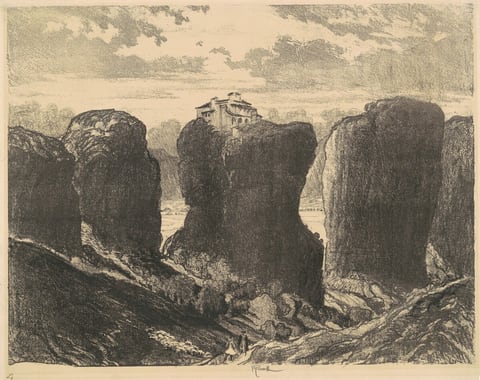
  1. The image depicts a landscape with towering rock formations dominating the scene. The ground is rugged and textured, leading the eye towards the rock pillars in the center. A structure or building is perched atop one of these rocks. The background shows the horizon above the structure, with clouds and sky stretching out beyond. The artwork features detailed brushstrokes adding texture to the rocks. The color palette is monochromatic with varying shades of charcoal or ink, emphasizing the contrast between the rocks and the sky.
    The Cliffs of the TrinityJoseph Pennell, 1913Courtesy National Gallery of Art, Washington
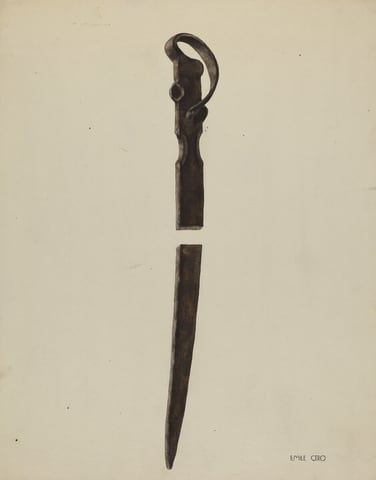
  2. The image shows a dark metal object with two parts: a handle and a blade. The color palette consists of shades of dark brown on a light beige background. The handle is located at the top center, and the blade portion is positioned below it, both aligned vertically in the center of the frame.
    SpitEmile Cero, c. 1938Courtesy National Gallery of Art, Washington
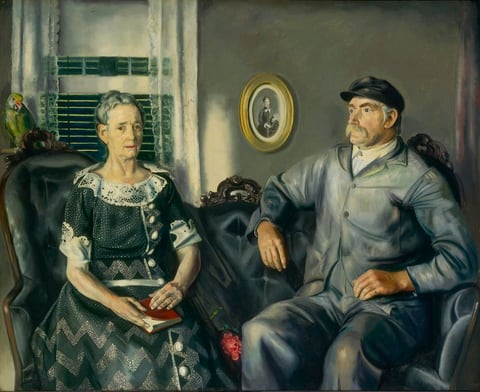
  3. Mr. and Mrs. Phillip Wase, by George Bellows, 1924
    Mr. and Mrs. Phillip WaseGeorge Bellows, 1924Courtesy of the Smithsonian American Art Museum

Section 2, north wall
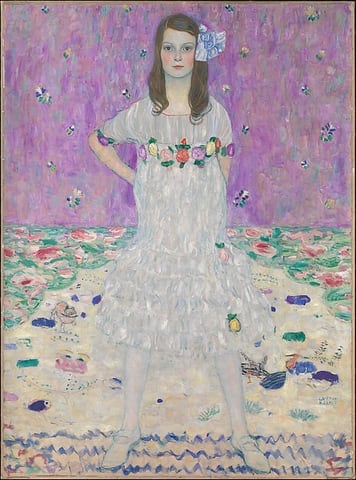
  1. Mäda Primavesi (1903–2000), by Gustav Klimt, 1912–13
    Mäda Primavesi (1903–2000)Gustav Klimt, 1912–13Courtesy of The Metropolitan Museum of Art
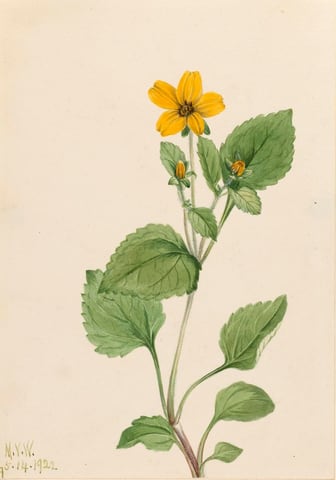
  2. Golden Star (Chrysogonum virginianum), by Mary Vaux Walcott, 1922
    Golden Star (Chrysogonum virginianum)Mary Vaux Walcott, 1922Courtesy of the Smithsonian American Art Museum
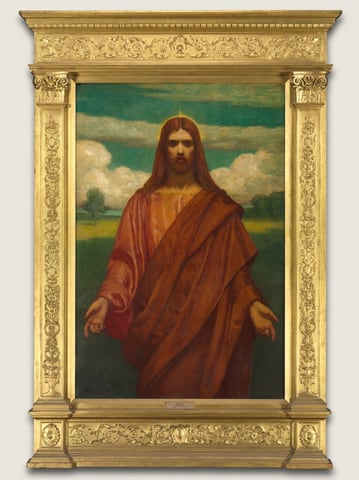
  3. Christ, by Kenyon Cox, 1905
    ChristKenyon Cox, 1905Courtesy of the Cleveland Museum of Art

Section 3, north wall
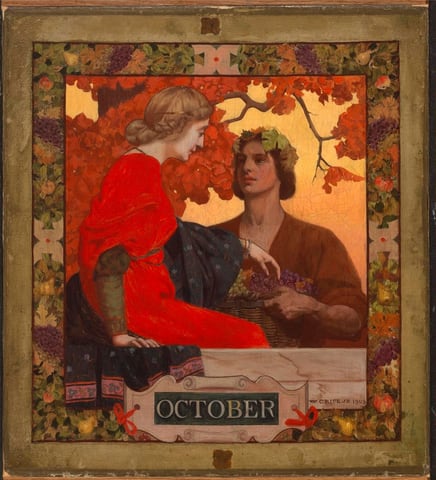
  1. October (cover illustration for Harper's Magazine), by William Clarke Rice, 1903
    October (cover illustration for Harper's Magazine)William Clarke Rice, 1903Courtesy of the Smithsonian American Art Museum
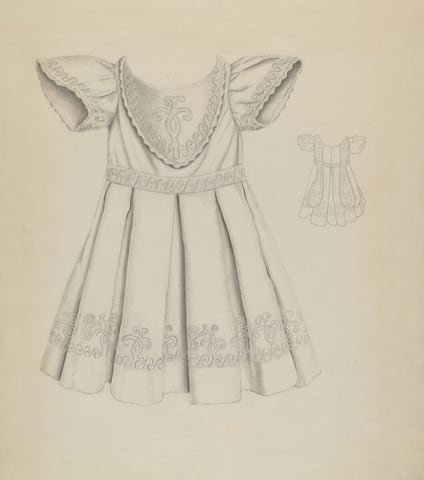
  2. The image shows a detailed sketch of a dress with short, puffed sleeves and a decorative neckline. There is a smaller sketch of the same dress to the right. The color palette is monochrome gray scale, with darker gray outlines and details against a light gray background. The main dress is centered, with the smaller sketch positioned to the right.
    Child's DressRay Price, c. 1937Courtesy National Gallery of Art, Washington