Floor plan

Time and placeThe 20th century

The 20th century

The image is a painting of a woman's nude upper body extending from her head down to her hips, depicted in a standing position with her head slightly tilted to one side. Her facial features are distinct with a strong brow, prominent nose, and full lips, and her long dark hair cascades down to her shoulders. The background features abstract brushstrokes in dark blues and browns, blending into the lighter brown tone of the canvas, enhancing the figure's prominence in the composition. The woman appears naturalistic, with no jewelry or other objects visible in the painting.
The image shows a dark metal object with two parts: a handle and a blade. The color palette consists of shades of dark brown on a light beige background. The handle is located at the top center, and the blade portion is positioned below it, both aligned vertically in the center of the frame.
The image displays a full-body illustration of a person standing upright. They have a delicate and round face with rosy cheeks and small, pink lips. Their eyes are large and expressive, and they have light-colored hair peeking out from under a bonnet. The person's attire consists of a long, dark skirt and a light-colored shawl draped over their shoulders. They wear a hooded cloak tied with a bow at the neck, and hold a small bag in their left hand. The background is plain with a light-colored texture. The artwork is a painted illustration with visible fine lines and shading to enhance details of the clothing and facial features.
The image shows a wooden stool with a semi-circular seat on a light beige background. The stool has four slim legs and a primarily brown color.
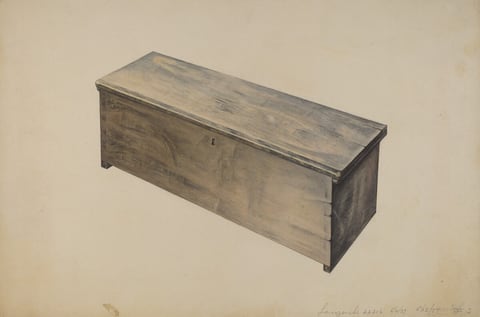
The image shows a large wooden chest with a rectangular design and a keyhole on its front panel. The chest has a weathered look in muted browns and grays. It is positioned in the center with its top, front, and side panels visible. The background is plain and light in color.
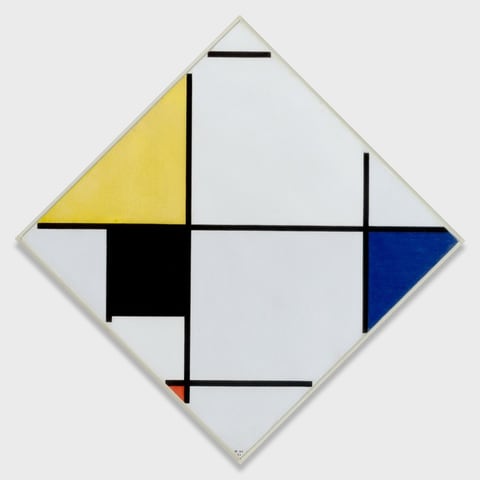
A square white tile, rotated 90 degrees, crossed by black lines intersecting at 90-degree angles. A few of the shapes thus formed—some partial squares, some rectangles—are colored in a single shade of yellow, blue, black, or red.
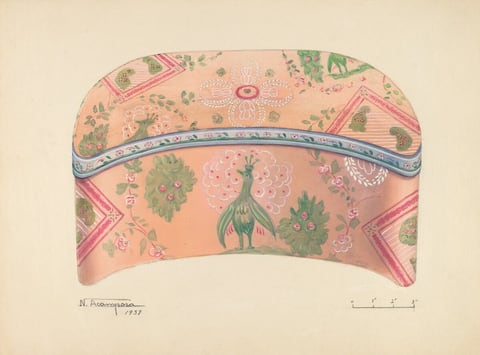
The image shows a decorative curved object with intricate patterns. There is a large green peacock motif in the center, surrounded by floral and geometric patterns. The color palette includes soft pinks, greens, and blue accents outlining the curve of the object. The object is placed on a plain light background.
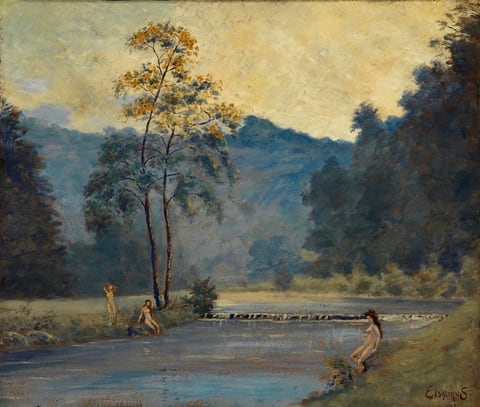
Three Girls and River, by Louis M. Eilshemius, 1907

The works in this room are listed below.

Works in this room

Works made in the 20th century, anywhere in the world.

Section 1, north wall

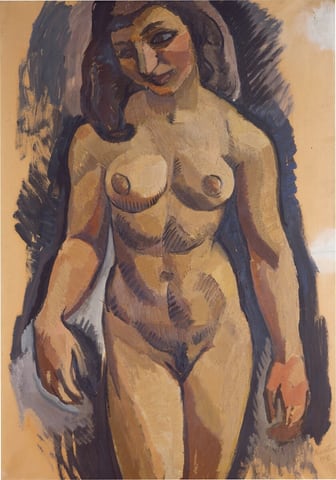
  1. The image is a painting of a woman's nude upper body extending from her head down to her hips, depicted in a standing position with her head slightly tilted to one side. Her facial features are distinct with a strong brow, prominent nose, and full lips, and her long dark hair cascades down to her shoulders. The background features abstract brushstrokes in dark blues and browns, blending into the lighter brown tone of the canvas, enhancing the figure's prominence in the composition. The woman appears naturalistic, with no jewelry or other objects visible in the painting.
    NudeRoger de La Fresnaye, 1910Courtesy National Gallery of Art, Washington
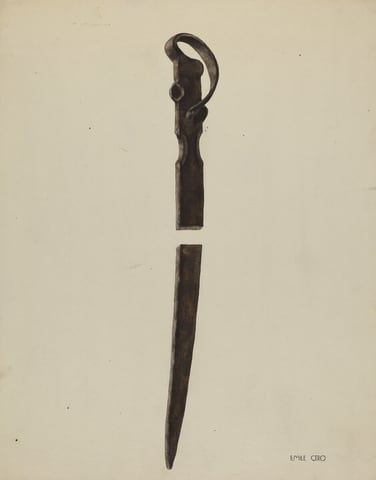
  2. The image shows a dark metal object with two parts: a handle and a blade. The color palette consists of shades of dark brown on a light beige background. The handle is located at the top center, and the blade portion is positioned below it, both aligned vertically in the center of the frame.
    SpitEmile Cero, c. 1938Courtesy National Gallery of Art, Washington
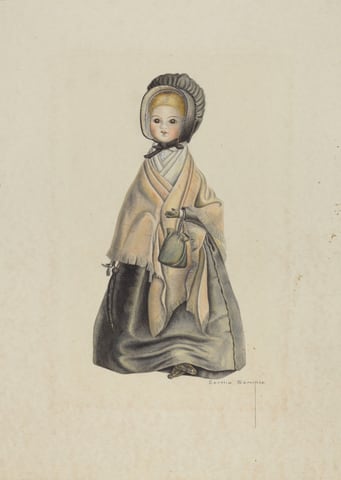
  3. The image displays a full-body illustration of a person standing upright. They have a delicate and round face with rosy cheeks and small, pink lips. Their eyes are large and expressive, and they have light-colored hair peeking out from under a bonnet. The person's attire consists of a long, dark skirt and a light-colored shawl draped over their shoulders. They wear a hooded cloak tied with a bow at the neck, and hold a small bag in their left hand. The background is plain with a light-colored texture. The artwork is a painted illustration with visible fine lines and shading to enhance details of the clothing and facial features.
    Quaker DollBertha Semple, 1935/1942Courtesy National Gallery of Art, Washington
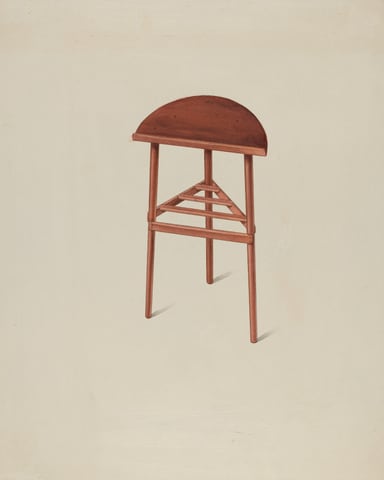
  4. The image shows a wooden stool with a semi-circular seat on a light beige background. The stool has four slim legs and a primarily brown color.
    Shaker Music RackAlfred H. Smith, c. 1936Courtesy National Gallery of Art, Washington

Section 1, south wall

  1. The image shows a large wooden chest with a rectangular design and a keyhole on its front panel. The chest has a weathered look in muted browns and grays. It is positioned in the center with its top, front, and side panels visible. The background is plain and light in color.
    Utility ChestHenry Tomaszewski, 1937Courtesy National Gallery of Art, Washington
  2. A square white tile, rotated 90 degrees, crossed by black lines intersecting at 90-degree angles. A few of the shapes thus formed—some partial squares, some rectangles—are colored in a single shade of yellow, blue, black, or red.
    Lozenge Composition with Yellow, Black, Blue, Red, and GrayPiet Mondrian, 1921Courtesy of the Art Institute of Chicago
  3. The image shows a decorative curved object with intricate patterns. There is a large green peacock motif in the center, surrounded by floral and geometric patterns. The color palette includes soft pinks, greens, and blue accents outlining the curve of the object. The object is placed on a plain light background.
    BandboxNicholas Acampora, 1937Courtesy National Gallery of Art, Washington
  4. Three Girls and River, by Louis M. Eilshemius, 1907
    Three Girls and RiverLouis M. Eilshemius, 1907Courtesy of the Smithsonian American Art Museum

Section 2, south wall
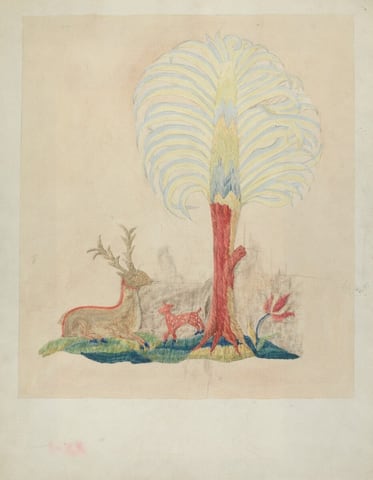
  1. This is a painting of two deer under a tree. The larger deer has antlers and is resting next to a smaller deer. They are depicted with red and brown strokes. The background shows a patch of earth and grass in green and blue. Beside the deer is a tree with colorful leaves or a feather-like structure and a red trunk. A pink flower is near the tree's base. The background is neutral. This painting is in the style of Henri Rousseau.
    Crewel EmbroideryHelen Dana, 1935/1942Courtesy National Gallery of Art, Washington
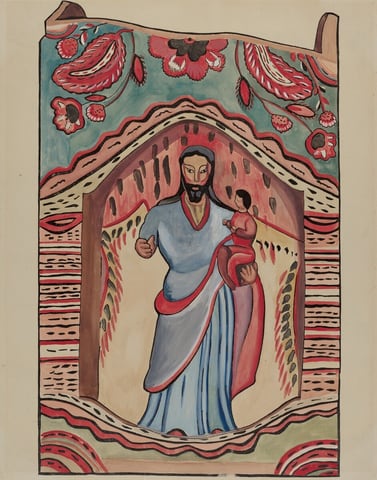
  2. This is a painting of stylized figures within an ornate frame. The artwork features two central figures that are reminiscent of a traditional religious iconography but rendered in a simplified and almost cartoonish form. The larger figure is draped in blue with red accents, while a smaller figure is held in one hand, enrobed in red. The background is decorated with a variety of patterns including an arch-like structure with wavy designs and lines, all outlining the central figures. The outer sections feature floral patterns with bold, contrasting colors of red, black, and teal. The use of thick outlines and vivid colors suggests a playful and decorative approach to the portrayal of the figures, drawing inspiration possibly from folk art traditions.
    St. JosephE. Boyd, 1936Courtesy National Gallery of Art, Washington
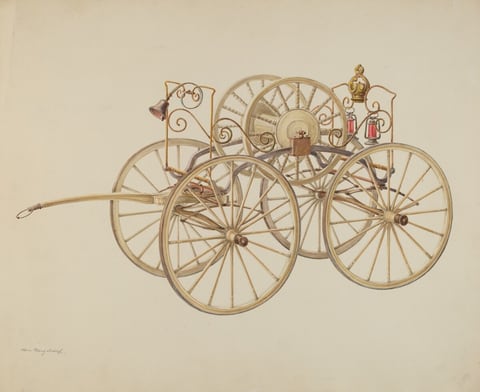
  3. This is a painting of a vintage fire hose cart. It is intricately designed, featuring a four-wheeled cart meant to hold a coiled fire hose. The painting showcases the cart's wooden spoked wheels and hose mechanism, as well as ornate wrought iron designs and a brass figure. A bell is depicted above one wheel. The painting captures the craftsmanship of the era and is reminiscent of the style of Charles Demuth, known for his attention to detail and focus on industrial and architectural elements.
    Fire Hose ReelHans Mangelsdorf, c. 1938Courtesy National Gallery of Art, Washington
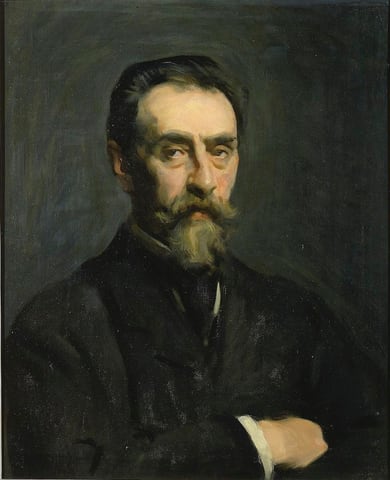
  4. Portrait of William E. Norton, by William Penhallow Henderson, 1901
    Portrait of William E. NortonWilliam Penhallow Henderson, 1901Courtesy of the Smithsonian American Art Museum

Section 2, north wall
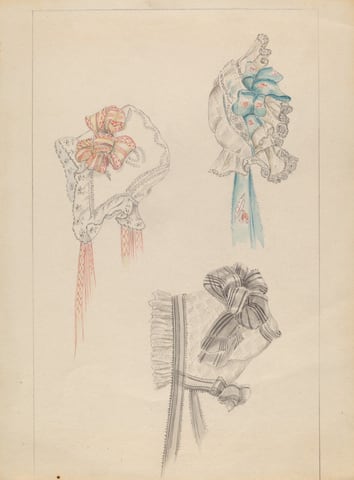
  1. This is a drawing of three decorative bonnets. The drawing features three different hat designs, each embellished with lace, ribbon, and bow details. The upper left bonnet is adorned with pink hues and intricate lace, displaying a floral-like bow. The top right bonnet showcases a turquoise ribbon and bow, surrounded by soft lace. The lower bonnet is in grayscale, with shadowing for dimension, featuring a checkered ribbon. Each hat is detailed with line work and shading, conveying elegance.
    CapsUnrecorded American maker, 1935/1942Courtesy National Gallery of Art, Washington
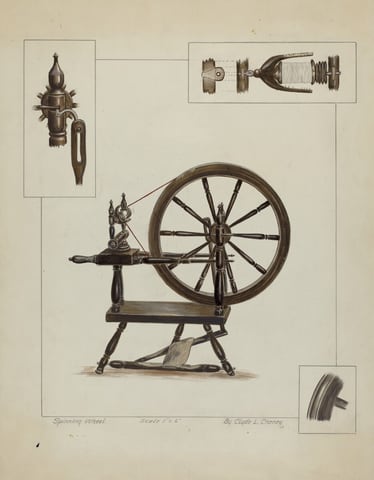
  2. The image shows a spinning wheel with intricate details, surrounded by smaller insets highlighting specific components. The color palette consists of muted browns, greens, and beiges. The spinning wheel is positioned in the center, with its circular wheel on the right and the spinning mechanism on the left. Detailed insets are placed around the spinning wheel, each showing different mechanical elements.
    Spinning WheelClyde L. Cheney, 1935/1942Courtesy National Gallery of Art, Washington
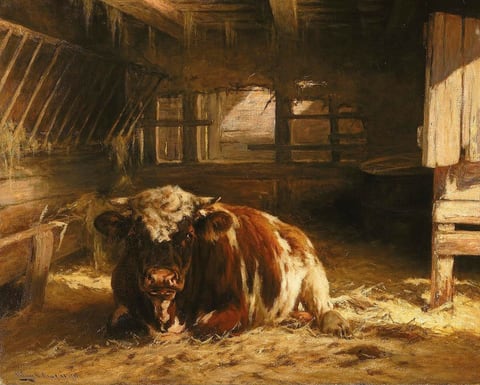
  3. My Day at Home, by William H. Howe, 1906
    My Day at HomeWilliam H. Howe, 1906Courtesy of the Smithsonian American Art Museum
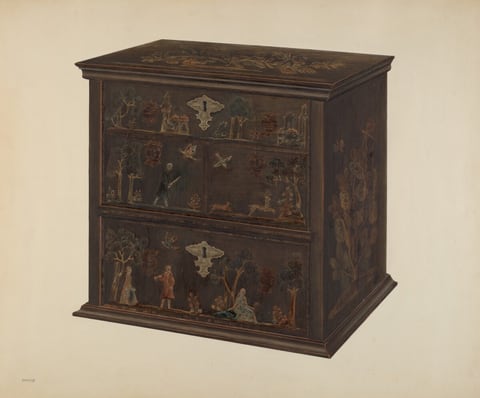
  4. This is a painting of a decorative wooden chest. The chest has intricate designs, such as painted figures, trees, and animals, creating a narrative scene on its front side, and floral motifs on its sides. The craftsmanship suggests it is an ornate object, potentially used for storage or as an ornamental piece. The painting focuses on the texture and details of the wood and decoration with precision, in a traditional arts and crafts or folk art style, emphasizing fine detail and storytelling through imagery on functional furniture.
    Jewel CabinetCharles Henning, c. 1939Courtesy National Gallery of Art, Washington