Floor plan

Time and placeThe 20th century

The 20th century

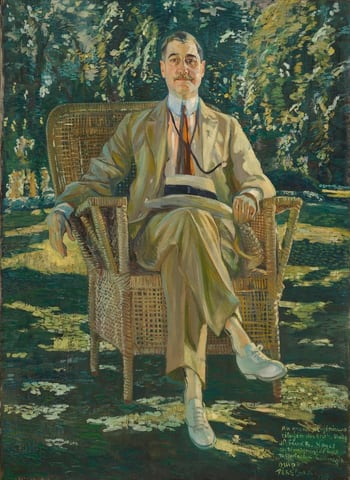
Artist: Ossip Perelma, Sitter: Frank Brett Noyes, Current owner: National Portrait Gallery, Smithsonian Institution
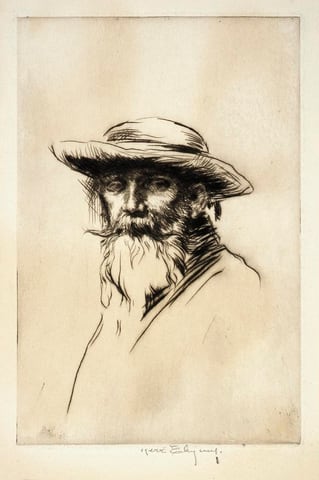
Head of an Old Man, by Kerr Eby, ca. 1918
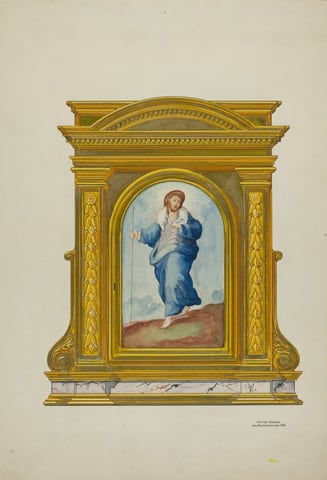
The image shows a painted artwork within an ornate frame. The artwork features a figure standing with one hand raised. The figure has long hair and a beard, and wears flowing blue and white garments. The background shows an earthy surface and a sky. The frame is gold and elaborately designed. The scene is set against a blank, light-colored background.
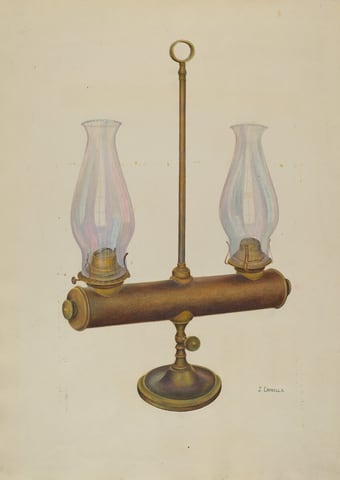
The image shows an antique double kerosene lamp with ornate glass chimneys set atop a horizontal cylindrical base with a central vertical support ending in a circular handle. The base and lamp parts have a bronze-like color with a textured appearance, and the glass chimneys are primarily clear but show hints of colorful reflections. Positioned centrally in the image, the lamp stands upright with the two chimneys equally spaced on either side of the vertical support, which is topped by a circular loop handle, while the signature "J. Cannella" is visible towards the lower right side of the image.
The image depicts two individuals from the waist up. The person on the left has a round face and is slightly behind the person on the right who has a slightly elongated face. Both individuals appear to be seated and have short, neatly combed hair. They have neutral facial expressions and their features are indistinct. The person on the left wears a suit with a bow tie, while the person on the right is dressed in clothing with detailed patterns and holds a flower-like object in their left hand. The background shows simple line sketches that suggest an interior setting.
The Repast of the Lion, by Henri Rousseau, ca. 1907
Artist: Philip Alexius de László, Sitter: Clara Margaret Cook Kellogg, Current owner: National Portrait Gallery, Smithsonian Institution
The image shows a person standing upright. They have a round face with simple facial features, wearing a hat with a red flower and dark ribbon. Their outfit includes a belted dress or coat, pleated texture, a cape, and arm coverings. The person is holding a matching umbrella in their right hand. The background is plain and light tan.

The works in this room are listed below.

Works in this room

Works made in the 20th century, anywhere in the world.

Section 1, north wall

  1. Artist: Ossip Perelma, Sitter: Frank Brett Noyes, Current owner: National Portrait Gallery, Smithsonian Institution
    Frank Brett NoyesOssip Perelma, 1917Courtesy of the National Portrait Gallery, Smithsonian Institution
  2. Head of an Old Man, by Kerr Eby, ca. 1918
    Head of an Old ManKerr Eby, ca. 1918Courtesy of the Smithsonian American Art Museum
  3. The image shows a painted artwork within an ornate frame. The artwork features a figure standing with one hand raised. The figure has long hair and a beard, and wears flowing blue and white garments. The background shows an earthy surface and a sky. The frame is gold and elaborately designed. The scene is set against a blank, light-colored background.
    Original Tabernacle, for Communion VesselsDayton Brown, 1936Courtesy National Gallery of Art, Washington
  4. The image shows an antique double kerosene lamp with ornate glass chimneys set atop a horizontal cylindrical base with a central vertical support ending in a circular handle. The base and lamp parts have a bronze-like color with a textured appearance, and the glass chimneys are primarily clear but show hints of colorful reflections. Positioned centrally in the image, the lamp stands upright with the two chimneys equally spaced on either side of the vertical support, which is topped by a circular loop handle, while the signature "J. Cannella" is visible towards the lower right side of the image.
    Reading LampJoseph Cannella, 1941Courtesy National Gallery of Art, Washington

Section 1, south wall

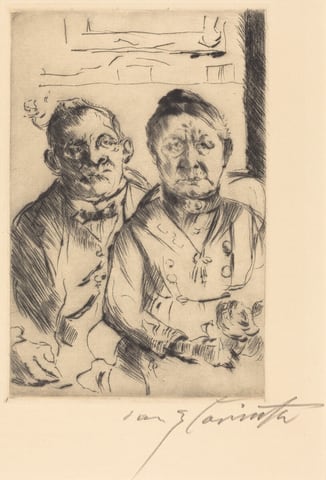
  1. The image depicts two individuals from the waist up. The person on the left has a round face and is slightly behind the person on the right who has a slightly elongated face. Both individuals appear to be seated and have short, neatly combed hair. They have neutral facial expressions and their features are indistinct. The person on the left wears a suit with a bow tie, while the person on the right is dressed in clothing with detailed patterns and holds a flower-like object in their left hand. The background shows simple line sketches that suggest an interior setting.
    Ostpreussisches Ehepaar (Couple from East Prussia)Lovis Corinth, 1916Courtesy National Gallery of Art, Washington
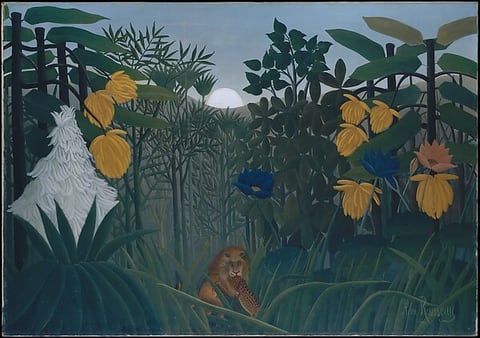
  2. The Repast of the Lion, by Henri Rousseau, ca. 1907
    The Repast of the LionHenri Rousseau, ca. 1907Courtesy of The Metropolitan Museum of Art
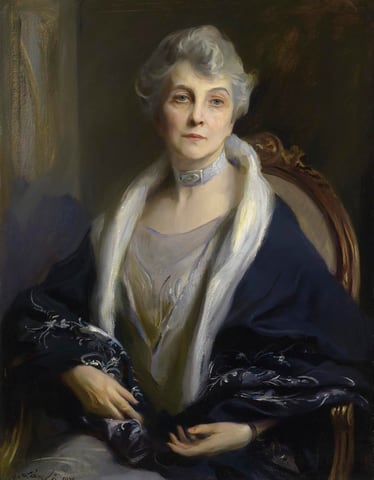
  3. Artist: Philip Alexius de László, Sitter: Clara Margaret Cook Kellogg, Current owner: National Portrait Gallery, Smithsonian Institution
    Clara Cook KelloggPhilip Alexius de László, 1929Courtesy of the National Portrait Gallery, Smithsonian Institution
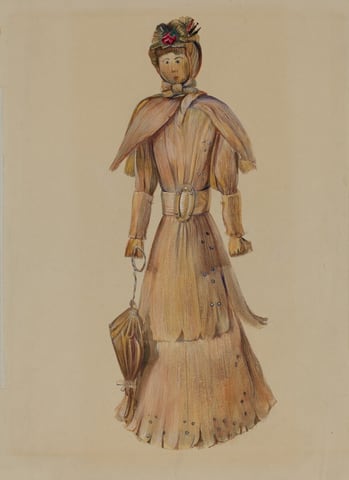
  4. The image shows a person standing upright. They have a round face with simple facial features, wearing a hat with a red flower and dark ribbon. Their outfit includes a belted dress or coat, pleated texture, a cape, and arm coverings. The person is holding a matching umbrella in their right hand. The background is plain and light tan.
    Corn Husk DollMina Lowry, c. 1936Courtesy National Gallery of Art, Washington

Section 2, south wall
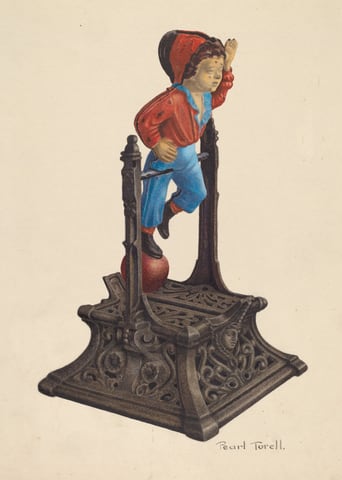
  1. The sculpture depicts a young boy dressed in a bright red coat, blue shirt, and blue pants, with black shoes. He is wearing a black hat with a red rim and has curly hair. The boy is balanced on one foot atop a red ball, with one leg lifted behind him and one hand held high above his head. The sculpture is made of painted, cast metal with intricate designs and textures. The boy stands on an ornately decorated dark pedestal.
    Toy BankPearl Torell, c. 1939Courtesy National Gallery of Art, Washington
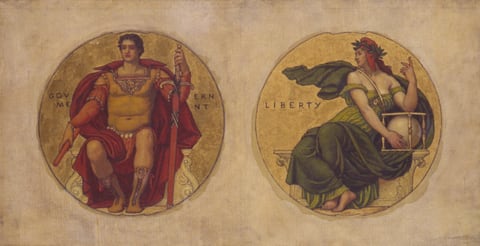
  2. Study for mosaic in the Wisconsin State Capital "Government and Liberty", by Kenyon Cox, ca. 1912
    Study for mosaic in the Wisconsin State Capital "Government and Liberty"Kenyon Cox, ca. 1912Courtesy of the Smithsonian American Art Museum
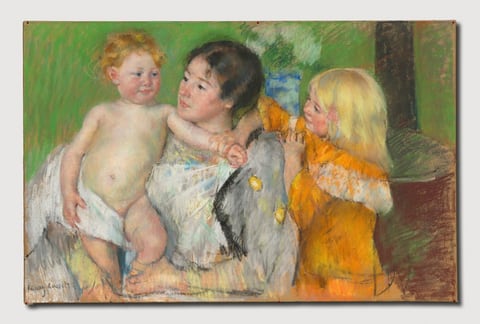
  3. After the Bath, by Mary Cassatt, 1901
    After the BathMary Cassatt, 1901Courtesy of the Cleveland Museum of Art
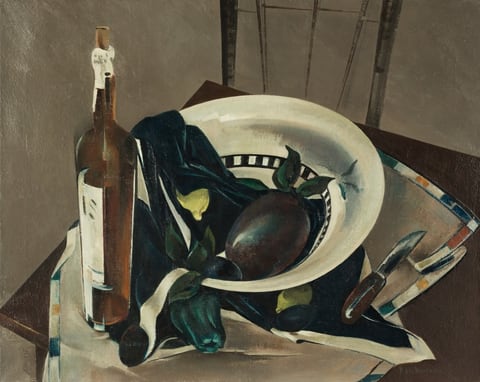
  4. Still Life, by Preston Dickinson, c. 1924
    Still LifePreston Dickinson, c. 1924Courtesy of the Cleveland Museum of Art

Section 2, north wall
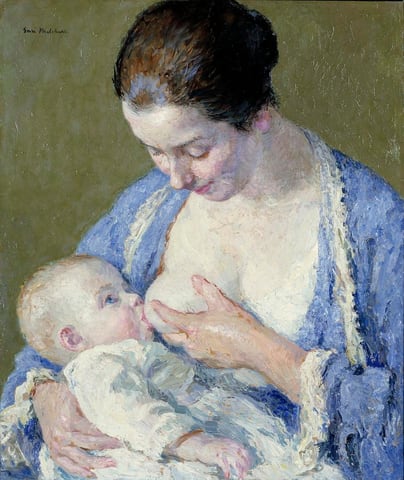
  1. Mother and Child, by Gari Melchers, ca. 1920
    Mother and ChildGari Melchers, ca. 1920Courtesy of the Smithsonian American Art Museum
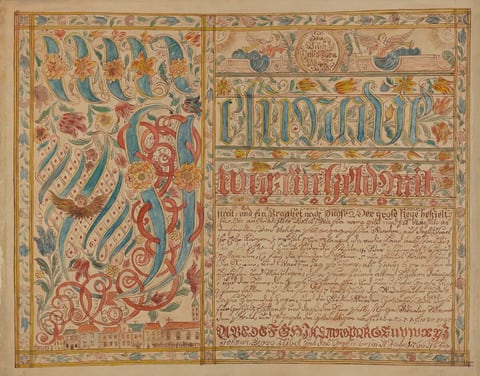
  2. This is a painting of an intricate and colorful illuminated manuscript page. The full-description includes a richly decorated page featuring elaborate calligraphy and floral motifs. The left side showcases swirling ornamental patterns with vibrant colors - blues, reds, and golds - interwoven with blooming flowers and a small figure with wings. In the lower portion, there is a depiction of small buildings. The right side contains text in different styles, with the top section written in large decorative letters and the lower section in a more detailed script. The overall design is bordered with floral elements and intertwining vines. This is in the style of illuminated manuscripts found in historical European documents and books.
    FrakturAlbert Levone, 1935/1942Courtesy National Gallery of Art, Washington
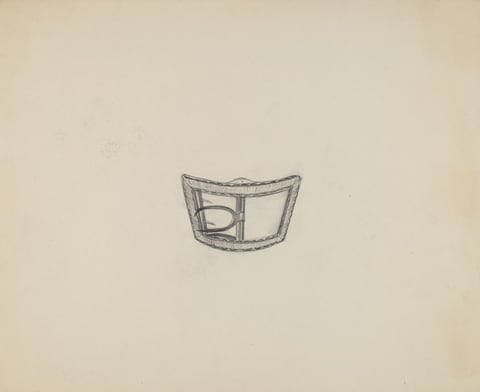
  3. The image displays a detailed pencil sketch of a curved architectural structure in the center of a light beige canvas. The sketch is in grayscale, with a simple color palette. The object occupies a small portion of the canvas, surrounded by negative space.
    Knee BuckleEdna Crenshaw Rex, c. 1937Courtesy National Gallery of Art, Washington
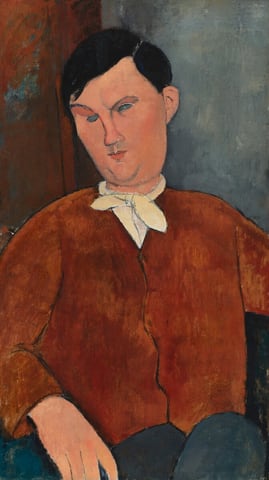
  4. Shown from the lap up, a person with peach-colored skin sits facing us as he looks down and to our left in this vertical, stylized, portrait painting. The person’s clothing and features are outlined with thin black lines, and areas are filled in with mottled, streaked color painted with visible strokes. The person has a round face with a double chin and a small red mouth. The eyes are painted as slate-blue slivers under thin brows, one of which is cocked. The man’s short black hair is parted to one side and combed across the top of his head. He wears a white cravat tied at his neck under a rust-red jacket or shirt. Two rounded, muted blue forms below suggest crossed knees. The man’s right elbow rests next to his body, and that hand is near his lap. The background is painted with pecan brown on the left third and gray-blue on the right two-thirds.
    Monsieur DeleuAmedeo Modigliani, 1916Courtesy National Gallery of Art, Washington