Floor plan

Time and placeThe 20th century

The 20th century

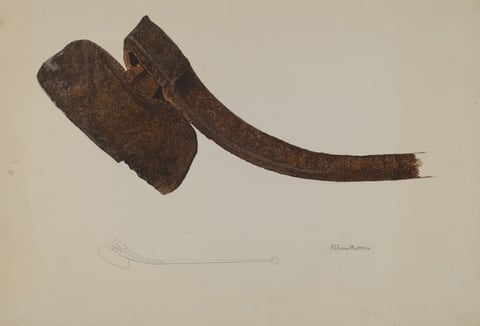
The image shows a large, rusted ax with a curved brown handle placed diagonally across the canvas. The color palette consists of muted browns and beiges, highlighting the aged appearance of the ax. Beneath the ax, there is a faint outline sketch of a similar object, and the artist's signature is located to the right of the sketch. The ax is in the upper half of the image, while the sketch and signature are in the center-bottom section.
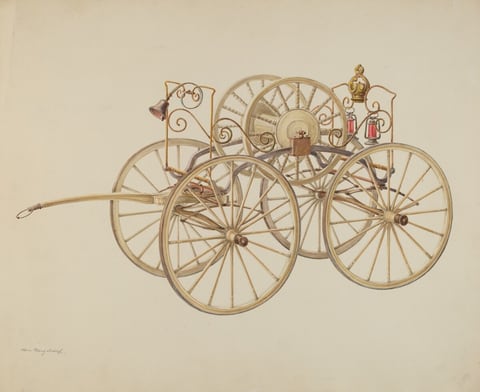
This is a painting of a vintage fire hose cart. It is intricately designed, featuring a four-wheeled cart meant to hold a coiled fire hose. The painting showcases the cart's wooden spoked wheels and hose mechanism, as well as ornate wrought iron designs and a brass figure. A bell is depicted above one wheel. The painting captures the craftsmanship of the era and is reminiscent of the style of Charles Demuth, known for his attention to detail and focus on industrial and architectural elements.
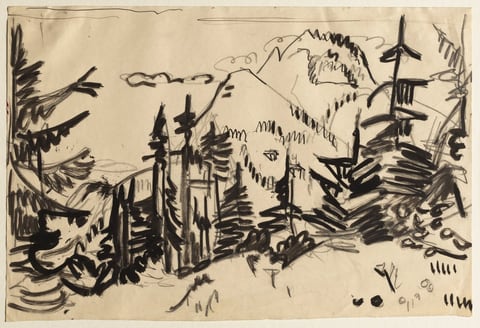
Mountain Landscape with Fir Trees, by Ernst Ludwig Kirchner, 1918/19
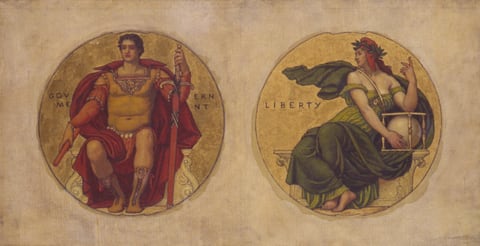
Study for mosaic in the Wisconsin State Capital "Government and Liberty", by Kenyon Cox, ca. 1912
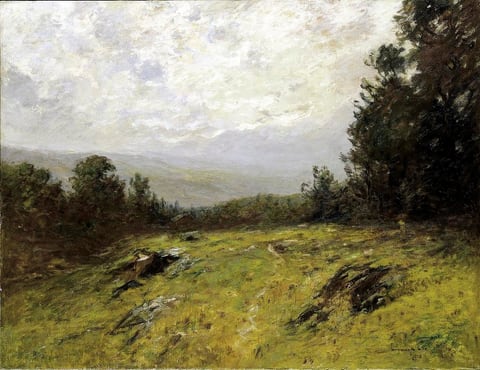
Hillside, by Edward Gay, 1908
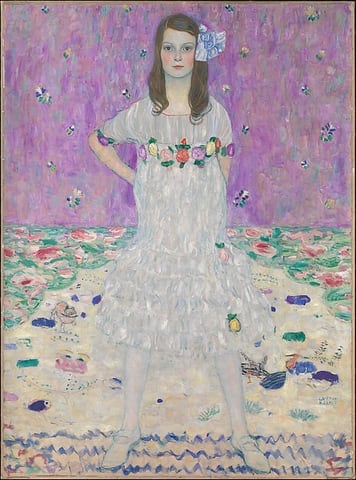
Mäda Primavesi (1903–2000), by Gustav Klimt, 1912–13
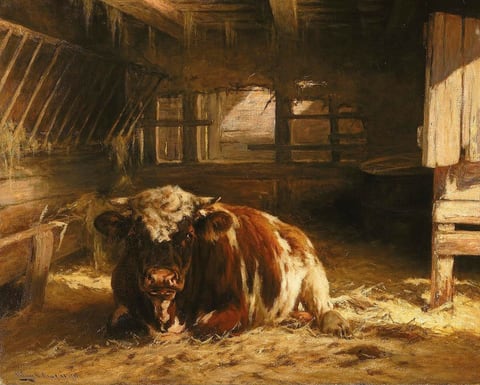
My Day at Home, by William H. Howe, 1906

The works in this room are listed below.

Works in this room

Works made in the 20th century, anywhere in the world.

Section 1, north wall

  1. The image shows a large, rusted ax with a curved brown handle placed diagonally across the canvas. The color palette consists of muted browns and beiges, highlighting the aged appearance of the ax. Beneath the ax, there is a faint outline sketch of a similar object, and the artist's signature is located to the right of the sketch. The ax is in the upper half of the image, while the sketch and signature are in the center-bottom section.
    Dumb IronAlfonso Moreno, c. 1938Courtesy National Gallery of Art, Washington
  2. This is a painting of a vintage fire hose cart. It is intricately designed, featuring a four-wheeled cart meant to hold a coiled fire hose. The painting showcases the cart's wooden spoked wheels and hose mechanism, as well as ornate wrought iron designs and a brass figure. A bell is depicted above one wheel. The painting captures the craftsmanship of the era and is reminiscent of the style of Charles Demuth, known for his attention to detail and focus on industrial and architectural elements.
    Fire Hose ReelHans Mangelsdorf, c. 1938Courtesy National Gallery of Art, Washington
  3. Mountain Landscape with Fir Trees, by Ernst Ludwig Kirchner, 1918/19
    Mountain Landscape with Fir TreesErnst Ludwig Kirchner, 1918/19Courtesy of the Cleveland Museum of Art
  4. Study for mosaic in the Wisconsin State Capital "Government and Liberty", by Kenyon Cox, ca. 1912
    Study for mosaic in the Wisconsin State Capital "Government and Liberty"Kenyon Cox, ca. 1912Courtesy of the Smithsonian American Art Museum

Section 1, south wall

  1. Hillside, by Edward Gay, 1908
    HillsideEdward Gay, 1908Courtesy of the Smithsonian American Art Museum
  2. Mäda Primavesi (1903–2000), by Gustav Klimt, 1912–13
    Mäda Primavesi (1903–2000)Gustav Klimt, 1912–13Courtesy of The Metropolitan Museum of Art
  3. My Day at Home, by William H. Howe, 1906
    My Day at HomeWilliam H. Howe, 1906Courtesy of the Smithsonian American Art Museum

Section 2, south wall
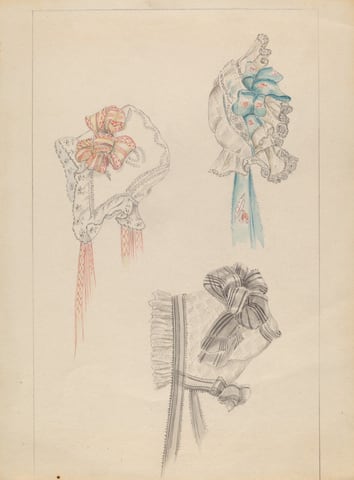
  1. This is a drawing of three decorative bonnets. The drawing features three different hat designs, each embellished with lace, ribbon, and bow details. The upper left bonnet is adorned with pink hues and intricate lace, displaying a floral-like bow. The top right bonnet showcases a turquoise ribbon and bow, surrounded by soft lace. The lower bonnet is in grayscale, with shadowing for dimension, featuring a checkered ribbon. Each hat is detailed with line work and shading, conveying elegance.
    CapsUnrecorded American maker, 1935/1942Courtesy National Gallery of Art, Washington
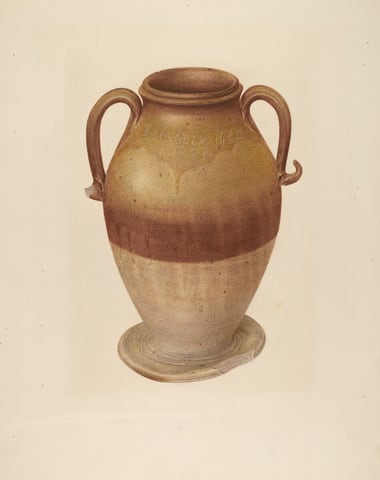
  2. The image shows a large ceramic vase with two curved handles positioned near the top on either side. The vase has an earthy color palette with shades of brown, beige, and a subtle hint of reddish-brown forming a band around its middle. The vase is centrally placed on a flat surface, and both handles extend outward at the top.
    VaseIsadore Goldberg, c. 1939Courtesy National Gallery of Art, Washington
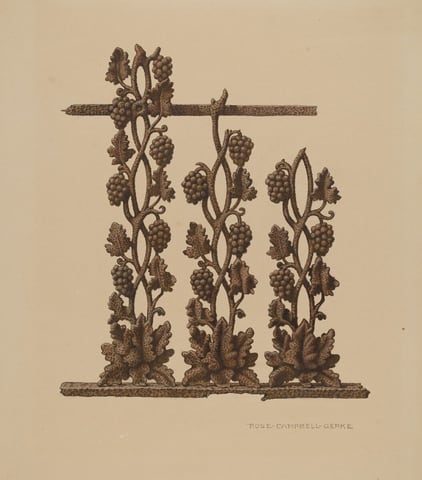
  3. The image depicts an iron sculpture with grapevine motifs. The color scheme is primarily brown, with a textured appearance. The grapevine design is arranged vertically and includes grape clusters and leaves. The sculpture is mounted on a base and includes an iron bar at the top. The artist's signature "ROSE CAMPBELL GERKE" is visible in the lower right corner of the image.
    FenceRose Campbell-Gerke, c. 1940Courtesy National Gallery of Art, Washington
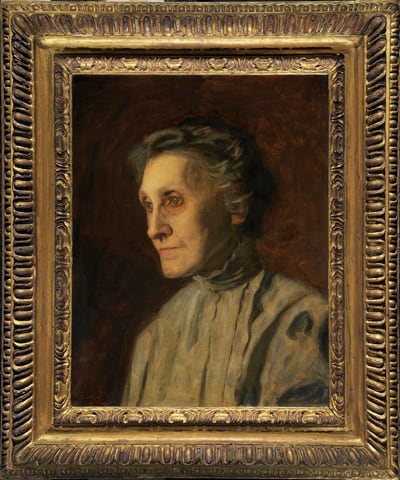
  4. Thomas Eakins
    Portrait of Mrs. Helen Mac Knight (Portrait of a Mother)Thomas Eakins, (c. 1903)Courtesy of the Hirshhorn Museum and Sculpture Garden, Smithsonian Institution

Section 2, north wall
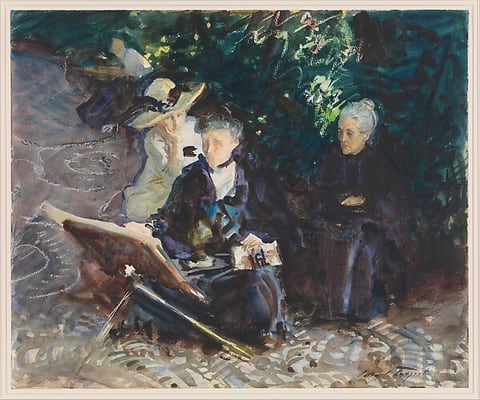
  1. In the Generalife, by John Singer Sargent, 1912
    In the GeneralifeJohn Singer Sargent, 1912Courtesy of The Metropolitan Museum of Art
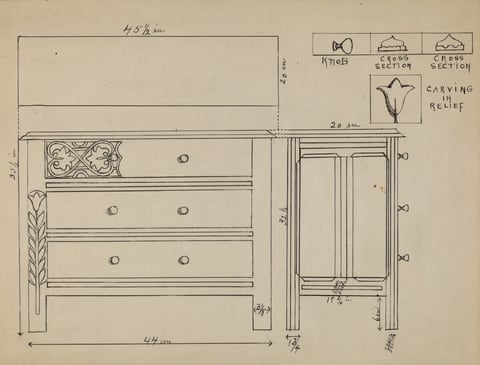
  2. This is a drawing of a furniture design with detailed measurements and decorative elements. The drawing depicts a piece of furniture with a combination of drawers and a cabinet, shown from the front and the side. Specific measurements are provided for various parts of the furniture, such as the width, height, and depth. The design features include a decorative carving in relief on the front panel, a detailed cross-section of the knob, and ornamental patterns on the side. The drawing is technical in nature, likely intended for crafting or woodworking purposes, emphasizing the detailed aspects needed for construction.
    Chest of DrawersFlorence Neal, 1935/1942Courtesy National Gallery of Art, Washington
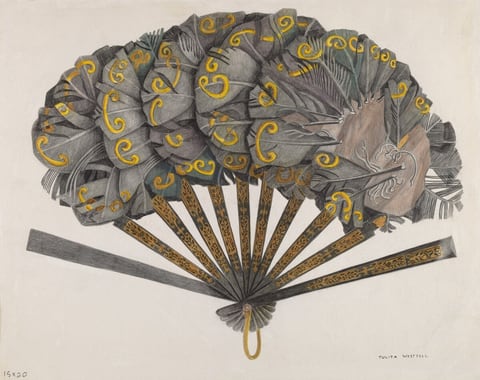
  3. The image shows a large fan with intricate feather-like segments adorned with yellow patterns and a bird depiction. The color palette is grey with hints of yellow, brown, and metallic sheen on the ribs. The fan is positioned upright with the handle at the bottom center, and the feathers extend outward in a semi-circular shape.
    Feather FanTulita Westfall, c. 1937Courtesy National Gallery of Art, Washington

Section 3, north wall
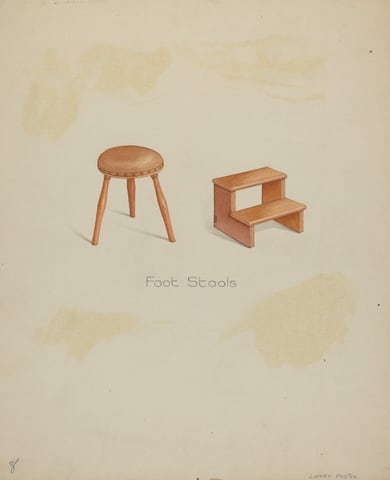
  1. The image shows two foot stools. One is a round stool with four legs and the other is a small two-step wooden staircase. The color palette includes shades of brown and tan against a light beige background. The round stool is positioned to the left, and the step-stool is to the right. Both are labeled with the words "Foot Stools" below them.
    Shaker StoolsLawrence Foster, 1935/1942Courtesy National Gallery of Art, Washington
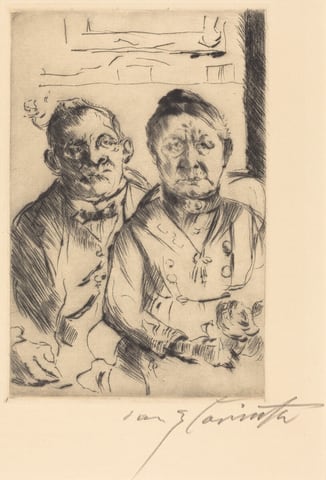
  2. The image depicts two individuals from the waist up. The person on the left has a round face and is slightly behind the person on the right who has a slightly elongated face. Both individuals appear to be seated and have short, neatly combed hair. They have neutral facial expressions and their features are indistinct. The person on the left wears a suit with a bow tie, while the person on the right is dressed in clothing with detailed patterns and holds a flower-like object in their left hand. The background shows simple line sketches that suggest an interior setting.
    Ostpreussisches Ehepaar (Couple from East Prussia)Lovis Corinth, 1916Courtesy National Gallery of Art, Washington