Floor plan

Time and placeThe 20th century

The 20th century

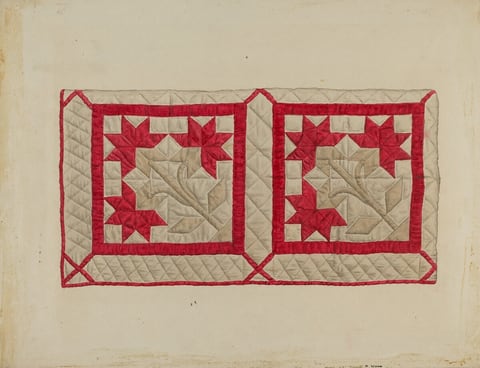
The image shows two large quilt blocks with a matching design, side by side. Each block consists of red and beige fabric with quilted stitching creating a textured appearance. The color palette includes primarily red, beige, and dark stitching outlining the patterns. The quilt blocks are placed centrally on a light-colored surface.
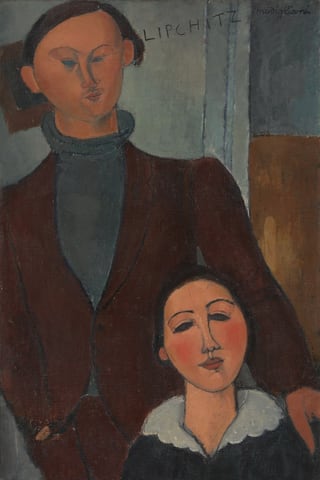
Large painting, standing man blue turtleneck, sitting woman with white collar.
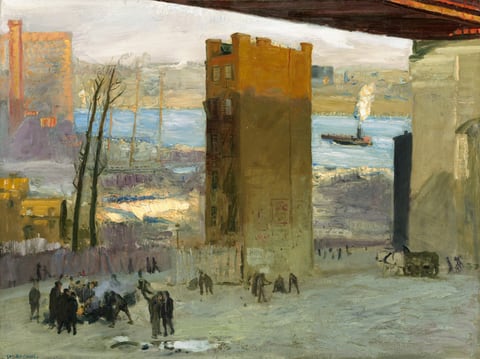
A six-story, narrow building stands alone in an otherwise unoccupied lot under the deck of a high bridge, with a river and cityscape in the background in this horizontal painting. Dozens of people, small in scale, are each painted with a few swipes of black and some with peach-colored faces. They gather at the foot of the building and around a fire to our left, near the lower left corner of the composition. The fire is painted with a dash of orange, a few touches of canary yellow, and a smudge of gray smoke. Several more people stand and sit against the building, which has a streetlamp near its entrance. The back end of the building angles away from us to our right, so we see the narrow, front entrance side to our left. Each of the six floors of the building has two windows with fire escape ladders on the narrow side we can see. Some strokes in red and white on the lower levels of the long, flat side of the building suggest signs or posters. The top story glows a warm sienna brown in sunlight, while the rest of the building and the scene below are in shadow. More people walk along a grayish-violet fence that encloses the lot beyond the building. The ground is painted thickly with slate gray, pale, sage green, and one smear of white to suggest snow. To our right and a short distance from us, a white horse pulls a carriage near the foot of the bridge. The ivory-white, concrete piling rises up and off the right edge of the canvas and supports the deck of the bridge above. Only a sliver of the brick-red underside of the bridge is visible, skimming the top edge of the painting in the upper right corner. Two twiggy, barren trees grow up beyond the muted purple fence, and the landscape beyond is bright in the sunlight. A terracotta-orange building rises along the left edge of the painting, with the area between it and the lot under the bridge filled with thickly painted patches of butter yellow, amethyst purple, and sage green. Beyond that, an ice-blue river flows across the composition. The shore beyond is lined with patches of beige and tan paint that could be buildings. A black tugboat puffs bright white smoke in the river. The sky above is frosty white. The artist signed the work with dark blue in the lower left corner of the painting, “Geo Bellows.”
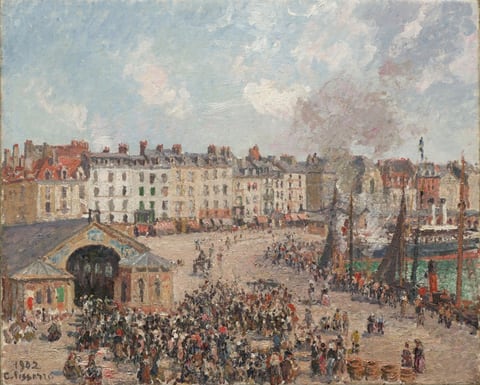
Fishmarket, by Camille Pissarro, 1902
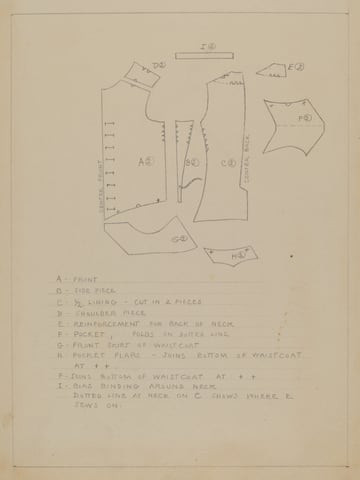
This is a drawing depicting instructional annotations on a pattern for tailoring or assembling clothing. The pattern includes various pieces labeled with letters and numbers corresponding to specific parts of a garment, like "FRONT," "SIDE BACK," and "COLLAR." The layout is precise and technical, resembling a guide for constructing a garment with detailed cutting and assembly instructions.
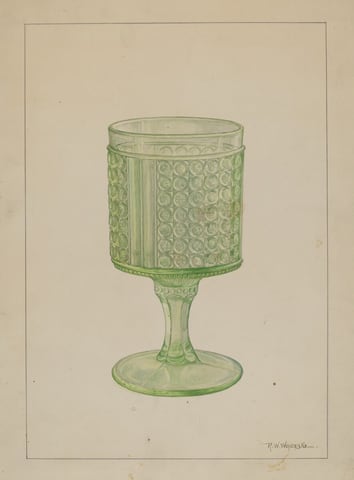
The image shows a green glass goblet with a textured, bubble-like pattern on the cup and a smooth stem. The color palette consists of shades of green with varying tones, depending on the glass's thickness and pattern. The goblet is positioned centrally, seen straight-on with the cup's pattern visible across its surface. It rests on a flat surface, slightly above the center of the image.
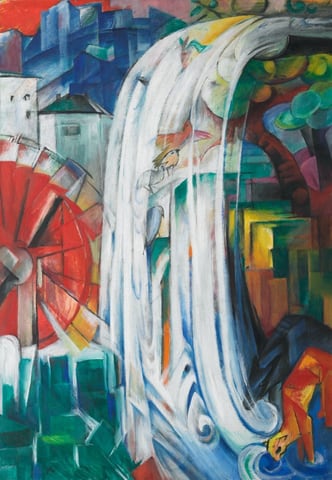
Vibrantly colored geometric painting of a central white and blue waterfall with birds visible through it. A stylized red jungle cat and black wild boar drink at bottom right. Red water wheel at left, angular blue and white cityscape top at left, tree top at right.
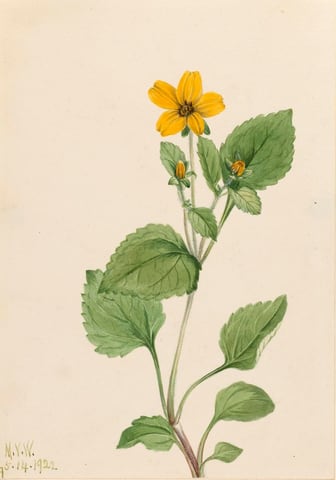
Golden Star (Chrysogonum virginianum), by Mary Vaux Walcott, 1922

The works in this room are listed below.

Works in this room

Works made in the 20th century, anywhere in the world.

Section 1, north wall

  1. The image shows two large quilt blocks with a matching design, side by side. Each block consists of red and beige fabric with quilted stitching creating a textured appearance. The color palette includes primarily red, beige, and dark stitching outlining the patterns. The quilt blocks are placed centrally on a light-colored surface.
    Patchwork QuiltPaul Ward, c. 1936Courtesy National Gallery of Art, Washington
  2. Large painting, standing man blue turtleneck, sitting woman with white collar.
    Jacques and Berthe LipchitzAmedeo Modigliani, 1916Courtesy of the Art Institute of Chicago
  3. A six-story, narrow building stands alone in an otherwise unoccupied lot under the deck of a high bridge, with a river and cityscape in the background in this horizontal painting. Dozens of people, small in scale, are each painted with a few swipes of black and some with peach-colored faces. They gather at the foot of the building and around a fire to our left, near the lower left corner of the composition. The fire is painted with a dash of orange, a few touches of canary yellow, and a smudge of gray smoke. Several more people stand and sit against the building, which has a streetlamp near its entrance. The back end of the building angles away from us to our right, so we see the narrow, front entrance side to our left. Each of the six floors of the building has two windows with fire escape ladders on the narrow side we can see. Some strokes in red and white on the lower levels of the long, flat side of the building suggest signs or posters. The top story glows a warm sienna brown in sunlight, while the rest of the building and the scene below are in shadow. More people walk along a grayish-violet fence that encloses the lot beyond the building. The ground is painted thickly with slate gray, pale, sage green, and one smear of white to suggest snow. To our right and a short distance from us, a white horse pulls a carriage near the foot of the bridge. The ivory-white, concrete piling rises up and off the right edge of the canvas and supports the deck of the bridge above. Only a sliver of the brick-red underside of the bridge is visible, skimming the top edge of the painting in the upper right corner. Two twiggy, barren trees grow up beyond the muted purple fence, and the landscape beyond is bright in the sunlight. A terracotta-orange building rises along the left edge of the painting, with the area between it and the lot under the bridge filled with thickly painted patches of butter yellow, amethyst purple, and sage green. Beyond that, an ice-blue river flows across the composition. The shore beyond is lined with patches of beige and tan paint that could be buildings. A black tugboat puffs bright white smoke in the river. The sky above is frosty white. The artist signed the work with dark blue in the lower left corner of the painting, “Geo Bellows.”
    The Lone TenementGeorge Bellows, 1909Courtesy National Gallery of Art, Washington
  4. Fishmarket, by Camille Pissarro, 1902
    FishmarketCamille Pissarro, 1902Courtesy of the Cleveland Museum of Art

Section 1, south wall

  1. This is a drawing depicting instructional annotations on a pattern for tailoring or assembling clothing. The pattern includes various pieces labeled with letters and numbers corresponding to specific parts of a garment, like "FRONT," "SIDE BACK," and "COLLAR." The layout is precise and technical, resembling a guide for constructing a garment with detailed cutting and assembly instructions.
    Waistcoat PatternRosalia Lane, c. 1936Courtesy National Gallery of Art, Washington
  2. The image shows a green glass goblet with a textured, bubble-like pattern on the cup and a smooth stem. The color palette consists of shades of green with varying tones, depending on the glass's thickness and pattern. The goblet is positioned centrally, seen straight-on with the cup's pattern visible across its surface. It rests on a flat surface, slightly above the center of the image.
    GobletRonau William Woiceske, 1935/1942Courtesy National Gallery of Art, Washington
  3. Vibrantly colored geometric painting of a central white and blue waterfall with birds visible through it. A stylized red jungle cat and black wild boar drink at bottom right. Red water wheel at left, angular blue and white cityscape top at left, tree top at right.
    The Bewitched MillFranz Marc, 1913Courtesy of the Art Institute of Chicago
  4. Golden Star (Chrysogonum virginianum), by Mary Vaux Walcott, 1922
    Golden Star (Chrysogonum virginianum)Mary Vaux Walcott, 1922Courtesy of the Smithsonian American Art Museum

Section 2, south wall
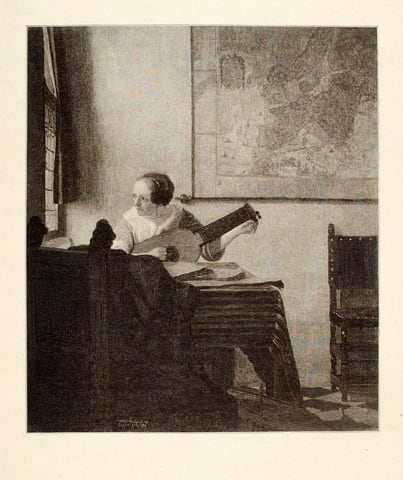
  1. Lady with the Lute, by Henry Wolf, 1909
    Lady with the LuteHenry Wolf, 1909Courtesy of the Smithsonian American Art Museum
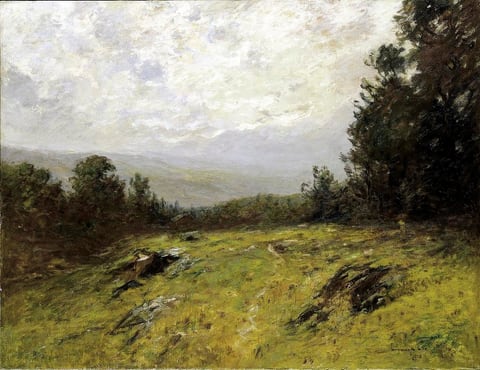
  2. Hillside, by Edward Gay, 1908
    HillsideEdward Gay, 1908Courtesy of the Smithsonian American Art Museum
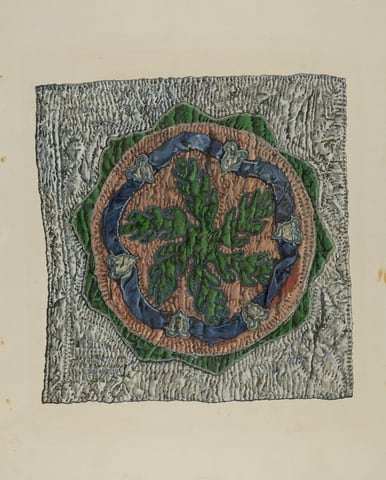
  3. The image shows various shapes and lines within a square border. In the center, there is an abstract circular pattern resembling a stylized floral design. The inner circle contains leaf-like shapes in green, surrounded by a ring resembling petals or decorative motifs. The overall effect is similar to a decorative shield or medallion. The background texture adds depth to the composition.
    Quilt Block - "E. Cooper" DesignFlorence Truelson, 1935/1942Courtesy National Gallery of Art, Washington
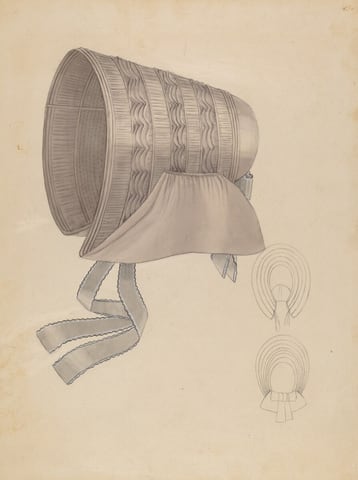
  4. This is an image of a bonnet and its details. The drawing showcases a bonnet with intricate design and texture. The bonnet is viewed from the side, revealing its woven structure with patterns representing fabric pleats or folds. It has a long ribbon hanging from the back, depicted with flowing lines. There are also two smaller sketches showing the bonnet from the back, emphasizing its shape and construction. The background is plain.
    BonnetBessie Forman, c. 1936Courtesy National Gallery of Art, Washington

Section 2, north wall
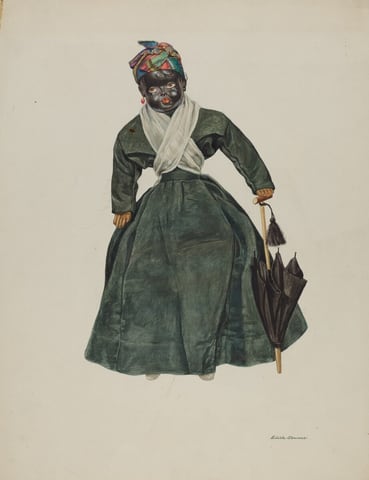
  1. The image depicts a person standing upright. They are wearing a dark green dress with long sleeves and a floor-length skirt. Over the dress, there is a white fabric wrapped around their shoulders. The person is holding a closed umbrella in their right hand. Their face is dark with distinguishable eyes and a nose, but specific facial features are not detailed. The person's hair is covered by a colorful headscarf with shades of blue, pink, and yellow. They are wearing large earrings, possibly pink or red. The background is plain and light with no additional objects present.
    Doll--"Hannah Hitch"Edith Towner, c. 1940Courtesy National Gallery of Art, Washington
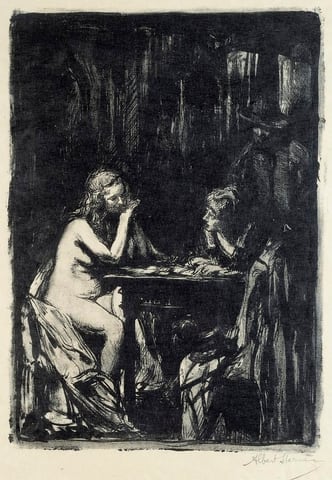
  2. The Stranger, by Albert Sterner, 1916
    The StrangerAlbert Sterner, 1916Courtesy of the Smithsonian American Art Museum
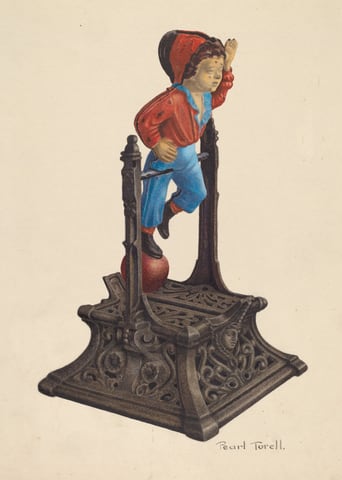
  3. The sculpture depicts a young boy dressed in a bright red coat, blue shirt, and blue pants, with black shoes. He is wearing a black hat with a red rim and has curly hair. The boy is balanced on one foot atop a red ball, with one leg lifted behind him and one hand held high above his head. The sculpture is made of painted, cast metal with intricate designs and textures. The boy stands on an ornately decorated dark pedestal.
    Toy BankPearl Torell, c. 1939Courtesy National Gallery of Art, Washington
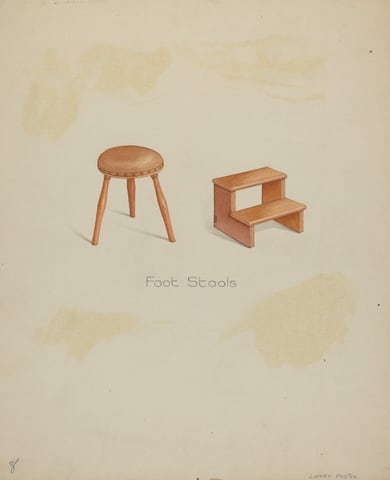
  4. The image shows two foot stools. One is a round stool with four legs and the other is a small two-step wooden staircase. The color palette includes shades of brown and tan against a light beige background. The round stool is positioned to the left, and the step-stool is to the right. Both are labeled with the words "Foot Stools" below them.
    Shaker StoolsLawrence Foster, 1935/1942Courtesy National Gallery of Art, Washington