Floor plan

Time and placeThe 20th century

The 20th century

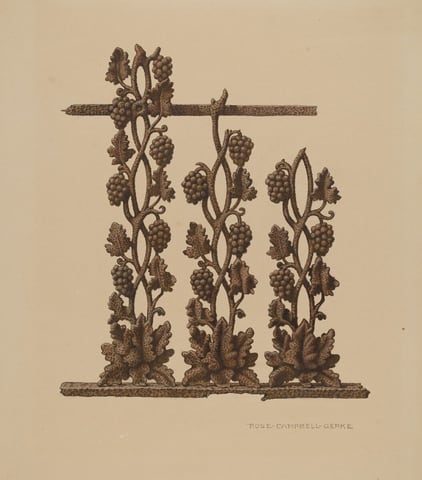
The image depicts an iron sculpture with grapevine motifs. The color scheme is primarily brown, with a textured appearance. The grapevine design is arranged vertically and includes grape clusters and leaves. The sculpture is mounted on a base and includes an iron bar at the top. The artist's signature "ROSE CAMPBELL GERKE" is visible in the lower right corner of the image.
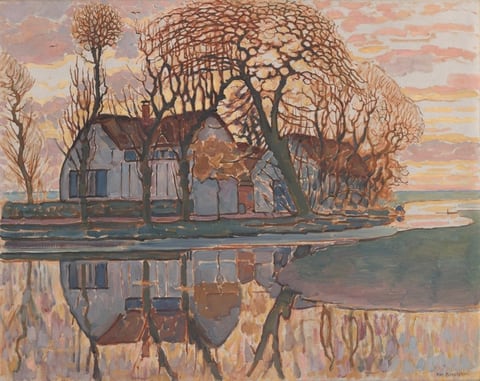
A work made of oil on canvas.
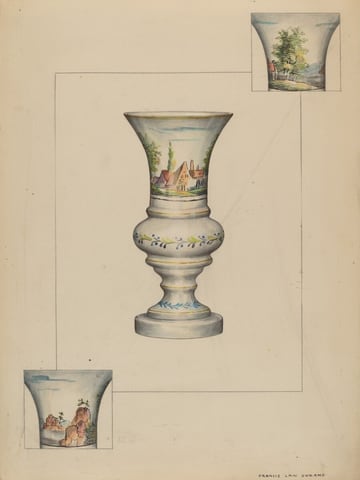
The image shows a large, intricately designed vase with a bulbous base and flared top at the center. The vase is decorated with painted scenes of a town or village. The color scheme includes shades of blue, green, brown, and touches of yellow and red. Surrounding the vase are two smaller detailed sections showing close-ups of the painted scenes on it. The main vase image is enclosed within a boxed outline on the page.
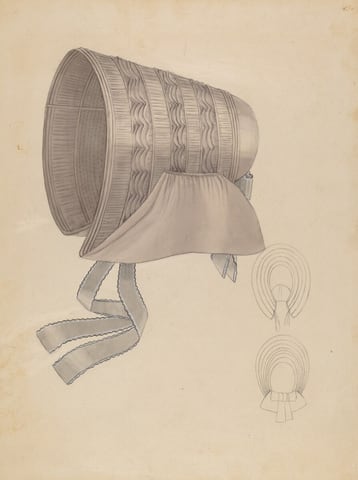
This is an image of a bonnet and its details. The drawing showcases a bonnet with intricate design and texture. The bonnet is viewed from the side, revealing its woven structure with patterns representing fabric pleats or folds. It has a long ribbon hanging from the back, depicted with flowing lines. There are also two smaller sketches showing the bonnet from the back, emphasizing its shape and construction. The background is plain.
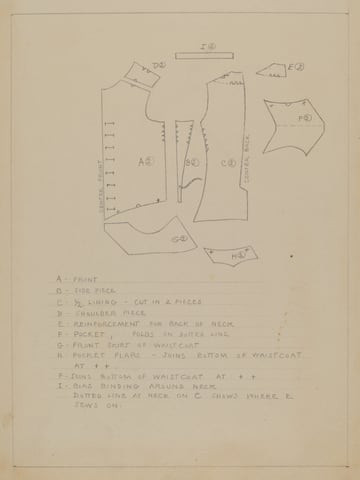
This is a drawing depicting instructional annotations on a pattern for tailoring or assembling clothing. The pattern includes various pieces labeled with letters and numbers corresponding to specific parts of a garment, like "FRONT," "SIDE BACK," and "COLLAR." The layout is precise and technical, resembling a guide for constructing a garment with detailed cutting and assembly instructions.
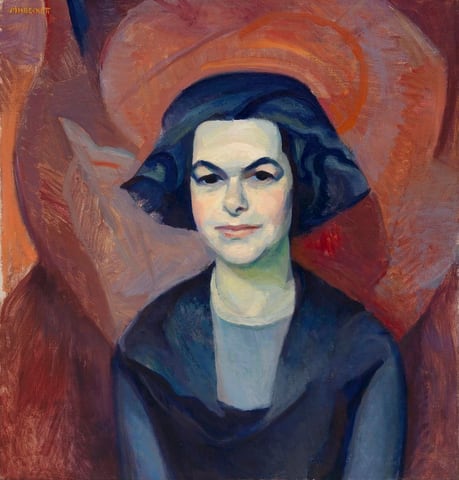
Artist: Marion H. Beckett, Sitter: Theresa Helburn, Current owner: National Portrait Gallery, Smithsonian Institution
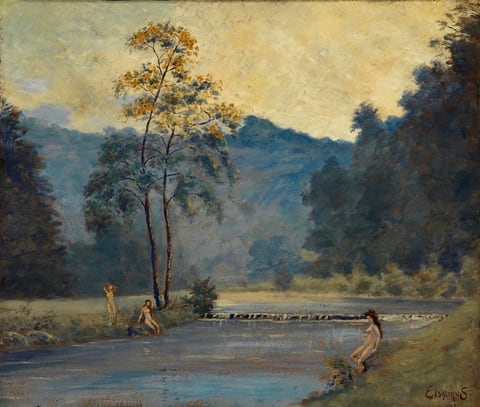
Three Girls and River, by Louis M. Eilshemius, 1907
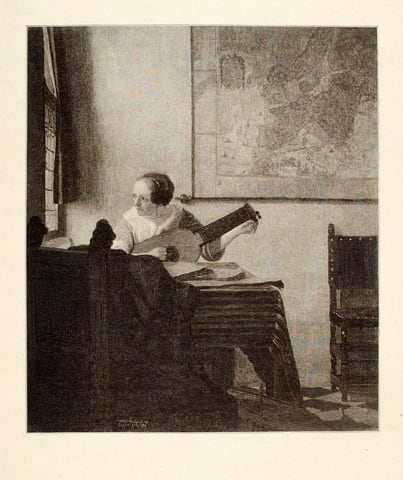
Lady with the Lute, by Henry Wolf, 1909

The works in this room are listed below.

Works in this room

Works made in the 20th century, anywhere in the world.

Section 1, north wall

  1. The image depicts an iron sculpture with grapevine motifs. The color scheme is primarily brown, with a textured appearance. The grapevine design is arranged vertically and includes grape clusters and leaves. The sculpture is mounted on a base and includes an iron bar at the top. The artist's signature "ROSE CAMPBELL GERKE" is visible in the lower right corner of the image.
    FenceRose Campbell-Gerke, c. 1940Courtesy National Gallery of Art, Washington
  2. A work made of oil on canvas.
    Farm near DuivendrechtPiet Mondrian, c. 1916Courtesy of the Art Institute of Chicago
  3. The image shows a large, intricately designed vase with a bulbous base and flared top at the center. The vase is decorated with painted scenes of a town or village. The color scheme includes shades of blue, green, brown, and touches of yellow and red. Surrounding the vase are two smaller detailed sections showing close-ups of the painted scenes on it. The main vase image is enclosed within a boxed outline on the page.
    Fire Lighter VaseFrancis Law Durand, 1935/1942Courtesy National Gallery of Art, Washington
  4. This is an image of a bonnet and its details. The drawing showcases a bonnet with intricate design and texture. The bonnet is viewed from the side, revealing its woven structure with patterns representing fabric pleats or folds. It has a long ribbon hanging from the back, depicted with flowing lines. There are also two smaller sketches showing the bonnet from the back, emphasizing its shape and construction. The background is plain.
    BonnetBessie Forman, c. 1936Courtesy National Gallery of Art, Washington

Section 1, south wall

  1. This is a drawing depicting instructional annotations on a pattern for tailoring or assembling clothing. The pattern includes various pieces labeled with letters and numbers corresponding to specific parts of a garment, like "FRONT," "SIDE BACK," and "COLLAR." The layout is precise and technical, resembling a guide for constructing a garment with detailed cutting and assembly instructions.
    Waistcoat PatternRosalia Lane, c. 1936Courtesy National Gallery of Art, Washington
  2. Artist: Marion H. Beckett, Sitter: Theresa Helburn, Current owner: National Portrait Gallery, Smithsonian Institution
    Theresa HelburnMarion H. Beckett, 1922Courtesy of the National Portrait Gallery, Smithsonian Institution
  3. Three Girls and River, by Louis M. Eilshemius, 1907
    Three Girls and RiverLouis M. Eilshemius, 1907Courtesy of the Smithsonian American Art Museum
  4. Lady with the Lute, by Henry Wolf, 1909
    Lady with the LuteHenry Wolf, 1909Courtesy of the Smithsonian American Art Museum

Section 2, south wall
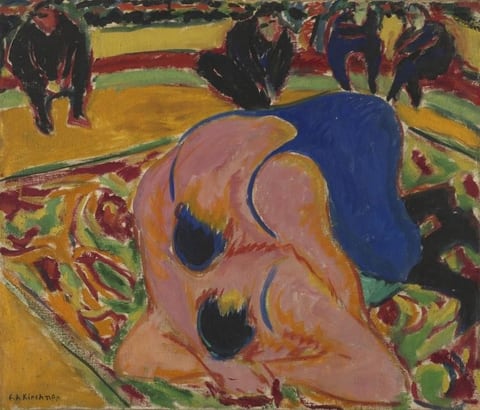
  1. Wrestlers in a Circus, by Ernst Ludwig Kirchner, 1909
    Wrestlers in a CircusErnst Ludwig Kirchner, 1909Courtesy of the Cleveland Museum of Art
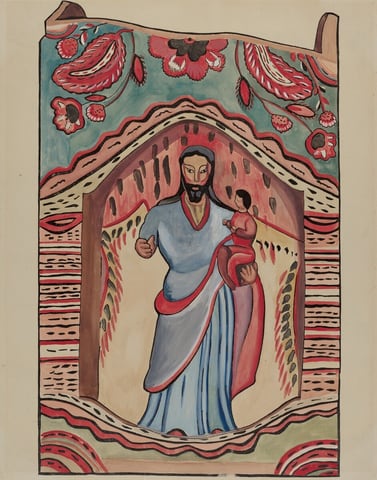
  2. This is a painting of stylized figures within an ornate frame. The artwork features two central figures that are reminiscent of a traditional religious iconography but rendered in a simplified and almost cartoonish form. The larger figure is draped in blue with red accents, while a smaller figure is held in one hand, enrobed in red. The background is decorated with a variety of patterns including an arch-like structure with wavy designs and lines, all outlining the central figures. The outer sections feature floral patterns with bold, contrasting colors of red, black, and teal. The use of thick outlines and vivid colors suggests a playful and decorative approach to the portrayal of the figures, drawing inspiration possibly from folk art traditions.
    St. JosephE. Boyd, 1936Courtesy National Gallery of Art, Washington
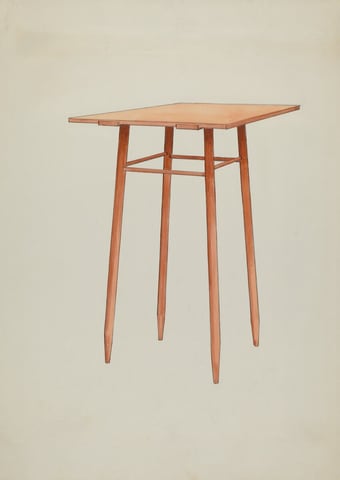
  3. The image shows a tall, narrow wooden table with a square top and four long, slender legs. The color palette is warm with shades of light brown and reddish-brown on the table. Positioned centrally, the table stands against a plain, light-colored background.
    Shaker StandRay Holden, c. 1936Courtesy National Gallery of Art, Washington
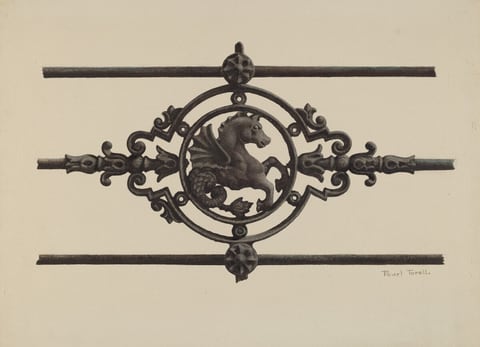
  4. The image shows an ornate metalwork design with a winged creature. The design features intricate wrought iron decoration with a mythical figure, resembling a Pegasus, enclosed within a circular frame. The central circle is surrounded by symmetrical, stylized scrollwork motifs and horizontal bars, suggesting an architectural or ornamental fixture intended for use in structures like gates or window grills. The detailed craftsmanship and balanced design highlight the creature's form and the harmonious symmetry of the patterns.
    Fence - Sea Horse DesignPearl Torell, c. 1939Courtesy National Gallery of Art, Washington

Section 2, north wall
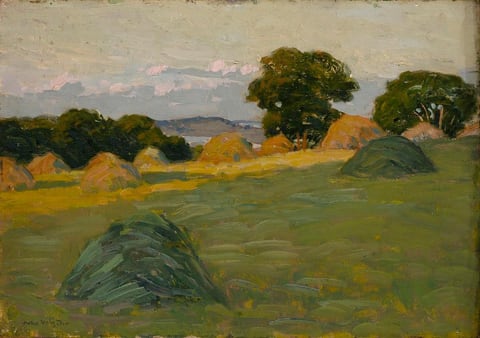
  1. The Hill Field, by Arthur Wesley Dow, 1908-1910
    The Hill FieldArthur Wesley Dow, 1908-1910Courtesy of the Smithsonian American Art Museum
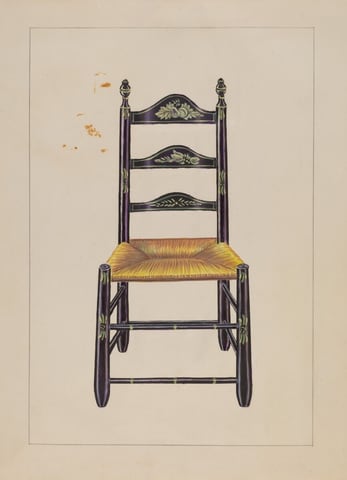
  2. The image shows a wooden chair with a rush seat. It features ornate details on the backrest. The color palette includes dark wood tones, pale greenish detailing, and a warm yellowish hue for the seat. The chair is centrally positioned in the image, viewed from the front, with no other objects around it.
    Ladderback ChairGerald Bernhardt, c. 1936Courtesy National Gallery of Art, Washington
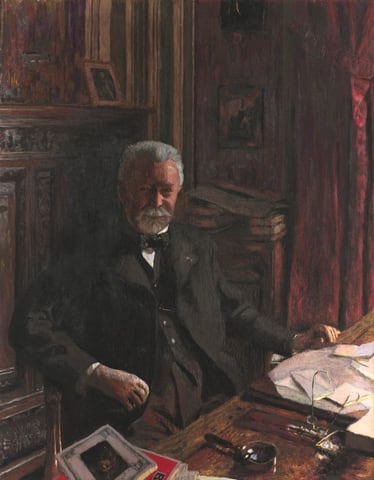
  3. André Bénac, by Édouard Vuillard, 1936
    André BénacÉdouard Vuillard, 1936Courtesy of the Cleveland Museum of Art
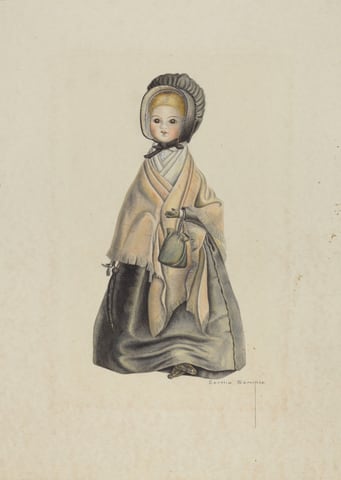
  4. The image displays a full-body illustration of a person standing upright. They have a delicate and round face with rosy cheeks and small, pink lips. Their eyes are large and expressive, and they have light-colored hair peeking out from under a bonnet. The person's attire consists of a long, dark skirt and a light-colored shawl draped over their shoulders. They wear a hooded cloak tied with a bow at the neck, and hold a small bag in their left hand. The background is plain with a light-colored texture. The artwork is a painted illustration with visible fine lines and shading to enhance details of the clothing and facial features.
    Quaker DollBertha Semple, 1935/1942Courtesy National Gallery of Art, Washington